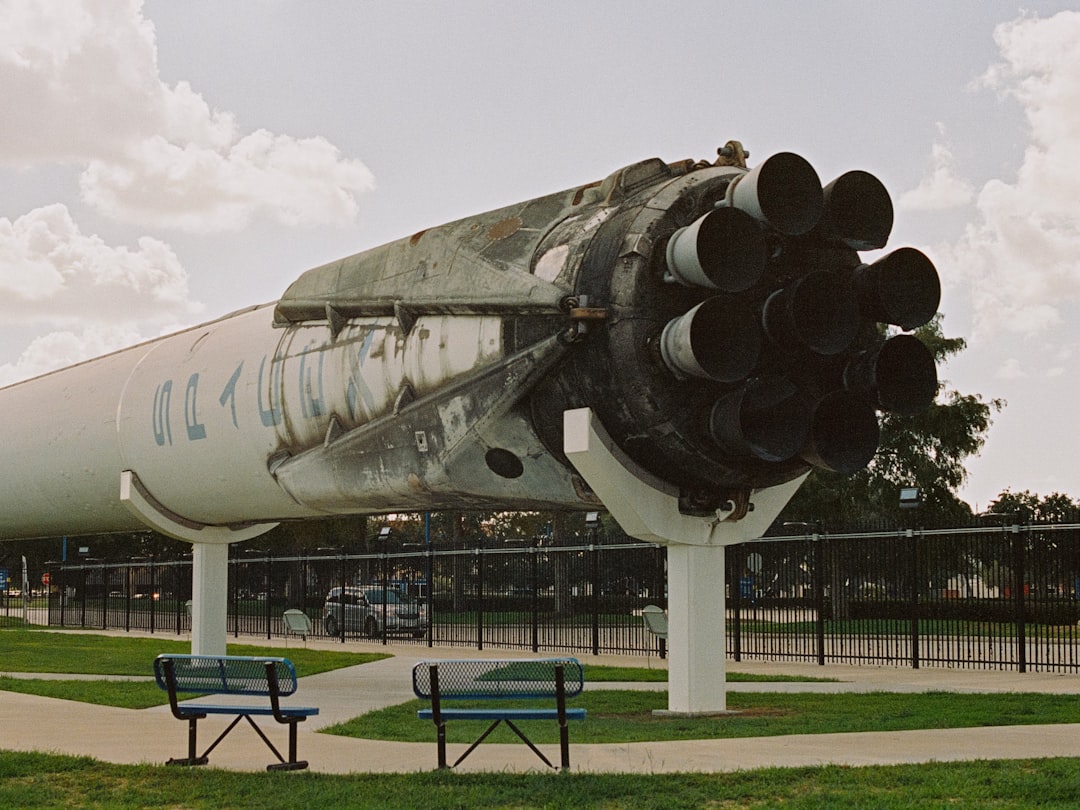
The ambition to explore beyond Earth’s atmosphere, a pursuit deeply ingrained in humanity’s narrative, culminated in a period of intense technological competition and groundbreaking scientific achievement: the Space Race. This historic endeavor, primarily a geopolitical contest between the United States and the Soviet Union, spanned roughly from the mid-1950s to the early 1970s, reshaping our understanding of the cosmos and propelling human civilization into a new era of possibilities. It was a time when the ultimate frontier became the ultimate prize, and nations poured immense resources and intellect into a race for supremacy in space.
The Space Race did not emerge sui generis; it was a direct outgrowth of the broader ideological and geopolitical struggle that defined the latter half of the 20th century. The post-World War II landscape was characterized by a palpable tension between the capitalist West, led by the United States, and the communist East, dominated by the Soviet Union. This “Cold War” was a battle of ideologies, economic systems, and military might, fought on myriad fronts, from proxy wars and espionage to propaganda and, crucially, technological superiority.
The Arms Race and its Celestial Echo
The nuclear arms race, a terrifying manifestation of Cold War anxieties, provided a critical impetus for the Space Race. The development of intercontinental ballistic missiles (ICBMs) necessary to deliver nuclear warheads also provided the foundational technology for launching spacecraft into orbit and beyond. The ability to project power across vast distances, a military imperative, quickly translated into the capacity to reach space. This duality meant that every rocket developed for defense also held the promise of a payload destined for the stars, a potent symbol of national power. Imagine a shield forged in the fires of conflict, with the unforeseen gift of opening a gateway to the heavens.
Propaganda and Prestige
Beyond military considerations, space offered a powerful arena for ideological propaganda and national prestige. Success in space was seen as a litmus test of a nation’s technological prowess, economic strength, and the supposed superiority of its political system. Each launch, orbit, and landing became a global spectacle, broadcast and analyzed by media worldwide. The nation that could conquer the cosmos could, it was believed, conquer the hearts and minds of people around the globe. It was a grand theater where nations performed their capabilities for an international audience, each triumph a resounding declaration of their might.
The Early Soviet Lead
The Soviet Union, with a well-established rocket program driven by missile development, gained an early and significant advantage in the Space Race. This lead fueled American anxieties and galvanized efforts to catch up. The perceived gap in technological achievement was a source of national concern, prompting a significant reassessment of scientific and engineering education and investment within the United States.
The US space race, a pivotal moment in history, was not only about technological advancements but also about national pride and competition with the Soviet Union. For those interested in exploring this fascinating topic further, you can read a related article that delves into the key events and figures of the space race era. Check it out here: US Space Race Overview.
The Dawn of the Space Age: Sputnik and its Aftermath
The official launch of the Space Race is widely attributed to the launch of Sputnik 1 by the Soviet Union on October 4, 1957. This small, metallic sphere, beeping its way across the night sky, sent shockwaves around the world and particularly within the United States.
Sputnik 1: A Wake-Up Call
Sputnik 1 was more than just an object in orbit; it was a powerful symbol. It demonstrated the Soviet Union’s capability to place a man-made object into space, a feat previously thought to be years away for any nation. The satellite’s radio signals, easily detected by amateur radio operators, served as a constant, audible reminder of this technological leap. For many in the West, it was a stark and unwelcome realization that the Soviet Union was not merely catching up but, in this specific domain, had pulled ahead. The world had suddenly shrunk, and the heavens had been breached, not by the West, but by the East.
The Explorer 1 and the American Response
In response to the Sputnik shock, the United States accelerated its own satellite program. After a series of failed attempts, the U.S. successfully launched Explorer 1 on January 31, 1958. While it reached orbit, it was smaller and carried less sophisticated instrumentation than Sputnik. Nevertheless, Explorer 1 carried a significant scientific payload that led to the discovery of the Van Allen radiation belts, a crucial early scientific return from space exploration. This marked the first tangible success of the American space effort in direct response to the Soviet lead.
The Creation of NASA
The urgency generated by Sputnik 1 and the subsequent early Soviet successes led to a fundamental restructuring of American space efforts. On July 29, 1958, President Dwight D. Eisenhower signed the National Aeronautics and Space Act, establishing the National Aeronautics and Space Administration (NASA). This civilian agency was tasked with the ambitious goal of leading American space exploration, consolidating existing research efforts and providing a unified national direction. NASA became the engine of American ambition in space, a dedicated body designed to compete and excel.
Project Mercury: Putting Americans in Orbit

Following the establishment of NASA, the immediate priority was to put an American astronaut into space and orbit the Earth. Project Mercury, launched in 1958 and concluding in 1963, was the United States’ first human spaceflight program. Its primary objectives were to achieve human spaceflight, investigate the astronaut’s ability to function in space, and recover both the spacecraft and the astronaut safely.
The First Americans in Space
The Mercury program faced the daunting task of overcoming the Soviet lead in human spaceflight, as the Soviets had already achieved limited suborbital flights. On May 5, 1961, Alan Shepard became the first American in space with a 15-minute suborbital flight aboard Freedom 7. Though a significant achievement, it was still a far cry from orbital flight. This was swiftly followed by Gus Grissom’s suborbital flight in July 1961. The true benchmark, however, was orbital flight.
John Glenn’s Orbital Triumph
The historic moment came on February 20, 1962, when John Glenn became the first American to orbit the Earth, completing three orbits aboard the Friendship 7 spacecraft. This successful mission was a massive morale boost for the United States, demonstrating that it could indeed compete with and, in this crucial aspect, match the Soviet Union. Glenn’s flight was met with widespread celebration, symbolizing American resilience and determination. It was a moment when the nation collectively looked up, not just at the stars, but at the embodiment of their aspirations.
The Scientific and Engineering Legacy
Beyond the human achievement, Project Mercury yielded invaluable data and experience in spacecraft design, astronaut training, and mission control. The program laid the groundwork for future, more complex missions by developing crucial technologies and protocols. The lessons learned from Mercury were essential for the subsequent development of more advanced American spacecraft.
Project Gemini: Bridging the Gap to the Moon

While Project Mercury focused on achieving basic human spaceflight, Project Gemini, which ran from 1961 to 1966, served as a critical stepping stone towards the ultimate goal: landing a man on the Moon. Gemini missions were designed to test technologies and procedures essential for lunar missions, including rendezvous and docking in orbit, extravehicular activities (EVAs), and longer-duration spaceflights.
Mastering Orbital Maneuvers
A key objective of Project Gemini was to develop the capability for two spacecraft to maneuver and link up in orbit. The first successful rendezvous and docking occurred on March 16, 1966, when Gemini 8, piloted by Neil Armstrong and David Scott, docked with an uncrewed Agena target vehicle. This maneuver was a crucial precursor to the complex orbital operations required for lunar missions, where a lunar module would need to dock with an orbiting command module. It was like learning to tether two ships in a vast, invisible ocean.
The Art of the Spacewalk
Gemini also pioneered the concept of the extravehicular activity, or spacewalk. The first American spacewalk was performed by Ed White on June 3, 1965, during the Gemini 4 mission. White spent approximately 20 minutes outside the spacecraft, maneuvering using a handheld maneuvering unit. EVAs were vital for future lunar missions, where astronauts would need to work outside their spacecraft on the surface of the Moon. This allowed humans to physically step out from their metal cocoons and interact directly with the void.
Longer Durations and Critical Data
Gemini missions also pushed the boundaries of human endurance in space. Gemini 7, for instance, completed a 14-day mission in December 1965, setting a new endurance record and demonstrating that humans could withstand extended periods in space, a crucial factor for the then-envisioned lunar voyage. The data gathered on the physiological effects of long-duration spaceflight was invaluable for understanding human limits and developing countermeasures.
The US space race was a pivotal moment in history that not only showcased technological advancements but also highlighted the intense rivalry between the United States and the Soviet Union. For those interested in exploring more about this fascinating period, you can read an insightful article that delves into the various missions and milestones achieved during this era. The article provides a comprehensive overview of the challenges faced and the triumphs celebrated, making it a great resource for anyone looking to understand the complexities of the space race. You can find it here: read more about it.
Project Apollo: The Lunar Zenith
| Year | Event | Country | Significance |
|---|---|---|---|
| 1957 | Launch of Sputnik 1 | USSR | First artificial satellite in orbit, starting the space race |
| 1958 | Creation of NASA | USA | Established to coordinate US space efforts |
| 1961 | First human in space (Yuri Gagarin) | USSR | First manned spaceflight, orbiting Earth |
| 1961 | President Kennedy’s Moon landing goal | USA | Set goal to land a man on the Moon by the end of the decade |
| 1969 | Apollo 11 Moon landing | USA | First humans landed on the Moon (Neil Armstrong and Buzz Aldrin) |
| 1975 | Apollo-Soyuz Test Project | USA & USSR | First joint US-Soviet space mission, symbolizing détente |
The culmination of the Space Race and arguably humanity’s most audacious technological endeavor was Project Apollo. Launched in 1961 and concluding in 1972, it was the ambitious program designed to land humans on the Moon and return them safely to Earth. President John F. Kennedy’s bold declaration in 1961, pledging to achieve this goal “before this decade is out,” set the stage for a national undertaking of unprecedented scale and ambition.
The Saturn V: Rocket to the Stars
Central to Project Apollo was the development of the Saturn V rocket, the most powerful launch vehicle ever successfully operated. This colossal machine, standing 363 feet tall, was capable of lifting the massive Apollo spacecraft, including the lunar module, into Earth orbit and then propelling it towards the Moon. The Saturn V was a marvel of engineering, a testament to the ingenuity and perseverance of the scientists and engineers who designed and built it. It was the iron bird that would carry humanity’s dreams across the gulf to another world.
The Apollo 1 Tragedy and Resilience
The Apollo program experienced a devastating setback early on with the Apollo 1 fire in January 1967, which claimed the lives of astronauts Gus Grissom, Ed White, and Roger Chaffee during a ground test. This tragedy led to a comprehensive review and redesign of the spacecraft, emphasizing safety and reliability. The loss of these astronauts underscored the inherent dangers of space exploration and the immense sacrifices often demanded by ambitious endeavors. However, the program’s ability to learn from this disaster and emerge stronger demonstrated the resilience of the human spirit and the commitment to the ultimate goal.
Apollo 8: Circling the Moon
Before the lunar landing, Apollo 8 achieved a significant milestone on December 21, 1968. The mission, carrying astronauts Frank Borman, Jim Lovell, and William Anders, became the first crewed spacecraft to leave Earth orbit, travel to the Moon, orbit it, and return safely. The astronauts saw Earthrise from lunar orbit, an iconic image that profoundly impacted humanity’s perspective on our home planet. This mission was a crucial test of the translunar injection and lunar orbit insertion procedures.
Apollo 11: The Giant Leap
The pinnacle of the Space Race arrived on July 20, 1969, when Apollo 11’s lunar module, the Eagle, landed on the Moon’s Sea of Tranquility. Neil Armstrong became the first human to set foot on another celestial body, uttering the immortal words, “That’s one small step for man, one giant leap for mankind.” Buzz Aldrin soon joined him on the lunar surface. This monumental achievement represented the successful fulfillment of Kennedy’s challenge and a definitive victory for the United States in the Space Race. It was a moment of collective human triumph, a shared experience that transcended national boundaries.
Subsequent Lunar Missions and Scientific Returns
Following Apollo 11, five more Apollo missions successfully landed astronauts on the Moon, with Apollo 17 in December 1972 marking the final human lunar expedition. These subsequent missions conducted extensive scientific research, collected lunar samples, and deployed scientific instruments on the Moon’s surface. The Apollo program returned hundreds of kilograms of lunar rocks and soil, providing invaluable insights into the Moon’s geology, origin, and evolution, and by extension, the early history of our solar system.
The End of the Race and its Enduring Legacy
The Space Race, as a distinct competitive endeavor, largely concluded with the United States’ successful lunar landings. While the Soviet Union continued its space program with notable achievements, including the development of space stations, the symbolic peak had been reached by the Americans. However, the impact of this intense period of competition resonated far beyond the immediate geopolitical rivalry.
Shared Scientific Advancements
The Space Race spurred advancements not only in rocketry and spacecraft engineering but also in a vast array of related fields, including materials science, computing, telecommunications, and medicine. Technologies developed for space applications found their way into countless everyday products and industries, subtly transforming modern life. Lasers, satellite communication, and even enhanced athletic shoes can trace their lineage back to the demands of space exploration.
Inspiration and Education
The excitement and wonder generated by the Space Race inspired generations of scientists, engineers, and explorers. It fueled a renewed interest in STEM education, encouraging young people to pursue careers in fields critical for technological progress. The images of astronauts, rockets, and distant planets became indelible symbols of human potential and the pursuit of knowledge.
A New Era of Cooperation
While born from competition, the Space Race eventually paved the way for international cooperation in space. The Apollo-Soyuz Test Project in 1975, a joint US-Soviet mission where American and Soviet spacecraft docked in orbit, symbolized a thawing of Cold War tensions and a recognition of the shared benefits of space exploration. This laid the groundwork for future collaborative ventures, such as the International Space Station.
The Space Race was a remarkable chapter in human history, a testament to what can be achieved when nations pour their resources, intellect, and ambition into a shared, albeit competitive, goal. It was a period of daring exploration, scientific discovery, and ultimately, a profound demonstration of humanity’s capacity to reach beyond the familiar into the unknown. The echoes of those rocket launches and the images of those distant footprints on the Moon continue to inspire us to look upwards and to dream of further frontiers.
FAQs
What was the US space race?
The US space race was a period of intense competition between the United States and the Soviet Union during the Cold War, focused on achieving significant milestones in space exploration.
When did the US space race take place?
The US space race primarily occurred from the late 1950s through the 1970s, beginning with the Soviet launch of Sputnik in 1957 and culminating with the Apollo moon landings.
What were some key achievements of the US in the space race?
Key achievements include the first American satellite (Explorer 1), the first American astronaut in space (Alan Shepard), and the first manned moon landing with Apollo 11 in 1969.
Why was the US space race important?
The space race was important for technological advancement, national security, and demonstrating political and scientific superiority during the Cold War era.
How did the US space race impact future space exploration?
The US space race led to significant advancements in rocket technology, satellite communications, and human spaceflight, laying the foundation for modern space exploration and international cooperation.