
The Western Sahara conflict, a protracted territorial dispute with deep colonial roots, has long been characterized by its unresolved status and the intermittent armed struggle between Morocco and the Polisario Front. While often framed in terms of self-determination and national sovereignty, the conflict is also inextricably linked to the region’s rich natural resources, most notably its vast phosphate deposits. These mineral wealth reserves have not only fueled economic aspirations for both parties but have also become a significant, albeit contentious, element in the ongoing political and diplomatic stalemate. The exploitation and revenue derived from phosphate mining in the Western Sahara are thus central to understanding the complexities and persistence of this enduring dispute.
The Western Sahara is geologically endowed with some of the world’s largest and most accessible phosphate reserves. These deposits are found primarily in a geological formation known as the “Bu Craa formation,” a sedimentary basin stretching across a significant portion of the territory. The sheer scale of these reserves has long attracted international attention and commercial interest, positioning the Western Sahara as a key player in the global phosphate market.
Understanding Phosphate and its Importance
Phosphate, in its mineral form, is primarily composed of apatite, a group of phosphate minerals. It is an essential nutrient for plant growth and is thus a critical component in the production of fertilizers, which are vital for global food security. Beyond agriculture, phosphates find applications in animal feed, food additives, detergents, and even some industrial processes. The demand for phosphate fertilizers, driven by a growing global population and the need to increase agricultural yields, has thus created a continuous market for this commodity.
The Magnitude of Western Saharan Reserves
Estimates regarding the exact size of the Western Saharan phosphate reserves vary, but they consistently place the territory among the top global reserves. The Bu Craa mine, in particular, was developed by the Spanish colonial administration in the 1960s and early 1970s, and its operational capacity was significant. Even after its initial exploitation, substantial reserves remain, prompting ongoing exploration and evaluation efforts. These reserves are not only significant in quantity but also in terms of their quality and ease of extraction, making them economically attractive.
The ongoing conflict in Western Sahara has significant implications for the region’s phosphate mining industry, which is a vital economic resource. For a deeper understanding of how this resource extraction impacts both the local population and the geopolitical landscape, you can read a related article that explores these dynamics in detail. This article provides insights into the historical context and current challenges faced by the Sahrawi people in relation to phosphate mining. To learn more, visit this link.
Pre-Conflict Exploitation and the Dawn of Occupation
The discovery and initial exploitation of Western Saharan phosphates predate the full outbreak of the conflict, laying the groundwork for future territorial claims and economic considerations. The Spanish colonial power recognized the immense potential of these resources and began to develop the infrastructure necessary for their extraction and export.
Spanish Colonial Endeavors
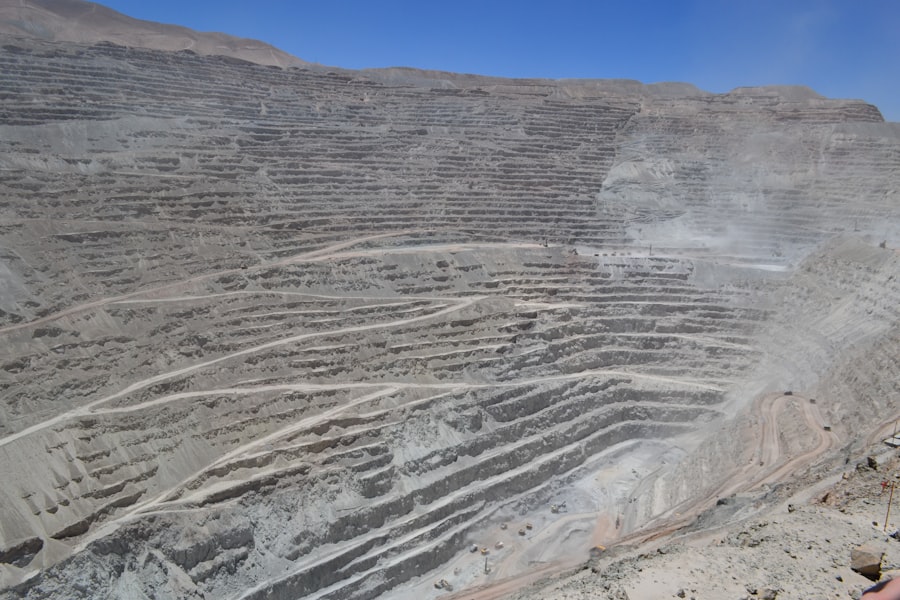
During the Spanish colonial period, significant investment was made in developing the phosphate industry. The Bu Craa mine was the flagship project, involving the construction of a vast open-pit mine, processing facilities, and a unique conveyor belt system designed to transport phosphate rock to a coastal loading port. This was the longest single-belt conveyor in the world at the time, a testament to the scale of the Spanish ambition to capitalize on the region’s mineral wealth. This development was not solely driven by altruistic motives; it was a clear economic strategy to leverage natural resources for the benefit of the colonizing power.
The Genesis of the Conflict
The decolonization process in the mid-1970s proved to be the catalyst for the current conflict. As Spain prepared to withdraw, a tripartite agreement was struck between Spain, Morocco, and Mauritania, dividing the territory. This agreement was met with fierce opposition from the Polisario Front, which had emerged as the nationalist movement seeking independence for the Western Sahara. The subsequent Moroccan annexation and the ensuing war fundamentally altered the landscape of resource exploitation.
Morocco’s Post-Annexation Control and Mining Operations
Following Morocco’s de facto annexation of the Western Sahara in 1975, it assumed control over the territory’s resources, including its phosphate mines. This control has been a cornerstone of Moroccan economic policy concerning the region and a major point of contention with the Polisario Front and its supporters.
Governance and Administration of Mines
Morocco, through its state-owned phosphate company, OCP Group (Office Chérifien des Phosphates), has been the primary operator of the phosphate mines in the Western Sahara. The company has invested in maintaining and expanding operations, particularly at the Bu Craa site, which was partially restarted after the conflict began. Morocco views these operations as legitimate economic activities within its sovereign territory, a claim that is internationally disputed. The administration of these mining activities is integrated into Morocco’s national economic planning, with revenues reportedly contributing to the Moroccan state budget.
OCP Group’s Role and Investments
OCP Group is a global leader in phosphate production and marketing. Its operations in the Western Sahara are a significant component of its overall production capacity. The company has undertaken modernization efforts, including excavating previously unexploited phosphate seams and investing in infrastructure to support ongoing extraction and processing. Despite the contested political status of the territory, OCP Group has continued to operate and expand its presence, presenting a fait accompli scenario in terms of resource utilization.
The Polisario Front’s Stance and International Legal Perspectives
The Polisario Front, representing the self-proclaimed Sahrawi Arab Democratic Republic (SADR), strongly opposes any exploitation of Western Saharan resources by Morocco. Their position is rooted in the principle of self-determination and is supported by significant international legal interpretations.
The Principle of Self-Determination and Natural Resources
A core tenet of international law concerning decolonization is the right of an indigenous people to freely determine their political status and pursue their economic, social, and cultural development. The Polisario Front argues that the exploitation of Western Saharan phosphates by Morocco, without the consent of the Sahrawi people, constitutes a violation of this fundamental principle and is akin to pillaging natural resources. They maintain that any benefit derived from these resources should accrue to the future independent Sahrawi state.
United Nations’ Position and Legal Opinions
The United Nations has consistently recognized the Western Sahara as a non-self-governing territory. Numerous UN resolutions, as well as advisory opinions from the International Court of Justice, have affirmed the principle that the natural resources of such territories should not be exploited in a manner that is detrimental to the interests of their peoples. While the UN does not explicitly prohibit all commercial activity, it emphasizes that any exploitation must be conducted in consultation with, and for the benefit of, the indigenous population. Morocco’s unilateral exploitation is therefore seen by many as contravening these international legal norms.
The Role of Third-Party Companies
Beyond OCP Group, various international companies have been involved in the extraction, processing, or trading of phosphates originating from the Western Sahara. These partnerships, whether direct or indirect, have drawn criticism from the Polisario Front and human rights organizations. The involvement of foreign entities is often framed as legitimizing Morocco’s occupation and its resource management policies in the eyes of some international actors, further complicating the legal and ethical dimensions of the conflict.
The ongoing conflict in Western Sahara has significant implications for the region’s phosphate mining industry, which is a critical economic resource. As various stakeholders vie for control over these valuable deposits, the situation remains tense and complex. For a deeper understanding of the geopolitical dynamics at play, you can explore a related article that discusses the intersection of natural resources and conflict in this area. This insightful piece highlights the challenges faced by local communities and the international community’s response. To read more about this topic, visit this article.
Economic Implications and International Scrutiny
| Year | Phosphate Production (in million metric tons) | Phosphate Export (in million metric tons) |
|---|---|---|
| 2015 | 2.5 | 2.3 |
| 2016 | 2.7 | 2.5 |
| 2017 | 2.9 | 2.7 |
| 2018 | 3.1 | 2.9 |
| 2019 | 3.3 | 3.1 |
The phosphate mining operations in the Western Sahara have significant economic implications for Morocco, but they also attract considerable international scrutiny due to the disputed status of the territory and the ethical considerations surrounding resource exploitation.
Economic Benefits for Morocco
The phosphate sector is a vital component of the Moroccan economy. Revenues generated from phosphate exports, including those from the Western Sahara, contribute substantially to the national budget, foreign exchange earnings, and employment. Morocco views the development of these resources as essential for its economic growth and infrastructure development, both within its recognized borders and in the annexed territory. The perceived economic benefits serve as a powerful incentive for Morocco to maintain its control and continue its resource management policies.
Protests, Boycotts, and Transparency Concerns
The Polisario Front and various international solidarity movements have actively campaigned against the exploitation of Western Saharan phosphates. These campaigns have involved protests, lobbying efforts, and calls for boycotts of products derived from the region’s minerals. Some companies have faced reputational damage or legal challenges for their involvement with Moroccan phosphate operations in the Western Sahara. Transparency regarding the revenue generated from these operations and how it is allocated remains a persistent concern for international observers and human rights advocates.
Sustainable Development and Future Prospects
The long-term sustainability of phosphate mining, regardless of territorial claims, is also a consideration. Ensuring responsible extraction practices, environmental protection, and equitable distribution of benefits are crucial for any resource management regime. For the Western Sahara, the question of who will benefit from these resources and how they will be managed in the event of a resolution to the conflict remains a significant point of contention and a challenge for future sustainable development. The current situation, where one party unilaterally controls and exploits a vital resource, presents inherent obstacles to achieving equitable and lasting solutions.
FAQs
What is the Western Sahara conflict?
The Western Sahara conflict is a long-standing dispute between the indigenous Sahrawi people and the Kingdom of Morocco over the sovereignty of the Western Sahara region.
What is phosphate mining in the Western Sahara?
Phosphate mining in the Western Sahara involves the extraction of phosphate rock, a key ingredient in fertilizer production, from the region’s rich phosphate reserves.
Who controls the phosphate mining in the Western Sahara?
Morocco currently controls the majority of the phosphate mining in the Western Sahara, despite ongoing disputes over the region’s sovereignty.
What are the concerns surrounding phosphate mining in the Western Sahara?
There are concerns about the exploitation of the Western Sahara’s natural resources without the consent of the indigenous Sahrawi people, as well as the potential violation of international law and human rights.
What is the international community’s stance on phosphate mining in the Western Sahara?
The international community is divided on the issue, with some countries and organizations calling for the suspension of phosphate mining in the Western Sahara until a resolution to the conflict is reached, while others continue to engage in trade with Morocco for the region’s phosphate resources.