
The teddy bear originated in the early 20th century through parallel developments in the United States and Germany. The American version traces its creation to President Theodore Roosevelt’s 1902 hunting expedition in Mississippi, where he declined to shoot a captured bear cub. Political cartoonist Clifford Berryman illustrated this incident, inspiring Brooklyn candy shop owners Morris and Rose Michtom to create a stuffed bear they called “Teddy’s Bear.” Simultaneously, German toy manufacturer Margarete Steiff began producing similar plush bears designed by her nephew Richard Steiff.
Commercial production of teddy bears expanded rapidly following their introduction. Manufacturers developed various designs, incorporating different fabrics, sizes, and construction techniques to meet growing consumer demand. The toys gained widespread acceptance across age groups, becoming standard items in toy stores and children’s bedrooms.
Their popularity extended beyond childhood, with adults adopting them as collectibles and comfort objects. The teddy bear’s cultural significance grew throughout the 20th century, establishing its role as a common gift for occasions including births, birthdays, holidays, and periods of illness or grief. Medical professionals and therapists began recognizing the psychological benefits of comfort objects, particularly for children experiencing stress or trauma.
This recognition contributed to the teddy bear’s integration into healthcare settings, educational environments, and therapeutic practices, cementing its status as more than a simple toy.
Key Takeaways
- Teddy bears have a long history as comforting objects that foster attachment and bonding from childhood.
- They play a significant role in emotional regulation and psychological development for both children and adults.
- Teddy bears provide comfort, security, and support during times of trauma, grief, and loss.
- Their presence can positively influence self-esteem, confidence, and overall mental health.
- Teddy bears are effectively used as therapeutic tools in counseling and therapy settings.
The Attachment and Bonding Process with Teddy Bears
When you receive a teddy bear, it often marks the beginning of a unique relationship. The attachment you form with this soft companion can be profound. As you cuddle and play with your teddy bear, you may find yourself projecting emotions onto it, treating it as a confidant or friend.
This bonding process is not merely a whimsical act; it serves as a crucial part of emotional development. You may find solace in sharing your thoughts and feelings with your teddy bear, creating a safe space where you can express yourself without fear of judgment. This attachment can also foster a sense of security.
As you navigate the complexities of childhood, your teddy bear becomes a constant presence in your life. It is there during moments of joy and sadness alike, providing comfort during times of uncertainty. This bond can help you develop social skills and emotional intelligence as you learn to navigate relationships through the lens of your connection with your teddy bear.
The act of caring for your stuffed friend can mirror real-life relationships, teaching you empathy and nurturing instincts that will serve you well into adulthood.
The Role of Teddy Bears in Childhood Development

Teddy bears play an essential role in childhood development by serving as tools for imaginative play and emotional exploration. When you engage in pretend play with your teddy bear, you are not just having fun; you are also developing critical cognitive skills.
This imaginative play fosters creativity and problem-solving abilities that are vital for your growth. Moreover, teddy bears can act as transitional objects that help ease the anxiety associated with separation from caregivers. When you face new experiences—such as starting school or spending the night away from home—having your teddy bear by your side can provide a sense of continuity and comfort.
This reliance on your stuffed companion can help you build resilience and adaptability as you encounter new challenges in life. In this way, teddy bears become more than just toys; they are integral to your emotional and psychological development.
The Psychological Benefits of Teddy Bears for Adults
While teddy bears are often associated with childhood, their psychological benefits extend well into adulthood. As an adult, you may find that having a teddy bear can evoke feelings of nostalgia and warmth, reminding you of simpler times when life was less complicated. This connection can serve as a source of comfort during stressful periods or moments of loneliness.
The tactile experience of hugging a soft teddy bear can trigger the release of oxytocin, often referred to as the “love hormone,” which promotes feelings of happiness and reduces stress. Additionally, teddy bears can serve as symbols of emotional support during challenging times. You might find solace in having a teddy bear nearby when facing difficult situations such as job loss or relationship issues.
The presence of this comforting object can provide a sense of stability and reassurance, allowing you to process your emotions more effectively. In this way, teddy bears become not just relics of childhood but valuable companions that help you navigate the complexities of adult life.
The Comfort and Security Provided by Teddy Bears
| Metric | Description | Typical Findings | Psychological Implications |
|---|---|---|---|
| Attachment Security | Degree to which a child feels secure when holding a teddy bear | High attachment scores in 70% of children aged 2-6 | Provides emotional security and reduces anxiety |
| Stress Reduction | Measured decrease in cortisol levels after interaction | Average 15-20% cortisol reduction post 10 minutes of cuddling | Helps regulate stress and promotes calmness |
| Sleep Quality Improvement | Impact on sleep onset latency and duration | Children with teddy bears fall asleep 10 minutes faster on average | Enhances feelings of safety, improving sleep patterns |
| Emotional Expression | Frequency of using teddy bears to express feelings | Reported in 60% of children as a tool for emotional communication | Facilitates emotional development and coping skills |
| Transition Object Usage | Use of teddy bears during separation from caregivers | Used by 80% of toddlers during daycare or parental absence | Supports independence and eases separation anxiety |
The comfort and security provided by teddy bears are undeniable. When you hold a teddy bear close, it can create an immediate sense of safety and warmth. This feeling is particularly important during times of stress or anxiety when the world feels overwhelming.
The act of hugging or cuddling your teddy bear can trigger physiological responses that promote relaxation, such as lowering heart rates and reducing cortisol levels. This simple act can be incredibly grounding, allowing you to regain a sense of control amidst chaos. Moreover, the familiarity of your teddy bear can serve as an anchor during turbulent times.
Whether you’re facing personal challenges or external pressures, having a comforting object nearby can help you feel more secure in your environment. This sense of security is not just emotional; it can also have tangible effects on your mental well-being. By providing a reliable source of comfort, teddy bears can help mitigate feelings of anxiety and promote overall emotional stability.
The Influence of Teddy Bears on Emotional Regulation
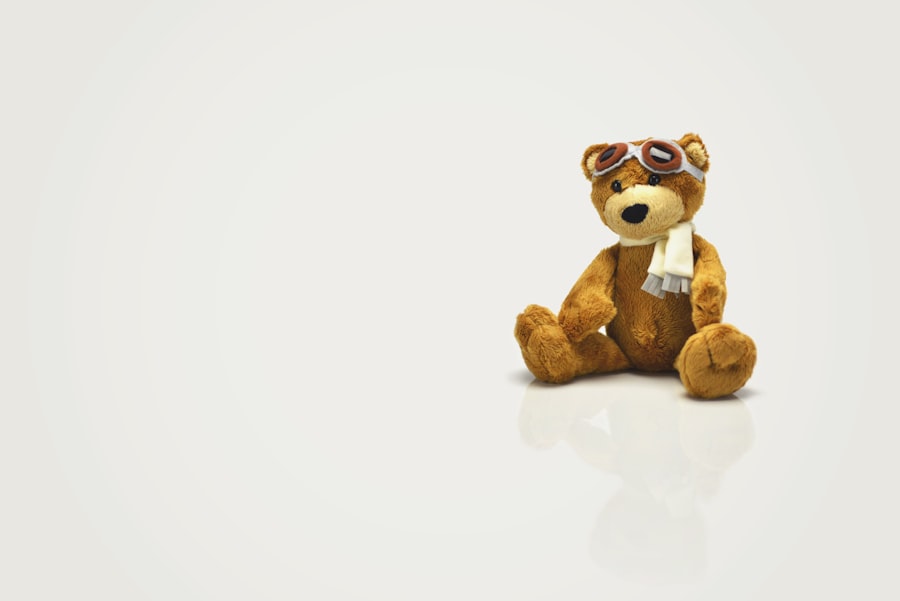
Teddy bears can play a significant role in helping you develop emotional regulation skills. As you interact with your stuffed companion, you may find yourself processing complex emotions in a safe space. For instance, when you’re feeling sad or angry, talking to your teddy bear can provide an outlet for those feelings without fear of judgment or misunderstanding.
This practice allows you to articulate your emotions more clearly and develop healthier coping mechanisms. Furthermore, the presence of a teddy bear can serve as a reminder to practice self-soothing techniques. When you’re feeling overwhelmed, reaching for your teddy bear can prompt you to take deep breaths or engage in calming activities like reading or listening to music.
Over time, this association between your teddy bear and emotional regulation can help you build resilience and improve your ability to manage stressors in everyday life.
The Symbolism of Teddy Bears in Coping with Trauma
Teddy bears often symbolize comfort and safety, making them powerful tools for coping with trauma. When faced with distressing experiences—such as loss or abuse—having a teddy bear can provide a tangible source of support that helps you navigate the healing process. The act of holding or talking to your teddy bear can create a sense of connection that fosters emotional healing during difficult times.
In therapeutic settings, teddy bears are sometimes used as transitional objects for individuals dealing with trauma. They serve as safe companions that allow individuals to express their feelings without fear or shame. By engaging with their teddy bears, individuals may find it easier to confront painful memories or emotions associated with their trauma.
This symbolic relationship can facilitate healing by providing a sense of safety while exploring difficult topics.
The Connection Between Teddy Bears and Mental Health
The connection between teddy bears and mental health is profound and multifaceted. For many individuals, these plush companions serve as sources of comfort during times of distress or anxiety. Research has shown that having comforting objects nearby can significantly reduce feelings of loneliness and depression.
When you hold onto a teddy bear, it can evoke feelings of warmth and security that contribute positively to your mental well-being.
As you nurture this object—whether by keeping it clean or creating stories around it—you may find that these small acts contribute positively to your mental health.
In this way, teddy bears become more than just toys; they are integral components in maintaining emotional balance and promoting mental wellness.
The Attachment to Teddy Bears in Grief and Loss
Grief is an incredibly complex emotion that often requires time and support to navigate effectively. During periods of loss—whether it be the death of a loved one or the end of a significant relationship—teddy bears can provide much-needed comfort and companionship. You may find yourself turning to your teddy bear for solace during moments when grief feels overwhelming.
The familiar softness and presence of your stuffed friend can create an environment where you feel safe enough to express your sorrow. In some cases, individuals may even create rituals involving their teddy bears to honor their grief. This could include talking to the bear about their feelings or including it in memorial activities.
These practices allow for an external expression of internal emotions, making it easier to process grief over time. By fostering this connection with your teddy bear during difficult moments, you may find that it becomes an essential part of your healing journey.
The Impact of Teddy Bears on Self-esteem and Confidence
Teddy bears can have a surprisingly positive impact on self-esteem and confidence levels throughout various stages of life. As children, when you receive praise for taking care of your teddy bear or engaging in imaginative play with it, those moments contribute to building self-worth. You learn that nurturing relationships—whether with people or objects—can lead to positive reinforcement and validation.
As adults, the presence of a teddy bear can continue to serve as a reminder of self-acceptance and love. When faced with self-doubt or insecurity, holding onto your teddy bear may evoke feelings of warmth that remind you to be kind to yourself. This simple act can help reinforce positive self-talk and encourage confidence in navigating life’s challenges.
The Therapeutic Use of Teddy Bears in Counseling and Therapy
In therapeutic settings, teddy bears are often utilized as tools for facilitating communication and emotional expression. For children who may struggle to articulate their feelings verbally, having a teddy bear present allows them to project their emotions onto the toy instead. This technique creates an opportunity for therapists to gain insight into the child’s inner world while providing a safe space for exploration.
For adults seeking therapy, incorporating a teddy bear into sessions can also be beneficial. It serves as a comforting presence that encourages vulnerability and openness during discussions about difficult topics such as trauma or anxiety. By using teddy bears in therapy sessions, mental health professionals create an environment where clients feel secure enough to confront their emotions head-on.
In conclusion, the significance of teddy bears extends far beyond mere childhood nostalgia; they serve as vital companions throughout various stages of life. From fostering emotional development in children to providing comfort during times of grief for adults, these plush toys have proven their worth as essential tools for emotional well-being across generations. Whether you’re seeking solace during challenging times or simply looking for a reminder of love and security, your trusty teddy bear will always be there—ready to offer comfort when you need it most.
Teddy bears often serve as comfort objects for children, providing emotional support and a sense of security during times of stress or anxiety. This phenomenon is explored in greater detail in the article found at Hey Did You Know This, which discusses the psychological benefits of attachment to comfort objects and how they can aid in emotional development.
WATCH THIS 🧸They Lied About the Teddy Bear’s Origin…Here’s The Truth!
FAQs
What is a teddy bear comfort object?
A teddy bear comfort object is a soft, plush toy that provides emotional support and a sense of security, especially to children. It is often used as a transitional object to help individuals cope with stress, anxiety, or unfamiliar situations.
Why do children form attachments to teddy bears?
Children form attachments to teddy bears because these objects offer comfort, familiarity, and a sense of safety. The soft texture and consistent presence of a teddy bear can help soothe emotional distress and provide reassurance during times of change or uncertainty.
How does a teddy bear function psychologically as a comfort object?
Psychologically, a teddy bear serves as a transitional object that bridges the gap between dependence on caregivers and independent emotional regulation. It helps individuals manage feelings of anxiety by providing a tangible source of comfort and stability.
Are teddy bears only beneficial for children?
No, teddy bears and other comfort objects can be beneficial for people of all ages. Adults may also use comfort objects to reduce stress, manage anxiety, or evoke positive memories from childhood.
Can using a teddy bear comfort object impact emotional development?
Yes, using a teddy bear as a comfort object can support healthy emotional development by helping children learn to self-soothe and regulate their emotions. It can also foster a sense of security that promotes confidence and resilience.
Is it normal for adults to keep teddy bears for comfort?
Yes, it is normal for some adults to keep teddy bears or similar comfort objects. These items can provide emotional support, reduce feelings of loneliness, and serve as reminders of positive experiences or relationships.
How can parents encourage healthy use of a teddy bear comfort object?
Parents can encourage healthy use by allowing children to use the teddy bear as a source of comfort while also promoting independence. It is important to balance reliance on the comfort object with opportunities for children to develop other coping skills.
When should a child stop using a teddy bear as a comfort object?
There is no specific age when a child should stop using a teddy bear. Many children naturally outgrow the need for a comfort object as they develop other emotional regulation strategies. Parents can support this transition by gently encouraging independence when appropriate.