You might think of time as a constant, an unyielding river flowing at the same pace for everyone. For most of human history, this was a reasonable assumption. Sunrise to sunset, the rhythmic beat of manual labor, the familiar cycles of nature—these dictated the rhythm of your days. But you are living in a world indelibly shaped by the Industrial Revolution, a period that didn’t just invent new machines; it fundamentally altered your perception and management of time itself. This era, beginning roughly in the late 18th century and stretching through much of the 19th, was a profound restructuring of society, economy, and indeed, your very consciousness, all centered around a relentless transformation of time.
Before the roar of steam engines and the clang of factory bells, your relationship with time was far more fluid and localized. The sun was your clock, the seasons your calendar. Work was often dictated by immediate needs and the natural world, not by an external schedule imposed by an abstract authority.
Sunlight and Seasons: The Natural Rhythms of Life
You rose with the dawn because artificial light was scarce and expensive. Your tasks directly correlated with the available daylight hours. Planting, harvesting, building – all were governed by the arc of the sun. In winter, with shorter days, work often slowed, or shifted to indoor crafts. There was an inherent adaptability to this timekeeping; if a storm delayed a journey, you adjusted. If the harvest was particularly abundant, you might work longer, but the pace was largely set by the environment.
Task-Oriented Work vs. Time-Bound Labor
Your work wasn’t typically measured in minutes and hours. Instead, you focused on completing a task. A farmer needed to plow a field, a weaver to finish a bolt of cloth, a blacksmith to forge a set of tools. The time it took was secondary to the successful completion of the job. There was a certain autonomy in this, an ability to set your own pace within the broader constraints of your agrarian or artisanal life.
Localized Clocks and the Absence of Synchronization
While clocks existed, they were often expensive, ornate, and found only in wealthy households or public buildings. Even then, their accuracy varied. There was no widespread need for precise, synchronized time. Your village or town operated on its own rhythm. If you needed to meet someone, you agreed on a time relative to a known landmark or event, like “after church” or “when the town bell rings noon.” This lack of universal synchronization fostered a sense of localized time, distinct from any grand, overarching temporal order.
The Industrial Revolution brought about significant changes in various aspects of society, including the way time was perceived and measured. As factories began to operate on strict schedules, the need for a standardized time system became crucial. This shift not only affected work hours but also influenced daily life and social interactions. For a deeper understanding of how these changes unfolded, you can read the related article on this topic at this link.
The Dawn of the Machine Age: Time Measured in Cycles
The Industrial Revolution introduced a fundamentally different mode of measuring and valuing time. The advent of machines, particularly those powered by steam, necessitated a new precision. Time was no longer a loose concept dictated by nature; it became a quantifiable commodity, broken down into ever smaller units.
The Steam Engine: A New Heartbeat for Production
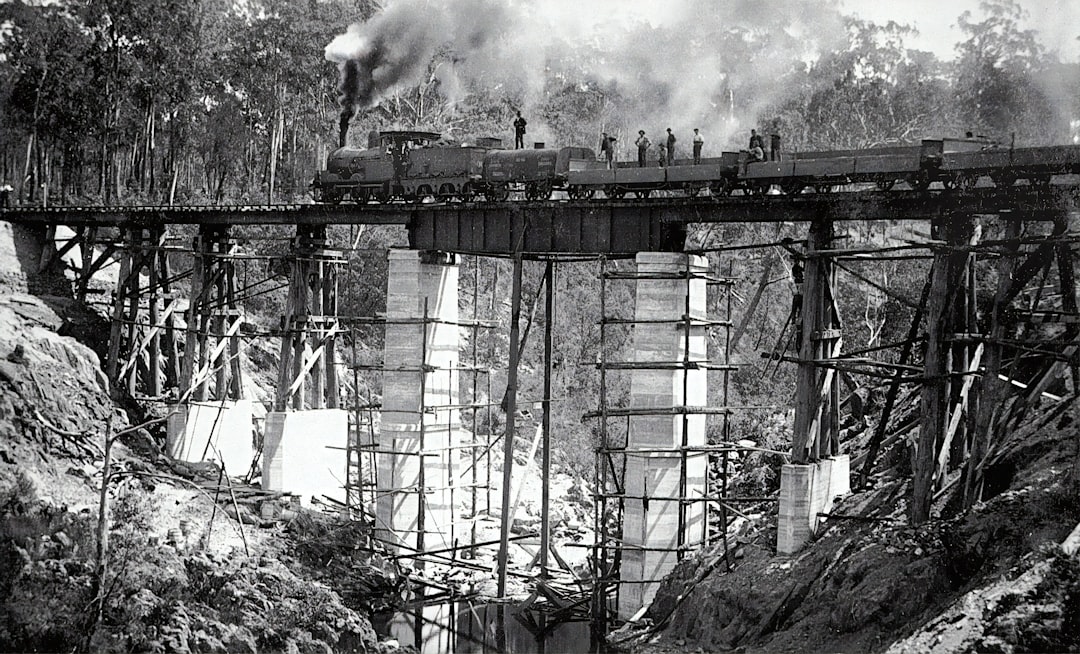
The steam engine was the iconic symbol of this new era. Its relentless, rhythmic operation provided a consistent power source that dwarfed human or animal strength. This consistency demanded a new approach to work. No longer could you simply finish a task when you felt it complete. You had to keep pace with the machine.
Factory Bells and Whistles: The New Temporal Dictators
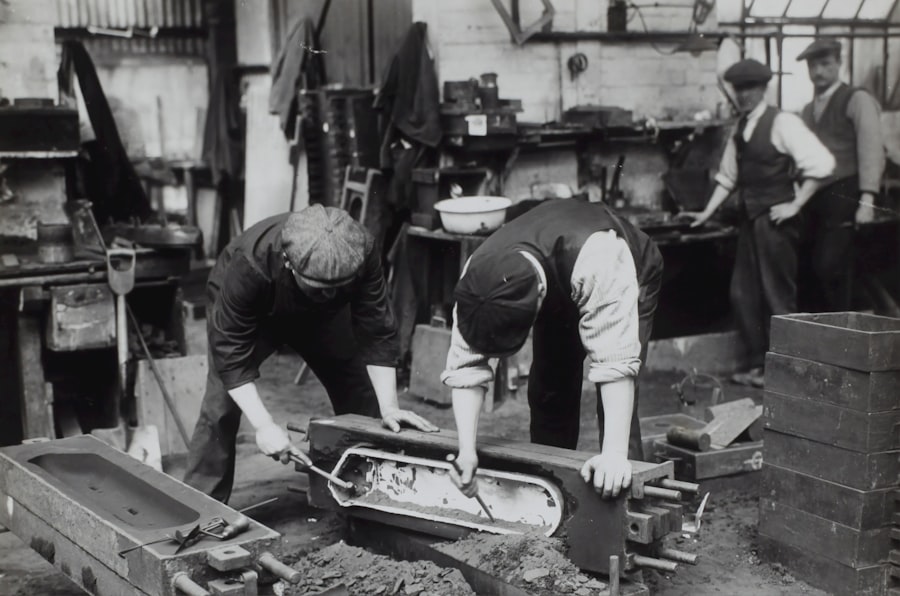
The introduction of factories meant that work began and ended not with the sun, but with the ringing of bells or the blowing of whistles. These were the audible manifestations of a new temporal regime. You were summoned to work, and you were dismissed. The intervals were fixed, and deviation was met with penalties. This was a fundamental shift from self-paced work to externally dictated schedules.
The Division of Labor: Breaking Down Tasks and Time
To maximize efficiency, industrial production often involved breaking down complex processes into smaller, repetitive tasks. This division of labor meant that each worker performed a specialized operation over and over. The time spent on each individual task became a crucial metric for productivity. You were expected to perform your part of the process as quickly and consistently as possible, contributing your allotted minutes to the larger production cycle.
The Clock as a Tool of Control and Efficiency
In the factory, the clock was no longer a passive indicator of the day’s passage; it became an active instrument of control. Every minute spent away from your designated task was a loss of productivity, and therefore, a loss of profit for your employer. This incentivized a new discipline, a constant awareness of the ticking second hand.
The Disciplinarian Role of the Foreman
Foremen and supervisors were tasked with ensuring that workers adhered to the punctuality demands. They were the enforcers of the new temporal order, monitoring attendance, ensuring prompt restarts after breaks, and discouraging any perceived idleness. You learned to watch the clock, not just to know when your shift would end, but to avoid censure.
Lost Time: A Financial Liability
For factory owners, “lost time” – periods when machines were idle or workers were not actively engaged – represented a direct financial loss. This fueled a drive for ever-greater efficiency, demanding that every moment of the workday be utilized for production. This mindset trickled down, subtly influencing your own perception of how your time was best spent.
The Railroads: Synchronizing Nations, Erasing Distances

The Industrial Revolution’s impact on time wasn’t confined to the factory floor. The development of the railway system represented another colossal leap in temporal transformation, demanding and enabling unprecedented levels of synchronization.
A Nation in Motion, But Which Time?
Before the railways, each town and city often operated on its own local time. With multiple local times across vast distances, coordinating train schedules became an impossible nightmare. Imagine trying to run a railway network where every town had a different “noon.” A train departing London at 2 PM might arrive in Manchester at a time calculated by Manchester’s clock, which could be significantly different from London’s.
The Chaos of Local Times
Travellers faced constant confusion. They had to constantly reset their watches, and errors in timetables led to missed connections and frustrating delays. This temporal discrepancy was not just an inconvenience; it hindered the very progress that the railways were supposed to facilitate.
The Birth of Standard Time Zones
The sheer logistical necessity of the railway system forced a solution. Scientists, engineers, and railway magnates grappled with the problem. The solution that emerged was the creation of standardized time zones. This was a radical idea: to impose a uniform temporal framework across vast geographical areas.
Sir Sandford Fleming and the Global Clock
The Canadian engineer Sir Sandford Fleming is often credited with being a key advocate for and architect of the time zone system. His tireless efforts in proposing and championing a world divided into 24 equal time zones, each differing by one hour, laid the groundwork for the modern system we take for granted today.
The Resistance to Universal Time
It wasn’t an easy transition. People were accustomed to their local time. The idea of the sun not being directly overhead when it was “noon” in their town felt unnatural, even disorienting. There was a vested interest in maintaining local autonomy, and time was a fundamental part of that identity. Arguments arose about which meridians should define the zones and the potential economic implications.
The Railway’s Temporal Dominion
Once implemented, the standardized time zones profoundly altered your experience of travel and communication. You could now plan journeys with a degree of certainty. The railway timetable became your new temporal guide, dictating when you needed to be at the station, when you would depart, and when you could expect to arrive. The world began to shrink, not just geographically, but temporally.
The Social and Psychological Reordering of Time
The Industrial Revolution’s transformation of time was not merely technological or logistical; it had a deep social and psychological impact. The way you experienced and valued your time shifted in profound ways.
Rise of the Middle Class and the Workday
As industries grew, so did the need for managers, clerks, and administrative staff. This burgeoning middle class was also subject to the clock. Their work, while not as physically demanding as manual labor, was equally bound by scheduled hours. The concept of a “9 to 5” workday, while not explicitly defined as such immediately, began to take shape. This created a division between the “working day” and “personal time.”
Leisure Time: A New, Delineated Concept
For those who could afford it, the increased productivity of the industrial era eventually led to the concept of “leisure time” being more formally recognized and differentiated from work time. However, this leisure was often structured and commodified, with public parks, organized sports, and entertainment venues all operating on schedules. Your free time became something to be planned and managed, rather than an amorphous space.
The “Time is Money” Mentality
The efficiency-driven ethos of the Industrial Revolution seeped into everyday life. The phrase “time is money” became a ubiquitous maxim, reflecting the capitalist logic that you could earn money by working, and therefore, any time spent idly was a missed opportunity for financial gain. This fostered a sense of urgency and a drive to maximize productivity in all aspects of your life.
The Pressure to Be Productive
This constant pressure to be productive could lead to anxiety and a feeling of never having enough time. The rhythmic ticking of the clock, once a neutral signifier, could become a source of stress, urging you to always be doing something “useful.”
The Home as a Temporal Contrast
For many, the home offered a refuge from the rigid temporal discipline of the factory or office. However, even the home began to adopt some of the industrial era’s temporal characteristics. The introduction of new household technologies, like gas lighting and later electricity, extended the usable hours of the domestic sphere. The family schedule, with mealtimes and bedtime routines, became more formalized, mirroring the order found in the public sphere.
The Industrial Revolution not only transformed economies and societies but also significantly altered the way people perceived and measured time. With the advent of factories and the need for synchronized work schedules, the concept of time became more rigid and structured than ever before. This shift is explored in detail in a related article that discusses how the rise of mechanized production led to standardized timekeeping practices. For more insights on this fascinating topic, you can read the article here.
The Legacy: Your Time in the 21st Century
| Aspect | Impact |
|---|---|
| Work hours | Shifted from agrarian-based sunup to sundown to standardized 8-hour workdays |
| Timekeeping | Introduction of precise clocks and watches for scheduling and coordination |
| Transportation | Improved speed and efficiency of travel with the invention of steam engines and railways |
| Communication | Development of telegraph and postal systems for faster exchange of information |
| Social structure | Shift from rural, agrarian communities to urban, industrialized cities with different social dynamics |
The temporal transformations initiated by the Industrial Revolution are not relics of the past; they are the very foundation of your modern existence. You live in a world that continues to refine and intensify the principles established during that transformative period.
Hyper-Connectivity and the Blurring of Boundaries
The digital age has accelerated and complicated the Industrial Revolution’s impact on time. Smartphones, constant internet access, and the 24/7 news cycle mean that the boundaries between work and personal life, and between different time zones, are increasingly blurred. You are perpetually connected, potentially available, and constantly bombarded with information that demands your temporal attention.
The Illusion of Always-On Availability
The expectation of instant responses and immediate gratification has fostered a culture of “always-on” availability. You are expected to be reachable, to reply to emails outside of traditional work hours, and to be mentally present even when you are physically elsewhere. This can further erode the clear divisions of time that the Industrial Revolution, in its own way, sought to create.
The Quantified Self and the Pursuit of Optimization
Modern technologies allow for an unprecedented level of tracking and quantifying your activities, including how you spend your time. Apps monitor your sleep cycles, your exercise routines, your browsing habits, and even your focus levels. This pursuit of self-optimization, while potentially beneficial, reflects the enduring Industrial Revolution obsession with efficiency and maximizing every moment, albeit now applied to personal well-being as much as to economic output.
The Eternal Challenge of “Having Enough Time”
Despite technological advancements that theoretically save you time, the feeling of being time-poor remains prevalent. The constant demands, the endless stream of information, and the ingrained cultural imperative to be productive create a perpetual challenge of “having enough time.” You are still, in many ways, a descendant of the factory worker, albeit one who now often carries their clock and their work in their pocket.
The Industrial Revolution, you see, did not just provide you with faster machines and greater production. It fundamentally rewired your relationship with time itself. The rhythmic pulse of your days, the way you schedule your life, and even your deepest anxieties about time are all echoes of a past when the world learned to measure, control, and ultimately, to be controlled by the relentless march of the clock.
FAQs
1. What was the impact of the industrial revolution on timekeeping?
The industrial revolution led to the standardization of timekeeping through the introduction of clocks and the development of accurate timepieces. This allowed for more precise scheduling and coordination of activities, leading to increased productivity and efficiency.
2. How did the industrial revolution affect working hours?
The industrial revolution brought about significant changes in working hours, with the introduction of shift work and the concept of working to a set schedule. This shift from agrarian-based work to factory-based work led to longer and more structured working hours for many individuals.
3. What role did the industrial revolution play in the development of time zones?
The industrial revolution, with its advancements in transportation and communication, necessitated the need for standardized time across regions. This led to the development of time zones, which were crucial for coordinating activities and schedules on a national and global scale.
4. How did the industrial revolution impact daily life and time management?
The industrial revolution brought about a shift in daily life, with the introduction of more structured and regimented schedules. This led to changes in time management practices, as individuals and societies adapted to the new demands of industrialized work and production.
5. What technological advancements during the industrial revolution influenced timekeeping?
During the industrial revolution, technological advancements such as the invention of the steam engine, the telegraph, and the development of more accurate clocks and watches greatly influenced timekeeping. These innovations played a crucial role in shaping modern timekeeping practices and standards.