
Following the U.S.-led invasion of Iraq in 2003, the search for former Iraqi president Saddam Hussein became a major military and intelligence operation. The invasion aimed to remove his regime from power, after which locating Saddam became a priority for coalition forces. Saddam had governed Iraq for approximately 23 years, and his capture held significant symbolic importance as it would mark the definitive end of his rule.
The search proved challenging due to several factors. Coalition forces employed various tracking methods and strategies to locate Saddam across Iraqi territory. The country’s complex geography, combined with support from Saddam’s remaining loyalists, complicated the operation.
Additionally, uncertainty about his location and the theoretical possibility of his regrouping presented ongoing concerns for coalition leadership. Over the following months, coalition forces intensified their efforts to apprehend Saddam. The operation served a dual purpose: locating a fugitive leader and establishing stability in a nation destabilized by military conflict.
Despite the operational difficulties, coalition forces maintained their commitment to capturing Saddam and bringing him into custody. These sustained efforts eventually resulted in his apprehension in December 2003.
Key Takeaways
- Extensive intelligence and surveillance efforts were crucial in locating Saddam Hussein.
- Collaboration with local informants and coordination with military forces enabled the successful operation.
- Advanced technology played a significant role in tracking and capturing Saddam Hussein.
- Operation Red Dawn marked the pivotal moment of Saddam’s capture from his underground hideout.
- The capture led to significant political reactions, an international response, and ultimately Saddam’s trial and sentencing.
Intelligence and Surveillance Operations
Intelligence and surveillance operations played a crucial role in the quest to locate Saddam Hussein. The coalition forces relied heavily on a combination of human intelligence (HUMINT) and signals intelligence (SIGINT) to gather information about his possible whereabouts. Analysts worked tirelessly to sift through mountains of data, piecing together fragments of information that could lead them closer to their target.
The challenge was immense; Saddam had a well-established network of loyalists who were committed to protecting him at all costs. In addition to traditional intelligence-gathering methods, coalition forces employed advanced surveillance techniques. Drones and reconnaissance aircraft flew over suspected hideouts, capturing images and monitoring movements in real-time.
These high-tech tools provided invaluable insights into the activities of Saddam’s supporters and helped identify potential locations where he might be hiding. The combination of human intelligence and cutting-edge technology created a multifaceted approach that was essential in narrowing down the search area. You can learn more about the hunt for Saddam Hussein by watching this informative video hunt for saddam hussein.
Collaborating with Local Informants
The collaboration with local informants proved to be a pivotal aspect of the hunt for Saddam Hussein. Understanding the cultural and social dynamics of Iraq was essential for coalition forces, as they sought to gain the trust of local communities. Many Iraqis were hesitant to cooperate due to fear of retribution from Saddam’s loyalists, but others were motivated by a desire for change and stability in their country.
Coalition forces recognized that local informants could provide critical insights into Saddam’s movements and hideouts. Efforts were made to establish relationships with community leaders and ordinary citizens alike. These interactions often required patience and sensitivity, as many Iraqis had suffered under Saddam’s regime.
Over time, some individuals began to share information, leading coalition forces closer to their target. The intelligence gathered from these local sources proved invaluable, as it often contained details that were not accessible through traditional intelligence channels. This grassroots approach highlighted the importance of community engagement in military operations.
Coordinating with Military and Special Forces
Coordinating with military and special forces was another key element in the hunt for Saddam Hussein. The coalition forces recognized that a multi-faceted approach was necessary to increase their chances of success. Special operations units were deployed to conduct targeted missions based on actionable intelligence received from various sources.
These elite teams were trained to operate in high-risk environments and were equipped with advanced weaponry and technology. The collaboration between different branches of the military allowed for a more comprehensive strategy.
This seamless coordination was essential in executing operations that aimed to capture or eliminate high-value targets associated with Saddam’s regime. The synergy between conventional forces and special operations units exemplified the adaptability required in modern warfare.
The Role of Technology in the Search
| Metric | Details |
|---|---|
| Date Found | December 13, 2003 |
| Location | Underground “spider hole” near Tikrit, Iraq |
| Duration in Hiding | Approximately 8 months after the fall of Baghdad |
| Operation Name | Operation Red Dawn |
| US Forces Involved | Approximately 600 soldiers from the 4th Infantry Division and Special Forces |
| Method of Discovery | Intelligence gathering and tip-offs from local informants |
| Condition at Capture | Wearing traditional clothing, no weapons, surrendered peacefully |
| Significance | Marked the end of major combat operations against Saddam Hussein’s regime |
Technology played an indispensable role in the search for Saddam Hussein, revolutionizing how military operations were conducted. The use of satellite imagery allowed coalition forces to monitor vast areas of Iraq, identifying potential hideouts and movement patterns associated with Saddam’s loyalists. This technological advantage provided a level of situational awareness that was previously unattainable, enabling commanders to make informed decisions based on real-time data.
Moreover, advancements in communication technology facilitated better coordination among various military units involved in the search. Secure communication channels allowed for rapid dissemination of intelligence, ensuring that all units were operating with the most current information available. The integration of technology into military strategy not only enhanced operational efficiency but also increased the likelihood of successfully locating Saddam Hussein before he could escape or evade capture.
The Capture: Operation Red Dawn
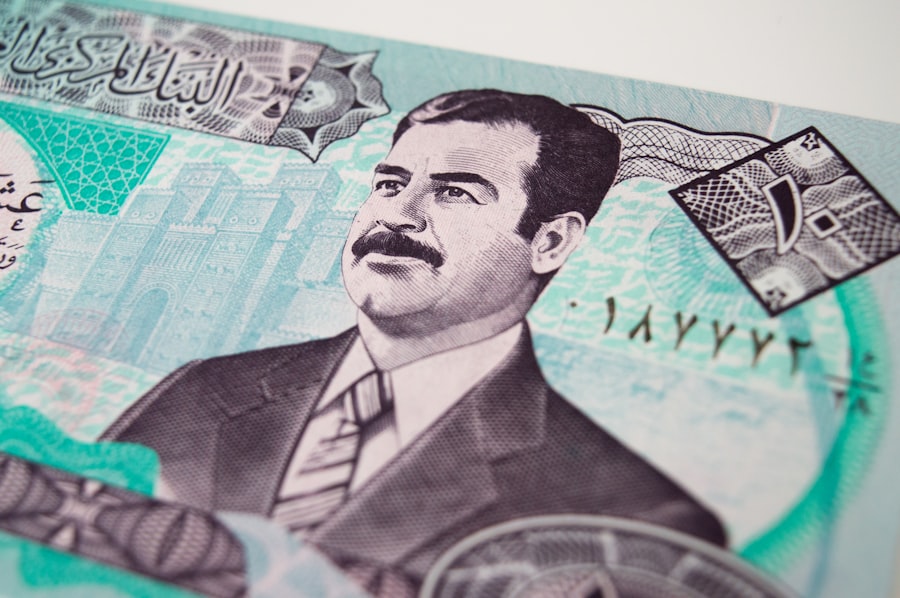
The culmination of months of relentless pursuit came on December 13, 2003, during Operation Red Dawn. This operation marked a significant turning point in the hunt for Saddam Hussein, as coalition forces finally located and captured him in a rural area near Tikrit, his hometown. The operation was meticulously planned, drawing on all available intelligence and resources gathered over the preceding months.
As special forces moved in on the target location, anticipation ran high; this was a moment that many had hoped for since the invasion began. Saddam was found hiding in a small underground hideout known as a “spider hole.” His capture was swift and relatively uneventful; he offered little resistance as he was taken into custody. The images of his disheveled appearance during his capture shocked many around the world, contrasting sharply with his former image as a powerful dictator.
Operation Red Dawn not only marked the end of Saddam’s reign but also served as a symbol of hope for many Iraqis who longed for a new beginning free from tyranny.
The Underground Hideout: Uncovering Saddam’s Location
The discovery of Saddam Hussein’s underground hideout was a testament to both his cunning and the effectiveness of coalition intelligence efforts. The hideout itself was cleverly concealed, demonstrating Saddam’s awareness of the risks he faced after being ousted from power. It was located near Tikrit, surrounded by farmland and rural terrain that provided natural cover from aerial surveillance.
This strategic choice allowed him to evade capture for months while relying on loyalists for support. Once coalition forces secured the area, they began to piece together how Saddam had managed to remain hidden for so long. Investigations revealed that he had access to a network of supporters who provided him with food, supplies, and information about ongoing military operations.
This underground infrastructure not only facilitated his survival but also highlighted the challenges faced by coalition forces in dismantling remnants of his regime. Understanding these dynamics became crucial for establishing long-term stability in Iraq following his capture.
The Reaction from the Iraqi People
The reaction from the Iraqi people following Saddam Hussein’s capture was mixed, reflecting the complex sentiments held by various segments of society. For many Iraqis who had suffered under his oppressive rule, his capture represented a long-awaited moment of justice and liberation. Celebrations erupted in some areas as people expressed their relief at the prospect of moving forward without fear of tyranny.
The hope for a new era filled with democracy and freedom resonated deeply among those who had endured years of violence and repression. However, there were also segments of the population that viewed his capture with skepticism or outright hostility. Loyalists who had supported Saddam remained defiant, believing that he was still their legitimate leader despite his downfall.
This division within Iraqi society underscored the challenges that lay ahead for coalition forces as they sought to rebuild a nation fractured by years of conflict. The varying reactions highlighted the need for careful navigation through Iraq’s complex political landscape in order to foster unity and reconciliation.
International Response to Saddam’s Capture
The international response to Saddam Hussein’s capture was swift and varied, reflecting global perspectives on his regime and its impact on Iraq and beyond. Many world leaders hailed his arrest as a significant victory for justice and democracy, viewing it as an opportunity for Iraq to begin healing from years of oppression. Countries that had supported the U.S.-led invasion expressed optimism about the potential for stability in Iraq following Saddam’s removal from power.
Conversely, some nations criticized the invasion itself and questioned whether capturing Saddam would truly lead to peace in Iraq. Skeptics argued that his removal would not resolve underlying issues within Iraqi society or address the broader geopolitical implications of foreign intervention in the region. This divergence in opinion highlighted ongoing debates about sovereignty, interventionism, and the complexities involved in nation-building efforts following regime change.
The Trial and Sentencing of Saddam Hussein
Following his capture, Saddam Hussein faced trial for crimes against humanity committed during his time in power.
The trial aimed not only to hold him accountable for his actions but also to provide a sense of closure for victims who had suffered under his regime.
It became a symbol of justice for many Iraqis who had long awaited accountability for atrocities committed during his rule. Ultimately, Saddam was found guilty on charges related to the massacre of 148 Shiite Muslims in Dujail in 1982 and was sentenced to death by hanging. His trial raised numerous questions about legal processes in post-conflict societies and sparked debates about fairness, due process, and international law.
While some viewed it as a necessary step toward justice, others criticized aspects of the trial as politically motivated or flawed. Regardless of differing opinions on its execution, Saddam’s trial marked a significant moment in Iraq’s journey toward confronting its past.
Legacy of Saddam Hussein’s Capture
The legacy of Saddam Hussein’s capture continues to shape discussions about Iraq’s future and its place in global politics. His arrest marked a pivotal moment in history that signified not only the end of an oppressive regime but also set off a chain reaction of events that would influence Iraq’s trajectory for years to come. While some celebrated his capture as a victory for democracy, others pointed out that it did not automatically translate into stability or peace within Iraq.
In retrospect, Saddam’s capture served as both a cautionary tale and a lesson learned regarding foreign intervention and nation-building efforts. It underscored the complexities involved in dismantling authoritarian regimes while attempting to foster democratic governance in their wake. As Iraq continues to navigate its post-Saddam reality, discussions surrounding his legacy remain relevant—serving as reminders of both the challenges faced by nations emerging from conflict and the enduring quest for justice and accountability in global affairs.
Saddam Hussein’s capture in December 2003 marked a significant turning point in the Iraq War, as it symbolized the end of his regime and the beginning of a new chapter for the country. For a deeper understanding of the events surrounding his discovery, you can read more in this related article: How Saddam Hussein Was Found. This article provides insights into the intelligence operations and the circumstances that led to his eventual arrest.
WATCH THIS! 🚨 How the US Hunted and Captured Saddam Hussein!
FAQs
Who was Saddam Hussein?
Saddam Hussein was the President of Iraq from 1979 until 2003. He was a leading member of the Ba’ath Party and ruled Iraq with an authoritarian regime.
When was Saddam Hussein found?
Saddam Hussein was found on December 13, 2003, after being in hiding for several months following the U.S.-led invasion of Iraq.
Where was Saddam Hussein found?
He was found hiding in a small underground bunker near a farmhouse in ad-Dawr, near Tikrit, Iraq.
How was Saddam Hussein discovered?
U.S. forces located Saddam Hussein through intelligence gathering, including tips from informants and surveillance operations, which led them to the hideout.
What was the operation to capture Saddam Hussein called?
The operation to capture Saddam Hussein was known as Operation Red Dawn.
What happened after Saddam Hussein was found?
After his capture, Saddam Hussein was taken into U.S. custody, interrogated, and later tried by the Iraqi Special Tribunal for crimes against humanity.
Why was Saddam Hussein in hiding?
Saddam Hussein went into hiding to avoid capture following the U.S.-led invasion of Iraq in 2003, which aimed to remove him from power.
Was Saddam Hussein armed when he was found?
No, Saddam Hussein was found unarmed in the underground hideout.
How long was Saddam Hussein in hiding before being found?
Saddam Hussein was in hiding for approximately eight months after the fall of Baghdad in April 2003 until his capture in December 2003.
What was the significance of finding Saddam Hussein?
Finding Saddam Hussein was significant because it marked the end of a major manhunt and was a symbolic moment in the Iraq War, representing the removal of Iraq’s former regime leader.