
You stand at a precipice, looking back at a landscape fundamentally altered. The hum of machinery, the rhythmic clang of hammers, the organized throng of workers – these elements have always defined industrial labor. Yet, prior to a specific, seemingly unassuming device, the organization of this human force was a far more nebulous affair. The introduction of the punch clock was not a sudden paradigm shift heralded by fanfare, but a quiet revolution, a gradual yet profound reordering of how work was managed, measured, and, consequently, experienced by the laborer.
Before the ubiquitous click and clack of perforated cards, the management of industrial labor operated on principles that would appear primitive to contemporary eyes. The very concept of time as a strictly quantifiable metric for labor was not as rigidly enforced.
Absence of Standardized Timekeeping
The most significant predecessor to the punch clock was the lack of a universal, objective system for tracking employee presence. Employers relied on various, often informal, methods.
Overseer’s Vigilance
The immediate supervisor, the foreman or overseer, was the primary arbiter of attendance. Their personal observation, memory, and, at times, their biases, dictated who was present and for how long. This created a direct dependency on the goodwill or strictness of a single individual.
Daily Sign-in Sheets
In some more organized settings, rudimentary sign-in sheets might have existed. However, these were susceptible to manipulation, with individuals signing in for absent colleagues or backdating entries. The integrity of such records was inherently compromised.
Wage Calculation Ambiguities
Calculating wages was often a more complex and less transparent process without precise time records. While piece-rate systems existed, where workers were paid for output, hourly wages faced challenges. Estimates or approximations were sometimes used, leading to potential disputes and a lack of clear accountability.
The Employer’s Perspective: A Need for Control
From the employer’s viewpoint, this lack of standardization presented significant challenges. The inability to accurately gauge labor input made effective resource allocation and cost management difficult.
Inconsistent Labor Costs
Without precise tracking, the actual labor cost for a given period could be difficult to ascertain. This made budgeting and forecasting unreliable, impacting the efficiency of production planning.
Potential for Slacking
The absence of a visible deterrent and consistent measurement opened the door for what employers perceived as “slacking” or unproductive time. The exact extent of this was hard to quantify, leading to a climate of suspicion or an inability to address it systematically.
Difficulty in Performance Evaluation
Assessing individual employee performance was also hampered. Beyond the observable output of a piece-rate worker, distinguishing between genuine hard work and time spent idly was problematic, hindering the implementation of merit-based systems.
The punch clock has played a significant role in shaping industrial labor history, marking a shift towards more regimented work hours and the commodification of labor. For a deeper understanding of this transformation and its implications on workers’ rights and productivity, you can explore a related article that delves into the evolution of labor practices and the impact of timekeeping technologies. Check it out here: Hey Did You Know This.
The Dawn of Precision: Introducing the Punch Clock
The advent of the punch clock, in its various early forms, marked a crucial step towards a more industrialized and quantifiable approach to labor management. It was a technological intervention that sought to impose order and objectivity where subjectivity had previously reigned.
Early Mechanizations of Time
The initial implementations were not the sleek electric devices you might envision today. Early punch clocks were mechanical marvels designed for a singular purpose: to record the precise time of arrival and departure.
The First Mechanical Clocks
Invented towards the end of the 19th century, these devices typically involved a clock mechanism that, when a worker inserted their time card and pressed a lever, would mechanically imprint the date and time onto the card.
The Time Card: A Tangible Record
The time card itself became a central artifact. This small, typically rectangular piece of cardstock, with pre-printed spaces for dates and hours, served as the primary document for labor record-keeping. It was the physical embodiment of the worker’s presence.
The Manual Process of Punching
The act of using the punch clock was a ritual. Workers would approach the machine, locate their designated card, orient it correctly, and firmly press the lever. The resulting “punch” was a small hole or series of holes, uniquely identifying the time and the individual.
The Managerial Imperative: Efficiency and Accountability
For those managing industrial operations, the punch clock offered a tantalizing promise: increased efficiency and enhanced accountability. It was a tool designed to streamline processes and provide verifiable data.
Centralized Record Keeping
The punch clock consolidated timekeeping data in a single location, eliminating the need for multiple, potentially unreliable sign-in sheets. This facilitated easier data collation and analysis.
Objective Verification of Attendance
The mechanical imprint provided an objective record, largely immune to the personal judgment or potential favoritism of an overseer. This created a more transparent system for tracking who was present and when.
Facilitating Wage Payments
With accurate and verifiable time records, the process of calculating wages, particularly for hourly workers, became more straightforward and less prone to disputes. This contributed to smoother payroll operations.
The Transformative Impact on Industrial Labor
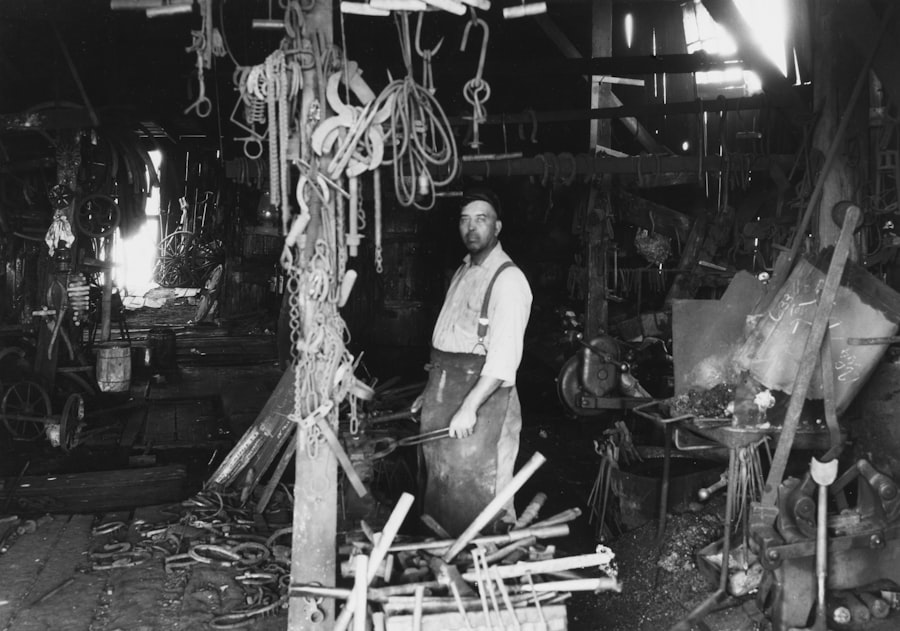
The integration of the punch clock into the fabric of industrial life was not merely a change in administrative procedure; it fundamentally altered the experience of work for the laborer and the operational dynamics of the factory.
The Worker’s Perspective: A New Cadence
For the individual worker, the punch clock introduced a new, often unyielding, rhythm to their day. It imposed a strict temporal discipline that directly impacted their freedom and their perceived autonomy.
The Tyranny of the Clock
The arrival of the punch clock meant that punctuality was no longer a matter of general expectation but a precise, mandated requirement. Lateness, even by a few minutes, could have immediate consequences, such as a docked wage or disciplinary action.
The Public Nature of Timekeeping
The act of punching in and out was often a public affair, conducted at a central location. This exposed individual punctuality (or lack thereof) to the scrutiny of colleagues and supervisors, fostering a sense of constant observation.
The Separation of Work and Personal Time
While it could lead to more accurate payment for time worked, it also reinforced a clear, and sometimes stark, separation between work time and personal time. The clock dictated the boundaries, and crossing them was explicitly tallied.
The Perception of Being “Owned” by Time
For some workers, the punch clock symbolized a loss of control over their own time. They were no longer simply contributing their labor; they were selling discrete units of time that were minutely accounted for. This could foster a feeling of being a cog in a larger, time-driven machine.
The Employer’s Gain: Data-Driven Management
From the employer’s perspective, the punch clock was a powerful tool for driving efficiency and profitability. It provided the raw data needed for more sophisticated management practices.
Enhanced Productivity Monitoring
The ability to accurately track individual and team attendance and hours worked allowed for more precise measurement of labor input against output. This data could be analyzed to identify bottlenecks and optimize workflows.
Cost Control and Labor Budgeting
With predictable and verifiable labor expenditure, employers could implement more rigorous cost controls and develop more accurate labor budgets. This offered greater financial certainty.
The Foundation for Performance Metrics
The punch clock data, when combined with other performance indicators, became the bedrock for developing more formal performance metrics. It allowed for the quantification of employee contributions to a degree previously impossible.
The Basis for Industrial Efficiency Models
The aggregate data collected from punch clocks across an entire workforce provided essential insights for the development and refinement of industrial efficiency models, such as those championed by scientific management theorists.
Beyond Punctuality: The Broader Societal Ramifications

The impact of the punch clock extended beyond the factory floor, subtly reshaping societal norms and expectations around work and time management.
The Normalization of Time Discipline
The widespread adoption of the punch clock in industrial settings helped to normalize a highly structured and time-conscious approach to work across society. The concept of clocking in and out became ingrained.
Influence on Other Sectors
As industrialization progressed, the principles of synchronized timekeeping began to influence other sectors, including offices, retail, and even government services, albeit often through different mechanisms but with the same underlying objective.
The Rise of the “Clock-Watcher” Mentality
In some instances, the emphasis on precise timekeeping could lead to a focus on the clock itself rather than the quality or volume of work produced. This could foster a culture of simply “being present” for the allotted hours.
The Evolution of Labor Relations
The introduction of the punch clock also had a complex interplay with the evolving landscape of labor relations and unionization.
A Tool for Management-Employee Negotiation
While primarily a management tool, punch clock data could also be used by unions to negotiate for fair wages, overtime pay, and adherence to working hour regulations. Accurate records provided a basis for claims.
Potential for Conflict and Grievances
Conversely, the strict enforcement of timekeeping rules, particularly for minor infractions, could become a source of friction and grievance between workers and management, creating a new category of workplace disputes.
The Digitization of Timekeeping
The mechanical punch clock was eventually superseded by more advanced technologies, from electronic time clocks to sophisticated biometric and digital systems. These advancements further refined and intensified time tracking.
The evolution of the punch clock is a fascinating aspect of industrial labor history, reflecting the broader changes in work practices and employee management. For a deeper understanding of how timekeeping devices transformed the workplace and influenced labor rights, you can explore this insightful article on the subject. It highlights the significance of these innovations in shaping modern employment standards and the ongoing struggle for workers’ rights. To read more about this topic, visit this article.
The Punch Clock’s Enduring Legacy: A Foundation for Modern Work
| Year | Event |
|---|---|
| 1888 | First recorded use of a punch clock by Willard Le Grand Bundy |
| 1890 | Introduction of punch clocks in industrial workplaces |
| 20th century | Widespread adoption of punch clocks in factories and businesses |
| Today | Transition to digital time tracking systems in many industries |
While the physical punch clock might seem like a relic of a bygone era, its influence is undeniable and its core principles continue to shape how we conceive of and manage work in the 21st century.
The Digital Descendants of the Punch Clock
Modern workplaces utilize a variety of digital systems that perform the same fundamental function as the original punch clock, but with far greater sophistication and data processing capabilities.
Swipe Cards and Key Fobs
These systems often involve employees swiping identification cards or key fobs to log their entry and exit times, transmitting this data electronically.
Biometric Time Clocks
More advanced systems use fingerprint scanners, facial recognition, or other biometric data to authenticate employees and record their time, offering enhanced security and accuracy.
Computer-Based Time Tracking
Software applications and online portals increasingly allow employees to log their work hours directly via their computers or mobile devices, often with GPS tracking capabilities.
The Unseen Influence: From Factory Floors to Knowledge Work
The fundamental paradigm shift introduced by the punch clock – the quantifiable measurement of labor time – has permeated nearly every aspect of the modern working world, even in professions that appear far removed from the industrial setting.
The Concept of Billable Hours
Even in professional fields like law or consulting, the notion of billable hours directly echoes the punch clock’s principle of accounting for time spent on tasks.
The Measurement of Productivity in Office Environments
Modern office environments, while not always using literal punch clocks, employ various systems for tracking project time, task completion rates, and overall employee engagement, all of which trace their lineage back to the drive for measurable output initiated by the punch clock.
The Ongoing Debate on Work-Life Balance
The legacy of the punch clock also fuels ongoing debates about work-life balance. The very act of quantifying and strictly demarcating work time can create expectations about the cessation of work, yet it also contributes to the pressure to maximize output within those defined hours.
In conclusion, the punch clock was more than just a timekeeping device. It was a catalyst for profound change, transforming industrial labor from a generally subjective endeavor into a quantifiable science. It brought order, enabled efficiency, and fundamentally altered the daily experience of millions. Its echoes resonate even today, in every digital swipe, every logged hour, and every measure of productivity, underscoring its indelible impact on the very rhythm of modern work.
FAQs
What is the punch clock?
The punch clock, also known as a time clock, is a device used by employers to record the arrival and departure times of their employees. It typically requires employees to insert a paper card or badge into the machine and “punch in” and “punch out” to track their work hours.
What is the significance of the punch clock in industrial labor history?
The punch clock played a significant role in industrial labor history by revolutionizing the way employers tracked and managed their workers’ time. It allowed for more accurate and standardized recording of work hours, leading to increased efficiency and productivity in the workplace.
When was the punch clock first introduced in industrial settings?
The punch clock was first introduced in industrial settings during the late 19th and early 20th centuries, coinciding with the rise of factory-based production and the need for more precise timekeeping methods to monitor large numbers of workers.
How did the punch clock impact the working conditions of industrial laborers?
The punch clock had both positive and negative impacts on the working conditions of industrial laborers. On one hand, it helped to regulate work hours and ensure fair compensation for employees. On the other hand, it also led to increased scrutiny and control over workers’ time and productivity.
What is the legacy of the punch clock in modern workplaces?
The legacy of the punch clock in modern workplaces can be seen in the continued use of time-tracking systems, such as electronic time clocks and digital attendance software, to monitor employee work hours. While the technology has evolved, the fundamental purpose of the punch clock remains relevant in today’s labor practices.