The global agricultural sector faces a multifaceted challenge: to increase food production to meet a growing population’s demands while simultaneously minimizing its environmental footprint. Among the critical nutrients required for plant growth, phosphorus (P) plays an indispensable role. However, the current paradigm of phosphorus management in agriculture is often characterized by inefficiencies, leading to significant environmental consequences and the depletion of finite phosphate rock reserves. Improving agricultural sustainability through enhanced phosphorus management is therefore a pressing necessity. This involves optimizing phosphorus use efficiency, exploring alternative nutrient sources, and mitigating the environmental impacts associated with phosphorus runoff.
Phosphorus is a vital macronutrient for all living organisms, playing a fundamental role in numerous biological processes, including energy transfer (ATP), genetic material (DNA and RNA), and cell membrane integrity. In plants, phosphorus is crucial for photosynthesis, respiration, root development, and flowering. Sufficient phosphorus availability in the soil directly influences crop yield and quality. However, the supply of phosphorus in agricultural systems is complex and influenced by a range of soil properties and management practices.
Soil Phosphorus Fractions and Availability
Soils contain phosphorus in various forms, broadly categorized as inorganic and organic phosphorus. Inorganic phosphorus exists in both soluble (available to plants) and insoluble (unavailable or slowly available) forms. The solubility and availability of inorganic phosphorus are highly dependent on soil pH. In acidic soils, phosphorus can be fixed by iron and aluminum oxides, while in alkaline soils, it can be precipitated with calcium. Organic phosphorus, present in dead plant and animal residues, undergoes mineralization by soil microorganisms, releasing plant-available inorganic phosphorus. The equilibrium between these different fractions dictates the overall phosphorus supply to crops. Understanding these dynamics is essential for tailoring phosphorus application strategies to specific soil conditions.
Phosphorus Uptake by Crops
Plants acquire phosphorus primarily in the form of orthophosphate ions (H₂PO₄⁻ and HPO₄²⁻) from the soil solution. The rate of uptake is influenced by phosphorus concentration in the soil solution, root surface area and architecture, and the presence of mycorrhizal fungi. Mycorrhizal fungi form symbiotic relationships with plant roots, extending their hyphae into the soil and effectively increasing the volume of soil from which phosphorus can be accessed. Management practices that promote healthy root systems and encourage mycorrhizal colonization can enhance phosphorus uptake efficiency.
Phosphorus Cycling and Loss Pathways
Phosphorus enters agricultural systems mainly through the application of fertilizers derived from phosphate rock. It also enters through organic amendments like manure and crop residues. Within the soil, phosphorus undergoes various transformations and can be lost from the system through several pathways. These include crop removal (harvested biomass), leaching (movement with water through the soil profile, primarily in sandy soils or under heavy rainfall), erosion (transport of soil particles containing phosphorus by wind and water), and runoff (transport of dissolved phosphorus and phosphorus adsorbed to soil particles into surface water bodies). Minimizing these loss pathways is central to improving phosphorus sustainability.
Sustainable phosphorus management in agriculture is crucial for maintaining soil health and ensuring food security. For those interested in exploring this topic further, a related article can be found at Hey Did You Know This, which discusses innovative practices and strategies for optimizing phosphorus use in farming systems. This resource provides valuable insights into how farmers can reduce environmental impacts while enhancing crop productivity through effective phosphorus management techniques.
Optimizing Phosphorus Use Efficiency in Cropping Systems
A cornerstone of sustainable phosphorus management lies in maximizing the amount of applied phosphorus that is actually utilized by crops. Current application rates often exceed crop requirements, leading to accumulation in the soil and subsequent environmental risks. Optimizing phosphorus use efficiency (PUE) involves a multi-pronged approach.
Nutrient Management Planning and Soil Testing
Accurate soil testing is the foundation of efficient phosphorus fertilization. Regular analysis of soil phosphorus levels allows for precise determination of existing phosphorus reserves, avoiding unnecessary applications. Based on soil test results, crop requirements, and yield goals, a nutrient management plan can be developed that specifies the type, rate, timing, and placement of phosphorus fertilizer. This data-driven approach moves away from blanket recommendations and promotes targeted applications.
Precision Phosphorus Application
Precision agriculture technologies offer significant potential for optimizing phosphorus application. Variable rate technology (VRT) allows for the application of phosphorus at different rates across a field based on spatially variable soil test data or yield maps. This ensures that phosphorus is applied only where and in the amounts needed, reducing over-application in some areas and under-application in others. Geographic information systems (GIS) and GPS technology are integral to implementing VRT systems effectively.
Timing and Placement of Phosphorus Fertilizers
The timing and placement of phosphorus fertilizers are critical factors affecting PUE. Phosphorus is relatively immobile in most soils, meaning it does not readily move to plant roots from a distance. Therefore, placing phosphorus fertilizer in close proximity to the developing root system, for example, through banding or in-furrow application at planting, can significantly enhance uptake and reduce losses. Applying phosphorus at stages of plant development when demand is highest can also improve efficiency.
Enhancing Soil Health and Biological Activity
Healthy soils are more effective at retaining and cycling phosphorus, making it available to plants when needed. Practices that improve soil health can indirectly enhance PUE.
Organic Matter Management
Incorporating organic matter into the soil through crop residues, cover crops, and compost enhances soil structure, improves water-holding capacity, and increases the soil’s capacity to adsorb and retain phosphorus. As organic matter decomposes, it also releases plant-available phosphorus. Maintaining adequate soil organic matter levels creates a more dynamic and resilient phosphorus cycle within the agricultural system.
Promoting Mycorrhizal Associations
Arbuscular mycorrhizal fungi (AMF) form symbiotic relationships with the roots of most agricultural crops, greatly extending the root system’s reach for phosphorus and other immobile nutrients. Practices that promote AMF colonization, such as reducing tillage, minimizing the use of synthetic fertilizers (which can sometimes suppress mycorrhizal activity), and maintaining organic matter, can significantly improve phosphorus acquisition by plants.
Developing and Utilizing Alternative Phosphorus Sources
The reliance on mined phosphate rock for fertilizer production is unsustainable in the long term due to its finite nature and the environmental impacts of mining. Exploring and developing alternative phosphorus sources is crucial for a more circular and sustainable agricultural system.
Recycling Phosphorus from Waste Streams
Significant amounts of phosphorus are contained within various waste streams, including municipal wastewater, sewage sludge, animal manure, and food processing waste. Developing efficient and safe technologies for recovering phosphorus from these sources can not only provide a valuable nutrient source but also reduce pollution.
Struvite Precipitation
Struvite (magnesium ammonium phosphate) is a crystalline compound that readily precipitates from wastewater containing high concentrations of magnesium, ammonium, and phosphate. Struvite is a slow-release fertilizer that can be recovered from wastewater treatment plants and animal manure slurries, offering a valuable nutrient source with reduced environmental risks compared to soluble phosphate fertilizers.
Phosphate Recovery from Manure
Animal manure is a rich source of phosphorus and a significant contributor to nutrient runoff in agricultural landscapes. Technologies for separating, concentrating, and converting phosphorus in manure into more stable and less mobile forms are being developed. This can include processes like thermal treatment or chemical precipitation to recover phosphorus.
Bio-based Phosphorus Fertilizers
Research is ongoing into developing bio-based phosphorus fertilizers through microbial processes. Some microorganisms possess the ability to solubilize insoluble phosphorus compounds in the soil or to accumulate phosphorus within their biomass, which can then be utilized as a fertilizer. These approaches could offer more environmentally benign and potentially renewable sources of phosphorus.
Utilizing Industrial By-products
Certain industrial processes generate by-products that contain phosphorus. Investigating the potential for utilizing these materials as soil amendments or phosphorus fertilizers, after appropriate testing and treatment to ensure safety and efficacy, could divert waste from landfills and provide a nutrient source.
Mitigating Environmental Impacts of Phosphorus Loss
Excess phosphorus entering aquatic ecosystems is a major cause of eutrophication, leading to algal blooms, oxygen depletion, and damage to aquatic life. Reducing phosphorus losses from agricultural fields is therefore paramount for protecting water quality.
Buffer Strips and Riparian Zones
Establishing vegetated buffer strips along watercourses and maintaining riparian zones ( vegetated areas adjacent to rivers and streams) are effective measures for intercepting phosphorus-rich runoff. The vegetation and soil within these areas can trap sediment, adsorb dissolved phosphorus, and absorb nutrients before they reach surface water bodies.
Cover Cropping and Reduced Tillage
Cover crops planted between main cropping seasons can help to bind soil particles, reducing erosion and the associated loss of phosphorus adsorbed to soil. Reduced or no-tillage practices also contribute to improved soil structure, increased infiltration of water, and a reduction in soil erosion, thereby minimizing phosphorus losses.
Sediment and Erosion Control Measures
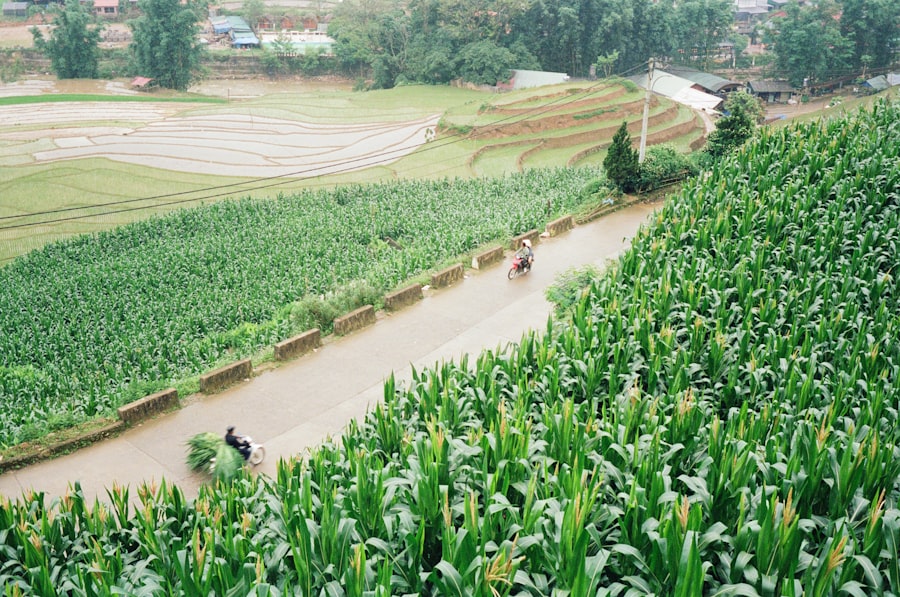
Implementing comprehensive erosion control measures, such as contour plowing, terracing, and grassed waterways, directly reduces the transport of soil particles, and consequently phosphorus, from fields into surface waters. These practices are particularly important in areas prone to heavy rainfall or where soils are susceptible to erosion.
Managed Drainage and Nutrient Management on Sloping Lands
In areas with permeable soils and significant slopes, managed drainage systems can help to control water flow and reduce nutrient losses. Coupled with precise nutrient management plans that consider the specific characteristics of sloping land, these approaches can prevent excessive phosphorus from entering waterways.
Sustainable phosphorus management in agriculture is crucial for maintaining soil health and ensuring food security. A recent article highlights innovative practices that farmers can adopt to optimize phosphorus use while minimizing environmental impact. For more insights on this topic, you can read the article on sustainable practices by following this link. Implementing these strategies can lead to more efficient nutrient cycling and reduced runoff, ultimately benefiting both agricultural productivity and ecosystem health.
The Role of Policy, Education, and Research
| Metrics | Data |
|---|---|
| Phosphorus Application Rate | 20-40 kg/ha for most crops |
| Phosphorus Use Efficiency | 30-40% on average |
| Phosphorus Runoff Loss | 5-10 kg/ha/year in high-risk areas |
| Phosphorus Recycling Rate | 30-50% in developed countries |
Achieving widespread adoption of sustainable phosphorus management practices requires a concerted effort involving policy frameworks, educational initiatives, and ongoing research and development.
Policy Incentives and Regulations
Government policies can play a significant role in encouraging the adoption of sustainable phosphorus management. This can include financial incentives for adopting best management practices, regulations on nutrient application rates, and programs that support the development and use of recycled phosphorus sources. Clear guidelines and enforcement mechanisms are essential for their effectiveness.
Farmer Education and Extension Services
Effective education and extension services are crucial for disseminating knowledge about sustainable phosphorus management to farmers. Workshops, field days, and personalized advice can empower farmers with the skills and information needed to implement best practices, understand soil test results, and adopt new technologies.
Investment in Research and Development
Continued investment in research is vital for advancing our understanding of phosphorus dynamics in different agricultural systems, developing novel phosphorus recovery technologies, and evaluating the efficacy and environmental impact of new management practices. Long-term research is also needed to understand the cumulative effects of different management approaches on soil health and phosphorus cycles.
Sustainable phosphorus management is not merely an environmental imperative; it is also an economic necessity. Efficiently utilizing this finite resource ensures that it remains available for future generations of farmers while simultaneously protecting vital ecosystems. By embracing a holistic approach that encompasses optimizing PUE, exploring alternative sources, mitigating losses, and fostering collaboration through policy, education, and research, agriculture can move towards a more sustainable and resilient future.
FAQs
What is sustainable phosphorus management in agriculture?
Sustainable phosphorus management in agriculture refers to the responsible and efficient use of phosphorus fertilizers to minimize environmental impact while maintaining soil fertility and crop productivity. It involves practices such as optimizing fertilizer application, using phosphorus-efficient crop varieties, and implementing soil conservation measures.
Why is sustainable phosphorus management important in agriculture?
Phosphorus is an essential nutrient for plant growth, but excessive use of phosphorus fertilizers can lead to environmental problems such as water pollution and eutrophication. Sustainable phosphorus management is important to ensure the long-term availability of phosphorus for agriculture while minimizing its negative impact on the environment.
What are some sustainable phosphorus management practices in agriculture?
Some sustainable phosphorus management practices in agriculture include soil testing to determine phosphorus levels, using precision agriculture techniques to apply fertilizers more efficiently, incorporating organic matter into the soil to improve phosphorus availability, and implementing erosion control measures to prevent phosphorus runoff.
How can farmers implement sustainable phosphorus management on their farms?
Farmers can implement sustainable phosphorus management by adopting practices such as soil testing to determine phosphorus levels, using nutrient management plans to optimize fertilizer application, rotating crops to improve phosphorus uptake, and implementing conservation practices to reduce phosphorus runoff.
What are the benefits of sustainable phosphorus management in agriculture?
The benefits of sustainable phosphorus management in agriculture include improved soil health and fertility, reduced environmental impact from phosphorus runoff, cost savings for farmers through more efficient fertilizer use, and long-term sustainability of phosphorus resources for future generations.