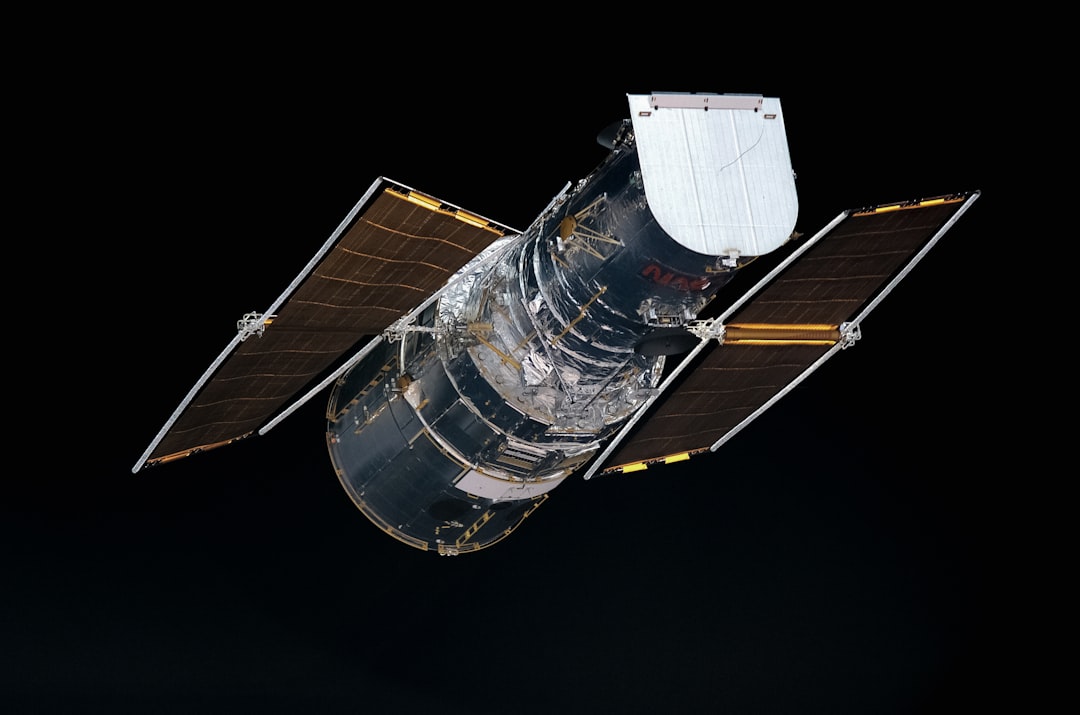
You might think of your smartphone’s GPS as a simple tool, a digital map guiding you from point A to point B. You tap in an address, and a tiny icon, guided by signals from space, locks onto your location with impressive accuracy. But behind this seemingly effortless functionality lies a profound scientific marvel: the intricate dance of physics, specifically Einstein’s theories of relativity, that makes it all possible. Without accounting for time dilation, your GPS would be wildly inaccurate, rendering it almost useless within minutes.
To understand why time dilation is crucial, you must first grasp the basic principles of how GPS works. It’s not about one satellite telling you where you are; it’s a system involving a constellation of satellites orbiting the Earth.
The Role of the Satellite Constellation
Your GPS receiver, whether in your car or on your wrist, doesn’t communicate directly with a single satellite. Instead, it listens to signals from multiple satellites simultaneously – at least four for a precise three-dimensional fix. Each satellite broadcasts information, including its precise orbital location and the exact time the signal was sent.
Triangulation and Trilateration
The magic happens by measuring the time it takes for these signals to reach your receiver. This time difference, when multiplied by the speed of light (the speed at which radio signals travel), gives you the distance between your receiver and each satellite. By knowing the distance to at least three satellites (and their precise locations), your receiver can pinpoint your position in three dimensions – latitude, longitude, and altitude. A fourth satellite provides redundancy and helps refine the accuracy, particularly by correcting for errors in your receiver’s clock.
The Importance of Precise Timing
The core of GPS accuracy hinges on incredibly precise timing. Atomic clocks are employed on each GPS satellite, ticking with an accuracy of nanoseconds. This is because even a tiny error in time measurement translates into a significant error in distance calculation.
The Speed of Light as a Constant
The speed of light in a vacuum is approximately 299,792,458 meters per second. This fundamental constant is used to convert the time difference between signal transmission and reception into a distance.
The Formulaic Relationship
The relationship is straightforward: Distance = Speed of Light × Time. If your receiver measures a signal taking 0.07 seconds to arrive from a satellite, that satellite is approximately 21,000 kilometers away (0.07 s × 299,792,458 m/s).
GPS satellites must account for time dilation effects due to their high speeds and the weaker gravitational field at their altitude, which causes their onboard clocks to tick slightly faster than those on Earth. This phenomenon is a consequence of Einstein’s theory of relativity, and without these corrections, GPS systems would quickly become inaccurate. For a deeper understanding of how these adjustments are made and their implications for navigation technology, you can read a related article at this link.
The Unexpected Impact of Relativity
Here’s where things get interesting. If the world operated solely on Newtonian physics, the precise clocks on the satellites and the speed of light would, in theory, be enough to guarantee accurate positioning. However, the Earth is not a static, non-gravitational environment. And the satellites are not stationary. This is where Albert Einstein’s groundbreaking theories of relativity come into play, specifically special and general relativity, which predict phenomena that directly affect timekeeping.
Special Relativity and Velocity Time Dilation
You’ve likely heard of Einstein’s theory of special relativity, which deals with the relationship between space and time for objects moving at constant speeds. One of its key predictions is time dilation: time passes more slowly for an object in motion relative to a stationary observer. The faster an object moves, the more pronounced this effect becomes.
The Speed of GPS Satellites
GPS satellites orbit the Earth at speeds of roughly 14,000 kilometers per hour (about 8,700 miles per hour). While this might seem fast in everyday terms, it’s a significant fraction of the speed of light.
The Observable Slowing of Time
According to special relativity, this high velocity causes the atomic clocks on the GPS satellites to tick slightly slower than identical clocks on Earth. This effect, compared to clocks on the ground, leads to a time difference of about 7 microseconds (millionths of a second) per day.
General Relativity and Gravitational Time Dilation
Beyond special relativity, you also need to consider general relativity, Einstein’s theory of gravity. General relativity posits that gravity is not a force but a curvature of spacetime caused by mass and energy. A significant consequence of this is gravitational time dilation: time passes more slowly in stronger gravitational fields.
The Influence of Earth’s Gravity
Satellites are in orbit, but they are still subject to Earth’s gravitational pull. While they are farther away from the Earth’s center than you are on the surface, they are still within a region where Earth’s gravity has a measurable effect.
The Difference in Gravitational Potential
Because the GPS satellites are in a weaker gravitational field than observers on Earth, their clocks tick faster than clocks on the ground. This effect, driven by general relativity, causes the satellite clocks to gain about 45 microseconds per day relative to ground-based clocks.
The Net Effect: A Combined Challenge
When you combine the effects of special relativity (slowing time due to speed) and general relativity (speeding up time due to weaker gravity), you find that the general relativistic effect is dominant.
The Calculation of Relative Time Flow
The net effect is that the atomic clocks on GPS satellites run faster by approximately 38 microseconds (45 microseconds from general relativity minus 7 microseconds from special relativity) per day compared to stationary clocks on Earth.
Why 38 Microseconds Matters
This 38-microsecond daily discrepancy, if uncorrected, would lead to significant positional errors. Since your receiver uses these time signals to calculate distance, a consistent error in the satellite clock would accumulate rapidly.
Implementing Corrections for Time Dilation
The engineers who designed the GPS system were well aware of these relativistic effects. They didn’t just hope for the best; they built the necessary corrections into the system from its inception.
Pre-launch Frequency Adjustments
One of the primary methods of correction involves adjusting the frequency of the atomic clocks on the satellites before they are launched. By slightly slowing down their oscillation rate, their “natural” speed, their actual ticking rate in orbit, when subjected to the combined relativistic effects, will more closely match the rate of clocks on Earth.
The Target Frequency
The clocks are precisely tuned so that, once in orbit and experiencing both velocity and gravitational time dilation, their frequency appears correct from the perspective of an observer on Earth. This is an ingenious engineering solution that preemptively accounts for the predictable distortions of time.
Onboard System Calculations
While pre-launch adjustments are crucial, they are not the sole method of correction. The GPS system also incorporates mechanisms for ongoing refinement and error correction.
Incorporating Relativistic Parameters
The onboard systems of the GPS satellites are programmed with parameters that reflect the precise calculations of special and general relativity. These parameters are used to continuously monitor and, if necessary, adjust the timing signals in real-time.
The Ephemeris Data’s Role
The broadcast signals from the satellites include ephemeris data, which describes their precise orbital path. This data is combined with the relativistic calculations to ensure that the timing information conveyed is as accurate as possible.
Receiver-side Corrections
Your GPS receiver also plays a role in ensuring accuracy. While it relies on the corrected signals from the satellites, it employs its own methods to further refine the positioning.
Correcting Receiver Clock Errors
As mentioned earlier, a minimum of four satellites are needed for a 3D fix. The fourth satellite’s signal, in particular, is used to correct for any inaccuracies in the receiver’s own internal clock. Even a relatively inexpensive quartz clock in your phone is not as precise as an atomic clock, and these corrections compensate for that difference.
Leveraging Redundant Data
By receiving signals from multiple satellites, the receiver can cross-reference the timing information and identify any discrepancies that might arise from its own clock or minor variations in the satellite signals.
GPS satellites play a crucial role in our daily lives, but their accuracy relies on a fascinating aspect of physics known as time dilation. As these satellites orbit the Earth at high speeds and experience weaker gravitational fields, they experience time differently than clocks on the ground. To ensure precise positioning, the satellite systems must correct for this time discrepancy. For a deeper understanding of how these corrections are made and the science behind them, you can explore this related article on the topic. If you’re curious about more intriguing facts, check out this website for additional insights.
The Consequences of Ignoring Time Dilation
| Data/Metric | Description |
|---|---|
| Time Dilation Effect | The phenomenon predicted by Einstein’s theory of relativity where time runs slower in stronger gravitational fields or when moving at higher speeds. |
| GPS Satellites | Orbiting satellites that provide geolocation and time information to GPS receivers on Earth. |
| Correction Mechanism | GPS satellites are equipped with atomic clocks and constantly adjust their time to account for the time dilation effect caused by their high speed and distance from Earth’s gravitational field. |
| Precision | The correction mechanism ensures that the time provided by GPS satellites is accurate to within a few nanoseconds, allowing for precise positioning and navigation on Earth. |
Imagine the world without these relativistic corrections. The seemingly minor discrepancies in time would quickly snowball into fundamental failures of the GPS system.
Cumulative Positional Errors
As you use your GPS, the uncorrected timing errors from the satellites would accumulate. Over time, the calculated distance to each satellite would become increasingly inaccurate, leading to a positional drift.
The Exponential Growth of Error
Without corrections, the error in your determined position would grow at a rate of about 10 kilometers per day. Within hours, your GPS would be pointing you to the wrong city. Within a day, it would be almost useless for any navigation purpose requiring precision.
From Navigation to Uselessness
A navigation system that tells you you’re on a road when you’re actually miles off it is not just inconvenient; it’s dangerous. For applications like precise agricultural guidance or land surveying, this level of error would render the technology entirely impractical.
Impact on Critical Infrastructure
The impact of uncorrected time dilation would extend far beyond personal navigation. Many critical infrastructure systems rely on GPS for precise timing and synchronization.
Financial Transactions and Time Synchronization
The global financial system, for example, relies on extremely precise time synchronization for processing transactions and auditing. Without accurate GPS timing, the integrity of these systems would be compromised.
Scientific Research and Timing Experiments
Furthermore, scientific experiments that require highly accurate timing, such as those involving particle physics or astronomy, would be severely hampered or rendered impossible.
The Ongoing Evolution of GPS
The GPS system is not a static entity. It is constantly being improved and updated, and the understanding of relativistic effects continues to refine the system’s accuracy.
Technological Advancements in Atomic Clocks
New generations of atomic clocks are being developed, offering even greater stability and precision. These advancements can lead to more robust and reliable timing signals from future satellite constellations.
Enhanced Signal Processing
Improvements in signal processing techniques allow receivers to extract more accurate timing information from the satellite signals, even in challenging environments with interference or multipath effects.
The Role of Other Global Navigation Satellite Systems (GNSS)
GPS is not the only game in town. Other GNSS like GLONASS (Russia), Galileo (Europe), and BeiDou (China) also utilize relativistic principles. The interplay and interoperability of these systems further enhance global positioning capabilities.
Multi-Constellation Receivers
Modern GPS receivers often integrate signals from multiple GNSS. This allows them to access a larger pool of satellites and improve accuracy and availability, especially in areas where signals might be obstructed.
The Synergy of Interoperability
The combined use of various GNSS provides a more resilient and accurate positioning solution. The underlying principles of time dilation correction remain consistent across these systems, highlighting the universality of Einstein’s theories.
In conclusion, the next time you rely on your GPS to find your way, take a moment to appreciate the invisible forces at play. It’s not just a matter of sending signals from space; it’s a testament to humanity’s ability to understand and harness the fundamental laws of the universe, ensuring that the passage of time, as described by Einstein, aligns perfectly with your journey. The precise calculations needed to account for time dilation are a silent, yet essential, component of the seamless navigation experience you take for granted.
FAQs
What is time dilation?
Time dilation is a phenomenon predicted by Einstein’s theory of relativity, where time passes at different rates for observers who are moving relative to one another, or who are in different gravitational fields.
How do GPS satellites correct for time dilation?
GPS satellites correct for time dilation by using atomic clocks on board the satellites, which are synchronized with ground-based atomic clocks. The satellites constantly adjust their clocks to account for the time dilation effects caused by their high speed and the weaker gravitational field in space.
Why is it important for GPS satellites to correct for time dilation?
It is important for GPS satellites to correct for time dilation because accurate timekeeping is crucial for the precise determination of a receiver’s position on Earth. Without correcting for time dilation, the GPS system would quickly become inaccurate, leading to errors in navigation and positioning.
How much does time dilation affect the accuracy of GPS satellites?
Time dilation affects the accuracy of GPS satellites by causing their onboard clocks to run at a slightly different rate compared to clocks on Earth. If left uncorrected, this could lead to errors of up to several kilometers in GPS positioning.
What other applications benefit from the correction of time dilation by GPS satellites?
In addition to navigation and positioning, other applications that benefit from the correction of time dilation by GPS satellites include telecommunications, financial transactions, and scientific research. These applications rely on precise timing for their operations and would be affected by the effects of time dilation if not corrected for.