
You are standing at the precipice of a significant shift in how you conceptualize and deploy artificial intelligence. For too long, AI has been viewed as a monolithic entity, a black box residing on expensive, specialized hardware. You’ve likely experienced the frustration of waiting for models to train, the limitations of proprietary platforms, and the high cost of cloud-based inference. This article explores Distributed AI, not as a minor upgrade, but as a fundamental rethinking of AI architecture, focusing on the concept of “Powering Servers with Source Code.” It’s about breaking down AI, making it more accessible, adaptable, and efficient, by treating the underlying code as the primary deployable unit.
The traditional approach to AI deployment often involves packaging an entire trained model, often in a proprietary format, and then deploying it onto a specific infrastructure. This infrastructure could be a powerful server, a cluster of machines, or a cloud instance. The model is essentially a static artifact, and any significant changes require a redeployment process. This creates friction at multiple levels.
Understanding the Traditional Bottleneck
You’ve probably encountered situations where updating a deployed model means a lengthy downtime or a complex rollout procedure. This is because the model is tightly coupled with the environment it runs in. If you need to update a dependency, change a library, or even adjust the hardware specifications, you are often forced to rebuild and redeploy the entire package. This can be a time-consuming and error-prone process, especially for mission-critical applications. The infrastructure becomes a burden, an opaque layer that dictates your AI’s capabilities and limitations.
The Emergence of Source-First Deployment
Distributed AI, particularly with its emphasis on “powering servers with source code,” seeks to fundamentally alter this paradigm. Instead of deploying a pre-compiled, often opaque model artifact, you are deploying the actual source code that defines and executes the AI model. This means you are deploying Python scripts, TensorFlow or PyTorch definitions, or even custom compiled code that, when run on a server, expresses the intelligent behavior you require. The infrastructure, in this context, becomes a resource pool for executing this code.
Implications for Agility and Flexibility
This shift has profound implications for agility and flexibility. You can now think of updating an AI model as akin to updating a piece of software. Need to retrain a specific layer? Adjust a hyperparameter? Integrate a new feature? You can often do so by modifying the source code and redeploying that specific code segment, rather than the entire model. This granular control allows for faster iteration cycles and enables you to adapt your AI to evolving requirements with unprecedented speed. The server essentially becomes a programmable execution environment for your AI logic.
In the realm of distributed AI, the implementation of copy source code servers plays a crucial role in enhancing collaboration and efficiency among developers. For a deeper understanding of how these systems function and their impact on AI development, you can explore a related article that discusses the benefits and challenges of distributed AI architectures. Check it out here: Distributed AI and Code Management.
The Granularity of AI Components
One of the most significant advantages of treating AI as source code is the inherent granularity it enables. AI models are not single, indivisible units; they are complex compositions of various components, each contributing to the overall intelligence. Distributed AI allows you to treat these components individually, deploying and managing them as distinct, yet interconnected, pieces of code.
Deconstructing Neural Networks
Consider a deep neural network. You can think of it as a collection of layers (convolutional, recurrent, dense), activation functions, loss functions, and optimizers. In a source-code-centric approach, each of these can be developed, tested, and potentially deployed as independent units. You might have a library of pre-trained convolutional layers that you can assemble and connect with different types of subsequent layers, all defined by their source code.
The Power of Modular AI
This modularity extends beyond the architectural components of a single model. It allows for the creation of reusable AI modules. For example, you might develop a robust natural language processing module as a set of source code files. This module can then be integrated into various AI applications – a chatbot, a sentiment analysis tool, a text summarizer – without needing to reinvent the wheel each time. The server executes this modular code, bringing specific intelligent functionalities to different applications.
Managing Dependencies and Versions
With source code, you gain a level of control over dependencies and versions that is often elusive with compiled models. You can precisely define the libraries and frameworks your AI code relies upon. This prevents compatibility issues and ensures reproducibility. Version control systems become instrumental in managing different iterations of these AI components, allowing you to roll back to previous versions or experiment with new ones with confidence. The server’s environment can be tailored to precisely match the requirements of the source code it’s tasked with running.
Edge Computing and the Distributed AI Fabric

The concept of powering servers with source code is particularly powerful when considering the rise of edge computing. Edge devices, from smartphones and IoT sensors to local servers in factories, often have limited computational resources and connectivity. Distributed AI, deployed as source code, allows for intelligent processing closer to the data source.
Bringing Intelligence to the Periphery
Instead of sending all data to a centralized cloud for processing, you can deploy small, efficient AI models – defined by their source code – directly onto these edge devices. This reduces latency, conserves bandwidth, and enhances privacy, as sensitive data doesn’t need to leave the local environment. The source code for these edge AI models can be lightweight and optimized for the specific hardware constraints of the device.
Federated Learning and Collaborative Intelligence
Distributed AI and source code deployment create a natural synergy with federated learning. In federated learning, models are trained on decentralized data without the data ever leaving the user’s device. The updates to the model – essentially changes to the source code that defines the model’s behavior – are then shared and aggregated on a central server. This allows for collaborative model improvement while maintaining data privacy. The server acts as an orchestrator, receiving and distributing code updates that define collaborative learning.
Dynamic Adaptation at the Edge
The ability to deploy AI as source code to the edge means that AI can dynamically adapt to local conditions. An AI system monitoring industrial machinery, for instance, could have its source code updated in real-time to account for new operational parameters or unusual sensor readings. This real-time adaptation, driven by code changes, is crucial for applications where immediate responses are necessary. The server, in this instance, becomes a gateway for pushing these dynamic code adjustments to distributed edge AI agents.
The Role of Orchestration and Management
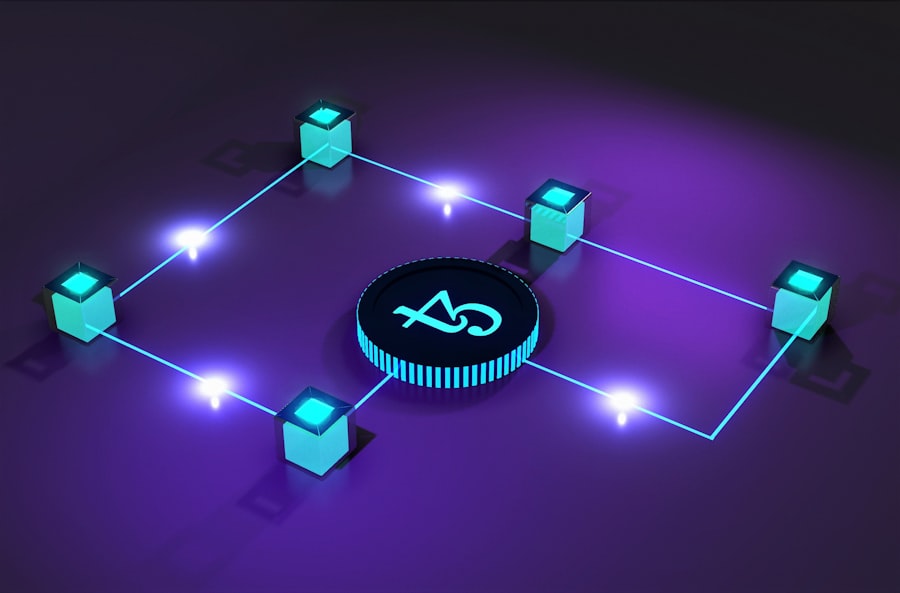
As AI systems become more distributed and granular, the need for robust orchestration and management tools becomes paramount. Simply distributing source code isn’t enough; you need mechanisms to control, monitor, and update these distributed AI components effectively.
Kubernetes and Containerization for AI
Containerization technologies like Docker and orchestration platforms like Kubernetes have become indispensable for managing distributed applications, and AI is no exception. You can package your AI source code and its dependencies into containers. Kubernetes then provides the tools to deploy, scale, and manage these containers across a cluster of servers. This allows you to treat your distributed AI as a fleet of intelligent microservices, all powered by their respective source code. The server farm becomes a managed ecosystem for these AI code units.
Workflow Management for Complex AI Pipelines
Many AI tasks involve complex, multi-step pipelines, such as data preprocessing, model training, evaluation, and deployment. Workflow management tools are essential for defining, executing, and monitoring these pipelines. In a source-code-centric distributed AI environment, these workflows can be defined as code, orchestrating the execution of various AI components (also defined by source code) across different servers. The server hosts the execution engine for these code-defined workflows.
Observability and Monitoring of Distributed AI
Understanding the performance and behavior of a distributed AI system can be challenging. Effective observability and monitoring tools are crucial. This involves collecting metrics from individual AI components, tracking their execution, and identifying potential issues. For AI powered by source code, this means monitoring the execution of the code itself – its resource utilization, its output, and any errors it encounters. The server infrastructure provides the hooks for this extensive monitoring.
Distributed AI is revolutionizing the way we manage and deploy machine learning models across various platforms, and a recent article highlights the importance of copy source code servers in this ecosystem. These servers play a crucial role in ensuring that AI models are easily accessible and can be efficiently updated. For more insights on this topic, you can read the full article here. This exploration into distributed AI and its infrastructure is essential for anyone looking to understand the future of technology.
Democratizing AI Development and Deployment
| Server Name | Location | Number of Copies | AI Model |
|---|---|---|---|
| Server 1 | New York | 5 | ResNet-50 |
| Server 2 | London | 3 | InceptionV3 |
| Server 3 | Tokyo | 4 | MobileNetV2 |
Ultimately, the move towards powering servers with source code represents a powerful step towards democratizing AI development and deployment. By breaking down the barriers of complex proprietary systems and specialized hardware, you can make AI more accessible to a wider range of individuals and organizations.
Open Source AI Frameworks as Building Blocks
The proliferation of open-source AI frameworks like TensorFlow, PyTorch, scikit-learn, and Hugging Face has laid the groundwork for this shift. These frameworks provide readily available source code for fundamental AI building blocks, allowing developers to focus on tailoring and combining these components to solve specific problems. Your server executes these open-source components, bringing their intelligence to bear.
Lowering the Barrier to Entry
When you can deploy AI by deploying source code, the initial investment and technical expertise required for AI implementation are significantly reduced. This empowers smaller businesses, startups, and even individual researchers to experiment with and deploy sophisticated AI solutions without needing to acquire expensive licenses or specialized infrastructure. The server becomes a flexible platform for experimentation, fueled by accessible code.
Fostering Innovation and Collaboration
A more accessible AI landscape inherently fosters greater innovation and collaboration. When developers can easily share, modify, and build upon each other’s AI code, the pace of progress accelerates. This collaborative environment, driven by the open sharing of AI logic as source code, leads to more robust, efficient, and creative AI solutions. The server becomes a common ground for deploying and running these collaboratively developed AI solutions.
FAQs
What is distributed AI?
Distributed AI refers to the use of multiple AI systems or components working together across different locations or servers to achieve a common goal. This approach allows for greater scalability, fault tolerance, and efficiency in AI applications.
What is source code server in the context of distributed AI?
A source code server in the context of distributed AI refers to a server or repository where the source code for AI models, algorithms, or applications is stored and managed. This allows for easy access, version control, and collaboration among developers and AI researchers.
How does distributed AI utilize source code servers?
In distributed AI, source code servers play a crucial role in enabling seamless sharing and synchronization of AI models and algorithms across multiple servers or nodes. This allows for consistent deployment and execution of AI applications in a distributed environment.
What are the benefits of using distributed AI with source code servers?
Using distributed AI with source code servers offers benefits such as improved scalability, enhanced fault tolerance, efficient resource utilization, and streamlined collaboration among developers and researchers. It also facilitates the deployment of AI applications across distributed systems.
What are some common challenges in managing distributed AI with source code servers?
Common challenges in managing distributed AI with source code servers include ensuring data consistency across distributed nodes, addressing network latency and communication overhead, maintaining version control, and managing access control and security of the source code repositories.