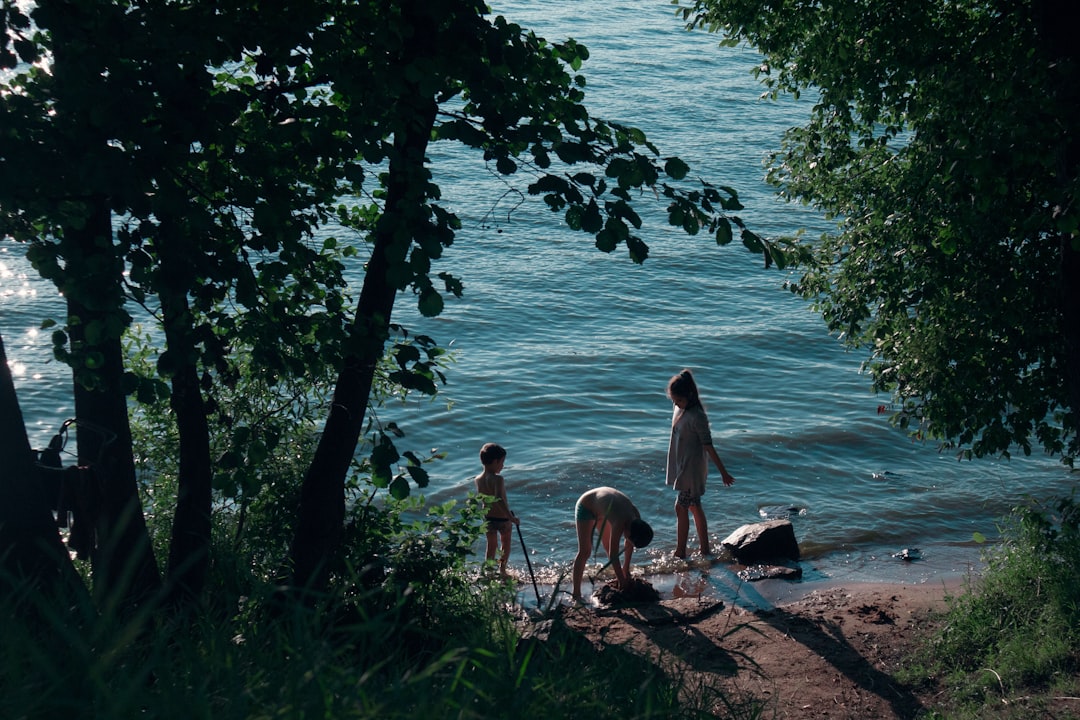
The long, lazy days of summer. For many adults, this phrase conjures a wistful ache, a memory of a seemingly infinite expanse of time stretching out before you. As a child, summer was a grand, untamed wilderness of possibilities, each day a chapter in an epic novel that never seemed to end. Now, as an adult, you find yourself staring at a calendar where weeks vanish like mist, and the idea of “endless” feels like a cruel joke. Why did those childhood summers feel so profoundly different, so much more expansive than the hurried sprints of your adult life?
You remember it, don’t you? The way time itself seemed to operate on a different frequency during those childhood summers. It wasn’t a rigid, ticking clock measuring your progress toward some predetermined finish line. Instead, it was a pliable, almost gelatinous substance that you could mold and shape as you pleased. This isn’t just sentimentality; there are underlying psychological and biological reasons for this profound difference in temporal perception.
Childhood Cognitive Development and Temporal Awareness
As a child, your brain is still under construction, and this nascent cognitive landscape fundamentally alters your experience of time. Your prefrontal cortex, responsible for higher-level executive functions like planning, impulse control, and temporal sequencing, is far from fully developed. This immaturity means you’re less adept at consciously tracking the passage of time in a linear fashion. You live more in the present moment, and the future feels distant and abstract.
The Absence of Future-Oriented Goals
Think about it: what were your primary goals as a child during summer? They were likely immediate and sensory: building the perfect sandcastle, mastering a new bike trick, or staying up just a little later to watch the fireflies. The concept of long-term objectives – careers, retirement, mortgages – was either non-existent or incredibly vague. Without the constant pressure of future deadlines and the need to plan for a distant tomorrow, each day could be savored without the looming specter of what’s next. Your focus was on the now, and that “now” felt remarkably capacious.
Novelty as a Time Expander
One of the most significant factors in your childhood perception of time was the sheer volume of new experiences. Every summer presented a fresh slate, a world brimming with novel stimuli. New places to explore (even if it was just the woods behind your house), new games to invent, new friends to make. Your brain, when encountering something new, dedicates more resources to encoding that information. This increased cognitive processing creates a richer, more detailed memory of the experience, which in turn makes that period of time feel longer in retrospect. You were constantly learning, constantly discovering, and each of these “firsts” stretched out the perceived duration of your summer.
The Biological Rhythms of Childhood
Beyond cognitive factors, your very biology contributed to this stretched-out temporality.
Circadian Rhythms and Sleep Patterns
Children generally have different sleep patterns than adults. They might sleep more deeply and have less fragmented sleep. Furthermore, their internal body clocks (circadian rhythms) might be less rigidly synchronized than a seasoned adult’s. This less rigid internal pacing could contribute to a softer, more flowing sense of daily progression, making the hours feel less demarcated and more continuous. Without the societal pressure of strict wake-up and bedtimes imposed by school, summer offered a chance for these rhythms to be more organic, and thus, perhaps, more conducive to a feeling of timelessness.
As we reminisce about our childhood summers, many of us recall those seemingly endless days filled with adventure and exploration. A fascinating article explores the psychological reasons behind why childhood summers felt longer than those of adulthood. It delves into the concept of time perception and how the novelty of new experiences during childhood can stretch our sense of time. For more insights on this topic, you can read the full article here: Why Childhood Summers Felt Longer Than Adulthood.
The Structure (or Lack Thereof) of Childhood Summers
The architecture of your childhood summers was fundamentally different from the meticulously scheduled, obligation-laden reality of adulthood. This lack of rigid structure was a key ingredient in their seemingly infinite nature.
The Absence of External Schedules and Obligations
School, with its bell schedules, homework assignments, and fixed classes, imposed a powerful external structure on your year. Summer was the glorious emancipation from this. With no alarm clocks demanding your immediate attention for school, and no pressing deadlines for assignments, the day unfolded at a pace dictated by your own burgeoning will. The unstructured hours were an invitation to wander, to dawdle, to simply be.
The Freedom to Be Spontaneous
You could wake up and decide to build a fort that day, or spend hours chasing dragonflies, or simply lie on the grass and watch the clouds drift by. There was no agenda, no need for efficiency. This spontaneity allowed for deep immersion in whatever captured your attention. The lack of needing to be “productive” in an adult sense freed you to engage in activities purely for the joy of engagement, and this unhurried exploration of interests naturally expanded the felt length of the day.
The Power of Unscheduled Exploration
Adult life is often a series of tasks to be completed, appointments to be kept, and responsibilities to be managed. Your childhood summers, however, were defined by the absence of these pressures. The vast, open stretches of time were your personal playground, ripe for exploration without the need for permission or a predefined purpose. This freedom to simply wander and discover, without the constraint of an itinerary, made the days feel boundless.
The Rhythm of Play and Exploration
Play, for a child, isn’t just a frivolous pastime; it’s a fundamental mode of learning and engagement with the world. And childhood summers were dedicated, in large part, to play.
Play as Deep Immersion
When you were deeply engaged in a game, building a complex LEGO structure, or crafting an imaginative story with friends, you weren’t checking your watch. You were fully absorbed in the present, and the outside world faded away. This state of “flow,” as psychologists call it, is characterized by intense focus and enjoyment, and it has a profound effect on our perception of time. The hours spent immersed in play felt like mere minutes, but when you look back, the sheer volume of those intensely engaging moments contributes to a sense of the summer being incredibly long.
The Undefined Nature of “Playtime”
Unlike the structured “recess” of school, summer playtime was often a fluid concept. It began when you woke up and often ended only when darkness fell or parental calls beckoned. There were no defined start and end times, no set duration to adhere to. This malleability meant that a single afternoon dedicated to imaginative role-playing could feel like an entire epic saga, rich with plot twists and character development.
The Social Fabric of Childhood Summers

Your childhood summers were also shaped by the unique social dynamics of that life stage, a stark contrast to the often more solitary or professionally driven interactions of adulthood.
The Constancy of Childhood Companions
During the school year, your social circle was largely defined by your classmates. But summer offered the opportunity for a different kind of social connection. You had a core group of friends, often neighborhood kids, with whom you spent consistent, unstructured time. These were the individuals with whom you built forts, invented games, and shared secrets.
The Density of Shared Experiences
The daily, often hours-long, interactions with these childhood companions created a dense tapestry of shared memories. You weren’t just meeting up for an hour-long coffee; you were embarking on full-day adventures, their narratives weaving together seamlessly. This constant proximity and shared history made those weeks feel more substantial, more filled with human connection. The collective immersion in activities solidified the experience, making it seem like it encompassed a greater span of time.
The Lack of Adult-Imposed Social Boundaries
As an adult, social interactions are often scheduled, curated, and sometimes transactional. Your childhood friendships, however, were organic and often dictated by proximity and shared interests. You could simply walk outside and find your friends, ready for whatever adventure the day held. This effortless social availability, free from the constraints of adult obligations, contributed to the feeling of endless possibilities and, by extension, endless time.
The Role of Family and Extended Time
While friends played a significant role, family also contributed to the expansive nature of childhood summers.
Extended Family Gatherings and Visits
Summer was often a time for extended family gatherings, visits to grandparents, or vacations that stretched for weeks. These periods of time spent with relatives, away from the usual routines, offered a different pace and set of experiences. The slower rhythm of visiting and being visited, the focus on shared meals and relaxed conversations, all contributed to a sense of time slowing down. You weren’t rushing from one obligation to the next; you were simply present within the extended family unit.
The Familiarity and Comfort of Home Base
Even when not on extended trips, the concept of “home” felt different. It was a place of comfort and security, a constant anchor in your world. The freedom to simply be at home, without the constant hum of work or adult responsibilities, allowed for a deeper engagement with your immediate surroundings. The familiar backyard, the local park, the quiet streets – these became the settings for your endless adventures, imbued with the feeling of infinite possibility.
The Loss of Anticipation and the Tyranny of the Calendar

As you transitioned into adulthood, the very mechanisms that made childhood summers feel endless began to erode, replaced by forces that actively compress your perception of time.
The Shift from Novelty to Routine
One of the most significant culprits is the shift from novelty to routine. Your adult life is, by necessity, more structured and predictable. You have established work routines, commute patterns, household chores, and social obligations that repeat with a comforting, yet time-compressing, regularity. The thrill of the new is often replaced by the comfort of the familiar, and this familiarity breeds a sense of time passing quickly.
The Mundanity of Repetitive Tasks
The daily grinding of adult responsibilities – the emails, the meetings, the bills – can make days feel like a blur. These repetitive tasks don’t offer the same cognitive richness as childhood discoveries. They are functional, necessary, but not inherently expansive in terms of memory formation. The lack of novelty means your brain doesn’t need to work as hard to process information, leading to a perceived faster passage of time.
The Lack of “Firsts”
As an adult, you experience far fewer genuine “firsts.” You’ve likely driven many cars, used many computers, and visited many cities. The constant stream of novel experiences that characterized childhood summers is largely absent. When every day is a variation on a theme, the weeks and months tend to blend together.
The Imposed Structure of Adult Time
The adult world is governed by a rigorous timetable. Work schedules, deadlines, appointments, and social commitments create a dense framework that dictates how your hours are spent. This external pressure to be productive and efficient actively works against the feeling of boundless time.
The “Weekend Warrior” Syndrome
The concept of the weekend becomes a poignant example. For a child, summer weekends were just more time to play. For an adult, they represent a brief, often frantic, reprieve from the weekday grind, a desperate attempt to cram in as much leisure as possible before the cycle begins anew. The compressed nature of the weekend, sandwiched between two demanding workweeks, highlights how little true “free” time you perceive yourself to have.
The Weight of Responsibilities
As an adult, you carry the weight of numerous responsibilities: financial, familial, professional. These obligations demand your attention and energy, often leaving little room for the unfettered exploration and spontaneous joy that defined your childhood summers. The constant awareness of these duties serves as a perpetual reminder of the ticking clock, pushing you forward rather than allowing you to linger.
Many people often reminisce about their childhood summers, feeling as though those days stretched on endlessly compared to the fleeting nature of adulthood. This perception can be attributed to various factors such as the abundance of free time, the novelty of experiences, and the way our brains process memories during different life stages. For a deeper exploration of this phenomenon, you can read a related article that discusses how our perception of time changes as we age. This insightful piece can be found here.
The Memory of Summer: A Nostalgic Lens
| Age | Perception of Time |
|---|---|
| Childhood | Longer summers due to less responsibilities and structured time |
| Adulthood | Shorter summers due to work, responsibilities, and structured schedules |
Perhaps part of the perceived difference lies not just in the lived experience, but in how you recall those summers now. Memory is a reconstructive process, and nostalgia often paints a rosier, more idyllic picture than reality.
The Selective Nature of Childhood Memory
Your childhood memories are often filtered through a lens of innocence and freedom. You tend to remember the highlights – the exciting adventures, the laughter, the sense of wonder – while the mundane or challenging moments fade into the background. This selective recall can skew your perception of how truly “endless” those summers felt.
Emphasizing the Peak Experiences
When you think of childhood summers, your mind naturally gravitates towards the extraordinary. The moments of pure, unadulterated joy. The epic fort-building sessions, the daring bike rides, the thrill of a perfect summer storm. These potent memories, imbued with strong positive emotions, create a powerful impression of prolonged, delightful leisure.
Minimizing the Boredom or Discomfort
Let’s be honest, not every moment of every childhood summer was ecstatic. There were undoubtedly periods of boredom, petty squabbles with siblings, or days when the weather was dreadful and you were stuck inside. However, these less-than-ideal moments are often downplayed or forgotten when you recall the broader sweep of those summers, contributing to an idealized memory of endless, perfect days.
The Adult Reinterpretation of Time
Your adult interpretation of those summers is necessarily colored by your current adult experiences. You compare them to the hurried reality of your present life, and the contrast is stark. This comparison fuels the sense of loss and the belief that those summers were somehow fundamentally different in their duration.
The Value Placed on “Free Time”
As an adult, “free time” is a precious commodity, something to be guarded and savored. This heightened appreciation for unstructured hours makes you look back on your childhood freedom with an intensified longing. You understand the value of that time in a way you never could as a child, and this understanding amplifies the perceived difference in temporal experience.
The Nostalgic Echo of Lost Innocence
There’s an undeniable element of nostalgia for a lost era of innocence and simplicity. The perception of endless summer is inextricably linked to the loss of childhood itself. The feeling of an extended, carefree existence is a potent symbol of that lost world, making the present feel comparatively compressed and demanding. This emotional resonance, while understandable, can further distort your retrospective assessment of how time actually passed.
Conclusion: Reclaiming Fragments of Summer’s Expansiveness
While you can’t turn back the clock and recapture the cognitive and biological architecture of your childhood self, you can, however, strive to reclaim fragments of that expansive feeling in your adult life. It’s about being more mindful of how you perceive and structure your time, and actively seeking out experiences that foster novelty and deep engagement.
Cultivating Novelty and Exploration in Adulthood
The antidote to the time-compressing effects of routine lies in actively injecting novelty into your adult life.
The Power of Deliberate Novelty
This doesn’t necessarily mean embarking on elaborate vacations. It can be as simple as taking a new route to work, trying a different restaurant, or dedicating an evening to learning a new skill that genuinely interests you. The key is to engage your brain in processing new information, creating those richer memories that expand your perception of time.
Embracing Curiosity and Learning
Cultivate a spirit of curiosity. Ask questions. Explore subjects that pique your interest, even if they have no immediate practical application. Learning a new language, picking up a musical instrument, or delving into a historical period can all act as powerful time expanders, much like your childhood explorations.
Prioritizing Unstructured Time and Mindfulness
Just as you’ve learned to guard your “free time,” you can also learn to inhabit it more fully.
The Practice of Mindfulness
Practice mindfulness. Be present in the moment, whether you’re enjoying a cup of coffee, taking a walk, or simply listening to a podcast. By intentionally focusing your attention, you can slow down your internal clock and extract more from each experience. This deliberate engagement with the present moment can make even short periods of time feel more substantial.
Intentional Unplugging
In our hyper-connected world, intentionally unplugging is crucial. Dedicate periods of time to being offline, free from the constant barrage of notifications and digital demands. This allows your mind to wander, to process, and to simply be, fostering a sense of unhurried existence. It’s about reclaiming those pockets of quiet where time can unfurl more gently.
The childhood summer’s perceived endlessness wasn’t a magical anomaly but a confluence of developmental, biological, and environmental factors. While you may never fully replicate that feeling, by understanding its origins, you can begin to cultivate more expansive moments in your adult life, not through a distortion of time, but through a richer, more deliberate engagement with it.
FAQs
1. Why did childhood summers feel longer than adulthood?
Childhood summers felt longer than adulthood due to the perception of time. As a child, the summer break from school seemed to stretch on endlessly, with fewer responsibilities and a more carefree lifestyle. As adults, the demands of work, family, and other obligations can make time feel like it passes more quickly.
2. What factors contribute to the perception of time in childhood versus adulthood?
Several factors contribute to the perception of time in childhood versus adulthood. As children, summers were often filled with new experiences, exploration, and a sense of freedom, which can make time feel more expansive. In contrast, as adults, the routine of daily life and the pressure of responsibilities can make time seem to pass more quickly.
3. Is there a scientific explanation for why childhood summers felt longer?
Yes, there is a scientific explanation for why childhood summers felt longer. Studies have shown that the perception of time is influenced by the amount of new and memorable experiences we have. As children, we often have more novel experiences during the summer, which can make time feel more elongated.
4. How does nostalgia play a role in the perception of childhood summers?
Nostalgia can play a significant role in the perception of childhood summers. Looking back on our childhood with fond memories can make it seem like those summers were longer and more carefree than they actually were. Nostalgia tends to highlight the positive aspects of the past, contributing to the feeling that time moved more slowly during childhood.
5. Can adults recreate the feeling of longer summers in their lives?
While adults may not be able to fully recreate the feeling of longer summers from childhood, they can incorporate elements of novelty, exploration, and relaxation into their lives to slow down the perception of time. Taking time for new experiences, travel, and leisure activities can help create a sense of expansiveness similar to that of childhood summers.