The figure of Robin Hood, etched into the collective consciousness, often appears as a dashing outlaw in Lincoln green, stealing from the rich to give to the poor. However, the layers of myth and legend that have accumulated over centuries obscure a more complex, and arguably more intriguing, historical tapestry. This article endeavors to peel back those layers, examining the evolution of the Robin Hood narrative and presenting the various theories regarding his historical origins. You, the reader, are invited on an intellectual journey through the annals of English history, a journey that probes beyond the romanticized ideal to seek the roots of this enduring legend.
The earliest traceable mentions of Robin Hood emerge not from official historical documents but from popular ballads and chronicles of the 14th and 15th centuries. These initial depictions paint a different picture from the one most commonly held today, a picture that is often grittier and less overtly heroic.
Ballad Evidence: A Glimpse into Early Portrayals
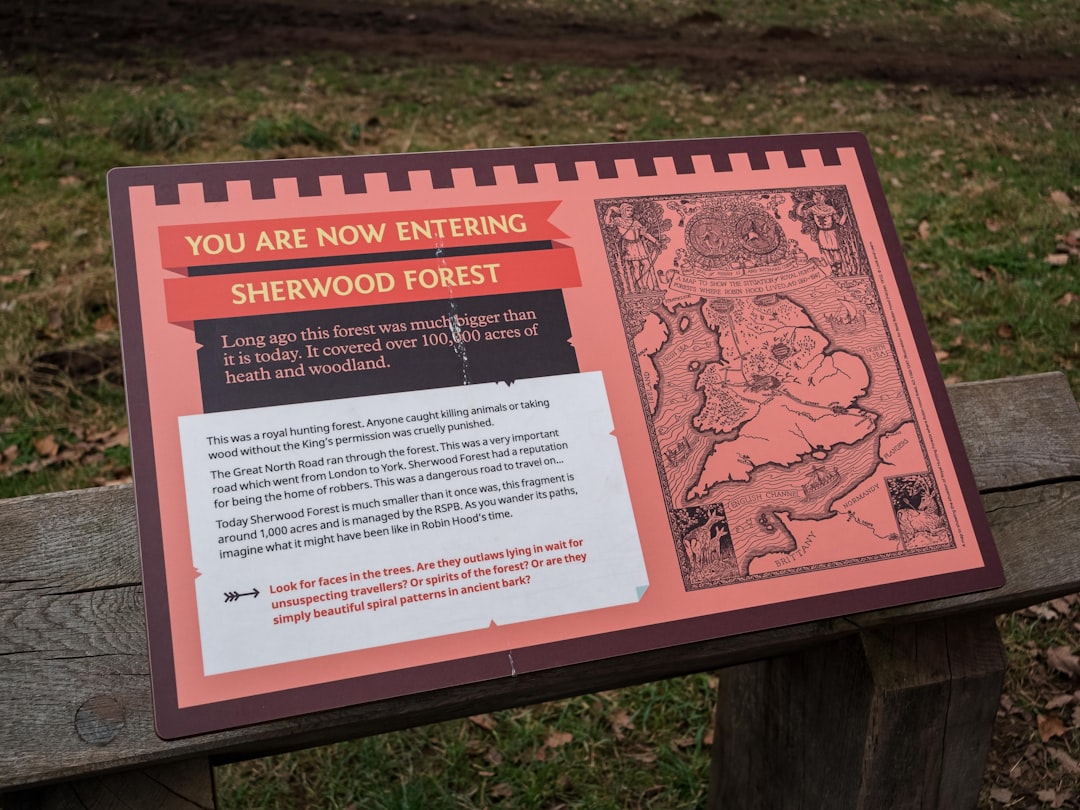
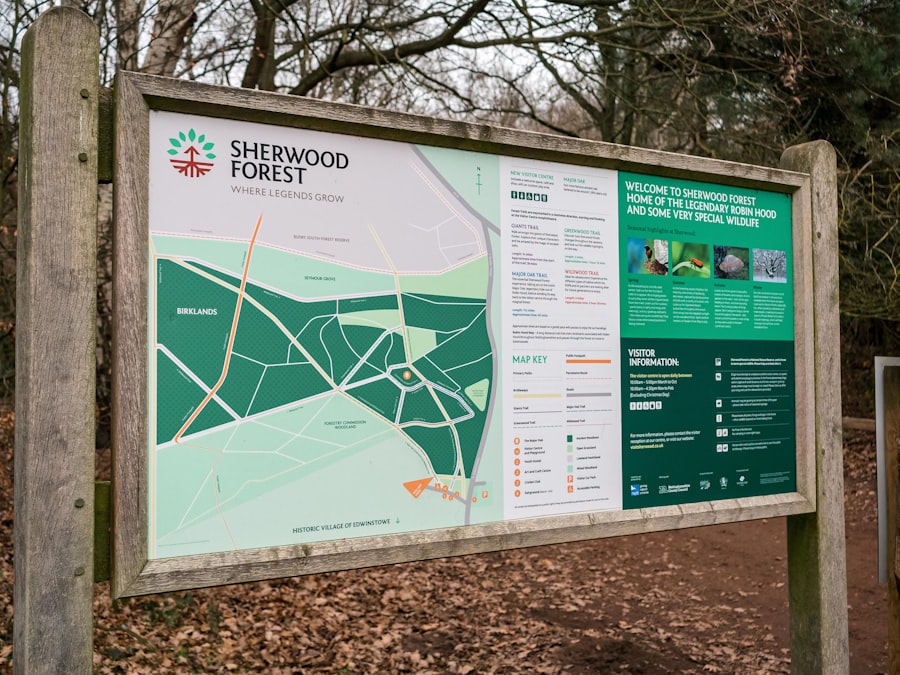
The Lytell Geste of Robyn Hode, a compilation of earlier ballads published around 1495, is considered one of the foundational texts. It tells the story of an outlaw who, while undoubtedly possessing a strong sense of justice, is also capable of violence and cunning. He is portrayed as an archer of unparalleled skill, a protector of yeomen and good knights, but critically, he operates outside the law. There is no explicit mention of him “stealing from the rich to give to the poor” in the systematic sense often attributed to him now. Instead, the focus is on his conflicts with oppressive sheriffs and abbots, and his loyalty to the king, even if the king is initially unaware of his true character. The geographical setting is largely concentrated around Sherwood Forest in Nottinghamshire and Barnsdale Forest in Yorkshire, suggesting a regional origin for the tales.
Other early ballads, such as “Robin Hood and the Monk” and “Robin Hood and Guy of Gisborne,” further illuminate these initial portrayals. These compositions often depict a solitary or small band of outlaws engaged in armed conflict, ambushes, and escapes. The antagonists are typically corrupt officials or arrogant knights, embodying the struggles of the common folk against autocratic authority. It is important to note that these early ballads were oral traditions before being committed to writing, meaning they would have evolved and adapted over time, reflecting the changing societal concerns of their audiences.
Chronicle Allusions: Robin Hood as a Known Figure
Beyond the ballads, fleeting references to Robin Hood appear in historical chronicles, indicating that he was a recognizable figure in popular culture long before a definitive historical personage was sought. Andrew of Wyntoun’s Orygynale Cronykil of Scotland (c. 1420) mentions “Little John and Robin Hood” as figures whose stories were widely sung and known. Similarly, Walter Bower’s continuation of John of Fordun’s Scotichronicon (c. 1440) notes that the “fame of Robert Hood, the most famous of cutthroats,” filled the mouths of ballad singers. These mentions are invaluable because they confirm the widespread recognition of Robin Hood as a popular outlaw figure during this period, even if they don’t offer specifics about his life. They serve as a testament to the power of oral storytelling and the way a character could permeate a society’s consciousness without needing a detailed historical dossier.
In exploring the themes of social justice and wealth redistribution, an interesting article that complements the narrative of “The Real Robin Hood” can be found at this link: The Real Robin Hood. This article delves into the historical context and modern interpretations of Robin Hood’s legacy, highlighting how his story continues to resonate in contemporary discussions about economic inequality and the fight for fairness in society.
The Search for the Historical Robin Hood: Theories and Contenders
The allure of grounding the legend in historical fact has driven scholars and enthusiasts alike to scour historical archives for a tangible individual who could have inspired the myth. This quest has yielded several prominent theories, each with its own set of arguments and inconsistencies.
Robert Hod, the Fleeing Tenant
One of the most persistent theories centers on a man named Robert Hod, who appears in various legal documents from the late 13th and early 14th centuries. Specifically, a “Robert Hod” is documented in the Yorkshire Assize Rolls of 1226 as having his goods confiscated after being outlawed. Another “Robert Hod” from Wakefield is recorded in the court rolls of the manor of Wakefield in 1284, showing him paying a small fine. The argument for this individual often rests on the idea that “Robin” is a diminutive of Robert, and “Hood” could refer to a specific type of headwear or even be a localized surname.
However, the major hurdle with this theory is the lack of direct evidence linking this specific individual to the heroic actions or the specific narratives of the Robin Hood ballads. While outlawry was common in medieval England, a simple matching of names across records is insufficient to establish a definitive link. It is akin to finding multiple individuals named John Smith in different historical records and then assuming they are all the same person who committed a specific act. The geographical settings sometimes align, but the crucial narrative connections are absent, leaving this theory as a plausible but unproven hypothesis.
Robert Hood, the Keeper of the King’s Deer
Another compelling candidate emerged in the form of Robert Hood, a figure reportedly in the service of King Edward II in the early 14th century. Records indicate that a “Robyn Hode” was a porter to the King in 1323, receiving wages before being dismissed from service. The prevailing hypothesis here is that this individual, perhaps after being discharged or falling out of favor, might have resorted to outlawry. This theory offers a tantalizing connection to the monarchy, even if it is a tumultuous one.
However, the leap from a dismissed royal servant to an accomplished outlaw leader is largely speculative. While it provides a potential motivation for outlawry – the loss of royal favor or employment – it does not directly explain how this individual became the legendary archer and champion of the poor. Furthermore, the timeline aligns reasonably well with the period when the ballads are thought to have begun circulating, but again, concrete evidence linking this particular Robyne Hode to the actions described in the ballads remains elusive. The connection, while intriguing, is often a product of wishful historical thinking rather than conclusive proof.
The Mythological or Archetypal Robin Hood
A significant school of thought argues that Robin Hood may not have been a single historical individual at all, but rather an archetype, a composite figure embodying the various struggles and aspirations of the common people in medieval England. This perspective suggests that the name “Robin Hood” itself could have been a generic epithet, a kind of nom de guerre adopted by numerous outlaws or even a folkloric invention representing resistance against oppressive authority.
Proponents of this theory point to the consistent themes across various ballads: the defiance of unjust laws, the skilled archer, the loyalty to certain segments of society, and the conflict with powerful figures. These elements resonate with the experiences of many during periods of social and economic upheaval. The name “Hood” itself could be symbolic of the stealth or disguise associated with outlaws. This interpretation views Robin Hood not as a biographical subject, but as a symbolic vessel, a mirror reflecting the desires and frustrations of an entire populace. This approach sidesteps the need for a specific historical match and instead focuses on the enduring cultural impact and symbolic power of the legend. It’s a pragmatic viewpoint, acknowledging the difficulty of pinpointing a single source for such a multifaceted narrative.
The Evolution of the Legend: From Outlaw to Hero
The transformation of Robin Hood from a localized outlaw figure to an international symbol of justice and rebellion is a testament to the power of storytelling and cultural adaptation. This evolution involved significant additions and alterations to the core narrative over centuries.
The Merry Men and Maid Marian
Perhaps one of the most significant developments in the Robin Hood legend was the introduction and expansion of his band of “Merry Men.” While early ballads mention a few companions, the cast of characters, including Little John, Friar Tuck, and Will Scarlet, grew and became more defined over time. These figures provided depth to the narrative, offering humor, loyalty, and complementary skills. Little John, often portrayed as Robin Hood’s loyal lieutenant, is a recurring and strong character from early on. Friar Tuck, the jovial and often pugnacious cleric, is thought to have entered the legend somewhat later, possibly in the 15th or 16th century, adding an element of religious satire and physical comedy.
The introduction of Maid Marian is also a later embellishment, likely emerging in the 16th century, possibly influenced by French pastoral plays and May Day celebrations. Her presence injected a potent romantic element into the otherwise action-oriented tales, transforming Robin Hood from a lone wolf into a leader with a personal stake in the welfare of others. This romantic angle humanized him further, making him more relatable and appealing to a broader audience.
The “Steal from the Rich, Give to the Poor” Motif
As mentioned earlier, the explicit philanthropic motto of “stealing from the rich to give to the poor” is not a dominant feature of the earliest ballads. While Robin Hood undeniably targets wealthy individuals, particularly corrupt clergy and sheriffs, the motivation often appears to be self-preservation, revenge, or a redistribution of wealth among his own band and their allies. The systematic, principled philanthropy we associate with him today is a later accretion, likely gaining prominence from the 17th century onwards, and particularly flourishing in the 19th-century Romantic era.
This shift reflects changing societal values and the moralizing tendencies of later generations. As the legend transitioned into print and popular literature, authors felt a need to imbue Robin Hood with a clearer moral purpose, transforming him from a simple outlaw into a social revolutionary. This addition undoubtedly enhanced his appeal and cemented his status as a heroic figure, aligning him with emerging ideas of social justice.
Robin Hood in the Modern Age: Cultural Resonance and Interpretations

The enduring appeal of Robin Hood lies in his adaptability. He has served as a cultural chameleon, transforming to reflect the anxieties, aspirations, and political ideologies of successive generations. His story continues to resonate deeply in contemporary society.
From Folk Hero to Political Symbol
In the modern era, Robin Hood has been appropriated by various political movements and ideologies. For some, he embodies a socialist ideal, a champion of the proletariat against exploitative capitalism. His actions are seen as a form of direct action, a revolutionary act against systemic injustice. For others, he represents a more individualistic freedom fighter, a man who stands up against tyranny and government overreach, even if it means operating outside established norms.
His image has been invoked in political rhetoric, protests, and even economic discussions, particularly concerning wealth redistribution and taxation. The “Robin Hood tax,” for instance, explicitly draws on his symbolism to advocate for financial levies aimed at rectifying economic inequalities. This demonstrates how a fictional character can transcend mere entertainment to become a potent symbol in real-world debates.
The Adaptability of the Narrative: Film, Literature, and Television
The 20th and 21st centuries have seen an explosion of Robin Hood adaptations across various media. From swashbuckling adventure films of the Golden Age of Hollywood (such as the Errol Flynn classic) to gritty, realistic portrayals, and even comedic interpretations, each iteration adds a new layer to the legend. These adaptations often reflect the prevailing cultural and technological trends of their time. For instance, more recent films might delve deeper into the psychological motivations of the characters, or incorporate contemporary political messages.
Each new adaptation, while drawing on the core elements of the myth, inevitably reinterprets and recontextualizes Robin Hood for a modern audience. This constant retelling ensures the legend remains fresh and relevant, allowing new generations to discover and connect with the enduring themes of justice, rebellion, and community that lie at its heart. It’s a testament to the power of a well-told story, allowing it to act as a mirror, reflecting changing societal values and concerns.
In exploring the fascinating tales of legendary figures, one might find interest in a related article that delves into the myths surrounding historical heroes. The Real Robin Hood not only highlights the adventures of this iconic outlaw but also connects to broader narratives of social justice and rebellion. For those intrigued by such stories, you can read more about various legendary figures and their impact on culture in this insightful article found here.
The Enduring Legacy: Why Robin Hood Persists
| Metric | Data |
|---|---|
| Title | The Real Robin Hood |
| Release Year | 2010 |
| Director | Nickolas Perry |
| Genre | Documentary |
| Runtime | 90 minutes |
| IMDB Rating | 6.5/10 |
| Box Office | Not widely released |
| Main Subject | Robin Hood Gardens housing estate and its residents |
Despite the historical ambiguities and the centuries of embellishment, the legend of Robin Hood continues to captivate and inspire. His persistence is not merely due to a good story, but because he taps into fundamental human desires and anxieties.
The Appeal of Justice and Fairness
At its core, the Robin Hood legend speaks to a universal human yearning for justice and fairness. In a world often perceived as unjust, where the powerful exploit the weak, Robin Hood offers a fantasy of rectification. He is the ultimate equalizer, someone who dares to challenge the status quo and, against all odds, succeeds in restoring a sense of balance. This deep-seated desire to see wrongs righted, to witness the humble triumph over the arrogant, ensures his story will always find an audience. He embodies the hope that even against overwhelming odds, a single individual or a small band can make a difference.
The Romance of Rebellion and Freedom
Beyond justice, Robin Hood also embodies the romance of rebellion and freedom. He lives outside the confines of oppressive society, making his own rules and forging his own destiny in the wild depths of the forest. This image of the free spirit, beholden to no man but his own conscience, holds immense appeal. It taps into the desire for autonomy, for a life lived on one’s own terms, unburdened by societal restrictions. In his forest domain, a verdant sanctuary, he represents an escape from the rigid hierarchies and injustices of medieval society, a place where loyalty and skill, rather than birthright or wealth, determine one’s standing. This freedom, however perilous, offers a powerful counter-narrative to the constraints of everyday life.
The Power of the Underdog
Finally, Robin Hood is the quintessential underdog. He and his small band pit their wits and skill against the vast institutional power of the Sheriff, corrupt religious figures, and sometimes even the King’s men. Their consistent triumphs against such formidable adversaries are deeply satisfying. The underdog narrative resonates because it offers hope that even the seemingly weakest can overcome the strongest through courage, cunning, and unity. It’s a psychological comfort, a reminder that size and power do not always equate to ultimate victory. This timeless theme underpins much of human storytelling and ensures Robin Hood’s place as an enduring symbol of resistance and hope.
As you, the reader, reflect on the trajectory of Robin Hood’s story, it becomes clear that his true power lies not in being a verifiable historical individual, but in his capacity to adapt and fulfill a crucial societal role. He is a cultural chameleon, a mirror reflecting our deepest desires for justice, freedom, and the triumph of the common person. The quest for the “real” Robin Hood might never fully conclude, but the journey itself reveals the fascinating evolution of a legend that, through all its metamorphoses, remains firmly lodged in the heart of Western culture.
FAQs
Who was the real Robin Hood?
The real Robin Hood is a legendary figure believed to have been an outlaw in medieval England, known for “robbing from the rich and giving to the poor.” While there is no definitive historical evidence of his existence, the character is thought to be based on various folk tales and possibly real individuals from the 12th to 14th centuries.
When did the stories of Robin Hood originate?
The earliest known references to Robin Hood date back to the 13th and 14th centuries in English ballads and folklore. These stories evolved over time, blending historical events with myth and legend.
Where was Robin Hood said to have lived?
Robin Hood is traditionally associated with Sherwood Forest in Nottinghamshire, England. This setting is central to many of the tales, where he and his band of Merry Men supposedly lived and carried out their exploits.
Was Robin Hood a real historical figure or purely fictional?
There is no conclusive historical proof that Robin Hood was a real person. Scholars believe the legend may be a composite of several outlaws or folk heroes from medieval England, combined with popular stories and cultural ideals.
What is the significance of Robin Hood in popular culture?
Robin Hood symbolizes justice, resistance against tyranny, and the fight for the common people. His story has been adapted into countless books, films, and other media, making him an enduring figure in English folklore and global popular culture.