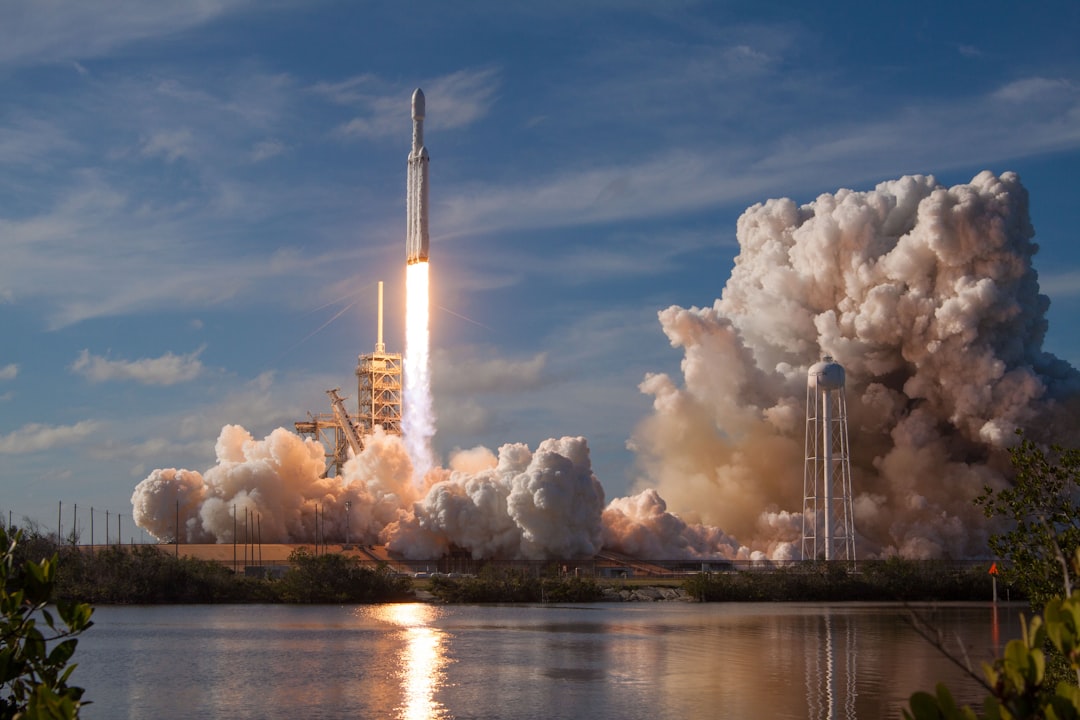
The dark canvas of the night sky, peppered with countless pinpricks of light, has long served as a silent invitation to humanity’s curiosity. For millennia, these celestial bodies have fueled myths, inspired art, and driven fundamental questions about our place in the universe. Space exploration, the tangible manifestation of this enduring human drive, represents our collective endeavor to lift the veil of mystery that shrouds the cosmos. It is a journey of scientific discovery, technological innovation, and, ultimately, a profound exploration of our own potential.
Early Observations and the Seeds of Wonder
Before the advent of rockets and telescopes, humanity’s understanding of space was rudimentary, gleaned through naked-eye observations and philosophical contemplation. Ancient civilizations meticulously charted the movements of the Sun, Moon, and stars, developing sophisticated calendars and astrological systems. These early astronomers, though limited by their tools, laid the groundwork for future scientific inquiry by establishing patterns and predicting celestial events. The celestial sphere was often viewed as a divine realm, a distant and immutable perfection. The very act of looking upwards, seeking to comprehend the movements of these distant lights, was an early form of cosmic exploration, an intellectual reaching out into the unknown.
The Telescope: A Window Opens
The invention of the telescope in the early 17th century marked a revolutionary leap in our ability to perceive the universe. Galileo Galilei’s pioneering observations, revealing the craters of the Moon, the moons of Jupiter, and the phases of Venus, shattered long-held geocentric views and provided empirical evidence for a heliocentric solar system. This optical instrument became the very first crack in the formidable wall of cosmic ignorance, allowing us to see beyond the limits of our earthly senses. Suddenly, celestial bodies, once distant points of light, transformed into tangible worlds with their own features and dynamics.
Theoretical Foundations: Gravitation and Cosmogony
Alongside observational advancements, theoretical physics began to provide the framework for understanding the mechanics of the universe. Isaac Newton’s law of universal gravitation, published in the late 17th century, explained the forces that govern the motion of planets and stars, unifying terrestrial and celestial mechanics. This theoretical bedrock allowed scientists to move beyond mere description to prediction and explanation, moving the cosmos from the realm of magic to that of physics. Later, the exploration of thermodynamics and quantum mechanics would further refine our understanding of stellar evolution and the fundamental particles that constitute the universe.
Space exploration continues to captivate the imagination of scientists and enthusiasts alike, as new discoveries and advancements are made regularly. A fascinating article that delves into the latest developments in this field can be found at this link. It explores the implications of recent missions and the future of human presence beyond Earth, highlighting the importance of international collaboration and technological innovation in our quest to understand the universe.
The Space Race: A Geopolitical Catalyst
From Cold War Rivalry to Scientific Ambition
The mid-20th century witnessed the emergence of space exploration as a focal point of the geopolitical competition between the United States and the Soviet Union. The Cold War, a period of intense ideological and military tension, inadvertently spurred unprecedented advancements in rocket technology and space science. The Sputnik crisis of 1957, the Soviet Union’s successful launch of the first artificial satellite, ignited a firestorm of concern and ambition in the United States, initiating the so-called “Sputnik moment.” This rivalry, though driven by strategic imperatives, inadvertently served as a powerful engine for scientific progress, pushing the boundaries of what was thought possible.
Milestones in Human Spaceflight
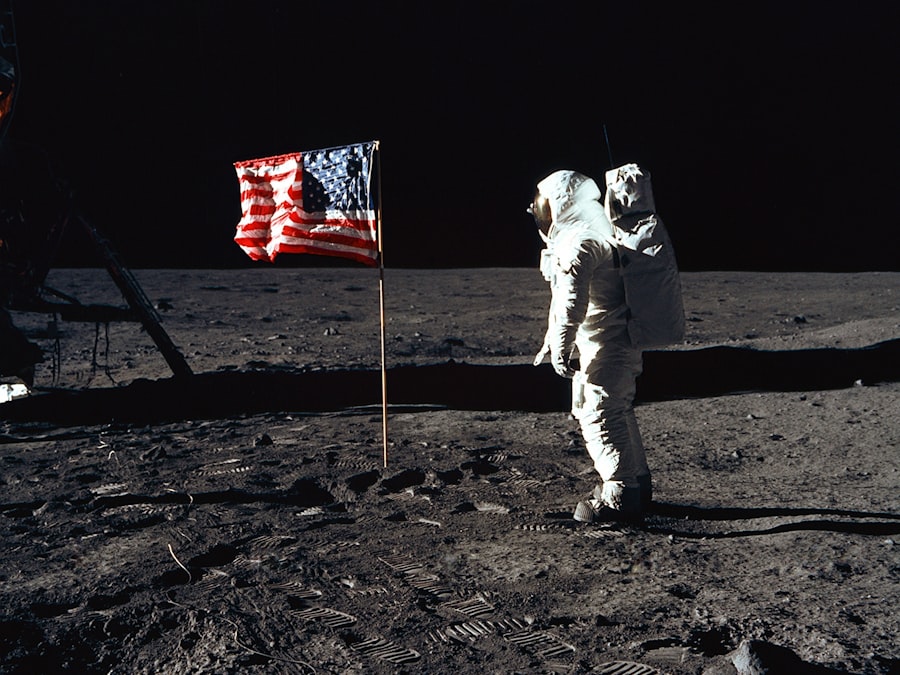
The Space Race yielded a cascade of remarkable achievements. The Soviet Union achieved another significant milestone with Yuri Gagarin’s historic orbital flight in 1961, making him the first human to journey into space. This was swiftly followed by the United States’ Mercury and Gemini programs, which steadily progressed towards the audacious goal of landing a man on the Moon. The Apollo program, culminating in the Apollo 11 mission in 1969 where Neil Armstrong became the first human to walk on the lunar surface, stands as a monumental testament to human ingenuity and determination. These missions were not merely technological feats; they were profound cultural events, inspiring a generation and solidifying space exploration as a symbol of human aspiration.
The Legacy of Competition
While the explicit driver was geopolitical rivalry, the legacy of the Space Race extends far beyond the political arena. It fostered collaboration in scientific research, established international protocols for space activities, and laid the foundation for future international endeavors like the International Space Station. The technological spin-offs derived from this period, ranging from advanced materials to satellite communications, have permeated countless aspects of modern life. The intense competition, like a compressed spring, released a powerful burst of innovation that continues to resonate today.
Unveiling Our Solar System: Robotic Explorers
Probes to the Planets: A Grand Tour
The era of human spaceflight, while iconic, has been complemented by an even more extensive and vital program of robotic exploration. Unmanned probes, often deployed to distant planets and celestial bodies, have become our tireless scouts, venturing into environments too extreme or distant for human presence. Missions like Voyager, Pioneer, Mariner, and Cassini have conducted close-up observations of planets, moons, asteroids, and comets, providing an unprecedented wealth of data and stunning imagery. These robotic emissaries act as our eyes and ears in the vastness, meticulously gathering information without the biological limitations of human explorers.
Studying Our Neighbors: Inner and Outer Worlds
The inner planets, Mercury and Venus, have been probed to understand their extreme temperatures, atmospheric compositions, and geological histories. Mars, in particular, has been a persistent focus of exploration, with rovers like Spirit, Opportunity, Curiosity, and Perseverance searching for signs of past or present life and paving the way for future human missions. The gas giants – Jupiter, Saturn, Uranus, and Neptune – and their intricate ring systems and numerous moons have been illuminated by missions like Galileo, Juno, and the Voyager probes, revealing a dazzling diversity of worlds, from Jovian storms to Saturn’s icy rings.
The Search for Water and Life: Astrobiological Frontiers
A primary objective of many robotic missions has been the search for water, a fundamental prerequisite for life as we know it. Evidence of ancient riverbeds on Mars, subsurface oceans on Europa and Enceladus, and water ice on lunar poles has significantly boosted the prospects for finding extraterrestrial life within our solar system. This quest for biosignatures, for the faint whispers of life beyond Earth, has become a cornerstone of modern astrobiology, transforming our understanding of life’s potential resilience and adaptability. The vastness of our solar system, once thought to be barren, is increasingly revealed as a place of surprising complexity and potential.
Reaching for the Stars: Telescopes and Distant Worlds
The Power of Observation: From Ground-Based to Space Telescopes
While robotic probes explore our immediate cosmic neighborhood, advanced telescopes grant us unparalleled views of the distant universe. Ground-based observatories, equipped with increasingly sophisticated adaptive optics to counteract atmospheric distortion, continue to make significant contributions. However, space telescopes, free from Earth’s atmospheric interference, offer superior clarity and access to a broader spectrum of light. The Hubble Space Telescope, launched in 1990, revolutionized astronomy with its breathtaking images and groundbreaking discoveries, revealing the universe in unprecedented detail across visible, ultraviolet, and near-infrared wavelengths.
Unveiling Exoplanets: New Worlds Abound
One of the most significant discoveries of modern astronomy has been the confirmation of thousands of exoplanets – planets orbiting stars other than our Sun. Missions like Kepler and now TESS (Transiting Exoplanet Survey Satellite) have employed sophisticated transit photometry to detect these distant worlds, a technique that observes the slight dimming of a star as a planet passes in front of it. This discovery has profoundly altered our perception of planetary systems, indicating that planets are not rare phenomena but likely commonplace throughout the galaxy. The universe, it seems, is not a solitary entity but a vast cosmic nursery teeming with potential abodes for life.
The James Webb Space Telescope: A New Era of Discovery
The James Webb Space Telescope (JWST), launched in 2021, represents the next frontier in observational astronomy. Operating in the infrared spectrum, JWST is designed to observe the universe’s first galaxies, peer into the formation of stars and planets, and analyze the atmospheres of exoplanets for signs of life. Its advanced capabilities promise to push the boundaries of our knowledge even further, allowing us to witness the universe’s earliest moments and potentially answer fundamental questions about its origin and evolution. JWST is less a telescope and more a time machine, designed to look back to the universe’s nascent stages.
Space exploration continues to captivate the imagination of scientists and enthusiasts alike, as new discoveries and technological advancements pave the way for future missions. A fascinating article that delves into the latest developments in this field can be found at Hey Did You Know This, where readers can learn about the innovative approaches being taken to explore distant planets and the potential for human colonization beyond Earth. As we stand on the brink of a new era in space travel, understanding these advancements is more important than ever.
The Future of Space Exploration: Challenges and Opportunities
| Mission | Launch Year | Destination | Duration (days) | Key Achievement |
|---|---|---|---|---|
| Apollo 11 | 1969 | Moon | 8 | First manned Moon landing |
| Voyager 1 | 1977 | Interstellar space | Over 17,000 | Farthest human-made object from Earth |
| Mars Rover Curiosity | 2011 | Mars | Ongoing (over 4,000) | Exploration of Mars surface and geology |
| International Space Station (ISS) | 1998 | Low Earth Orbit | Ongoing (over 9,000) | Longest continuous human presence in space |
| Hubble Space Telescope | 1990 | Low Earth Orbit | Over 11,000 | Revolutionized astronomy with deep space images |
Pushing the Boundaries: Mars Colonization and Beyond
The ambition of space exploration continues to evolve, with a growing focus on long-term human presence beyond Earth. Projects aimed at establishing a sustainable human colony on Mars are gaining momentum, driven by both scientific curiosity and the potential for humanity to become a multi-planetary species. Such endeavors present immense technological, physiological, and ethical challenges, requiring innovative solutions for life support, radiation shielding, and autonomous operations. The red planet, once a distant dream, is slowly transitioning to a potential future home.
Commercialization and Public-Private Partnerships
The landscape of space exploration is also being reshaped by the increasing involvement of private companies. Organizations like SpaceX, Blue Origin, and Virgin Galactic are developing reusable rocket technology, driving down launch costs, and pursuing ambitious goals, including space tourism and orbital infrastructure development. These public-private partnerships are vital for accelerating innovation and expanding access to space, transforming it from a domain solely of national governments to one where commercial enterprises play a significant role. The once prohibitively expensive path to orbit is becoming increasingly accessible.
Ethical Considerations and the Search for Extraterrestrial Intelligence
As our capabilities grow, so too do the ethical considerations surrounding space exploration. Questions about planetary protection – preventing the contamination of other worlds and Earth with extraterrestrial life – are paramount. Furthermore, the ongoing search for extraterrestrial intelligence (SETI) raises profound philosophical and societal questions about our potential place in a larger cosmic community. The possibility of contact, however remote, demands careful consideration of its implications. Unveiling the mysteries of space is not just about scientific discovery; it is also about understanding our responsibilities as we venture further into the cosmic unknown. The echoes we send out into the universe carry not just scientific data, but also the very essence of our humanity.
FAQs
What is space exploration?
Space exploration is the investigation of outer space through the use of astronomy, space technology, and spacecraft. It involves sending satellites, probes, and humans beyond Earth’s atmosphere to study celestial bodies and the universe.
When did space exploration begin?
Space exploration began in the mid-20th century, with the launch of the first artificial satellite, Sputnik 1, by the Soviet Union in 1957. This event marked the start of the space age and the space race between the United States and the Soviet Union.
What are some key milestones in space exploration?
Key milestones include the first human in space (Yuri Gagarin, 1961), the Apollo 11 Moon landing (1969), the launch of the Hubble Space Telescope (1990), and the Mars rover missions, such as Curiosity (2012) and Perseverance (2021).
What technologies are used in space exploration?
Technologies used include rockets for launch, spacecraft for travel and data collection, satellites for communication and observation, space telescopes, robotic rovers, and life support systems for human missions.
Why is space exploration important?
Space exploration advances scientific knowledge about the universe, helps develop new technologies, inspires innovation, and can address challenges on Earth such as climate monitoring. It also lays the groundwork for potential human settlement beyond Earth.