Exploring the Celestial Echoes: Unveiling Moon Landing Telemetry Data
The Apollo missions, etched into the annals of human achievement, represent a monumental leap for humankind. Beyond the iconic imagery and eloquent speeches, lay a foundation of intricate data – telemetry. This stream of raw information, painstakingly transmitted across the vast expanse of space, served as the nervous system of the missions, providing real-time feedback on every critical function. Unveiling this data offers a unique window into the engineering prowess, the challenges overcome, and the sheer audacity of landing humans on another celestial body. The telemetry data is not merely a dry collection of numbers; it is the faint celestial echo of humanity’s first decisive steps beyond Earth.
Telemetry, at its core, is the process of remotely gathering data and transmitting it to a receiving station. For the Apollo program, this capability was not a luxury but an absolute necessity. Imagine building a cathedral atop a precarious cliff; you need constant feedback on the structural integrity, the stress on each stone, the very breath of the wind. Telemetry provided that vital, constant reassurance, or conversely, the urgent alarm, for the astronauts and the ground control teams. The journey of this data began with the design and implementation of sophisticated sensor networks within the spacecraft and on the lunar surface. These sensors acted as the mission’s eyes and ears, translating physical phenomena into electrical signals.
Designing the Data Pipeline: From Sensors to Signals
The initial phase of telemetry involved the meticulous selection and calibration of sensors. For instruments like the descent engine, fuel tanks, environmental control systems, and even the astronauts’ vital signs, specific sensors were chosen for their accuracy and reliability under the extreme conditions of space. Temperature probes, pressure transducers, accelerometers, gyroscopes – each played a crucial role in quantifying the state of the spacecraft.
Quantifying the Unseen: The Sensory Network
Consider the challenge of measuring the temperature of liquid hydrogen in a fuel tank millions of miles away. This required specialized cryo-sensors capable of operating at extremely low temperatures and performing with unwavering precision. Similarly, the pressure within the lunar module’s cabin, a lifeline for the astronauts, was continuously monitored by sensitive transducers. The very motion of the spacecraft, its pitch, yaw, and roll, was captured by inertial measurement units, providing the raw ingredients for navigation.
Encoding the Message: From Analog to Digital Whispers
Once gathered, these analog signals needed to be transformed into a format that could be transmitted across the immense distances. This involved the analog-to-digital conversion (ADC) process. The continuous electrical signals from the sensors were sampled at regular intervals and converted into discrete digital values. This process, akin to taking snapshots of a flowing river, allowed the data to be encoded into a series of binary pulses – the language of computers.
The Art of Sampling: Capturing the Flow of Information
The sampling rate was a critical design parameter. Too slow, and crucial dynamic changes could be missed. Too fast, and the sheer volume of data would overwhelm the transmission capabilities. Engineers meticulously calculated the optimal sampling rates for each parameter, ensuring that the essential information was captured without unnecessary overhead.
Modulating the Signal: Packing the Information for the Journey
The digitized data was then modulated onto a radio frequency carrier wave. This process, much like sending a letter through the postal service, involved encoding the digital information onto an electromagnetic wave for efficient transmission. Various modulation techniques were employed, each designed to maximize the data rate and minimize error during the long journey through the vacuum of space.
Carrier Waves: The Invisible Couriers of Data
The radio frequencies chosen for the Apollo missions were crucial. They needed to propagate effectively through the Earth’s atmosphere and the vacuum of space, while also being able to carry the bandwidth required for the telemetry data. The S-band frequencies were a common choice, offering a balance of these properties.
The analysis of moon landing telemetry data has provided invaluable insights into the Apollo missions, revealing the intricate details of the spacecraft’s performance and the astronauts’ experiences during their historic journeys. For a deeper understanding of how this data has shaped our knowledge of space exploration, you can read a related article that explores the significance of telemetry in the context of lunar missions. Check it out here: Telemetry Data and the Apollo Missions.
Decoding the Echoes: The Ground-Based Receiving Network
Upon its arduous journey across the void, the telemetry signal arrived at Earth, weakened and susceptible to interference. A sophisticated network of ground stations was established to capture, demodulate, and ultimately, decode this precious cargo of information. This network acted as the mission’s anchor, the place where the celestial whispers became intelligible Earth-bound knowledge.
The Global Reach: A Web of Receivers
The Apollo program relied on a global network of Deep Space Network (DSN) stations and other tracking facilities. These stations, strategically located around the world, ensured continuous communication with the spacecraft as it orbited the Moon and traversed the lunar surface. The curvature of the Earth meant that no single station could maintain contact at all times, necessitating this interconnected infrastructure.
Tracking the Lunar Ballet: Global Coverage
Imagine a delicate dance taking place across the cosmos. The ground stations were the choreographers and audience, ensuring they never lost sight of the performers. Locations like Goldstone in California, Madrid in Spain, and Canberra in Australia formed the backbone of this communication network, providing overlapping coverage.
Demodulating the Signal: Reclaiming the Lost Message
Upon reception, the modulated carrier wave was subjected to the reverse process of modulation. Demodulation extracted the original digital signal from the carrier wave, amplifying it and filtering out any noise that may have been introduced during transmission. This was a delicate operation, akin to carefully picking out a single voice from a cacophony of sounds.
Noise Reduction: Preserving the Purity of the Signal
The space environment is not always a silent void. Solar flares, cosmic rays, and even man-made interference could corrupt the telemetry signal. Sophisticated filtering techniques and error detection/correction codes were employed to mitigate the impact of this noise, ensuring the integrity of the data.
Data Acquisition and Pre-processing: Preparing for Analysis
Once demodulated, the raw digital data was captured and subjected to initial pre-processing. This typically involved time-stamping the data, converting it into a usable format, and performing basic error checks. This stage was crucial for organizing the vast streams of data into a structure that could be efficiently analyzed.
Time-Stamping: Orchestrating the Data Stream
Accurate time-stamping of telemetry data was paramount. It allowed engineers to correlate events occurring in the spacecraft with specific sensor readings, providing a precise timeline of the mission’s progress and any anomalies.
Inside the Machine: Unpacking the Lunar Module’s Vital Signs
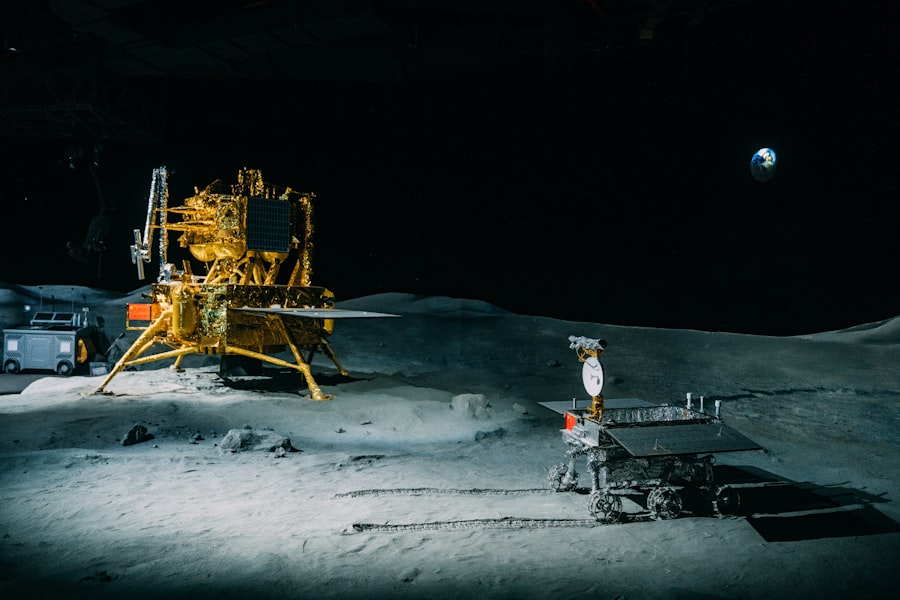
The telemetry data specific to the Lunar Module (LM) is perhaps the most captivating, as it directly relates to the very act of landing on the Moon and sustaining life there. This data paints a granular picture of the LM’s performance, from the terrifying descent to the delicate operations on the lunar surface. Every parameter transmitted from the LM was a lifeline, a constant report from a world alien and unforgiving.
The Descent Engine: A Controlled Implosion of Power
The heart of the lunar landing was the descent engine. Its performance was scrutinized through a multitude of telemetry streams. Thrust levels, fuel consumption, chamber pressure, and engine temperature were all critical indicators of the engine’s health and the descent’s progress. Malfunctions in any of these parameters could have had catastrophic consequences.
Thrust Vector Control: Steering the Descent
The ability to steer the descent engine was crucial for avoiding obstacles and achieving a safe landing. Telemetry data related to the gimbal angles of the engine Nozzle provided insight into the pitch and yaw control, allowing ground control to monitor and verify the trajectory adjustments.
Fuel Management: The Ticking Clock
Fuel was the ultimate constraint. Telemetry reporting fuel quantity and consumption rates was vital for calculating the remaining descent time and making critical decisions about landing sites. The “1202” and “1201” alarms during Apollo 11 are a prime example of how fuel calculations, intertwined with computer overload data, became pivotal to the mission’s success. The steady drip of fuel consumption indicators was a constant reminder of the finite resources available.
Environmental Control System (ECS): The Breath of Life
Maintaining a habitable environment within the LM was a constant battle against the vacuum of space. The ECS telemetry provided a constant readout of cabin pressure, oxygen levels, carbon dioxide concentration, and temperature. These readings were essential for ensuring the astronauts’ safety and comfort.
Oxygen Levels: The Air They Breathed
The monitoring of oxygen partial pressure was a direct indicator of the breathable atmosphere within the LM. Any deviation from the safe range would trigger immediate alerts.
CO2 Scrubbing: The Invisible Enemy
Carbon dioxide, a byproduct of respiration, needed to be effectively removed. Telemetry from the CO2 scrubbers indicated the efficiency of this critical system, ensuring that the astronauts were not succumbing to this silent threat.
The Mission Control Perspective: Navigating by the Numbers
The telemetry data was not just for observation; it was an active tool for decision-making. Mission Control on Earth was the brain, interpreting the streams of data and responding to the ever-changing conditions. The ability to process and react to this information in real-time was a testament to the ingenuity of the human element in this technologically advanced endeavor. These numbers were more than just data points; they were the brushstrokes painting the dynamic canvas of the mission.
Real-time Monitoring: The Constant Watch
Flight controllers were engaged in a perpetual state of monitoring. Dedicated controllers for each subsystem, from flight dynamics to life support, would meticulously observe their respective telemetry streams. Any deviation from expected parameters would trigger an alert, initiating investigation and problem-solving procedures.
The “Go/No-Go” Decisions: Data-Driven Judgment
Many critical mission phases, such as engine firings or stage separations, were subject to “Go/No-Go” decisions based on incoming telemetry. If the data indicated a problem, the mission could be aborted, highlighting the direct impact of telemetry on mission safety.
Anomaly Detection and Resolution: Troubleshooting from Afar
The telemetry data was the primary tool for detecting and diagnosing anomalies. When a spacecraft behaved unexpectedly, engineers would pore over the relevant data streams to pinpoint the cause. This process was akin to a medical diagnostician examining a patient’s vital signs to identify illness.
Pattern Recognition: Spotting the Cracks
Engineers developed sophisticated pattern recognition skills, capable of identifying subtle deviations in telemetry that might indicate a developing issue before it became critical.
Trajectory Prediction and Navigation: Guiding the Feather
While the spacecraft had its own navigation systems, telemetry also played a vital role in ground-based trajectory calculation and prediction. This allowed Mission Control to independently verify the spacecraft’s position and velocity, offering an additional layer of safety and redundancy.
Orbital Mechanics: Understanding the Celestial Dance
The principles of orbital mechanics were applied to the telemetry data to predict future trajectories and ensure accurate rendezvous and docking maneuvers.
The study of moon landing telemetry data has revealed fascinating insights into the Apollo missions and the technology used during those historic events. For a deeper understanding of how this data was collected and analyzed, you can explore a related article that discusses the significance of telemetry in space exploration. This resource provides a comprehensive overview of the challenges faced by engineers and scientists. To read more about it, check out this informative piece on space exploration.
Beyond Apollo: The Enduring Legacy of Telemetry Data
| Parameter | Value | Unit | Description |
|---|---|---|---|
| Altitude | 15,200 | meters | Current altitude above lunar surface |
| Velocity | 1.6 | m/s | Descent velocity towards lunar surface |
| Fuel Remaining | 120 | kg | Amount of descent fuel left |
| Engine Thrust | 4,500 | Newtons | Current thrust output of descent engine |
| Pitch Angle | 5 | degrees | Orientation angle relative to lunar surface |
| Roll Angle | 0 | degrees | Roll orientation of the lander |
| Yaw Angle | 2 | degrees | Yaw orientation of the lander |
| Time to Touchdown | 45 | seconds | Estimated time remaining before landing |
| Surface Temperature | -20 | °C | Temperature at landing site |
| Communication Signal Strength | 85 | percent | Signal strength between lander and mission control |
The telemetry data from the Apollo missions is more than just a historical artifact. It is a vast repository of information that continues to inform and inspire. The lessons learned from decoding these celestial echoes are as relevant today as they were during the missions, shaping the design of future spacecraft and the strategies for exploring the cosmos. The silent transmission across the void has left an indelible mark, a testament to human curiosity and our relentless pursuit of knowledge.
Archiving and Accessibility: Preserving the Digital Record
Significant efforts have been made to archive and make accessible the vast quantities of Apollo telemetry data. This ensures that future generations of engineers, scientists, and historians can study it. Organizations like NASA and the Smithsonian play a crucial role in this preservation.
The Digital Rosetta Stone: Translating the Past for the Future
The challenges of decoding and interpreting early digital data are akin to deciphering an ancient language. Much work has gone into developing tools and techniques to bring this historical data into a usable, modern format.
Modern Applications: Building on a Solid Foundation
The experience gained from Apollo telemetry has directly influenced the design of telemetry systems for modern space missions, from the International Space Station to the Mars rovers. The principles of robust data transmission, error correction, and real-time analysis remain fundamental.
Future Exploration: The Next Generation of Data Streams
As humanity ventures further into space, the volume and complexity of telemetry data will only increase. The lessons learned from Apollo will be instrumental in designing systems capable of handling these new challenges, allowing us to explore the furthest reaches of our solar system and beyond. The faint echoes from the Moon continue to guide us, a celestial compass pointing towards the unknown.
FAQs
What is moon landing telemetry data?
Moon landing telemetry data refers to the collection of real-time measurements and information transmitted from the lunar module and other spacecraft systems during the moon landing mission. This data includes spacecraft position, velocity, system status, environmental conditions, and astronaut vital signs.
Why is telemetry data important for moon landings?
Telemetry data is crucial because it allows mission control on Earth to monitor the spacecraft’s performance, ensure the safety of astronauts, and make informed decisions during the mission. It helps detect any anomalies and guides the landing process to ensure a successful touchdown on the lunar surface.
How was telemetry data transmitted during the Apollo moon landings?
During the Apollo missions, telemetry data was transmitted via radio signals from the spacecraft to Earth-based tracking stations. These signals were received, decoded, and analyzed in real-time by NASA’s Mission Control Center to monitor the spacecraft’s status and trajectory.
What types of information were included in the moon landing telemetry data?
The telemetry data included spacecraft altitude, speed, fuel levels, engine performance, guidance system status, environmental conditions inside the lunar module, astronaut heart rates, and other vital parameters necessary for mission success and astronaut safety.
Is moon landing telemetry data still used or studied today?
Yes, moon landing telemetry data is still studied today for historical research, engineering analysis, and educational purposes. It provides valuable insights into early space exploration technology and helps inform the design of current and future lunar missions.