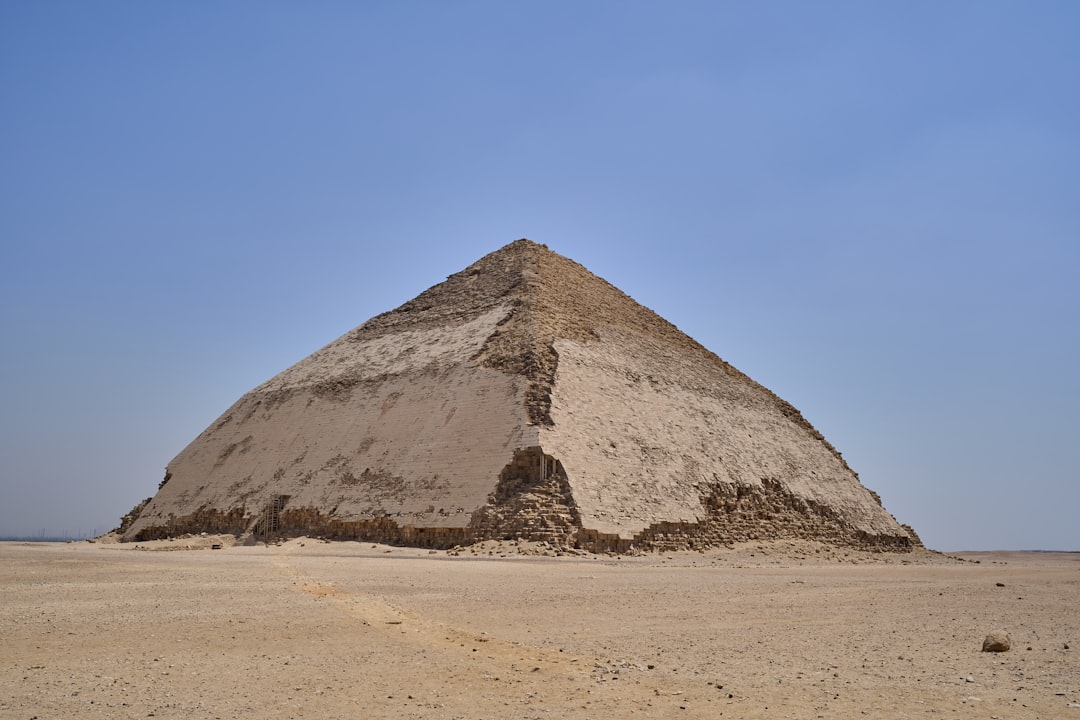
Unraveling the Mysteries of Pyramid Construction
The sheer monumental scale of ancient Egyptian pyramids has captivated humanity for millennia, standing as silent sentinels to a civilization that achieved astonishing feats of engineering and organization. While their purpose has been largely understood as elaborate tombs for pharaohs, the how of their construction remains a fertile ground for inquiry and debate. This article aims to unravel some of these enduring mysteries, exploring the prevailing theories and the evidence that supports them, offering a glimpse into the ingenuity and sheer human power that raised these colossal structures. As you delve into these discussions, imagine yourself a detective, piecing together clues left behind in stone and hieroglyph to solve an enigma laid bare across the desert sands.
The genesis of any pyramid lies in its raw materials. The massive blocks that form these enduring monuments were not conjured from thin air; they were painstakingly extracted from quarries, a process that required immense labor and a sophisticated understanding of geology and mechanics.
Sources of Stone: From Local Limestone to Transcontinental Granite
The primary building material for the core of most pyramids, particularly those of the Old Kingdom, was limestone. This readily available stone was quarried in close proximity to the pyramid sites, minimizing the logistical burden of transportation. The Giza Plateau itself, for instance, served as a primary source for the Great Pyramid of Giza. However, for specific architectural elements, such as the casing stones that once adorned the pyramids with a gleaming white finish, or for internal chambers and sarcophagi, materials of a higher quality or specific type were sought.
- Fine White Limestone: This was often imported from Tura, across the Nile River from Giza. Its superior quality made it ideal for the outer casing, reflecting sunlight and presenting a resplendent facade.
- Granite: Perhaps the most challenging material to work with, granite was used for some internal chambers, sarcophagi, and massive portcullis blocks. The main source for this hard stone was Aswan, located hundreds of kilometers to the south up the Nile. The transportation of these colossal granite beams, some weighing many tons, represents one of the most significant logistical puzzles.
Tools of Extraction: Simplicity Meets Ingenuity
Contrary to popular depictions of elaborate, lost technologies, the tools used by ancient Egyptian quarry workers were remarkably simple, yet effective. Their success lay in their understanding of the materials they were working with and the application of basic physics.
- Copper Chisels and Saws: For softer stones like limestone, copper tools were the primary instruments. While copper is not as hard as iron, when alloyed with a small amount of tin to form bronze, it becomes significantly more durable. Repeated hammering and abrasion with these tools could gradually cut into the stone. For granite, a more hardened approach was necessary.
- Dolerite Pounders: These hard, igneous rocks were used to pound and break away at granite. This was a slow and laborious process, involving the repeated striking of the dolerite against the granite face, gradually creating fissures and weakening the stone.
- Wedges and Water: For larger blocks, techniques involving wooden wedges were employed. Grooves would be cut into the stone, and dry wooden wedges would be inserted. When water was poured onto the wedges, they would swell, exerting immense pressure and splitting the rock along the pre-cut lines.
The construction of the pyramids has long fascinated historians and archaeologists, leading to various theories about how these monumental structures were built. One intriguing perspective can be found in the article titled “Theories on How the Pyramids Were Built,” which explores different hypotheses ranging from advanced engineering techniques to the use of ramps and manpower. For a deeper dive into this topic, you can read the related article at here.
The Herculean Task of Transportation: Moving Mountains of Stone
Once extracted, the monumental task of moving these colossal stone blocks from the quarry to the construction site began. This phase of pyramid construction is perhaps the most debated and awe-inspiring, requiring an intricate understanding of logistics, manpower, and potentially, innovative methods of locomotion.
Land Transport: Ramps and Rollers on a Grand Scale
The journey of a stone block over land represented a significant challenge. Given the weight of the blocks, which could range from a few tons to many tens of tons, simple dragging would have been inefficient and extremely difficult.
- Sledges: Evidence suggests the use of large wooden sledges to transport blocks. These sledges would have been placed on prepared tracks or smoothed surfaces. The friction generated would have been a major impediment.
- Lubrication: To reduce friction, it is theorized that water or other lubricants were poured onto the path in front of the sledges. A famous tomb painting from the Middle Kingdom (Tomb of Djehutihotep) depicts a colossal statue being moved on a sledge, with a person pouring liquid in front of it, lending credence to this theory.
- Manpower (and Animal Power): Thousands of laborers would have been required to pull these sledges. While oxen and possibly donkeys may have been used for smaller loads or for hauling materials at the quarry, the sheer weight of the largest blocks likely necessitated the coordinated effort of a human workforce. Imagine a disciplined army, all pulling in unison, their muscles straining against the immense weight.
Nile Transport: The Highway of the Gods
For stones quarried far from the construction sites, particularly the granite from Aswan and the fine limestone from Tura, the Nile River was the indispensable highway. This vital waterway offered a more efficient means of transport, though it still presented its own set of challenges.
- Barges: Large wooden barges, some of substantial size, were constructed to carry the stone blocks. These would have been loaded with the utmost care, often at specially constructed harbors or landing sites near the quarries.
- Controlled Flooding: During the annual inundation of the Nile, water levels would rise, bringing the barges closer to the construction sites. Some theories suggest that canals were dug to facilitate the movement of these barges even closer to the pyramid foundations, maximizing the benefit of the rising waters.
- Currents and Towing: Skilled navigators would have utilized the river currents to their advantage. For upstream journeys or against strong currents, teams of men would have lined the banks, pulling the barges with ropes. This would have been a synchronized effort, requiring precise timing and communication.
Construction Techniques: The Marvel of Vertical Ascent

The erection of these massive stones to their designated positions within the pyramid is perhaps the most profound mystery. How did the ancient Egyptians lift and place blocks that weighed as much as small buildings, to heights that rivaled modern structures?
The Ramp Theories: A Stepping Stone to the Sky
The most widely accepted hypothesis for achieving vertical ascent involves the construction of ramps. However, the nature and design of these ramps remain a subject of considerable debate.
- Straight Ramp: A single, long, straight ramp extending directly from the ground to the pyramid’s summit. The sheer length required to maintain a manageable gradient for such a heavy load would have made this incredibly resource-intensive, potentially requiring a ramp larger in volume than the pyramid itself.
- Spiral Ramp: A ramp that wound its way around the exterior of the pyramid as it grew. This would have been more space-efficient but would have obscured the pyramid’s faces and complicated precise placement of the blocks. Moreover, the external appearance of the pyramids, particularly in initial stages, doesn’t strongly support continuous external ramps.
- Internal Ramp: A theory popularized by architect Jean-Pierre Houdin proposes an internal ramp that spiraled upwards within the pyramid’s structure. This ramp would have been filled with rubble and then encased by the outer layers of stone as construction progressed. This theory offers a solution to the visual occlusion and resource issues of external ramps.
Other Proposed Methods: Levers and Ingenious Mechanisms
While ramps are the leading contenders, other theories propose supplementary or alternative methods:
- Leverage: The use of levers is a fundamental principle of mechanical advantage. It is plausible that levers were employed to maneuver blocks into their final positions, particularly for fine adjustments or for lifting them over short distances.
- Counterweights: Some speculate about the use of elaborate counterweight systems, though concrete evidence for such complex machinery remains elusive.
- Water Locks (Less Accepted): More fringe theories have explored the idea of water-filled channels or locks to float blocks into place, but these lack significant archaeological grounding.
The Workforce: The Human Engine of Pyramid Building
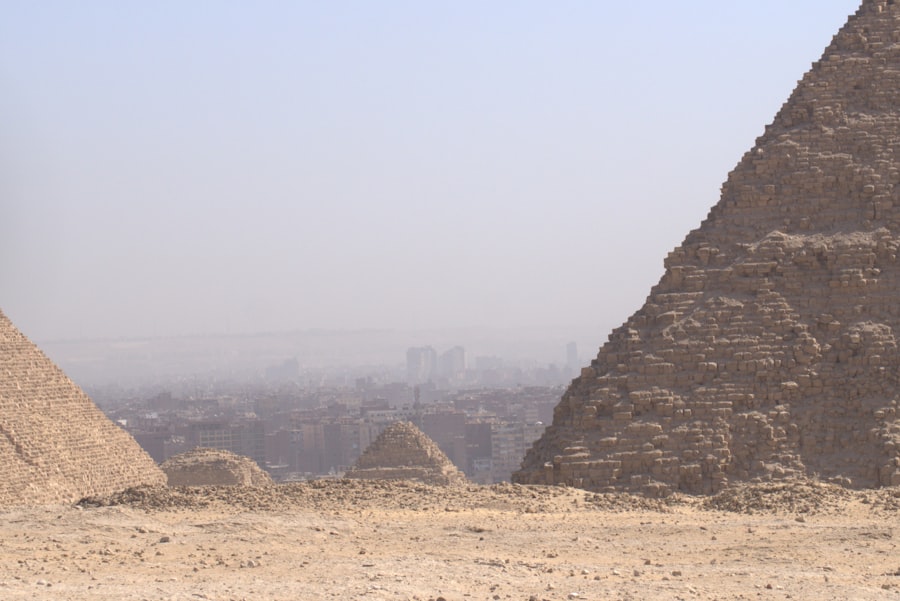
The construction of the pyramids was not the work of enslaved populations, as a common misconception might suggest. Archaeological evidence points towards a highly organized and skilled workforce, composed of free laborers who were housed, fed, and compensated.
Organization and Management: A National Project
Pyramid construction was a monumental undertaking that required unprecedented levels of organization and project management. This was not a task left to chance; it was a state-sponsored endeavor of immense scale.
- Seasonal Laboration: It is believed that many of the laborers were farmers who worked on the pyramids during the annual Nile inundation, a period when agricultural work was impossible. This provided a consistent and large labor pool.
- Skilled Craftsmen: Alongside the laborers who moved the stones, there would have been a cadre of highly skilled artisans, including stonemasons, surveyors, architects, and supervisors, who ensured the precision and integrity of the construction. These individuals were well-respected and likely held a higher social standing.
- Logistical Hubs: Villages and settlements were established near the construction sites to house and provision the workforce. Archaeological excavations at Giza have uncovered extensive remains of these settlements, providing insights into the daily lives of the pyramid builders.
Motivation and Compensation: More Than Just Orders
The motivation for such a massive and enduring effort is a complex question. While the pharaoh’s divine status was central to Egyptian society, it is unlikely that divine decree alone sufficed to inspire millions of man-hours of grueling labor.
- Religious Piety and National Pride: Contributing to the construction of the pharaoh’s tomb was likely seen as an act of religious devotion and a contribution to the stability and prosperity of the nation. The pharaoh was the conduit between the gods and the people, and ensuring his successful transition to the afterlife was paramount.
- Benefits of Service: While not slaves, the laborers were likely compensated for their work. This compensation could have included food, housing, clothing, and possibly other goods or even land. The provision of organized labor for such projects might have served as a means of taxation or a form of collective service to the state.
- Social Cohesion: The shared experience of building such a monumental structure could have fostered a sense of community and shared purpose among the diverse population.
The construction of the pyramids has fascinated historians and archaeologists for centuries, leading to numerous theories about how these monumental structures were built. Some suggest that advanced engineering techniques were employed, while others propose the use of a large workforce and simple tools. For those interested in exploring more about the various hypotheses surrounding this ancient marvel, a related article can be found at Hey Did You Know This, which delves into the intriguing possibilities and evidence behind the construction methods of the pyramids.
Precision and Alignment: The Celestial Blueprint
| Theory | Description | Supporting Evidence | Criticism |
|---|---|---|---|
| Ramp Theory | Large ramps were used to haul stones up as the pyramid rose. | Archaeological remains of ramps; ancient depictions of workers hauling stones. | Ramps would have to be extremely long and massive; no definitive ramp remains found. |
| Lever and Pulley System | Simple machines like levers and pulleys helped lift heavy stones. | Basic tools known to ancient Egyptians; feasible mechanical advantage. | No direct evidence of pulley use; levers alone may not explain height achieved. |
| Water Shaft Theory | Water-filled shafts and buoyancy were used to float blocks into place. | Some internal shafts in pyramids; water management was advanced. | Highly speculative; no conclusive proof of water use in construction. |
| Internal Spiral Ramp | An internal spiral ramp was built inside the pyramid to move stones upward. | Some structural anomalies suggest internal passageways; solves ramp length issue. | Limited archaeological evidence; difficult to confirm without excavation. |
| Alien Intervention | Extraterrestrial beings helped build the pyramids using advanced technology. | Popular in pop culture; explains precision and scale. | No scientific evidence; dismissed by mainstream archaeology. |
Beyond the sheer scale and logistical feats, the enduring wonder of the pyramids lies in their remarkable precision and alignment. These structures are not merely piles of stone; they are meticulously engineered marvels that connect the earthly realm with the cosmos.
Astronomical Alignment: Gazing at the Stars
The base of the Great Pyramid of Giza, for instance, is aligned with remarkable accuracy to the cardinal directions (north, south, east, and west). This level of precision suggests a sophisticated understanding of astronomy and the use of celestial bodies for surveying.
- The North Star: It is widely believed that the Egyptians used the North Star (or an equivalent visible pole star at the time) to establish the north-south axis. By tracking the apparent circumpolar motion of stars, they could determine the true north.
- Solar Observation: Solar observation, particularly at sunrise and sunset on the equinoxes, could also have been used to establish the east-west axis.
- Zenith Plumb Bob: For vertical alignment, a plumb bob lowered from a specific point in the sky at its zenith (highest point) could have been used to define a vertical line.
Mathematical and Geometric Principles: The Language of Design
The internal dimensions and proportions of the pyramids often exhibit sophisticated mathematical relationships. While the explicit mathematical texts are scarce for the Old Kingdom, the results speak for themselves.
- Pythagorean Relationships: Some scholars have identified close approximations of the Pythagorean theorem within the proportions of the pyramids, suggesting an understanding of right triangles and their relationships.
- The Golden Ratio: The presence of the Golden Ratio (phi, approximately 1.618) has been noted in some pyramid measurements, though this is a more contentious area, with some arguing for its deliberate incorporation and others suggesting it may be coincidental or an emergent property of simpler design goals.
- Incredible Accuracy: The astonishing accuracy of the stone fitting throughout the pyramids, with joints so fine that a blade cannot be inserted between them in many cases, speaks volumes about the skill of the masons and the quality of their tools and methods.
The construction of the ancient Egyptian pyramids, therefore, represents a convergence of a profound understanding of materials, ingenious engineering, meticulous organization, and a deep connection to the celestial realm. While some mysteries may persist, the evidence gathered thus far paints a compelling picture of human ingenuity and the power of collective endeavor that continues to inspire wonder today. As we continue to study these ancient monuments, we are not just unraveling mysteries of construction; we are glimpsing the very soul of a civilization that dared to build for eternity.
FAQs
1. What are the main theories about how the pyramids were built?
The main theories include the use of large ramps to move the stones, the employment of a system of levers, and the possibility of internal spiral ramps. Some researchers also suggest that water or lubrication methods were used to ease the transportation of heavy blocks.
2. Did the ancient Egyptians use slaves to build the pyramids?
Most modern archaeologists agree that the pyramids were built by a large workforce of skilled laborers and seasonal workers, not slaves. Evidence shows that these workers were well-fed and housed in nearby workers’ villages.
3. How were the massive stones transported to the pyramid construction site?
The stones were likely transported using sledges pulled over lubricated surfaces, such as wet sand, to reduce friction. They may have also been moved along the Nile River on boats during the flooding season.
4. What tools did the ancient Egyptians use to cut and shape the stones?
The Egyptians used copper chisels, stone hammers, and dolerite balls to quarry and shape limestone and granite blocks. They also employed abrasives like sand to smooth the surfaces.
5. Is there any evidence supporting the use of ramps in pyramid construction?
Yes, archaeological findings and ancient reliefs suggest that ramps were used to haul stones up as the pyramid rose. However, the exact design and location of these ramps remain debated among scholars.