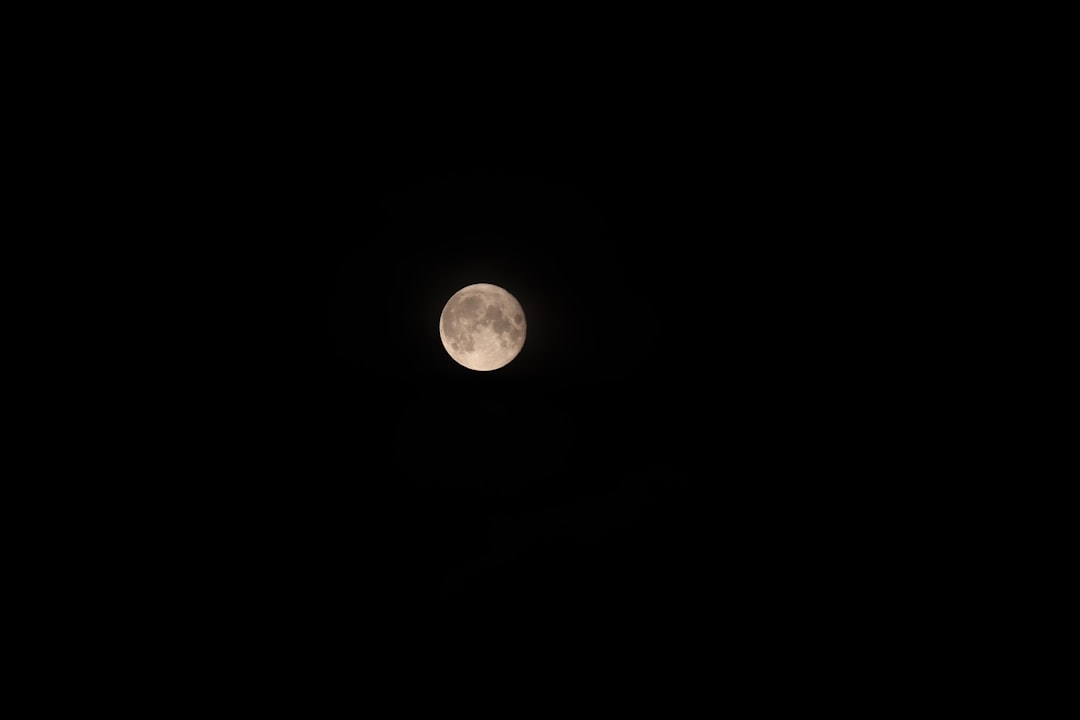
The claim that humanity has walked on the Moon is one of the most profound achievements in recorded history. For decades, this monumental feat has been supported by an overwhelming body of evidence, a tapestry woven from scientific observation, technological innovation, and human eyewitness testimony. This article will delve into the undeniable proof that underpins the reality of the Apollo Moon landings, exploring the vast array of data and artifacts that have cemented this event in the annals of human exploration.
The journey to the Moon was not a sudden leap but a meticulously planned and executed engineering marvel. The development of the Apollo program was a testament to the power of human ingenuity, requiring unprecedented advancements in rocketry, spacecraft design, navigation, and life support.
The Saturn V Rocket: A Colossus of Power
The Saturn V rocket, the behemoth that propelled humanity towards the lunar surface, stands as an icon of this technological prowess. Standing taller than the Statue of Liberty, its sheer scale was designed to overcome Earth’s gravitational pull.
Engineering a Titan
The engineering challenges involved in constructing such a colossal rocket were immense. The five F-1 engines in the first stage, each producing 1.5 million pounds of thrust, were a feat of combustion engineering. The precision required to control such power, ensuring it was directed not into a destructive explosion but into a controlled ascent, was paramount. The multiple stages, each shedding its weight as fuel was consumed, represent a masterful application of physics and engineering principles in tandem. Think of it as a meticulously choreographed dance of controlled detonations, each step precisely timed to lift the payload higher and farther.
Redundancy and Reliability
A core tenet of the Apollo program was redundancy. Critical systems were designed with backups, ensuring that even if one component failed, the mission could continue or be safely aborted. This principle applied to everything from navigation systems to life support. This wasn’t a single thread of rope; it was a meticulously braided cable, where if one strand frayed, the others would bear the load.
The Command and Lunar Modules: Homes in the Void
The spacecraft themselves were intricate ecosystems designed for survival in the unforgiving vacuum of space. The Command Module (CM), named “Columbia” for Apollo 11, served as the crew’s home during the journey, while the Lunar Module (LM), “Eagle” in the case of the first landing, was their specialized vessel for descending to and ascending from the lunar surface.
Life Support Systems: Recreating Earth in Miniature
Maintaining a habitable environment for astronauts millions of miles from Earth was a monumental task. The Environmental Control and Life Support System (ECLSS) provided breathable air, regulated temperature and pressure, and managed waste. This was a self-contained bubble of Earth, a miniature biosphere designed to defy the harsh realities of space.
Navigation and Communication: Speaking Across the Cosmos
Navigating to the Moon and back required sophisticated guidance systems. The Apollo Guidance Computer (AGC), though primitive by today’s standards, was revolutionary for its time, capable of performing complex calculations for trajectory and landing. Communication systems ensured constant contact between the spacecraft, mission control, and tracking stations around the world. This was the umbilical cord, connecting the voyagers to the knowledge and support of their home planet.
The evidence supporting the moon landing is extensive and well-documented, with numerous scientific analyses and testimonies from astronauts. For a deeper understanding of this topic, you can explore a related article that discusses various pieces of evidence and debunks common conspiracy theories surrounding the Apollo missions. To read more about it, visit this article.
The Lunar Footprint: Tangible Evidence on the Surface
The most direct evidence of the Moon landings lies on the lunar surface itself, where the Apollo astronauts left behind a variety of artifacts and their indelible imprints. These are not fleeting illusions but solid markers of human presence.
Lunar Samples: Rocks from Another World
Perhaps the most compelling physical evidence comes in the form of lunar rocks and soil samples. From Apollo 11 through Apollo 17, astronauts brought back approximately 382 kilograms (842 pounds) of lunar material.
Composition and Unearthly Origin
These samples have been subjected to rigorous scientific analysis by laboratories worldwide. Their unique isotopic compositions, mineralogy, and the absence of water strongly differentiate them from any terrestrial rocks. They bear the signature of an extraterrestrial origin, a distinct geological narrative forged in a different celestial crucible. Studies have confirmed their formation through processes entirely consistent with a volcanic history and bombardment on the Moon.
Independent Verification: A Global Consensus
Thousands of scientific papers based on the analysis of these samples have been published in peer-reviewed journals. These studies have been conducted by independent researchers from numerous countries, including those that were geopolitical rivals to the United States during the Cold War. The scientific community’s consensus on the authenticity of these lunar samples is a formidable bulwark against doubt, akin to a chorus of experts agreeing on the diagnosis after examining a unique specimen.
Landing Sites and Their Remnants
The landing sites of the Apollo missions, marked by the descent stages of the Lunar Modules, scientific equipment, and the astronauts’ footprints, are still observable.
The Fading Trails: Photographic Evidence
High-resolution images taken by lunar orbiters, such as NASA’s Lunar Reconnaissance Orbiter (LRO), clearly show the remnants of the Apollo missions at their respective landing sites. These images reveal the descent stages of the Lunar Modules, scientific instruments left behind, and even the tracks left by the astronauts and the Lunar Roving Vehicles (LRVs). These are not ambiguous shadows but clear photographic records, like footprints in the sand that, while softened by time, are still discernible.
Scientific Instruments: Tools of Discovery
Astronauts deployed a variety of scientific instruments on the Moon, including seismometers to study moonquakes and laser retroreflectors. These retroreflectors, still functioning decades later, allow scientists on Earth to precisely measure the distance to the Moon by bouncing laser beams off them. This is a remarkable testament to the durability and precision of the technology deployed, a technological handshake across the vast expanse of space, still resonating with signals today.
The View from Earth: Witness to the Journey
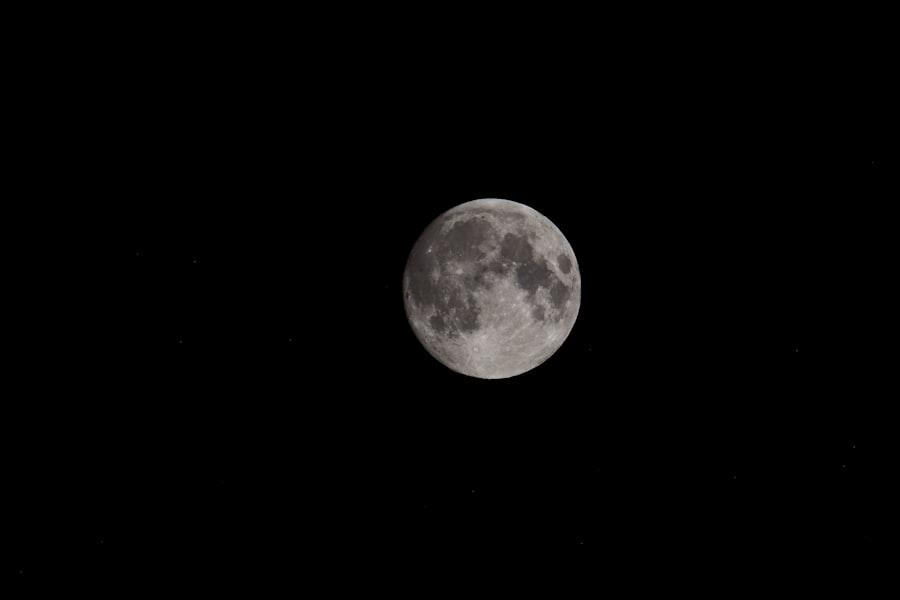
The Moon landings were not conducted in secret. They were broadcast live to an estimated 600 million viewers worldwide, a global audience that collectively held its breath as humanity took its first steps onto another celestial body.
Extensive Media Coverage: A Public Spectacle
The Apollo missions were documented by an unprecedented amount of media coverage. News reports, photographs, and documentary films from the era capture the excitement and the technological achievements.
Live Broadcasts: A Shared Experience
The iconic images and sounds of the Moon landings were transmitted in real-time, allowing people across the globe to share in this historic moment. Families huddled around television sets, captivated by the grainy, black and white footage. This shared experience, witnessed by hundreds of millions, forged a collective memory that is difficult to erase. Imagine a global town square, where everyone is looking at the same celestial event unfold, with cameras translating the drama for all to see.
Photographic Archives: The Unblinking Eye
The vast photographic archives generated by the Apollo missions, from the professional images taken by the astronauts to the home movies of viewers watching on Earth, represent a rich tapestry of visual documentation. These images, meticulously preserved and accessible, serve as a permanent record of the events.
Independent Tracking and Observation: Verifying the Trajectory
Numerous independent observatories and amateur astronomers around the world were able to track the Apollo spacecraft during their journeys to and from the Moon.
Radio Signals: Whispers from the Void
The radio communications between the spacecraft and Earth were monitored by various entities, including amateur radio enthusiasts. These independent observations corroborated the telemetry and communications data released by NASA, confirming the spacecraft’s trajectory and operational status. This was like having thousands of independent ears listening to the same conversations, confirming the verity of what was being said.
Observing the Rocket Trails and Spacecraft
While observing a spacecraft in deep space is challenging, the launches of the Saturn V rockets were spectacular events, visible from vast distances and tracked by multiple nations. The trajectory of the spacecraft leaving Earth and heading towards the Moon was also subject to astronomical observation, confirming that something substantial was indeed making that journey.
The Human Element: Eyewitnesses to History
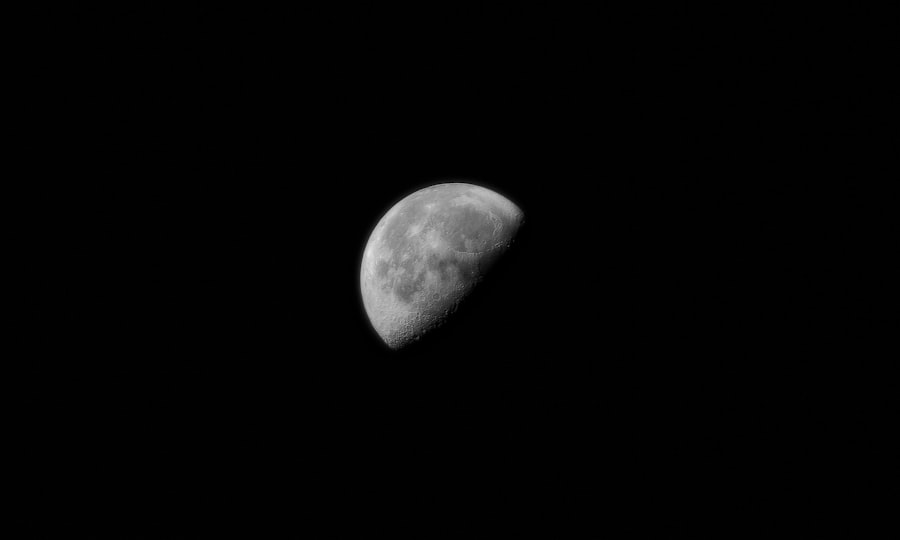
Beyond the technological and physical evidence, the testimonies of the astronauts themselves, along with the thousands of individuals involved in the Apollo program, form a crucial layer of corroboration.
The Astronauts’ Accounts: Journeys to the Moon
The astronauts who walked on the Moon provided consistent and detailed accounts of their experiences. Their personal narratives, captured in interviews, books, and official mission reports, describe the physical sensations, the visual panorama, and the emotional impact of being on another world.
Consistency Across Missions and Personnel
The accounts of the astronauts from different Apollo missions, and the vast number of engineers, scientists, and technicians who worked on the program, demonstrate a remarkable consistency in their descriptions of the process and the outcomes. This is not a single voice singing a lone tune but a vast choir singing in harmony.
Emotional Resonance and Personal Sacrifice
The dedication, training, and personal sacrifices made by the astronauts and the entire Apollo workforce speak to the genuine nature of their endeavor. The emotional weight of their experiences, their detailed memories, and their lifelong commitment to their mission are difficult to attribute to fabrication.
The Global Workforce: A Conspiracy of Scale
The Apollo program involved an estimated 400,000 people, from scientists and engineers to technicians and support staff. The idea that such a massive undertaking, spread across numerous organizations, nationalities, and decades, could be successfully orchestrated as a hoax without widespread whistleblowers strains credulity to the breaking point. A conspiracy of this magnitude would require an unbroken chain of silence from an impossibly large group of people, a feat far more challenging than a rocket launch.
The evidence supporting the moon landing is extensive and well-documented, with numerous scientific analyses and eyewitness accounts reinforcing the historic event. For those interested in exploring this topic further, a related article provides an in-depth look at the various pieces of evidence that have emerged over the years. You can read more about it in this fascinating piece that delves into the details of the Apollo missions and their significance in space exploration. Check out the article here: related article.
Addressing the Doubts: Deconstructing the Myths
| Type of Evidence | Description | Source | Verification Method |
|---|---|---|---|
| Moon Rocks | Samples of lunar soil and rocks brought back by Apollo missions | NASA Apollo Missions | Geochemical analysis and comparison with meteorites |
| Photographs | High-resolution images taken on the lunar surface | Apollo astronauts and Lunar Reconnaissance Orbiter | Image analysis and cross-referencing with lunar geography |
| Telemetry Data | Radio signals and mission data transmitted during moon landing | NASA Mission Control | Signal tracking and data decoding |
| Retroreflectors | Laser reflectors left on the moon surface for Earth-based laser ranging | Apollo 11, 14, 15 missions | Laser ranging experiments from Earth |
| Seismic Data | Seismometers placed on the moon to detect moonquakes | Apollo missions | Seismic wave analysis |
| Video Footage | Live broadcast and recorded videos of moonwalks | Apollo missions | Video authenticity and timestamp verification |
Despite the overwhelming evidence, a small but vocal contingent continues to question the reality of the Moon landings. These doubts often stem from misinterpretations of photographic evidence, a lack of understanding of physics in a vacuum, or a general distrust of authority.
Photographic Anomalies: A Matter of Perspective
Many conspiracy theories revolve around perceived anomalies in photographs, such as the lack of stars, the direction of shadows, or the appearance of the flag. These aspects have been thoroughly explained by scientists and photographic experts.
The Absence of Stars: The Brightness of the Lunar Surface
On the Moon, the lunar surface is bathed in intense sunlight, and the cameras were set with exposure settings optimized for this brightness. The faint light from distant stars was simply not bright enough to register on the film under these conditions, much like trying to see stars during a bright daylight on Earth. The lunar surface acted as a giant reflector, temporarily blinding the cameras to the fainter celestial background.
Shadow Play: A Vacuum’s Logic
The parallel rays of the Sun in the vacuum of space can create optical illusions, making shadows appear non-parallel due to perspective and the uneven lunar terrain. The absence of atmospheric diffusion also means shadows are sharper and darker than on Earth. Understanding the physics of light in a vacuum is key to demystifying these perceived anomalies.
The Vacuum of Space: Nature’s Unseen Witness
Some theories suggest that certain phenomena observed in footage are inconsistent with a vacuum. However, a careful scientific examination reveals that these observations are entirely consistent with the physics of space without an atmosphere.
No Air, No Resistance: The Flag’s Behavior
The “waving” appearance of the American flag on the Moon is often cited as evidence of wind. However, the flag was mounted on a telescoping pole with a horizontal bar to keep it unfurled. The apparent ripples are due to wrinkles from being folded and the subtle vibrations from its placement, not from any atmospheric movement. In a vacuum, objects behave as predicted by their inertia and any initial forces applied, without the dampening effect of air resistance.
The Absence of a Blast Crater: A Matter of Physics
The claim that the Lunar Module should have created a significant blast crater upon landing is a misunderstanding of rocket propulsion in a vacuum. The engine was throttled down considerably for the final descent, and the lunar soil is compacted beneath a thin layer of dust. While some disturbance of the surface occurred, it was not enough to create the deep crater envisioned by some critics, especially given the lower gravity of the Moon.
The Vastness of the Conspiracy: A Hole Too Big to Hide
The notion that a hoax of this magnitude could have been maintained for over fifty years, involving hundreds of thousands of people and multiple international entities, requires a level of secrecy and control that is virtually impossible to achieve. The sheer number of individuals who would have had to participate, and remain silent, makes the conspiracy theory less plausible than the reality of the mission itself. The logistical and psychological burden of maintaining such a monumental lie would be crushing.
In conclusion, the evidence for the Apollo Moon landings is not a single, fragile thread but a robust, interwoven fabric of scientific data, physical artifacts, photographic records, and human testimony. The technological achievements, the rocks brought back from another world, the images captured from orbit, and the consistent accounts of those involved all converge to paint a picture of a monumental human accomplishment. The Moon landings are not a myth to be deconstructed but a testament to what humanity can achieve when it sets its sights on the stars, a story written not in speculation but in the indelible footprints left on the lunar dust.
FAQs
1. What evidence supports the authenticity of the moon landing?
There are multiple pieces of evidence supporting the authenticity of the moon landing, including photographs and videos taken on the lunar surface, rock samples brought back to Earth, data from scientific experiments left on the moon, and tracking information from independent observatories around the world.
2. How do moon rocks prove that humans landed on the moon?
Moon rocks collected during the Apollo missions have unique chemical and isotopic compositions that differ from Earth rocks. These samples have been studied extensively by scientists worldwide and confirm their lunar origin, which supports the fact that astronauts physically visited the moon.
3. Can the moon landing be verified by independent sources?
Yes, the moon landing has been verified by independent sources such as observatories and space agencies from other countries. For example, the Soviet Union tracked the Apollo missions, and modern lunar orbiters have photographed the landing sites, showing equipment left behind by astronauts.
4. Why do some people believe the moon landing was faked?
Some people believe the moon landing was faked due to misunderstandings of photographic evidence, conspiracy theories, and mistrust of government agencies. However, these claims have been thoroughly debunked by experts and extensive scientific evidence.
5. What role do retroreflectors on the moon play in proving the landing?
Retroreflectors are devices left on the lunar surface by Apollo astronauts that reflect laser beams sent from Earth. Scientists use these to measure the distance between the Earth and the moon precisely. The presence and functionality of these retroreflectors provide direct evidence of human activity on the moon.