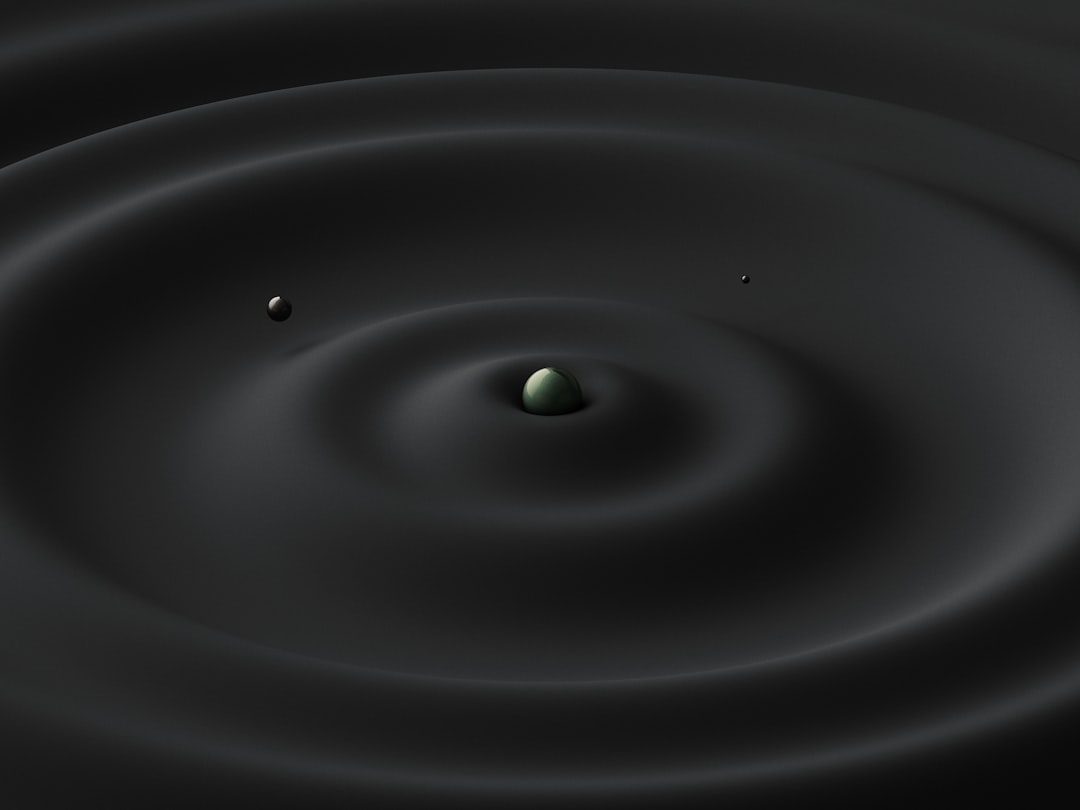
Tidal dissipation and orbital decay are two interconnected phenomena that play a significant role in the dynamics of celestial bodies. Tidal dissipation refers to the process by which the gravitational interactions between two bodies, such as a planet and its moon, lead to the conversion of kinetic energy into heat. This process results in a gradual loss of energy, which can have profound implications for the orbits of these celestial bodies.
Orbital decay, on the other hand, describes the gradual decrease in the altitude of an orbiting body, often leading to its eventual collision with the larger body it orbits. Together, these concepts provide insight into the long-term evolution of planetary systems and the intricate dance of celestial mechanics. Understanding tidal dissipation and orbital decay is crucial for astronomers and astrophysicists as they seek to unravel the complexities of gravitational interactions in space.
The study of these phenomena not only enhances knowledge about our own solar system but also sheds light on exoplanetary systems and their potential habitability. As researchers delve deeper into these processes, they uncover the underlying mechanisms that govern the behavior of celestial bodies, revealing a dynamic universe shaped by gravitational forces.
Key Takeaways
- Tidal dissipation converts orbital energy into heat, influencing the orbital decay of celestial bodies.
- Tidal forces arise from gravitational interactions, causing deformation and energy loss in planets and moons.
- Factors like internal structure, composition, and orbital parameters affect the rate of tidal dissipation.
- Orbital decay results from energy loss, leading to gradual shrinking of orbits over time.
- Understanding tidal dissipation and orbital decay aids in predicting celestial dynamics and informs future space exploration.
The Role of Tidal Forces in Celestial Bodies
Tidal forces arise from the gravitational pull exerted by one celestial body on another, leading to variations in gravitational strength across the body being influenced. This phenomenon is most commonly observed in the relationship between Earth and its moon, where the moon’s gravity causes ocean tides on Earth. However, tidal forces extend beyond mere oceanic effects; they can also induce significant geological and atmospheric changes on planets and moons.
For instance, Io, one of Jupiter’s moons, experiences intense tidal heating due to its proximity to the gas giant and the gravitational interactions with other Galilean moons. This heating results in volcanic activity that shapes Io’s surface. In addition to influencing geological processes, tidal forces can also affect the rotational dynamics of celestial bodies.
As a planet or moon rotates, the gravitational pull from its partner can create bulges that shift over time. This shifting can lead to changes in rotation speed and axial tilt, which can have cascading effects on climate and habitability. The interplay between tidal forces and rotational dynamics is a critical area of study for understanding how celestial bodies evolve over time.
Understanding Tidal Dissipation
Tidal dissipation occurs when the energy generated by tidal forces is transformed into heat within a celestial body.
The energy dissipated as heat can lead to various geological phenomena, including volcanic activity and tectonic movements.
For example, on Earth, tidal dissipation contributes to the warming of ocean floors and can influence seismic activity along tectonic plate boundaries. The efficiency of tidal dissipation varies among different celestial bodies, depending on their composition, structure, and distance from their partner body. For instance, rocky planets may exhibit different dissipation characteristics compared to gas giants or icy moons.
Researchers employ mathematical models and simulations to quantify tidal dissipation rates, allowing them to make informed predictions about the long-term behavior of planetary systems.
Factors Affecting Tidal Dissipation
Several factors influence the rate of tidal dissipation within celestial bodies. One of the most significant factors is the body’s composition and internal structure. For instance, a body with a solid crust may experience different dissipation rates compared to one with a fluid interior.
Additionally, the presence of geological features such as mountains or valleys can affect how tidal forces are distributed across a body, leading to variations in energy dissipation. Another critical factor is the distance between the two interacting bodies. The strength of tidal forces diminishes with distance; thus, closer bodies experience more significant tidal interactions and higher rates of dissipation.
The orbital eccentricity—how elliptical an orbit is—also plays a role; more eccentric orbits can lead to stronger tidal forces at certain points in the orbit, resulting in increased energy dissipation during those times. Understanding these factors is essential for accurately modeling tidal dissipation and its implications for orbital dynamics.
The Concept of Orbital Decay
| Parameter | Description | Typical Value | Units | Notes |
|---|---|---|---|---|
| Q (Tidal Quality Factor) | Dimensionless measure of tidal dissipation efficiency | 10^5 – 10^7 | Dimensionless | Lower Q means higher dissipation |
| k2 (Love Number) | Measures the rigidity and tidal response of a body | 0.01 – 0.3 | Dimensionless | Depends on internal structure |
| da/dt (Orbital Decay Rate) | Rate of change of semi-major axis due to tidal dissipation | 10^-9 – 10^-5 | AU/year | Varies with system parameters |
| Orbital Period (P) | Time taken for one orbit | 1 – 10 days | days | Shorter periods often show stronger decay |
| Mass Ratio (M_secondary / M_primary) | Ratio of companion mass to primary mass | 0.001 – 0.1 | Dimensionless | Influences tidal forces |
| Energy Dissipation Rate | Energy lost due to tidal friction | 10^19 – 10^22 | Watts | Depends on tidal forcing and structure |
Orbital decay refers to the gradual decrease in an orbiting body’s altitude over time due to various forces acting upon it. This phenomenon can occur in multiple contexts, from satellites orbiting Earth to moons circling planets and even binary star systems. As an orbiting body loses altitude, it experiences increased atmospheric drag or gravitational pull from its primary body, which can accelerate its descent.
Eventually, this process can lead to a collision with the larger body or a disintegration of the orbiting object. The concept of orbital decay is particularly relevant in understanding the life cycles of artificial satellites. Many satellites are designed with limited operational lifespans; once they exhaust their fuel or reach their operational limits, they begin to experience orbital decay due to atmospheric drag.
In natural systems, such as moons or planets, orbital decay can result from tidal interactions or gravitational perturbations from nearby bodies. The study of orbital decay provides valuable insights into both natural celestial mechanics and human-made space endeavors.
Causes of Orbital Decay
Several factors contribute to orbital decay, each playing a unique role in influencing an orbiting body’s trajectory. One primary cause is atmospheric drag, which affects low-Earth orbit satellites as they encounter particles in the upper atmosphere. This drag slows down their velocity and gradually lowers their altitude until they eventually re-enter Earth’s atmosphere and burn up.
In addition to atmospheric drag, gravitational interactions with other celestial bodies can also lead to orbital decay. For example, moons may experience changes in their orbits due to gravitational perturbations from nearby planets or other moons. Tidal forces can also play a significant role; as discussed earlier, tidal dissipation leads to energy loss that can result in changes to an orbiting body’s altitude over time.
Understanding these causes is essential for predicting how long an object will remain in orbit and what factors may influence its eventual fate.
The Relationship Between Tidal Dissipation and Orbital Decay
The relationship between tidal dissipation and orbital decay is intricate and multifaceted. Tidal dissipation contributes directly to orbital decay by causing energy loss within an orbiting body, which can lead to changes in its trajectory over time. As energy dissipates through internal friction and deformation, an orbiting body may lose altitude as it becomes less stable in its orbit.
Moreover, this relationship is not one-sided; orbital decay can also influence tidal dissipation rates. As an orbiting body descends closer to its primary body due to decay, it may experience stronger tidal forces that increase energy dissipation rates. This feedback loop highlights the dynamic nature of celestial mechanics and emphasizes how interconnected these processes are within planetary systems.
Implications of Tidal Dissipation and Orbital Decay
The implications of tidal dissipation and orbital decay extend far beyond individual celestial bodies; they have significant consequences for entire planetary systems. For instance, understanding these processes can help scientists predict the long-term stability of moons around planets or assess the potential habitability of exoplanets with close-in companions. As tidal forces shape orbits over millions of years, they can influence climate patterns and geological activity on planets.
In addition to planetary systems, tidal dissipation and orbital decay have implications for space exploration and satellite technology. Engineers must consider these factors when designing satellites to ensure they remain operational for their intended lifespan. Furthermore, understanding how these processes work can inform strategies for mitigating space debris and planning future missions beyond Earth.
Observations and Studies on Tidal Dissipation and Orbital Decay
Observations and studies on tidal dissipation and orbital decay have advanced significantly over recent decades due to technological advancements in astronomy and space exploration. Researchers utilize various methods, including radar measurements, telescopic observations, and computer simulations, to gather data on celestial bodies’ movements and interactions. These observations provide valuable insights into how tidal forces shape orbits over time.
One notable example is the study of Pluto’s moon Charon, where researchers have observed changes in its orbit that suggest significant tidal interactions with Pluto are at play. Such studies not only enhance understanding of specific celestial systems but also contribute to broader theories regarding tidal dynamics across different environments in space.
Applications of Understanding Tidal Dissipation and Orbital Decay
The knowledge gained from studying tidal dissipation and orbital decay has practical applications across various fields. In planetary science, this understanding aids researchers in predicting how celestial bodies will evolve over time, providing insights into their geological history and potential habitability. For instance, knowing how tidal forces affect a planet’s rotation can inform models about climate stability and surface conditions.
In aerospace engineering, understanding these phenomena is crucial for satellite design and mission planning. Engineers must account for potential orbital decay when determining satellite lifespans and trajectories. Additionally, this knowledge informs strategies for managing space debris by predicting when defunct satellites will re-enter Earth’s atmosphere.
Future Research and Developments in Tidal Dissipation and Orbital Decay
As research continues into tidal dissipation and orbital decay, future developments are likely to enhance understanding further and refine existing models. Advances in observational technology will enable scientists to gather more precise data on celestial bodies’ movements and interactions, leading to improved predictions about their long-term behavior. Moreover, interdisciplinary collaboration between astronomers, geophysicists, and aerospace engineers will foster innovative approaches to studying these phenomena.
By integrating knowledge from various fields, researchers can develop comprehensive models that account for complex interactions within planetary systems. As humanity continues to explore space and expand its presence beyond Earth, understanding tidal dissipation and orbital decay will remain essential for navigating the challenges ahead in both natural celestial mechanics and human-made endeavors in space exploration.
Tidal dissipation plays a crucial role in the phenomenon of orbital decay, particularly in celestial bodies like moons and planets. As gravitational forces interact, energy is dissipated as heat, leading to changes in orbital dynamics over time. For a deeper understanding of these processes, you can explore the article on this topic at Hey Did You Know This.
WATCH THIS! 🌍 They Lied About When Earth Dies 🌍
FAQs
What is tidal dissipation?
Tidal dissipation is the process by which the energy of tidal forces is converted into heat within a celestial body. This occurs due to the friction and deformation caused by gravitational interactions between two orbiting bodies, such as a planet and its moon or a star and its planet.
How does tidal dissipation affect orbital decay?
Tidal dissipation leads to the gradual loss of orbital energy, causing the orbiting body to slowly spiral inward toward the primary body. This process, known as orbital decay, results in a decrease in the orbital radius and can eventually lead to the merging or collision of the two bodies.
What factors influence the rate of tidal dissipation?
The rate of tidal dissipation depends on several factors, including the internal structure and composition of the celestial bodies, their relative sizes and masses, the distance between them, and the orbital eccentricity. Bodies with more fluid or deformable interiors tend to dissipate tidal energy more efficiently.
Can tidal dissipation cause changes in a planet’s rotation?
Yes, tidal dissipation can alter a planet’s rotation rate and axis orientation. Over time, it can lead to tidal locking, where the planet’s rotation period matches its orbital period, causing the same side to always face the primary body, as seen with the Moon and Earth.
Is tidal dissipation important in exoplanet studies?
Absolutely. Tidal dissipation plays a crucial role in the evolution of exoplanetary systems by affecting orbital stability, planetary climates, and potential habitability. Understanding tidal interactions helps scientists predict the long-term behavior of exoplanets and their moons.
How is tidal dissipation measured or observed?
Tidal dissipation is inferred through observations of orbital changes, such as shifts in orbital period or eccentricity, and through measurements of rotational dynamics. In some cases, heat generated by tidal friction can be detected, for example, as volcanic activity on moons like Io.
What is the significance of tidal dissipation in our solar system?
In our solar system, tidal dissipation explains phenomena such as the gradual recession of the Moon from Earth, the volcanic activity on Jupiter’s moon Io, and the synchronous rotation of many moons. It also influences the long-term stability and evolution of planetary orbits.