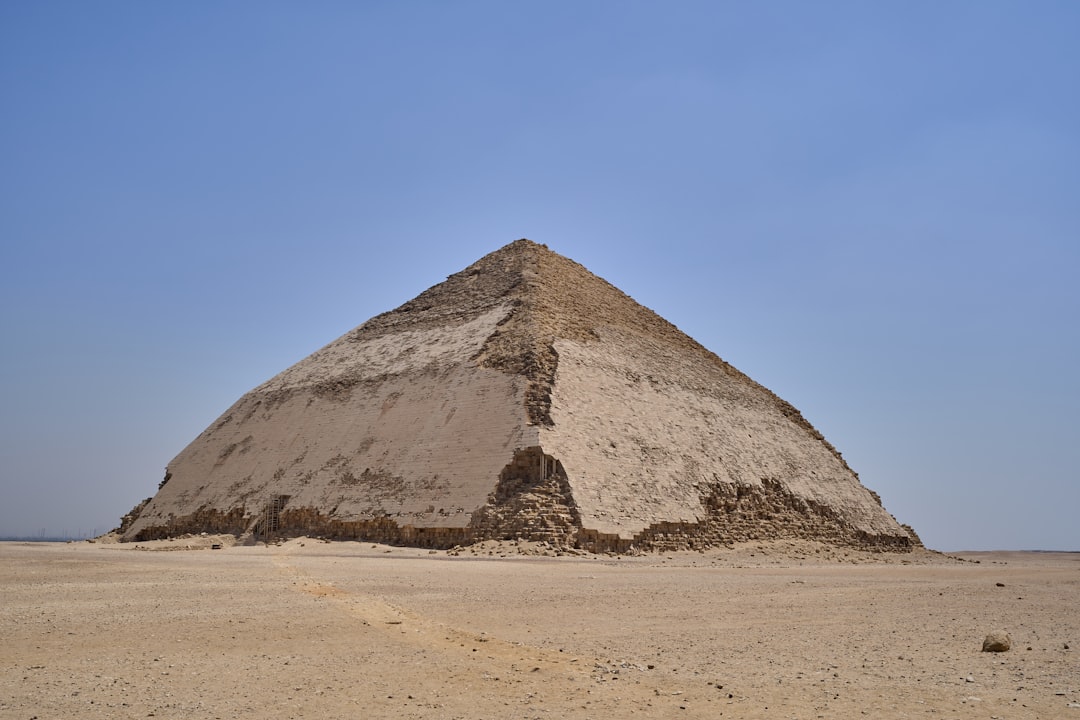
Uncovering the Truth: Pyramid Construction Myths Debunked
The pyramids of ancient Egypt stand as silent sentinels to a lost civilization, their monumental scale and enduring mysteries fueling imaginations for millennia. Yet, alongside genuine historical inquiry, a persistent undercurrent of speculation and myth has grown, suggesting methods of construction far removed from the capabilities of their creators. This article aims to disentangle fact from fiction, peeling back the layers of fanciful speculation to reveal the pragmatic ingenuity that underpinned these architectural marvels. The enduring allure of the pyramids is not diminished by understanding their construction; rather, it is amplified by the sheer human endeavor and clever problem-solving that brought them to life.
The notion that extraterrestrial beings were involved in the construction of the pyramids is perhaps the most pervasive and sensationalized myth. This theory often posits that ancient humans lacked the technological prowess, organizational skills, or sheer manpower to move and precisely place the massive stone blocks, thus demanding an intervention from a superior, non-human intelligence.
Lack of Archaeological Evidence for Extraterrestrial Involvement
Despite extensive archaeological investigations spanning centuries, no tangible evidence has ever been found to support the presence or intervention of alien civilizations in ancient Egypt. The archaeological record is a meticulous tapestry woven with the threads of human activity. Tools, settlements, administrative records, and burial sites all speak of a human story. The absence of any alien artifacts, celestial schematics, or extraterrestrial DNA within the pyramid complexes is a deafening silence that renders this theory untenable without extraordinary, as yet undiscovered, evidence which is highly improbable.
The Human Element: A Testament to Ingenuity
The pyramids are, in fact, a profound testament to human capability. They demonstrate the power of collective effort, meticulous planning, and a deep understanding of engineering principles, even if not expressed in modern scientific terminology. The construction projects were not spontaneous acts but were integrated into the social and economic fabric of the time, requiring massive mobilizations of labor, resources, and sophisticated project management.
Misinterpreting Scale and Precision
Proponents of the alien theory often point to the immense size of the stone blocks and the remarkable precision with which they were cut and fitted. However, these achievements, while awe-inspiring, are within the realm of human possibility for a society organized and motivated for such a grand undertaking.
The Weight of the Stones and Human Strength
The largest stones, weighing many tons, were indeed heavy. However, ancient peoples were adept at leveraging basic physics. Ramps, levers, and the cumulative power of thousands of workers, coordinated in rhythmic unison, could move these colossal weights. Think of a determined ant colony moving a crumb many times its size; the principle of distributed effort is similar, though on a vastly different scale.
Precision Without Modern Tools
The precision of the pyramid construction, particularly in the alignment with cardinal directions and the tight fitting of casing stones, has been attributed to technologies beyond ancient means. Yet, observations and experiments have shown that careful surveying using simple tools like plumb bobs, levels, and sighting instruments, combined with a deep understanding of astronomy, could achieve such accuracy. The secrets of a sundial and a keen eye for the stars were more than sufficient.
For those interested in further exploring the fascinating topic of ancient engineering, a related article can be found at Hey Did You Know This. This article delves into various misconceptions surrounding the construction of the pyramids, providing insights into the techniques and resources that ancient Egyptians utilized to achieve these monumental feats. By examining historical evidence and expert opinions, it aims to clarify the myths that often cloud our understanding of this remarkable achievement in human history.
The “Slave Labor” Narrative: A Simplified Portrayal
Another enduring myth is that the pyramids were constructed solely by vast armies of enslaved people, toiling under brutal conditions. This image, often perpetuated by popular culture, paints a grim picture of forced labor and suffering.
Emerging Evidence of Paid Labor and Skilled Craftsmanship
Modern archaeological research, including the discovery of worker villages, cemeteries, and administrative records, has significantly challenged this narrative. Evidence suggests that many of the workers were not slaves but rather skilled laborers, artisans, and farmers who were conscripted for periods of service, akin to a form of national civic duty or taxation by labor. These workers were often housed, fed, and even received medical care.
The Tombs of the Builders
The discovery of cemeteries containing the remains of pyramid builders offers crucial insights. These tombs are not the unmarked graves of slaves but often feature inscriptions, personal belongings, and evidence of proper burial rites, indicating a respected status. The presence of healed fractures in skeletal remains suggests that workers received medical attention, further contradicting the idea of disposable slave labor.
Economic and Social Incentives
The construction of pyramids was a momentous state project, deeply intertwined with religious beliefs and the pharaoh’s divine authority. It provided employment, fostered technical skill development, and solidified social cohesion. The opportunity to contribute to such a monumental undertaking, especially one tied to the afterlife and the stability of the cosmos, could have served as a powerful motivator for many.
The Scale of the Workforce: Organization, Not Just Numbers
While acknowledging the immense workforce required, the “slave labor” myth oversimplifies the organizational and logistical challenges. A successful construction project of this magnitude required skilled overseers, engineers, architects, quarry workers, stone masons, tool makers, carpenters, food providers, and countless others. The effective management of such a diverse and large workforce underscores a sophisticated administrative structure, not merely brute force.
Ramps and Levers: The Ingenious Lifting Mechanisms

The question of how the massive stones were lifted into place has been a focal point of debate and speculation. While various theories exist, the most plausible and archaeologically supported involve the strategic use of ramps and levers.
The Straight Ramp Theory and Its Challenges
The idea of a single, enormous straight ramp extending from the quarry to the pyramid’s apex is a visually striking concept. However, the sheer volume of material required for such a ramp, especially for the Great Pyramid’s height, would have been immense, potentially rivaling the pyramid itself in volume. Furthermore, the logistical challenges of building and dismantling such a ramp, and the steep gradient required in its final stages, present considerable engineering hurdles.
The Spiral Ramp Theory: A More Flexible Solution
A more widely accepted theory, supported by some archaeological findings and logical deduction, is the use of a spiral or encircling ramp. This ramp would wind around the developing pyramid, allowing for the transportation of blocks to increasingly higher levels.
Evidence of Spiral Ramps
While definitive remnants of a complete spiral ramp have not been found, archaeological investigations have uncovered evidence of supporting structures and pathways that suggest such a system. The changing character of the outer casing would also have facilitated the construction of a ramp that could be modified as the pyramid grew.
The Role of Levers and Rocking Mechanisms
Beyond ramps, levers likely played a crucial role in manipulating and positioning stones. Archaeological finds of wooden levers and evidence of their use in other ancient construction projects support this. Some theories also propose the use of rocking mechanisms to inch blocks into their final positions, effectively “walking” them into place.
The Power of Simple Machines and Physics
These methods rely on a fundamental understanding of basic mechanical principles – the lever, the inclined plane (ramp), and the wheel (though not widely used for heavy block transport itself, its principles are present in rollers). The ancient Egyptians, through observation and practice, mastered the application of these simple machines to achieve seemingly impossible feats. It was about leverage and applying force in the right direction, patiently and persistently.
Precision Engineering and Astronomical Alignment

The remarkable precision in the construction of the pyramids, particularly their alignment with celestial bodies and their geometric accuracy, often fuels myths of advanced, lost technologies.
Alignment with Cardinal Directions
The near-perfect alignment of the pyramids with the four cardinal directions (North, South, East, West) is a well-documented feature. This precision suggests a sophisticated understanding of astronomy and surveying techniques.
Methods of Astronomical Observation
Ancient Egyptians were keen observers of the stars. They understood the apparent movement of celestial bodies and likely used these observations to orient their monumental structures. Techniques involving the tracking of stars, like the heliacal rising of Sirius, or the observation of the sun’s shadow at specific times, could have provided the necessary directional cues.
The Meridian Line and Shadow Casting
One proposed method involves establishing a meridian line by observing the shadow cast by a vertical gnomon. By tracking the shortest shadow at noon and the shadow at sunrise and sunset, a highly accurate north-south line could be determined. This fundamental line could then be used to derive the east-west line at a 90-degree angle.
The Golden Ratio and Geometric Principles
Some calculations suggest that the dimensions of certain pyramids incorporate ratios akin to the Golden Ratio (phi, approximately 1.618), leading to speculation about advanced geometric knowledge.
Mathematical Understanding of the Time
While the Egyptians developed sophisticated mathematics for practical purposes like surveying and accounting, their understanding of abstract concepts like irrational numbers or the formalization of the Golden Ratio as a mathematical constant is debated. It is plausible that they achieved these proportions through empirical observation and iterative refinement of measurements, leading to aesthetically pleasing and structurally sound designs without necessarily understanding the underlying mathematical constant in its modern form.
The Power of Practical Geometry
The construction of pyramids involved practical geometry. Builders needed to ensure right angles, correct slopes, and proportional relationships. These could have been achieved through the use of ropes with knots to form specific geometric shapes (e.g., a 3-4-5 triangle for a right angle) and by repeated measurement and adjustment. The “unintended” appearance of ratios like phi might be a consequence of these practical geometric applications and an inherent desire for pleasing, harmonious proportions, rather than a direct application of a known mathematical formula.
In exploring the fascinating topic of ancient engineering, the article on Debunking myths about pyramid construction provides valuable insights into the techniques used by the Egyptians. It challenges common misconceptions and highlights the ingenuity behind these monumental structures. Understanding the true methods of construction not only sheds light on the capabilities of ancient civilizations but also enriches our appreciation for their architectural achievements.
The Quarrying and Transportation of Stone
| Myth | Fact | Supporting Evidence | Source |
|---|---|---|---|
| Pyramids were built by slaves | Constructed by skilled laborers who were well-fed and housed | Archaeological findings of workers’ villages with bakeries, breweries, and medical care | Egyptian Archaeological Research |
| Pyramids were built using alien technology | Built using simple tools, ramps, and human ingenuity | Discovery of copper tools, sledges, and ramp remains near pyramid sites | Egyptology Studies |
| Massive stones were transported by rolling on logs | Stones were moved on sledges lubricated with water to reduce friction | Wall paintings depicting workers pouring water in front of sledges | Ancient Egyptian Wall Art |
| Pyramids were built in a very short time | Construction took decades, often spanning the reign of a pharaoh | Historical records and labor organization evidence indicate long-term projects | Historical Chronology Research |
| Pyramids have hidden chambers with vast treasures | Most chambers have been explored; treasures are limited and mostly funerary | Extensive archaeological excavations and scans of pyramid interiors | Modern Archaeological Surveys |
The extraction and movement of millions of massive stone blocks were monumental undertakings that required immense logistical planning and labor.
Quarrying Techniques: Copper and Stone Tools
The primary tools used for quarrying were made of copper, bronze, and harder stones like dolerite. Copper chisels and saws, while relatively soft, could be used with abrasive sand as a cutting agent for softer stones like limestone. For harder stones like granite, dolerite pounding tools and wedges were employed.
The Use of Wedges and Water
In softer rocks, workers would cut channels or drill holes, into which wooden wedges were inserted. These wedges were then soaked with water, causing them to expand and split the stone. This method, though requiring labor, was effective for breaking large blocks free from the quarry face.
Dolerite Pounders for Harder Stones
For more resistant stones like granite, which formed the chambers and sarcophagi within the pyramids, harder dolerite pounders were used. This was a painstaking process of repeatedly battering the stone to wear away at it, gradually shaping and detaching blocks.
Transportation Over Land and Water
Once quarried, the stones had to be transported to the building sites.
Sledges and Wet Sand
Evidence suggests that large stones were transported on wooden sledges. Experiments have shown that placing wet sand in front of the sledge significantly reduces friction, making it easier to pull heavy loads. This simple yet effective technique would have been crucial for moving blocks across the desert.
The Role of the Nile River
For stones quarried further afield, particularly granite from Aswan, the Nile River was an indispensable highway. Massive barges, constructed from timber, would have been used to transport these blocks downstream, significantly reducing the effort and time required compared to overland transport. The construction of pyramids was inextricably linked to the annual inundation of the Nile, which brought fertile silt and provided a navigable waterway for transporting materials.
The Coordinated Effort of Labor
The quarrying and transportation process demanded an immense, coordinated workforce. Teams of laborers would have been organized to extract, shape, load, and pull the stones. This highlights the sophisticated organization and management required for such an undertaking, demonstrating that human ingenuity and collective effort were the primary “technologies” at play.
The enduring mystique of the pyramids is not weakened by understanding their construction. Instead, it is strengthened by the profound realization of what ancient humans, through dedication, ingenuity, and immense collective effort, were capable of achieving. The myths, while intriguing, ultimately detract from the remarkable story of human accomplishment that the pyramids truly represent. They are not monuments to alien intervention or the suffering of slaves, but rather enduring testaments to the power of human will, intellect, and organization.
FAQs
What materials were primarily used in the construction of the pyramids?
The pyramids were mainly constructed using limestone blocks, with some granite used in interior chambers and for structural support. The stones were quarried locally and transported to the building sites.
Did the ancient Egyptians use slave labor to build the pyramids?
No, current archaeological evidence suggests that the pyramids were built by a well-organized workforce of skilled laborers and seasonal workers, not slaves. These workers were likely paid and provided with food and shelter.
Were the pyramids built using ramps?
Yes, most Egyptologists agree that ramps were used to move the heavy stone blocks into place. Various ramp designs, such as straight, zigzagging, or spiral ramps, have been proposed based on archaeological findings.
Is it true that the pyramids were built with advanced technology unknown to us today?
No, the construction techniques used by the ancient Egyptians were based on simple tools, human labor, and ingenuity. There is no credible evidence of advanced or lost technologies involved in pyramid construction.
How long did it take to build a pyramid?
The construction of a pyramid typically took about 20 years. This timeframe included quarrying, transporting, and assembling millions of stone blocks to complete the structure.