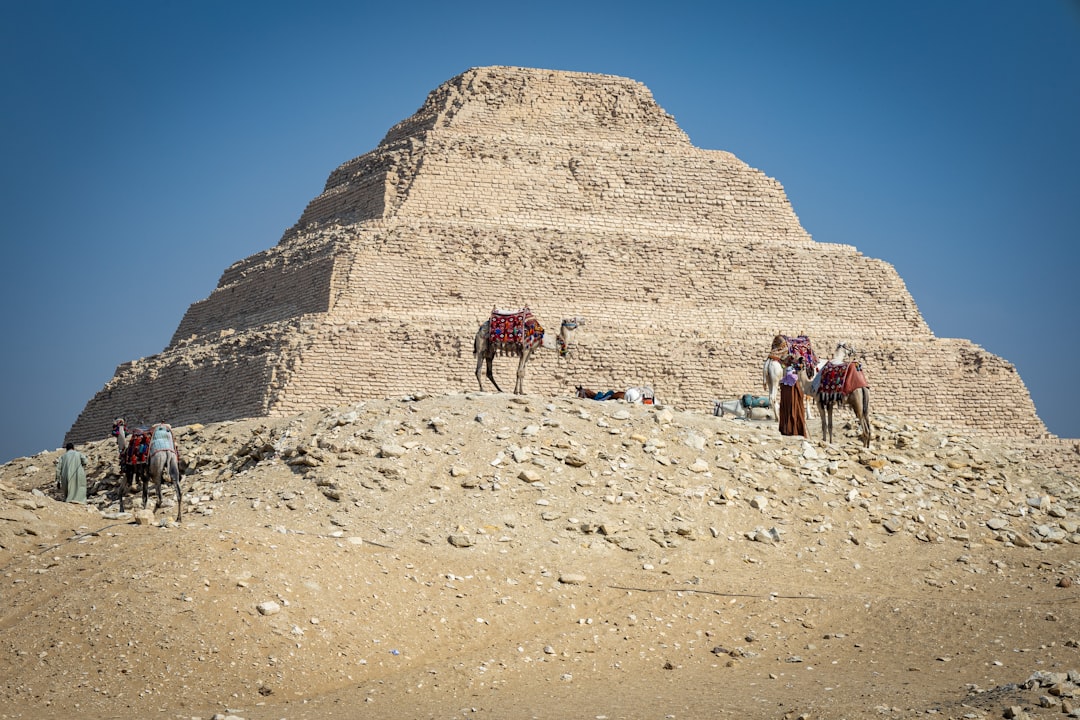
The enduring monuments of Ancient Egypt stand as testaments to a civilization that mastered monumental construction on an unprecedented scale. Consider the pyramids, the temples, the obelisks – each a colossal undertaking that continues to baffle and inspire. For centuries, researchers have sought to unravel the intricate web of techniques and organizational prowess that allowed the Egyptians to transform vast quantities of stone into structures that have withstood the relentless march of millennia. This article delves into the persistent questions surrounding ancient Egyptian construction, examining the evidence and the prevailing theories that attempt to illuminate their remarkable achievements.
The Unseen Workforce: Manpower and Organization behind the Monuments
No discussion of Ancient Egyptian construction can begin without acknowledging the bedrock of their achievements: human labor. Imagine a vast river of humanity, a collective consciousness directed towards a singular national purpose. This was not merely brute force, but a highly organized and stratified system that mobilized tens of thousands of individuals.
Feeding the Builders: Logistics of Sustenance
The logistical challenge of feeding and housing a workforce of up to 100,000 individuals, as estimated for the Great Pyramid of Giza, was monumental in itself. Archaeological evidence, particularly at sites like Heit el-Ghurab, the ancient workers’ town near Giza, reveals a sophisticated infrastructure. Bakeries capable of producing thousands of loaves of bread daily, vast storehouses for grain, and systematic distribution networks were essential. Their diet consisted primarily of bread, beer (a low-alcohol, nutritious beverage), fish, and occasional meat. This well-planned sustenance ensured the workforce remained healthy and productive.
Hierarchy and Specialization: A Production Line of Stone
The pyramid builders were not a homogeneous mass. Instead, a finely tuned hierarchy existed, much like the intricate gears of a colossal clock. Skilled stonemasons, engineers, overseers, and a massive pool of unskilled laborers worked in concert. Evidence suggests organized “gangs” of workers, identifiable by names such as “Friends of Khufu” or “Drunkards of Menkaure,” which points to a system of team-based work and perhaps even morale-boosting competition. This specialization allowed for efficient execution of numerous tasks simultaneously, from quarrying to transportation to final positioning.
Beyond Slavery: Motivation and Community
While the romanticized image of enslaved foreign populations toiling under the whip persists in popular culture, archaeological and historical evidence largely refutes this. Most scholars now agree that the primary workforce for monumental projects consisted of Egyptian farmers, called up for periods of corvée labor during the annual Nile inundation when agricultural work was impossible. This service was likely seen as a civic duty, a means to contribute to the divine pharaoh’s eternal house and thus ensure the well-being of Egypt itself. Workers were provided with housing, food, and medical care, fostering a sense of community and shared purpose.
Quarry to Construction Site: The Journey of the Stone
The journey of the colossal stone blocks, some weighing upwards of 80 tons, from distant quarries to the construction sites represented an immense feat of engineering and human endurance. Consider the geological tapestry of Egypt, offering granite, basalt, limestone, and alabaster – each demanding different extraction and transportation methods.
Extracting the Leviathans: Quarrying Techniques
The selection of stone depended on its intended use. Fine white Turah limestone was favored for casings and outer layers, while coarser local limestone formed the pyramid cores. Aswan granite, used for burial chambers, sarcophagi, and obelisks, had to be transported hundreds of kilometers. Quarrying techniques varied. For softer limestone, copper chisels, wooden mallets, and even simply splitting naturally occurring fissures were employed. For harder stones like granite, a more arduous process was required. Dolerite pounding stones were used to batter and chip away at the rock, creating grooves and then leveraging the stone free using wooden wedges expanded by water. Saw marks found on some granite blocks suggest the use of early bronze saws with abrasive sands. This sustained, laborious process was akin to slowly carving a mountain with the patience of geological time.
Navigating the Nile: The Water Highway
The Nile River was the undisputed lifeblood of Ancient Egypt, serving as the primary transportation artery. Large barges, often depicted in tomb reliefs, were used to transport massive blocks from quarries directly to the construction sites, especially during the annual flood when water levels were highest, allowing access to temporary canals built specifically for this purpose. Imagine dozens of such barges, laden with stone, creating a slow-moving convoy, a veritable fleet of architectural components. This riverine highway dramatically reduced the overland distance for heavy loads.
Overland Challenges: Ramps and Rollers
Once offloaded from the barges, the titanic blocks faced their greatest overland challenge. The predominant theory for moving these stones across land involves a combination of sledges, lubricated slipways, and an organized workforce. Imagine hundreds of men pulling a massive stone block on a wooden sledge over a prepared path, perhaps wetted with water to reduce friction, or even lubricated with oil or a slurry of gypsum and clay. Scenes in ancient tombs, such as the famous depiction from the tomb of Djehutihotep, illustrate men pulling a colossal statue on a sledge surrounded by workers pouring liquid onto the ground in front. While rollers have often been suggested, their practical application for extremely heavy, unshaped blocks over uneven terrain is debated due to the difficulty of keeping the block from falling off. Ramps, whether straight, spiraling, or switchback, were undeniably crucial for moving blocks up the rising structures.
The Riddle of the Ramps: Elevating the Colossus
Perhaps the most enduring mystery surrounding pyramid construction is the method by which blocks, especially the upper courses, were lifted to astonishing heights. Imagine attempting to build upwards with stones weighing many tons, without the benefit of cranes or modern machinery. Ramps, in various configurations, are consistently invoked as the solution.
Straight Ramps: The Simplest Solution
The simplest and perhaps earliest ramp theory suggests a single, massive straight ramp running perpendicular to one face of the pyramid. While conceptually straightforward, this design would require an impossibly long ramp to achieve a manageable gradient for the upper levels, consuming more material than the pyramid itself. It is more plausible for the initial lower courses.
Spiral Ramps: Winding Upwards
A more sophisticated theory proposes a spiraling ramp that wrapped around the pyramid’s exterior, potentially supported by scaffolding or built directly against the growing structure. This would allow for a continuous ascent and a relatively constant gradient. Variations include a ramp that spiraled upwards on the outside “skin” of the pyramid, possibly removed as construction progressed, or one that was largely internal, following internal passages, though the scale of such a ramp would be daunting.
Internal Ramps: A Hidden Passage
Recent research, particularly the work of Jean-Pierre Houdin, proposes an internal ramp system. This theory suggests that an internal ramp spiraled upwards within the pyramid’s core, perhaps with open sections at the corners for turning the massive blocks. This innovative concept aims to explain the rapid construction time and the sheer volume of material needed for external ramps, while leaving minimal archaeological traces often attributed to external ramp removal. The discovery of potential internal anomalies within the Great Pyramid using muon tomography offers tantalizing, if not conclusive, support for such theories, suggesting that the pyramid’s internal structure might be more complex than traditionally assumed.
Counterweights and Levers: Complementary Techniques?
While ramps were undoubtedly primary, it is plausible that ancient Egyptians also employed simpler mechanical principles. Lever systems could have been used for precise positioning of blocks or for lifting smaller stones to moderate heights. The use of robust timber for levers, fulcrums, and perhaps even early forms of counterweights would have been within their technological capabilities. Imagine teams of workers strategically applying force with levers, subtly shifting blocks into their intended places, an intricate dance of force and precision.
Precision and Alignment: Architects of Eternity
Beyond sheer mass, the pyramids and temples of Ancient Egypt exhibit an astonishing degree of precision and astronomical alignment. Their builders were not just engineers, but also keen observers of the heavens and masters of geometry.
Surveying the Sands: Establishing the Foundation
Before any stone was laid, extensive surveying was necessary to establish the incredibly precise alignment of the structures. The Great Pyramid, for instance, is aligned to within a fraction of a degree of true north. This was likely achieved using astronomical observations, tracking the movements of circumpolar stars. They would have used instruments like the “merkhet” (a plumb bob and sighting tool) and a “bay” (a palm rib with a V-shaped notch) to define north-south lines. The leveling of the vast foundation platform, achieved with remarkable accuracy, was probably accomplished using water levels within trenches or by meticulously flooding the area. Imagine the vast, flat expanse, an empty canvas waiting for its monumental painting.
Masterful Masonry: Fitting the Stones
The precision with which many blocks were cut and fitted, especially in the casing stones of the pyramids and the joints of temple walls, beggars belief. Some joints are so fine that it’s impossible to insert a razor blade between them. While this level of perfection is not uniform throughout all construction, particularly in the inner core of pyramids, it is a testament to the skill of their stonemasons. They employed tools like copper saws for softer stones, and likely used abrasive sands with saws for harder materials, coupled with careful grinding and polishing. The final placement of the outer casing blocks, often finished to a mirror-like shine, must have transformed the pyramids into dazzling beacons, visible for many miles under the Egyptian sun.
Astronomical Alignments: Temples as Cosmic Calendars
Many temples are meticulously aligned with solstices, equinoxes, or specific celestial events. For example, the temple of Karnak is aligned to the winter solstice sunrise, with light penetrating deep into the sanctuary on that specific day. This was not mere coincidence but represented a profound understanding of applied astronomy, intimately intertwined with their religious beliefs and the cyclical nature of agricultural life. These alignments served as cosmic clocks, reinforcing the pharaoh’s connection to the divine order and the stability of the cosmic cycle.
Enduring Legacy: Lessons from the Sands
The legacy of Ancient Egyptian construction is not just in the material remains but in the lessons it offers about human ingenuity, organization, and the power of collective endeavor. These structures stand as silent instructors, reminding us of what is possible when a civilization channels its resources and intellect towards a shared vision, a veritable beacon of ancient achievement.
Adaptability and Innovation: Evolving Techniques
The Egyptians did not cling to a single method. Their construction techniques evolved over millennia, adapting to different materials, scales, and architectural demands. From the early mastabas and the step pyramid of Djoser, through the various experimental pyramids, to the refined glory of the Giza pyramids and later the monumental temples, their builders continuously refined their approaches. This adaptability, a hallmark of true engineering prowess, allowed them to learn from successes and failures alike. They were, in essence, constantly iterating on their designs and methods, much like modern engineers refine their prototypes.
The Human Spirit: Beyond Technology
Ultimately, what enabled the Egyptians to achieve these monumental constructions was not just advanced technology (which, by modern standards, was rudimentary) but an unparalleled organizational capacity, profound cultural drivers, and the sheer power of human will. The belief in the divine nature of the pharaoh, the promise of eternal life, and the inherent desire to create lasting monuments for their gods and rulers provided an internal engine of motivation that powered these tremendous undertakings. The pyramids are not just piles of stone; they are crystallized beliefs, monuments to a civilization’s deeply held convictions. They are a tangible manifestation of a society’s highest aspirations.
Unanswered Questions: The Veil Remains
Despite centuries of research, many questions about Ancient Egyptian construction remain open. The precise methods for lifting the heaviest blocks, the exact nature of the ramp systems, and the detailed logistical planning continue to be subjects of debate and ongoing archaeological investigation. The sands of Egypt, while yielding vast amounts of information, still guard many of their secrets. These enduring mysteries, far from being frustrating, serve to inspire new generations of researchers to continue probing the depths of the past, forever seeking to peel back another layer from the onion of history. The great works of Ancient Egypt stand as an open invitation for humanity to marvel, to question, and to learn.
FAQs
What materials were commonly used in Ancient Egyptian construction?
Ancient Egyptians primarily used limestone, sandstone, and granite for their construction projects. Mudbrick was also widely used for building homes and smaller structures.
How did the Ancient Egyptians transport large stones for construction?
They transported large stones using sledges pulled by workers, often lubricating the sand with water to reduce friction. They also utilized the Nile River to move stones on boats closer to construction sites.
What tools did Ancient Egyptian builders use?
Builders used copper and bronze chisels, stone hammers, wooden mallets, and copper saws. They also employed plumb bobs, leveling instruments, and ropes for measurement and alignment.
How were the pyramids constructed with such precision?
The Egyptians used careful planning, precise measurements, and skilled labor. They employed ramps, levers, and sledges to position stones accurately, and used sighting tools to align the structures with cardinal points.
What role did labor play in Ancient Egyptian construction?
Construction projects were carried out by a large workforce of skilled laborers, craftsmen, and seasonal workers. Contrary to popular belief, many workers were well-fed and organized rather than slaves.