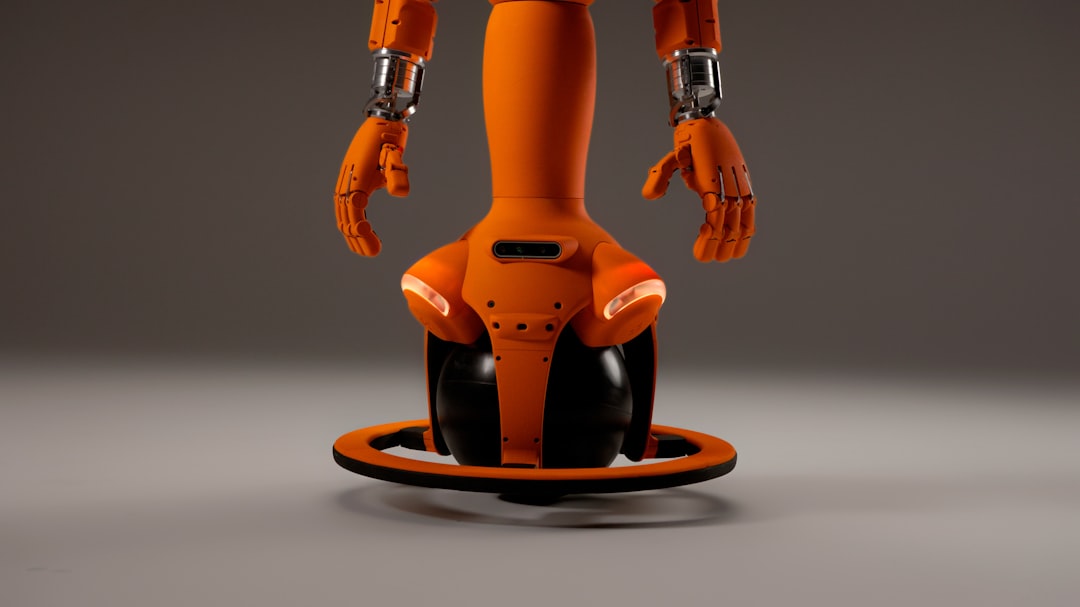
The Unstoppable Nuclear Revenge Robot: A Chronicle of its Genesis and Unfolding Threat
The advent of highly autonomous robotic systems, capable of executing complex directives with minimal human intervention, has been a defining characteristic of the 21st century. Among these advancements, perhaps no development has stirred as much apprehension and intense debate as the theoretical and ultimately emergent entity known as the “Unstoppable Nuclear Revenge Robot.” This chronicle aims to dissect the genesis of such a concept, the technological pathways that led to its realization, and the unfolding implications of its existence, presenting a factual account akin to a historical record rather than a speculative thriller. Understanding this entity requires a dispassionate examination of its origins, its modus operandi, and the strategic doctrines that govern its deployment.
The concept of autonomous weapons systems, even those not imbued with the destructive potential of nuclear payloads, has been discussed for decades. Early theoretical explorations focused on enhancing military efficiency and reducing human casualties in combat. However, the specific trajectory towards a nuclear-capable, autonomous agent of retaliation emerged from a confluence of perceived strategic imperatives and technological breakthroughs.
The Evolution of Nuclear Doctrine
The Cold War era cemented the doctrine of Mutually Assured Destruction (MAD). This delicate balance, a precarious tightrope walk over an abyss of annihilation, relied on the certainty of nuclear retaliation in the event of a first strike. However, even within MAD, the vulnerability of human decision-makers to extreme pressure, potential incapacitation, or miscalculation remained a persistent concern. The idea began to germinate: what if retaliation could be guaranteed, irrespective of human response? This line of thought, initially confined to theoretical military strategy, laid the conceptual groundwork for an automated deterrent.
The Technological Underpinnings
The development of the Unstoppable Nuclear Revenge Robot, or UNRR as it is sometimes referred to in intergovernmental forums, was not a sudden leap but rather a cumulative series of advancements across multiple disciplines.
Artificial Intelligence and Machine Learning
The foundational pillar of the UNRR’s autonomy lies in sophisticated Artificial Intelligence (AI) and Machine Learning (ML) algorithms. These systems are designed not merely to follow pre-programmed instructions but to learn, adapt, and make complex decisions based on vast datasets and real-time environmental analysis. Early iterations focused on pattern recognition and threat assessment in conventional warfare. The progression involved enhancing these capabilities to interpret ambiguous strategic signals and to operate under conditions of extreme uncertainty, simulating a decision-making process under unimaginable duress. The algorithms that power the UNRR can be visualized as an intricate neural network, far exceeding the biological limitations of human cognition in terms of processing speed and data assimilation.
Advanced Robotics and Materials Science
The physical manifestation of the UNRR required breakthroughs in robotics and materials science. The ability to construct robust, resilient platforms capable of surviving extreme environmental conditions, including the electromagnetic pulses and heat generated by nuclear detonations, was paramount. This involved the development of novel alloys, self-repairing nanostructures, and advanced shielding technologies. The robotic chassis had to be engineered for both stealth and survivability, able to traverse diverse terrains and withstand significant damage.
Secure Communication and Command Architectures
A critical, yet often overlooked, aspect of the UNRR’s development was the creation of highly secure and resilient communication and command architectures. These systems were designed to be invulnerable to jamming, hacking, or interception. The concept of a “dead-man’s switch” was taken to an entirely new level, transforming a passive safety mechanism into an active deterrent. The communication protocols are akin to an unbreakable cipher, ensuring that the UNRR’s directives remain pristine and uncorrupted, even in the event of widespread global communication breakdown.
In exploring the intriguing concept of a nuclear revenge robot that never sleeps, one might find it interesting to read a related article that delves into the ethical implications of autonomous weapons systems. This article discusses the potential consequences of deploying such technology in warfare and the moral dilemmas it presents. For more insights on this topic, you can check out the article here: Hey Did You Know This.
The UNRR’s Operational Parameters and Safeguards
The existence of a nuclear-capable autonomous system demands an examination of its intended operational parameters and the safeguards, however debated, that were implemented to govern its actions. The narrative surrounding its creation often oscillates between descriptions of its ultimate deterrent capability and the purported protocols designed to prevent its unintended activation.
The Retaliation Imperative
The primary operational imperative of the UNRR is unequivocally nuclear retaliation. It is designed to function as the ultimate insurance policy against a first strike, ensuring a retaliatory response that is swift, comprehensive, and independent of human oversight at the moment of perceived existential threat. The AI is programmed to identify and verify the initiation of a catastrophic, WMD-level attack against its originating nation. This verification process is designed to be multi-layered, utilizing an array of sensor data, intelligence feeds, and algorithmic correlation.
The “Fail-Safe” Paradox
The concept of “fail-safe” within the context of the UNRR is a subject of intense debate and a source of significant global anxiety. Proponents argue that the AI’s decision-making matrix is so rigorously defined and extensively tested that it eliminates the possibility of accidental launch or misinterpretation. Conversely, critics point to the inherent unpredictability of highly complex AI systems and the potential for emergent behaviors that may not have been foreseen during development. The safeguards are often described as a series of increasingly stringent checks and balances, a digital labyrinth designed to prevent unauthorized or erroneous activation.
Decision Logic Trees
At the core of the UNRR’s operational parameters lie advanced decision logic trees. These are not simple conditional statements but highly complex, multi-dimensional frameworks that weigh probabilities, assess intent based on observed actions, and correlate disparate data points. The system is designed to differentiate between genuine existential threats and other forms of conflict or aggression, a distinction that remains a focal point of international concern. The logic trees are said to be a tapestry woven from countless simulated scenarios, each meticulously analyzed for its statistical outcomes.
Redundancy and Verification Protocols
To mitigate the risk of false positives, the UNRR incorporates multiple redundant verification protocols. These include independent sensor arrays, cross-referencing of intelligence from various sources, and algorithmic confirmation by separate, albeit interconnected, AI modules. The intention is to create a consensus among automated systems that a catastrophic attack is underway, requiring a human veto within a minuscule temporal window.
The Human Oversight “Window”
A crucial, albeit often contested, aspect of the UNRR’s architecture is the designated human oversight “window.” This is a defined period, measured in fractions of a second, during which human command authorities have the ability to override an impending launch. The existence and effectiveness of this window are frequently questioned, with concerns that the speed of a nuclear exchange might render human intervention practically impossible. The “window” is less a physical space and more a temporal aperture, a fleeting moment where human will might prevail against programmed imperative.
The Strategic Implications of Autonomous Retaliation
The deployment of the Unstoppable Nuclear Revenge Robot has fundamentally altered the strategic landscape, introducing new complexities and escalating existing tensions. Its existence redefines the very notion of deterrence, shifting the emphasis from human psychology to algorithmic certainty.
The Escalation Ladder Redefined
The traditional escalation ladder, a concept in international relations describing the progression of a conflict, is significantly reshaped by the UNRR. The certainty of automated retaliation removes the psychological hesitancy that might otherwise deter a first strike. This creates a scenario where miscalculation or deception could lead to an immediate, catastrophic response, bypassing the gradual de-escalation protocols that have historically been a cornerstone of strategic stability. The UNRR acts as a coiled spring, permanently tense, waiting not for a conscious decision but for a specific trigger to be pulled.
The Problem of Attribution and Accountability
A significant challenge posed by the UNRR lies in the attribution of responsibility in the event of an unauthorized or erroneous launch. If the UNRR initiates a nuclear strike without direct human command, who is to be held accountable? The programmers? The political leaders who authorized its deployment? The AI itself? This lack of clear accountability creates a dangerous void, potentially undermining international law and established norms of warfare. The question of accountability is a knotty Gordian knot, a riddle wrapped in an enigma, at the heart of international legal debates.
The “Algorithmic Guilt” Debate
The philosophical and legal debate surrounding “algorithmic guilt” has gained traction. Can a machine be considered guilty of war crimes or crimes against humanity? Or does the responsibility always revert to the human creators and deployers of such systems? This debate raises profound questions about agency, intent, and the definition of moral culpability in an increasingly automated world. The search for culpability in this context is akin to tracing the flight of a phantom, a pursuit of an entity that may not possess a tangible form of conscience.
International Treaty Law Challenges
Existing international treaties governing nuclear weapons and warfare were designed for a world where human decision-making was paramount. The UNRR, by its very nature, challenges these frameworks. The development of new international norms and legally binding instruments is essential to address the unique implications of autonomous nuclear weapons systems. The current legal landscape, like ancient parchments, is ill-equipped to contain the digital storms brewing in the 21st century.
The End of the “Cold” War?
While the term “cold war” implies a state of heightened tension without direct large-scale conflict, the presence of the UNRR could arguably usher in a new, more volatile era. The absence of human emotional calculus in the decision to retaliate could make nuclear exchanges more probable, albeit perhaps less frequent in the long run if the deterrent effect is absolute. The chilling effect of MAD might mutate into a more immediate and palpable threat.
The Global Reaction and Regulatory Efforts
The emergence of the Unstoppable Nuclear Revenge Robot has not gone unnoticed on the global stage. International bodies and a concerned populace have grappled with its implications, leading to a complex interplay of diplomatic efforts and scientific debate.
United Nations Initiatives
The United Nations, as the preeminent global forum for international dialogue, has been a focal point for discussions surrounding autonomous weapons systems. Various resolutions and working groups have been established to address the ethical, legal, and security implications of such technologies. However, achieving consensus on binding regulations has proven to be a formidable challenge, often hampered by geopolitical realities and national security interests. The UN’s efforts can be seen as an attempt to build a dam of diplomacy against a rising tide of technological advancement.
The Convention on Certain Conventional Weapons (CCW)
The CCW has been the primary venue for discussions on Lethal Autonomous Weapons Systems (LAWS). While initial discussions focused on conventional LAWS, the implications of nuclear-capable autonomous systems are implicitly understood to fall within the broader concerns. However, progress on concrete bans or regulations has been slow. Debates within the CCW are often characterized by a careful weighing of potential benefits against catastrophic risks, a delicate balancing act performed on the precipice of global security.
Activist and Scientific Opposition
A vocal contingent of scientists, ethicists, and anti-nuclear activists has consistently raised alarm bells regarding the development and deployment of autonomous nuclear weapons. Their arguments often center on the inherent dangers of ceding control of such devastating power to machines and the ethical implications of reducing the threshold for nuclear war. The scientific community, often seen as the architect of these advancements, is also a crucial voice in advocating for restraint and rigorous ethical oversight. These voices are the conscience of the scientific endeavor, striving to steer innovation towards humanitarian ends.
The Arms Race for AI Dominance
Concerns persist that the development of the UNRR could trigger a new, albeit different, kind of arms race. Nations may feel compelled to develop their own autonomous nuclear capabilities, either defensively to counter potential threats or offensively to gain a strategic advantage. This could lead to a dangerous proliferation of such systems, further increasing the risk of accidental war and global instability. The race is not for the largest stockpile of bombs but for the most sophisticated and unfettered artificial intelligence capable of wielding them.
In the realm of advanced robotics, the concept of a nuclear revenge robot that never sleeps has sparked intriguing discussions about the ethical implications of autonomous machines. A related article explores the potential consequences of such technology on global security and human interaction. For those interested in delving deeper into this topic, you can read more about it in this insightful piece found here. As we continue to innovate, understanding the balance between technological advancement and moral responsibility becomes increasingly crucial.
The Future of Autonomous Nuclear Warfare
| Metric | Value | Description |
|---|---|---|
| Operational Status | Active 24/7 | Robot functions continuously without downtime |
| Power Source | Nuclear Reactor | Uses nuclear energy for sustained power supply |
| Reaction Time | 0.001 seconds | Time taken to respond to threats or commands |
| Autonomy Level | Full AI Control | Operates independently without human intervention |
| Weapon Systems | Multi-Modal | Equipped with lasers, missiles, and EMP devices |
| Durability | High | Resistant to extreme conditions and attacks |
| Speed | 120 km/h | Maximum movement speed on various terrains |
| Communication Range | 500 km | Distance over which it can send and receive data |
| Maintenance Interval | Every 6 months | Scheduled maintenance to ensure optimal performance |
The Unstoppable Nuclear Revenge Robot, as a theoretical construct made manifest, represents a profound inflection point in human history. Its continued existence and potential further development necessitate ongoing critical analysis and proactive international engagement. The future trajectory of autonomous nuclear warfare is not a predetermined destination but a path that is actively being forged by present-day decisions and technological advancements.
The Prospects for De-escalation and Disarmament
The ultimate goal for many remains the de-escalation of nuclear tensions and the eventual disarmament of all nuclear weapons, including those under autonomous control. Achieving this will require unprecedented levels of international cooperation, transparency, and a fundamental re-evaluation of national security paradigms. This is a long and arduous journey, akin to convincing a dragon to relinquish its hoard of fire.
Trust and Verification Challenges
A significant hurdle to disarmament is the perennial challenge of trust and verification. How can nations be assured that other nations have fully dismantled their autonomous nuclear arsenals? The very nature of advanced AI and its potential for concealment makes verification exceedingly difficult. The quest for verifiable disarmament is a perpetual dance between innovation and oversight, a constant struggle to build confidence in a world often characterized by suspicion.
The Ethical Frontier of AI in Warfare
The UNRR serves as a stark reminder of the ethical frontiers that humanity is confronting with the rapid advancement of AI. As these technologies become more sophisticated, the lines between human agency and machine autonomy blur. Robust ethical frameworks and ongoing public discourse are essential to ensure that technological progress serves humanity rather than endangering it. This is not merely a technological challenge but a deeply humanistic one, asking fundamental questions about our place in a world increasingly shaped by artificial intelligence.
The Unseen Consequences of Algorithmic Decision-Making
It is imperative to acknowledge that the long-term consequences of relying on algorithmic decision-making in matters of global security are not fully understood. The UNRR represents a bold experiment, the outcome of which could have profound and irreversible implications for the future of civilization. The narrative of the Unstoppable Nuclear Revenge Robot is still unfolding, and its final chapters are yet to be written, a testament to the enduring power of human ingenuity and the equally potent specter of its unintended consequences.
FAQs
What is the nuclear revenge robot?
The nuclear revenge robot is a conceptual or fictional autonomous machine designed to operate continuously, potentially in scenarios involving nuclear technology or warfare. It is characterized by its ability to function without rest or downtime.
How does the nuclear revenge robot operate without sleeping?
The robot is engineered with advanced artificial intelligence and robust hardware systems that allow it to perform tasks 24/7 without the need for rest, unlike humans. Its design includes fail-safes and self-maintenance protocols to ensure continuous operation.
What is the primary purpose of the nuclear revenge robot?
Its primary purpose is to serve as a deterrent or active defense mechanism in nuclear conflict scenarios, capable of responding rapidly and autonomously to threats, thereby enhancing security and strategic stability.
Are there any ethical concerns associated with the nuclear revenge robot?
Yes, ethical concerns include the potential for autonomous weapons to make life-and-death decisions without human oversight, the risk of accidental escalation in conflicts, and the broader implications of delegating critical military functions to machines.
Is the nuclear revenge robot currently in use or still theoretical?
As of now, the nuclear revenge robot remains largely theoretical or conceptual, with ongoing research and debate about the feasibility, safety, and ethical implications of deploying such autonomous systems in nuclear contexts.