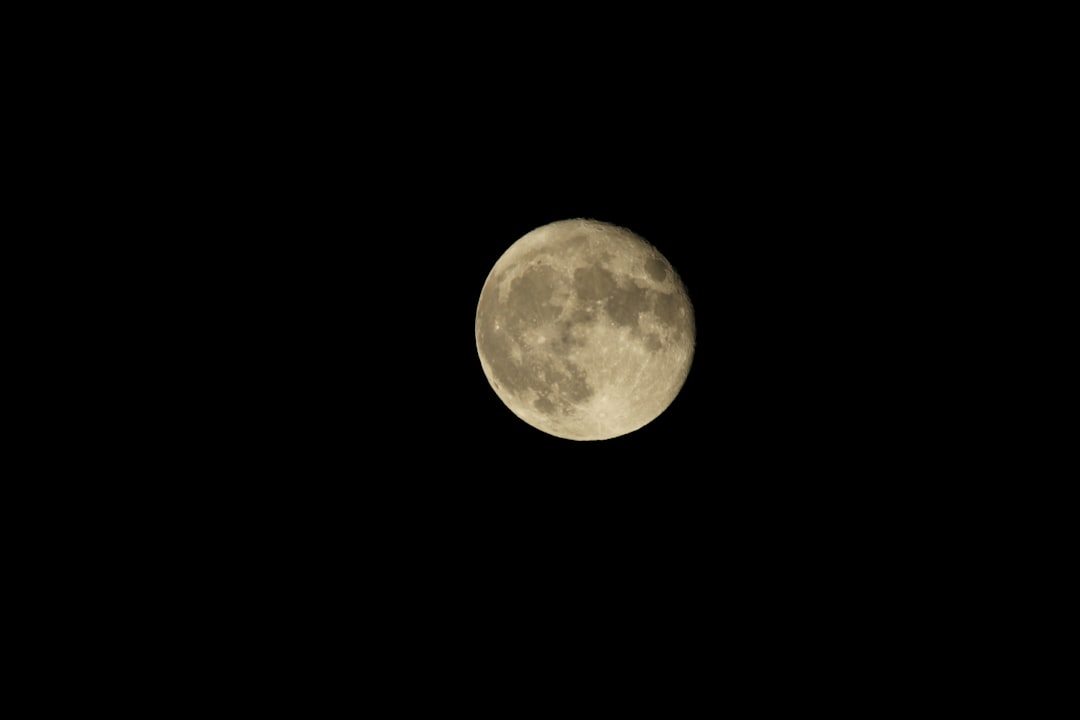
The assertion that humanity’s first steps on the lunar surface were a meticulously staged deception, a cinematic masterpiece rather than a monumental scientific achievement, has persisted for decades. Despite overwhelming scientific evidence and countless testimonies, a vocal minority continues to propagate the “moon hoax” theory. This article aims to systematically dismantle these claims by presenting the extensive and multifaceted scientific evidence that unequivocally demonstrates the reality of the Apollo moon landings. By examining various lines of independent verification, we can observe how the fabric of scientific inquiry, like a tightly woven tapestry, supports the historical record.
Direct Confirmation from Lunar Samples
One of the most compelling and tangible pieces of evidence supporting the Apollo missions comes in the form of approximately 382 kilograms (842 pounds) of lunar rocks, core samples, pebbles, dust, and soil collected by astronauts during the six successful Apollo missions between 1969 and 1972. These samples are not mere souvenirs; they are cosmic fingerprints, bearing unique characteristics that distinguish them unequivocally from any terrestrial material.
Unique Geochemical Composition
The analysis of these samples, performed by hundreds of independent research institutions worldwide, has consistently revealed a distinct geochemical signature. Lunar rocks are generally anhydrous (lacking water), depleted in volatile elements (like sodium and potassium), and enriched in refractory elements (like titanium and uranium) compared to Earth rocks. They also exhibit different isotopic ratios for elements like oxygen, which provides crucial information about their formation history and differentiation from Earth. This unique composition, a geological barcode, would be impossible to replicate with materials found on Earth.
Presence of Micro-Meteorite Impact Pits
The lunar surface is exposed to a constant bombardment of microscopic meteoroids. The returned samples, particularly the outer surfaces of rocks, exhibit countless tiny impact craters, often measured in micrometers. These pits are formed by high-velocity impacts in a vacuum and are distinct from erosion patterns seen on Earth. This characteristic, a testament to the harsh lunar environment, cannot be reproduced under terrestrial conditions.
Analysis of Lunar “Rust”
While the moon is largely anhydrous, some lunar samples showed traces of “rust” in the form of goethite. Initial reactions among some conspiracy theorists proposed this as evidence of Earth-based contamination. However, extensive scientific analysis has demonstrated that this rust formed from the interaction of iron in the lunar rock with hydrogen atoms from the solar wind and trace amounts of water molecules within the sample. This specific formation mechanism is unique to the lunar environment and has been meticulously studied and documented.
Independent Verification Through Third-Party Observations
Beyond the direct evidence brought back by the astronauts, critical validation of the Apollo missions comes from independent observations made by various nations and organizations, often utilizing sophisticated instrumentation. These observations serve as a global network of corroboration, strengthening the historical narrative.
Laser Ranging Retroreflectors (LRRRs)
One of the most elegant and enduring proofs of the moon landings comes from the deployment of Laser Ranging Retroreflectors (LRRRs). These passive devices, essentially specialized mirrors, were left on the lunar surface by Apollo 11, 14, and 15, as well as by two Soviet Lunokhod rovers. Scientists on Earth can fire lasers at these retroreflectors and precisely measure the time it takes for the light to return. This allows for continuous and accurate measurements of the Earth-Moon distance to within a few centimeters. The fact that these reflectors are still functioning and observable by multiple international observatories decades after their placement provides irrefutable proof of their presence on the moon. Any claim of a hoax would necessitate the fabrication of functional retroreflectors on the lunar surface without a human presence, a feat far more complex than the original landing.
High-Resolution Satellite Imaging
More recently, various lunar orbiters have provided photographic evidence of the Apollo landing sites with unprecedented detail. NASA’s Lunar Reconnaissance Orbiter (LRO), launched in 2009, has captured images showing the descent stages of the Apollo Lunar Modules (LMs), astronaut footpaths, equipment left behind, and even the tracks made by the lunar rovers. These images, taken from high-resolution cameras in orbit, are publicly available and have been independently verified by numerous scientific bodies. The level of detail in these images, showing the unmistakable relics of human activity, provides a visual confirmation that is difficult to dispute.
Observational Evidence of Landing Plumes
While less direct, some astronomical observations during the Apollo landings also lend credence to the events. Telescopes on Earth monitored the moon during the descent phases of the Lunar Modules, attempting to detect changes in brightness or even the faint glow of the exhaust plumes. While directly observing the small descent plumes from Earth was challenging due to atmospheric interference and the immense distance, some researchers reported transient increases in brightness consistent with the expected plumes during landing. This provides a supportive, albeit indirect, layer of evidence.
Addressing Common Hoax Claims with Scientific Principle
Many of the arguments put forth by moon landing deniers rely on a fundamental misunderstanding or misrepresentation of scientific principles, optics, and the physical conditions of the lunar environment. By dissecting these claims, we can observe how they unravel under the scrutiny of scientific fact.
The “Waving Flag” Conundrum
One of the most frequently cited “proofs” of a hoax is the appearance of a waving American flag in photographs and videos. The argument posits that in the vacuum of space, a flag cannot wave. However, the flag was mounted on a telescoping pole with a horizontal bar extending from its top, creating a rigid structure that held the flag unfurled. The “waves” or wrinkles visible are simply the result of the flag being folded tightly during transport and the natural creases remaining in the fabric in the low-gravity environment with no wind to smooth them out. The flag was specifically designed to appear unfurled, thereby ensuring visibility.
The “Missing Stars” Fallacy
Another common claim revolves around the apparent absence of stars in Apollo photographs. Critics argue that if the landings were real, stars should be visible in the black sky. This argument ignores the principles of photography and exposure. The lunar surface and the astronauts’ spacesuits were brilliantly illuminated by direct sunlight. To capture these brightly lit subjects without overexposure, the camera settings (specifically, shutter speed and aperture) were adjusted for short exposures. Stars, being incredibly faint points of light, would require much longer exposure times to be captured. It’s analogous to trying to photograph stars during the day on Earth – the ambient light would overwhelm any faint starlight.
Parallel Shadows and Light Source
Some conspiracy theorists point to photographs where shadows appear to converge or run parallel, suggesting multiple light sources and thus a studio setup. This argument demonstrates a misunderstanding of perspective and geometry. When projecting parallel lines (like shadows from a distant light source) onto a two-dimensional photograph, they can appear to converge at a vanishing point, giving the illusion of non-parallelism. Furthermore, the single light source (the sun) casts long, distinct shadows on the irregular lunar landscape. The apparent variations in shadow direction are due to the uneven terrain and the perspective of the camera.
The Van Allen Belts Radiation
A persistent concern raised by skeptics is the supposed insurmountable radiation levels within the Van Allen belts, a region of energetic charged particles trapped by Earth’s magnetic field. They argue that astronauts could not have survived passing through these belts. While the Van Allen belts do pose a radiation hazard, their intensity varies. The Apollo missions were meticulously planned to spend as little time as possible traversing the most intense parts of the belts, often passing through the thinner regions over the poles. The spacecraft were also designed with shielding, and the astronauts’ exposure was well within acceptable limits during their relatively brief transits. Furthermore, the primary radiation concern on long space missions, solar flares, was a known risk, and missions were scheduled to avoid periods of high solar activity when possible. The cumulative radiation dose received by Apollo astronauts has been thoroughly studied and documented, confirming it was within survivable parameters.
Long-Term Implications and Continuing Research
The scientific validation of the Apollo missions extends beyond merely disproving conspiracy theories. The data and experiences gleaned from these missions continue to inform and shape humanity’s understanding of the universe and our aspirations for future space exploration.
Understanding Lunar Formation and Evolution
The lunar samples returned by Apollo astronauts revolutionized our understanding of the moon’s origin and evolution. They provided crucial evidence supporting the “Giant Impact Hypothesis,” which posits that the moon formed from the debris ejected after a massive collision between Earth and a Mars-sized celestial body early in the solar system’s history. Continued analysis of these samples, decades later, continues to yield new insights into planetary formation and differentiation.
Advancements in Space Technology and Engineering
The demanding requirements of sending humans to the moon spurred incredible innovations in rocket propulsion, spacecraft design, life support systems, navigation, and telecommunications. Many technologies developed for Apollo, from miniature computers to advanced insulation materials, have found widespread applications on Earth, contributing to various industries and improving daily life. The challenge of the moon landing served as an unparalleled catalyst for technological progress, the echoes of which are still felt today.
Inspiration for Future Generations
Beyond the scientific and technological advancements, the Apollo missions remain a powerful testament to human ingenuity, perseverance, and the spirit of exploration. The image of Neil Armstrong’s boot on the lunar surface has transcended cultural boundaries, inspiring generations of scientists, engineers, and dreamers. The verification of these historical achievements reinforces the belief in humanity’s capacity for extraordinary endeavors and serves as a bedrock for future ambitions, including the planned return to the moon and eventual journeys to Mars.
In conclusion, the claim of a moon landing hoax crumbles under the weight of an immense body of independent, verifiable, and scientifically robust evidence. From the unique geochemistry of lunar rocks to the still-functioning laser retroreflectors, and from high-resolution satellite imagery to the meticulous dismantling of flawed arguments, the scientific community has consistently presented compelling proof. The reality of the Apollo missions is not a matter of belief, but a matter of empirically demonstrated fact, a triumph of human endeavor that stands as a beacon of scientific achievement and exploration. To deny this reality is to deny the vast collaborative effort of thousands of scientists and engineers and to disregard the fundamental principles of scientific inquiry itself.
FAQs
1. Why do some people believe the moon landing was faked?
Some people believe the moon landing was faked due to conspiracy theories that suggest the U.S. government staged the event to win the Space Race against the Soviet Union. These theories often cite perceived anomalies in photos and videos, such as shadows, flag movement, or lack of stars, as evidence.
2. What scientific evidence supports the authenticity of the moon landing?
The authenticity of the moon landing is supported by multiple lines of evidence, including rock samples brought back from the moon that have unique compositions, retroreflectors left on the lunar surface that are still used for laser ranging experiments, and telemetry data recorded during the missions.
3. How did technology in the 1960s make the moon landing possible?
The technology of the 1960s, including the Saturn V rocket, the Lunar Module, and advanced guidance systems, enabled NASA to send astronauts to the moon and return them safely. Extensive testing, engineering, and mission planning ensured the success of the Apollo missions.
4. What role do independent sources play in verifying the moon landing?
Independent sources such as the Soviet Union, which tracked the Apollo missions, and third-party observatories around the world confirmed the spacecraft’s trajectory and landing. Additionally, modern lunar missions have photographed Apollo landing sites, showing equipment left behind.
5. Why is it considered impossible to fake the moon landing?
Faking the moon landing would have required an unprecedented level of secrecy and technological capability to simulate lunar conditions convincingly. The vast amount of data, international tracking, physical evidence, and ongoing scientific research all corroborate the reality of the moon landings, making a hoax virtually impossible.