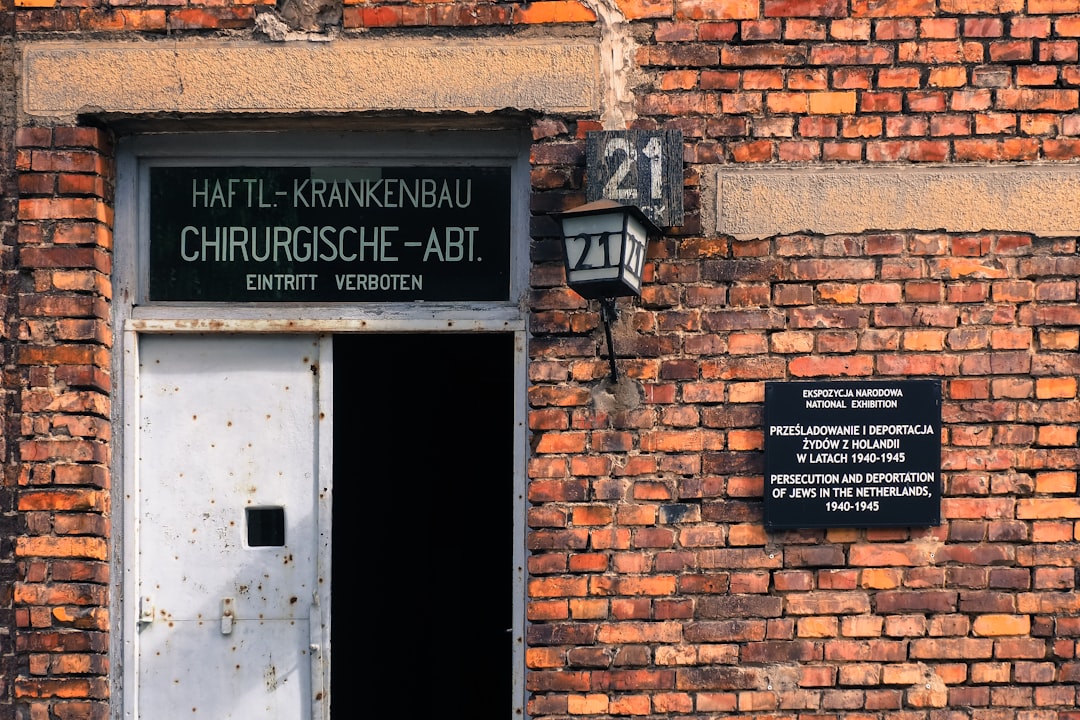
The chasm of the 20th century is marked by a period of profound darkness: the rise and devastating fall of Nazi Germany. This regime, born from the ashes of World War I and fueled by a potent brew of resentment, ideology, and charismatic demagoguery, plunged Europe and the world into a conflict of unprecedented brutality, ultimately culminating in its own cataclysmic collapse. To understand this period is to confront the darkest capabilities of human nature, a stark testament to how easily a nation can be led astray, and how the consequences of such a descent can echo through generations.
The birth of Nazism did not occur in a vacuum. It was the product of a fertile ground, cultivated by a complex interplay of historical, economic, and social factors that left Germany reeling at the close of the First World War. The terms of the Treaty of Versailles, imposed on a defeated Germany, proved to be a bitter pill to swallow. This treaty, as you’ll discover, was not merely a diplomatic document, but a psychological blow that festered in the national consciousness for years to come.
The Scars of Versailles
The treaty, signed in 1919, assigned sole blame for the war to Germany and its allies, a stipulation that was deeply humiliating. Germany was forced to cede vast territories, dismantle its military, and pay crippling reparations. This economic burden, often likened to an insurmountable debt, crippled the nation’s ability to recover and fueled a sense of injustice. The “war guilt clause,” Article 231, became a particular focal point of anger, a constant reminder of perceived unfairness and a rallying cry for revisionist sentiment.
Economic Instability and the Great Depression
The Weimar Republic, Germany’s first experiment with democracy, struggled to find its footing amidst this post-war turmoil. Hyperinflation in the early 1920s, a terrifying economic phenomenon where the value of money evaporated like mist in the morning sun, wiped out savings and created widespread poverty. While there were periods of relative stability, the global Great Depression, beginning in 1929, delivered a devastating blow. Unemployment soared, businesses failed, and civil unrest became a daily reality. This economic despair created a fertile breeding ground for extremist ideologies that promised radical solutions.
The Rise of Nationalism and Anti-Semitism
In the face of such hardship, a potent nationalistic fervor began to sweep across Germany. This feeling of wounded pride and a yearning for a return to past glories was skillfully exploited by various political factions. Intertwined with this nationalism was a virulent strain of anti-Semitism. For centuries, Jewish communities in Europe had been scapegoated for societal ills, and in Germany, this prejudice found a particularly dangerous champion. The Nazis, as you will see, weaponized these existing sentiments, transforming them into a central tenet of their ideology.
One fascinating article that delves into the complexities of Nazi Germany is available at this link: The Rise and Fall of Nazi Germany. This piece explores the socio-political factors that contributed to the regime’s ascent to power, as well as the consequences of its eventual downfall. It provides valuable insights into the historical context and the impact of Nazi ideology on both Germany and the world at large.
The Ascent of the Nazi Party
Amidst this volatile landscape, a fringe political party, the National Socialist German Workers’ Party (NSDAP), began to gain traction. Led by Adolf Hitler, the party offered a seductive vision of national rebirth, economic recovery, and the restoration of German power. Their message, disseminated through powerful propaganda and impassioned rallies, resonated with millions who felt disenfranchised and betrayed. The rise of the Nazi Party was not a sudden eruption, but a gradual, insidious creep that exploited the vulnerabilities of a beleaguered nation.
Hitler’s Charismatic Leadership
Adolf Hitler was a master of rhetoric, a compelling orator who could tap into the deepest fears and aspirations of his audience. His speeches were not mere political addresses; they were theatrical performances, designed to evoke strong emotions and foster a fervent loyalty. He projected an image of strength and decisiveness, offering himself as the savior Germany desperately needed. This personal magnetism, combined with his unwavering belief in his own vision, was a crucial element in the party’s rise.
Propaganda and Mobilization
The Nazi Party understood the power of propaganda, and they wielded it with ruthless efficiency. Joseph Goebbels, the party’s propaganda minister, orchestrated a sophisticated campaign that saturated the media, disseminated inflammatory messages, and demonized opposition. Rallies, parades, and the ubiquitous swastika became symbols of Nazi power and unity. The party also meticulously organized its members, creating a disciplined and hierarchical structure that was ready to seize power when the opportunity arose.
Exploiting Political Weakness
The political landscape of the Weimar Republic was fragmented and unstable. Coalition governments were common, often characterized by infighting and indecision. This paralysis made it difficult for the government to effectively address the nation’s problems. The Nazi Party, in contrast, presented a united and uncompromising front, appearing as a decisive alternative to the perceived weakness of the democratic system.
The Consolidation of Power and the Reign of Terror
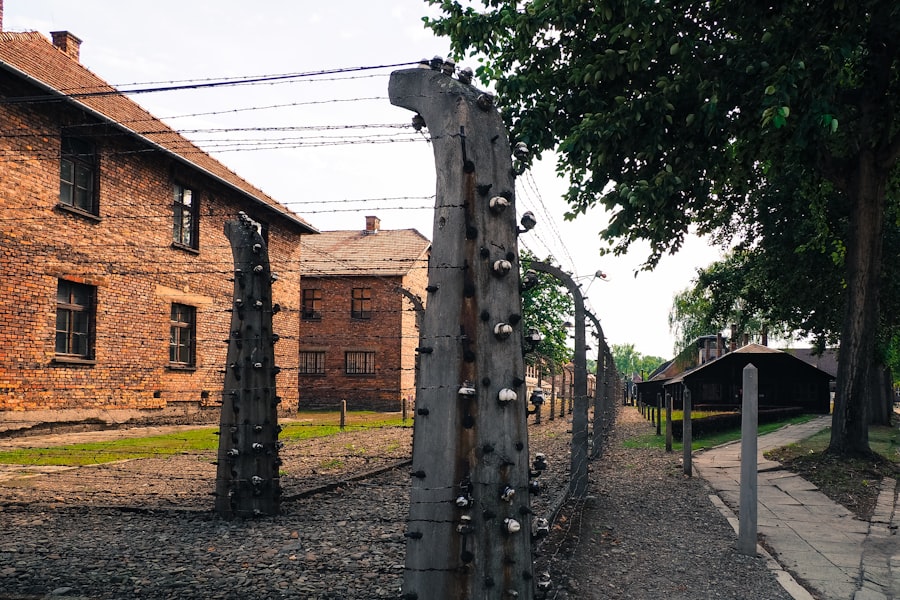
Once in power, the Nazi Party did not hesitate to dismantle Germany’s democratic institutions and establish a totalitarian state. This transition was swift and brutal, marked by the systematic suppression of all opposition and the creation of a climate of fear. The initial optimism of some who believed Hitler would be a moderating force quickly evaporated, replaced by the chilling reality of a dictatorship.
The Reichstag Fire and Enabling Act
A pivotal moment in the Nazi consolidation of power was the Reichstag fire in February 1933. While the perpetrators remain a subject of debate, the Nazis swiftly blamed communists and used the incident as a pretext to suspend civil liberties and arrest political opponents. The subsequent passing of the Enabling Act in March 1933 effectively granted Hitler dictatorial powers, allowing him to enact laws without the consent of the Reichstag. This was the legal framework that allowed the edifice of democracy to be dismantled brick by brick.
Gleichschaltung: The Co-ordination of Society
The Nazis implemented a policy known as Gleichschaltung, or “co-ordination,” which aimed to bring all aspects of German society under party control. This involved the dissolution of independent trade unions, political parties, and civil organizations. The press, arts, and education system were all brought under strict censorship and ideological direction. This process, akin to a vast engine being forced into a single, predetermined gear, ensured that no dissent could gain a foothold.
The Night of the Long Knives
To solidify his leadership and eliminate potential rivals within his own movement, Hitler ordered the “Night of the Long Knives” in 1934. This brutal purge saw the assassination of key figures within the SA (Sturmabteilung), the paramilitary wing of the Nazi Party, and other perceived enemies. This act demonstrated Hitler’s willingness to use extreme violence to maintain his grip on power and cemented his authority.
The Gestapo and SS: Instruments of Fear
The Gestapo, the secret state police, and the Schutzstaffel (SS), an elite paramilitary organization, became the twin pillars of Nazi terror. These organizations operated with impunity, using surveillance, intimidation, arbitrary arrest, torture, and murder to suppress any opposition. The pervasive fear they instilled choked off any nascent resistance and created a society where silence was often the safest option.
The Road to World War II and the Holocaust
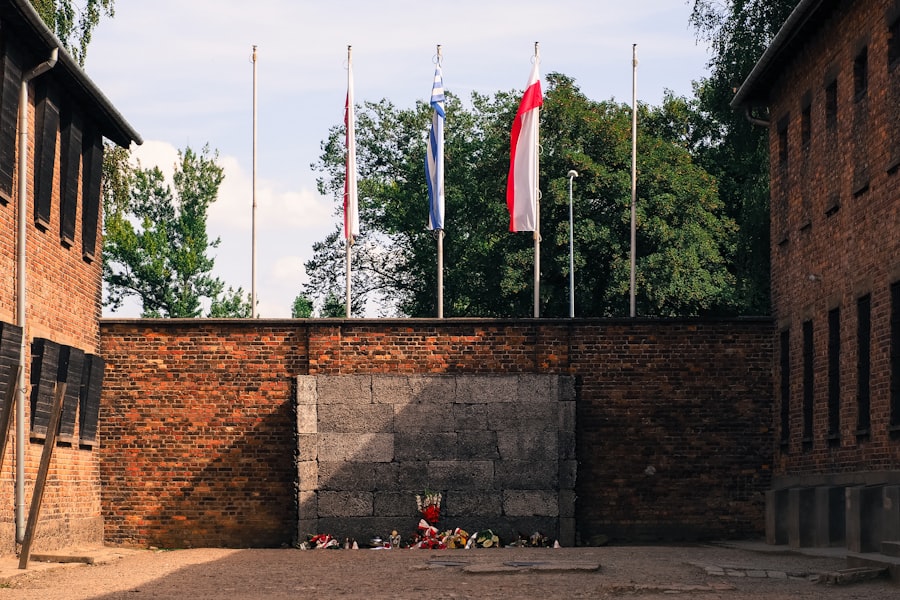
With internal opposition crushed and Germany rearming under a totalitarian regime, the stage was set for aggression. Hitler’s foreign policy ambitions, fueled by his expansionist ideology and a desire to overturn the Treaty of Versailles, inevitably led to conflict. The systematic persecution and eventual genocide of European Jews, the Holocaust, stands as the nadir of human barbarity, a crime of unprecedented scale and depravity.
Remilitarization and Aggression
Despite international warnings, Hitler embarked on a program of aggressive rearmament, violating the Treaty of Versailles with impunity. The remilitarization of the Rhineland in 1936, the annexation of Austria (Anschluss) in 1938, and the seizure of the Sudetenland from Czechoslovakia in the same year were all steps towards his ultimate goal of Lebensraum, or “living space,” in Eastern Europe. Each of these acts was met with a policy of appeasement from Western powers, who hoped to avoid another devastating war, a hope that proved tragically misplaced.
The Invasion of Poland and the Outbreak of War
The final straw came with the invasion of Poland on September 1, 1939. This act of unprovoked aggression finally forced Britain and France to declare war on Germany, marking the beginning of World War II. The war that followed was a global conflagration, a symphony of destruction that engulfed continents and claimed tens of millions of lives.
The Shoah: The Systematic Annihilation of Jews
The persecution of Jews, which began with discriminatory laws and segregation, escalated into the systematic extermination of an entire people – the Holocaust, or Shoah. Beginning with ghettos and mass shootings, the Nazis eventually implemented the “Final Solution,” a chillingly bureaucratic term for the extermination camps like Auschwitz-Birkenau, Treblinka, and Sobibor. Here, millions of Jews, along with Roma, Sinti, homosexuals, political dissidents, and other targeted groups, were systematically murdered through gassings, forced labor, starvation, and disease. This was not a spontaneous outburst of violence, but a meticulously planned and industrially executed act of genocide, a stain on the conscience of humanity.
Nazi Germany, a regime known for its totalitarian rule and aggressive expansionism, has been the subject of extensive historical analysis. One particularly insightful article explores the impact of propaganda on the German populace during this dark period. For those interested in understanding how the regime manipulated public perception, you can read more about it in this detailed exploration. This examination sheds light on the techniques employed by the Nazis to maintain control and influence over society.
The Collapse of the Reich
| Metric | Data | Notes |
|---|---|---|
| Period of Rule | 1933 – 1945 | From Hitler’s appointment as Chancellor to the end of WWII in Europe |
| Leader | Adolf Hitler | Führer of Nazi Germany |
| Population (1939) | ~70 million | Including annexed territories |
| Military Size (1939) | ~3 million | Active personnel in Wehrmacht |
| Holocaust Victims | ~6 million Jews | Estimated number of Jewish people murdered |
| Other Victims of Nazi Persecution | Millions | Including Romani people, disabled individuals, political prisoners, and others |
| GDP Growth Rate (1933-1938) | ~5-8% annually | Economic recovery largely due to rearmament and public works |
| Unemployment Rate (1933) | ~30% | Before Nazi economic policies were implemented |
| Unemployment Rate (1938) | Significant reduction due to militarization and public projects | |
| Territorial Expansion | Austria, Sudetenland, parts of Poland, Czechoslovakia | Annexations and invasions before and during WWII |
As the tides of war turned, the seemingly invincible Nazi regime began to crumble. Allied forces, driven by a growing understanding of the regime’s atrocities and a determination to end its reign of terror, pushed relentlessly into Germany. The once-mighty Reich, built on a foundation of lies and terror, proved to be as fragile as a house of cards when confronted with overwhelming force and the unwavering resolve of those who opposed it.
The Eastern Front and the Second Front
The brutal war on the Eastern Front against the Soviet Union, characterized by immense casualties and scorched-earth tactics, ultimately proved to be a devastating drain on German resources. The D-Day landings in June 1944, opening up a Second Front in Western Europe, placed Germany in a vise. The once-invincible Wehrmacht, stretched thin and depleted, found itself fighting a war on multiple fronts with dwindling supplies.
The Allied Advance
From the west, Allied forces pushed through France, Belgium, and into Germany. From the east, the Red Army advanced relentlessly, inflicting heavy losses on German forces. Cities were devastated by aerial bombardment, and the German populace, once united behind their Führer, grew increasingly weary and disillusioned by the mounting casualties and the visible suffering.
Hitler’s Demise and the Fall of Berlin
As Allied forces closed in on Berlin in April 1945, Adolf Hitler, holed up in his bunker, refused to surrender. He committed suicide on April 30, 1945. His death marked the symbolic end of his regime. Without its Führer, and with its military forces in disarray, Germany surrendered unconditionally on May 8, 1945, bringing World War II in Europe to an end.
The Aftermath and Legacy
The collapse of Nazi Germany left a continent in ruins and a world forever changed. The Nuremberg Trials brought many of the regime’s leaders to justice, but the physical and psychological scars of the war and the Holocaust would take generations to heal. The rise and fall of Nazi Germany serves as a perpetual, chilling reminder of the fragility of democracy, the seductive power of extremist ideologies, and the imperative obligation to remain vigilant against the forces of hatred and oppression. It is a historical lodestar, guiding us to remember the past so that we may never again repeat its most horrific chapters.
FAQs
What was Nazi Germany?
Nazi Germany refers to the period from 1933 to 1945 when Germany was governed by Adolf Hitler and the National Socialist German Workers’ Party (NSDAP). It was characterized by a totalitarian regime, aggressive expansionism, and the implementation of fascist policies.
Who was the leader of Nazi Germany?
Adolf Hitler was the leader of Nazi Germany. He became Chancellor in 1933 and later assumed the title of Führer, establishing a dictatorship.
What were the main goals of Nazi Germany?
The main goals included the establishment of a totalitarian state, the promotion of Aryan racial supremacy, territorial expansion (Lebensraum), and the elimination of perceived enemies such as Jews, communists, and other minority groups.
What events led to the fall of Nazi Germany?
Nazi Germany fell due to a combination of military defeats in World War II, including the Allied invasion of Germany, the Soviet advance from the east, and internal collapse. The regime ended with Hitler’s suicide in April 1945 and Germany’s unconditional surrender in May 1945.
What was the impact of Nazi Germany on world history?
Nazi Germany’s impact includes the devastation of World War II, the Holocaust in which six million Jews and millions of others were murdered, and significant geopolitical changes. It led to the division of Germany, the establishment of the United Nations, and a global commitment to preventing such atrocities in the future.