
The global stock market, often touted as a beacon of free-market capitalism and meritocracy, increasingly faces accusations of being rigged, a system where the odds are inherently stacked against the average participant. While the romanticized image of diligent research and shrewd investment leading to prosperity persists, a closer examination reveals a landscape riddled with structural inequalities, technological advantages, and informational asymmetries that favor a select few. This article delves into the various facets of this alleged rigging, exploring the mechanisms through which some players gain an unfair advantage, and the profound implications for market fairness, wealth distribution, and public trust.
The advent of high-frequency trading (HFT) has fundamentally reshaped the dynamics of modern stock markets. This technological leap allows certain firms to execute millions of trades in fractions of a second, far beyond the capabilities of human traders. The very speed at which these algorithms operate creates an inherent advantage, often at the expense of slower participants.
The Millisecond Advantage
HFT firms leverage co-location facilities, situating their servers physically closer to the exchange’s matching engines. This proximity, measured in mere feet, translates into a critical “millisecond advantage.” While seemingly insignificant, in the hyper-competitive world of HFT, these fractions of a second allow these firms to perceive price changes and execute trades before others. Imagine a race where some participants start several steps further down the track; that is the essence of the millisecond advantage.
Order Book Front-Running
A more controversial aspect of HFT is its alleged use in “front-running.” While strict regulations aim to prevent traditional front-running (where a broker executes trades based on foreknowledge of client orders), HFT algorithms, by observing large institutional orders entering the market, can infer impending price movements. They then execute their own micro-trades before the larger order is fully processed, profiting from the minuscule price shift that occurs as the larger order is filled. This creates a scenario where the slow-moving “whale” (the institutional investor) often pays a slightly higher price, while the agile HFT “shrimp” skims a profit.
Market Making and Liquidity Provision
HFT firms often justify their existence by claiming to provide liquidity to the market through their “market making” activities. They continuously post both buy and sell orders, profiting from the bid-ask spread. While this can indeed contribute to market efficiency by narrowing spreads and facilitating trading, the sheer scale and speed of their operations raise questions about the fairness of their profit extraction. Are they truly providing a service, or are they simply exploiting technological advantages to extract tiny profits from every transaction? The debate continues.
Many investors have raised concerns about the integrity of the stock market, suggesting that it operates as a rigged system favoring a select few. A related article that delves deeper into this topic can be found at this link. The article explores various factors contributing to the perception of unfairness in the market, including high-frequency trading, insider information, and the influence of institutional investors, all of which can create an uneven playing field for average investors.
Informational Oligarchies and Insider Trading
Information is the lifeblood of financial markets, and unequal access to it is a primary driver of unfair advantages. While outright insider trading is illegal, a spectrum of practices exists that blur the lines between legitimate research and exploitative information asymmetry.
The “News Leak” Economy
Even before official announcements, certain institutional investors and connected individuals often gain early access to market-moving information. This can range from subtle hints gleaned from industry contacts to sophisticated data analytics that predict company performance ahead of earnings reports. When this privileged information is acted upon, it creates a situation where some players are betting with a deck that has already been subtly marked.
Political Intelligence and Regulatory Arbitration
The intersection of finance and politics often breeds informational inequalities. Lobbyists and well-connected firms sometimes gain early insights into impending regulatory changes or government contracts that can significantly impact share prices. This “political intelligence” allows for strategic positioning in the market before such information becomes public knowledge, providing a clear advantage to those with the deepest pockets and strongest networks. The influence of financial institutions on regulatory bodies further exacerbates this issue, allowing them to shape the rules of the game in their favor.
Expert Networks and Gray-Area Research
The rise of “expert networks” allows fund managers to pay for consultations with industry insiders, former employees, and specialists. While these networks can provide valuable insights for due diligence, they also present a potential loophole for obtaining non-public information. The line between legitimate expert opinion and the divulging of proprietary or sensitive information can be incredibly thin and difficult to police, creating a “gray area” where informational advantages can be quietly cultivated.
The Unequal Playing Field: Investment Vehicles and Capital Access
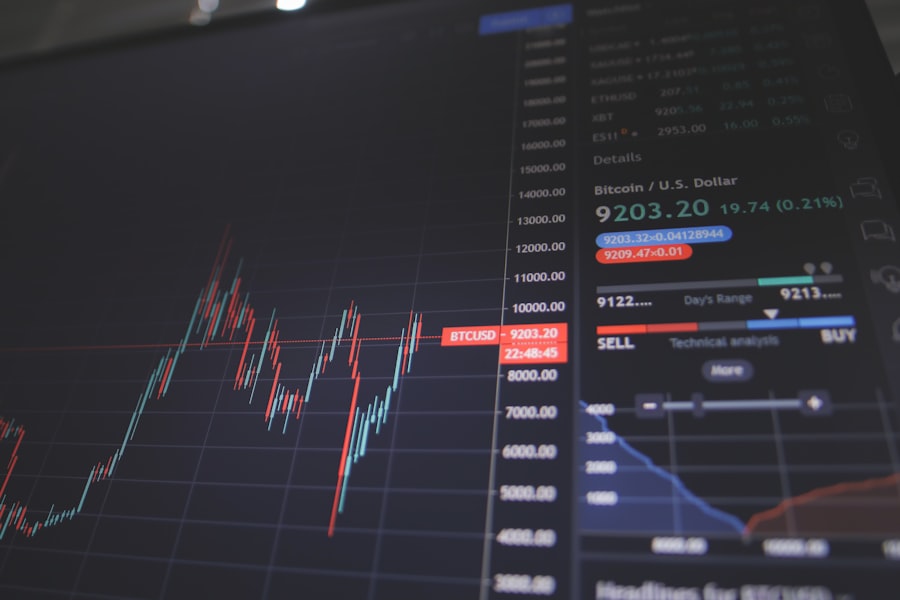
The very structure of financial markets often favors those with substantial capital, creating a stratified system where different tiers of investors operate under vastly different conditions.
Private Placements and Exclusive Opportunities
Many lucrative investment opportunities, particularly in early-stage companies or specialized funds, are offered through “private placements” that are only accessible to accredited investors – those with high net worth and significant investment experience. This effectively bars the average investor from participating in deals with potentially high returns, channeling wealth accumulation towards those who already possess it. The “democratization of finance” often rings hollow when such exclusive access remains prevalent.
Leverage and Margin Trading
While average investors can utilize leverage to some extent, institutional investors and high-net-worth individuals often have access to far more favorable lending terms and higher leverage ratios. This amplified buying power allows them to magnify their returns (and losses) to a degree that is simply unattainable for the typical retail investor. Leverage, when used skillfully, can be a powerful engine of wealth creation, but its unequal distribution contributes to the widening gap between the financially powerful and the average participant.
Minimum Investment Thresholds
Many high-performing hedge funds and private equity funds impose high minimum investment thresholds, often in the millions of dollars. This automatically excludes the vast majority of the population from accessing investment strategies and managers that have demonstrated superior returns. Consequently, the average investor is often relegated to publicly traded funds or individual stocks, which may not offer the same level of diversification or alpha generation potential.
Regulatory Lapses and Enforcement Gaps
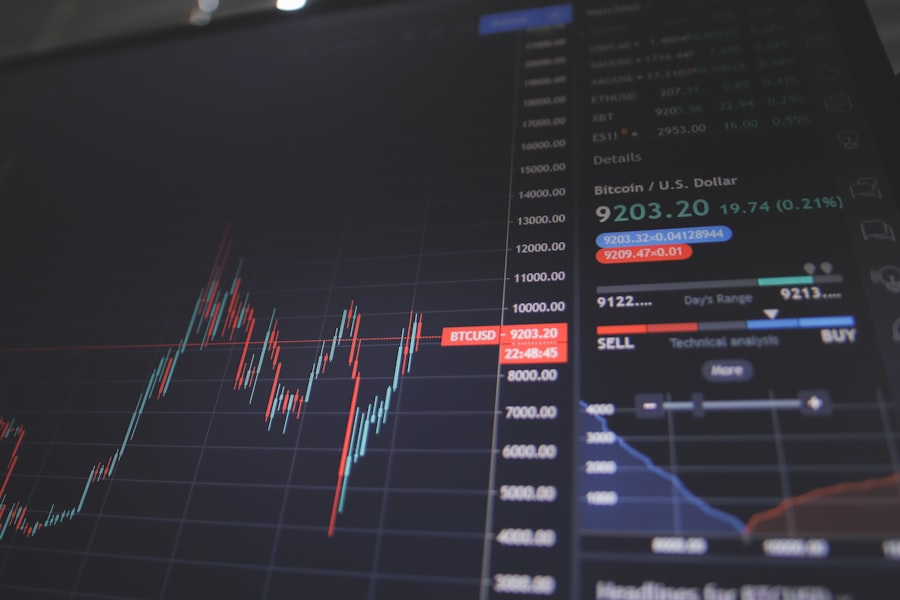
Even with regulations in place, the effectiveness of these rules hinges on robust enforcement. Critics argue that regulatory bodies are often outmatched by the sophistication of financial institutions, or that political pressures and revolving doors between industry and regulation weaken their resolve.
Insufficient Penalties and “Cost of Doing Business” Fines
When financial institutions are found guilty of misconduct, the penalties levied often appear to be a mere “cost of doing business” rather than a true deterrent. Fines, while sometimes substantial in absolute terms, can be a small fraction of the profits generated through illegal activities. This creates a perverse incentive structure where the potential rewards of illicit behavior outweigh the risks of being caught and penalized. The perception of a two-tiered justice system – one for the powerful institutions and another for the individual – erodes public trust.
The Complexity of Financial Products
The increasing complexity of financial products, particularly derivatives and structured finance vehicles, makes it challenging for regulators to fully understand, monitor, and regulate their impact. This informational and technical gap creates vulnerabilities that can be exploited by sophisticated players, potentially leading to systemic risks that go undetected until it is too late. The opaque nature of some financial instruments acts as a veil, obscuring potentially problematic practices.
Revolving Door Between Industry and Regulation
The phenomenon of individuals moving between senior positions in financial institutions and regulatory bodies raises concerns about potential conflicts of interest. Regulators who once worked for the very firms they are now supposed to supervise, or who intend to return to the private sector, may be hesitant to impose strict penalties or push for aggressive reforms. This “revolving door” can weaken the independence and perceived impartiality of regulatory oversight.
Many investors often feel that the stock market operates as a rigged system, favoring those with insider knowledge and resources. This sentiment is echoed in a related article that explores the intricacies of market manipulation and the advantages held by institutional investors. For a deeper understanding of these dynamics, you can read more about it in this insightful piece on the subject. By examining the factors that contribute to this perception, we can better understand the challenges faced by everyday investors. If you’re interested in learning more, check out the article here.
The Illusion of a Level Playing Field
| Metric | Description | Example/Statistic |
|---|---|---|
| High-Frequency Trading (HFT) Advantage | HFT firms use advanced algorithms and faster connections to execute trades milliseconds faster than average investors. | HFT accounts for approximately 50-60% of US equity trading volume. |
| Insider Trading Cases | Instances where individuals with non-public information trade stocks to gain unfair advantage. | SEC reported over 200 insider trading enforcement actions in the last 5 years. |
| Market Manipulation Incidents | Deliberate attempts to interfere with the free and fair operation of the market. | Pump and dump schemes affect thousands of small-cap stocks annually. |
| Dark Pools Trading Volume | Private exchanges where large trades are made anonymously, reducing market transparency. | Dark pools represent about 15-20% of total US equity trading volume. |
| Regulatory Fines on Major Banks | Penalties imposed for manipulative practices like spoofing or rate rigging. | Over 10 billion in fines levied on banks since 2010 for market misconduct. |
| Retail Investor Disadvantage | Smaller investors face higher fees, slower execution, and less access to information. | Retail investors hold less than 20% of total market volume but pay higher average fees. |
To the average investor, the stock market can feel like a casino where the house always wins, not through blatant cheating, but through a multitude of subtle, structural advantages. The narrative of individual empowerment through market participation crumbles under the weight of these systemic inequalities.
The Cognitive Burden on Retail Investors
Retail investors, often operating with limited resources and less sophisticated analytical tools, face a significant cognitive burden. They are bombarded with information, much of it contradictory or biased, and lack the dedicated research teams and real-time data access of institutional players. This asymmetry of resources places them at a significant disadvantage when attempting to compete in a market dominated by algorithms and informational titans.
Manipulation Through Social Media and “Pump and Dump” Schemes
The digital age, while offering some advantages to retail investors, also presents new avenues for manipulation. Social media platforms can be exploited for “pump and dump” schemes, where colluding parties artificially inflate the price of a stock through coordinated promotion, only to sell their holdings once retail investors buy in, leaving them with worthless shares. This exploitation leverages the emotional and communal aspects of online investing, preying on the desire for quick gains.
The Fading Dream of Meritocracy
The idealized vision of the stock market as a meritocracy, where hard work and intelligence are rewarded, is increasingly challenged by the reality of systemic advantages. If the playing field is not level, then success becomes less about individual merit and more about one’s position within a privileged hierarchy. This discredits the very principles upon which capitalist markets are supposed to operate, leading to disillusionment and calls for fundamental reforms.
Conclusion: Towards a More Equitable Market
The evidence suggests that the stock market is far from a perfectly level playing field. High-frequency trading, informational asymmetries, unequal access to capital, and regulatory weaknesses all contribute to a system where certain participants derive unfair advantages. For the market to regain its perceived legitimacy and for the broader public to trust in its fairness, significant reforms are necessary. This includes stricter regulation of HFT, enhanced enforcement against all forms of insider trading, greater transparency in political intelligence, and a re-evaluation of how investment opportunities are distributed. Ultimately, fostering truly equitable markets requires a commitment to addressing these structural inequalities, ensuring that the dream of financial participation is not just a privilege for the few, but a genuine possibility for many. The alternative is a continued erosion of trust, an exacerbation of wealth disparities, and a market system that, while appearing sophisticated, is fundamentally unfair.
FAQs
1. What does it mean when people say the stock market is a rigged system?
The phrase “rigged system” suggests that the stock market is unfairly manipulated or biased in favor of certain participants, such as large institutional investors or insiders, making it difficult for average investors to compete on a level playing field.
2. Are there regulations in place to prevent manipulation in the stock market?
Yes, regulatory bodies like the U.S. Securities and Exchange Commission (SEC) enforce rules designed to prevent market manipulation, insider trading, and fraud to protect investors and maintain market integrity.
3. How do high-frequency traders impact the fairness of the stock market?
High-frequency traders use advanced algorithms and high-speed data networks to execute trades in milliseconds, which can create advantages over regular investors and raise concerns about market fairness and transparency.
4. Can insider trading affect the stock market’s fairness?
Yes, insider trading—buying or selling stocks based on non-public, material information—undermines market fairness by giving certain individuals an unfair advantage, and it is illegal under securities laws.
5. Is it possible for individual investors to succeed in the stock market despite these challenges?
Yes, individual investors can succeed by educating themselves, diversifying their portfolios, using long-term investment strategies, and staying informed about market conditions and regulations.