
The image of the Viking warrior, fearsome and formidable, often conjures a specific visual: a helmet adorned with prominent, spiraling horns. This iconic depiction has permeated popular culture, emblazoned on everything from beer advertisements to children’s toys. However, a closer examination of historical and archaeological evidence reveals that this popular notion is largely a creation of later artistic interpretation and dramatic flair, rather than a reflection of actual Viking warrior equipment. The myth of Viking horned helmets is a pervasive and enduring one, largely a relic of imagination rather than reality.
The enduring image of the horned helmet doesn’t stem from the sagas or the archaeological sites of the Viking Age itself. Instead, the seeds of this potent, though inaccurate, visual were sown much later, primarily in the world of art and opera during the 19th century.
Wagner’s Operatic Influence
The most significant catalyst for the horned helmet myth can be traced to the operatic masterpieces of Richard Wagner. His epic cycle, “Der Ring des Nibelungen” (The Ring of the Nibelung), premiered in its entirety in 1876. In his dramatic stagings, the costume designer Carl Emil Doepler outfitted the Viking characters with helmets featuring large, imposing horns. This visually striking choice, designed to enhance the theatricality and perceived ferocity of the characters, proved to be a thunderclap, reverberating through the cultural consciousness of the era and beyond.
- The Power of Spectacle: Wagner’s operas were grand spectacles, intended to evoke powerful emotions and create unforgettable imagery for the audience. The horned helmets certainly achieved this, providing a visual shorthand for primal strength and ferocity.
- 19th Century Romanticism: The 19th century was a period deeply enamored with romanticism, often idealizing and mythologizing historical periods and figures. The Viking Age, with its tales of seafaring, raiding, and warrior prowess, was a fertile ground for such romantic embellishment. The horned helmet fit perfectly into this burgeoning narrative of the heroic, albeit savage, Norseman.
Early 20th Century Art and Illustration
Following Wagner’s lead, other artists and illustrators readily adopted and amplified the horned helmet motif. This imagery became particularly prevalent in children’s books, historical fiction, and early comic strips, further cementing the image in the public imagination.
- Visual Simplification: For illustrators, the horns provided a distinct and easily recognizable feature, simplifying the visual representation of a Viking for a wider audience.
- The Spread of Popular Media: As illustrated publications became more accessible, the image of the horned Viking transcended the opera house and infiltrated homes and schools, becoming the default visual association with these Norse seafarers.
Viking horned helmets are often mistakenly associated with the iconic image of Norse warriors, but historical evidence suggests that these helmets were likely not worn by Vikings in battle. For a deeper understanding of the myths and realities surrounding Viking attire, you can read a related article that explores the origins of these misconceptions and the true nature of Viking helmets. Check it out here: Viking Horned Helmets: Myth vs. Reality.
Archaeological Silence: The Absence of Evidence
Despite the visual prominence of horned helmets in popular culture, the archaeological record offers a stark and almost complete absence of evidence to support their use by Viking warriors. Excavations of Viking burial sites, weapon caches, and settlements have yielded a wealth of information about their material culture, including numerous examples of helmets, but none bearing horns.
Helmets of the Viking Age
The helmets that have been unearthed from the Viking Age are remarkably practical and often understated. They are typically simple, conical, or rounded caps, designed for battlefield utility rather than ostentatious display.
- The Gjermundbu Helmet: The most famous and complete Viking Age helmet discovered is the Gjermundbu helmet, found in Norway. This impressive iron helmet is bowl-shaped with a rounded top and features a mail coif or aventail to protect the neck and face. Crucially, it is unadorned by any horns or other decorative projections.
- Nasal Guards and Spectacle Helmets: Other helmets found, such as those with prominent nasal guards or the “spectacle helmets” (named for the eye-protecting faceplates), also prioritize function. These designs suggest a focus on providing effective head protection for combat.
- Materials and Craftsmanship: The helmets recovered are typically made from iron or steel, reflecting the available technology of the time. Their construction points towards a pragmatic approach, aiming for durability and protection.
The Rarity of Viking Helmets
It is important to note that helmets, in general, were not as common as one might assume even for Viking warriors. Their scarcity in archaeological finds suggests they were a valuable and perhaps not universally distributed piece of military equipment.
- Cost and Availability: Helmets were likely expensive to produce and maintain, making them a luxury item for many. Military attire was often simpler, with shields and spears forming the primary defensive and offensive equipment for the majority of warriors.
- Battlefield Tactics: Viking battlefield tactics may not have always necessitated the widespread use of heavy helmets for every individual. Their fluid combat styles and reliance on axes, swords, and spears might have influenced the prioritization of other equipment.
Pre-Viking Horned Helmets: A Different Context Entirely

While Viking warriors did not sport horned helmets, the idea of headgear adorned with animal horns is not entirely unprecedented in European history. However, these instances occur in entirely different eras and contexts, sometimes serving ritualistic or ceremonial purposes rather than martial ones.
Bronze Age Discoveries
Archaeological finds from the European Bronze Age, predating the Viking Age by well over a millennium, have occasionally uncovered artifacts that might be interpreted as horned headgear. These are believed to have served a ritualistic or ceremonial function.
- The Viksø Helmets: Two helmets discovered in a bog in Viksø, Denmark, are often cited as examples. Dating to the Bronze Age, these helmets are adorned with bronze horns. However, their delicate construction and the fact that they were found near a sacrificial site strongly suggest they were not designed for combat but rather for religious ceremonies or as symbols of status.
- Symbolism of Power and Divinity: In many ancient cultures, animal horns were associated with strength, fertility, and divinity. Their incorporation into headwear likely served to imbue the wearer with these qualities or to identify them as figures of authority or spiritual significance.
Ceremonial and Ritualistic Use
The few instances of horned headwear found in European archaeology consistently point towards ceremonial or religious use. They appear to have been symbolic objects, not practical armor for the battlefield.
- Drums, Pipes, and Other Instruments: It is also worth noting that some ancient musical instruments, particularly drums, were occasionally made with animal horns. This further illustrates the symbolic and ritualistic associations of horns in ancient European societies.
- A Clear Distiguation: The crucial distinction lies in the context of discovery and the typical characteristics of the artifacts themselves. Bronze Age ritualistic headgear is a world away from the iron helmets designed for protection in a skirmish.
Why the Myth Endures: The Power of Narrative and Symbolism
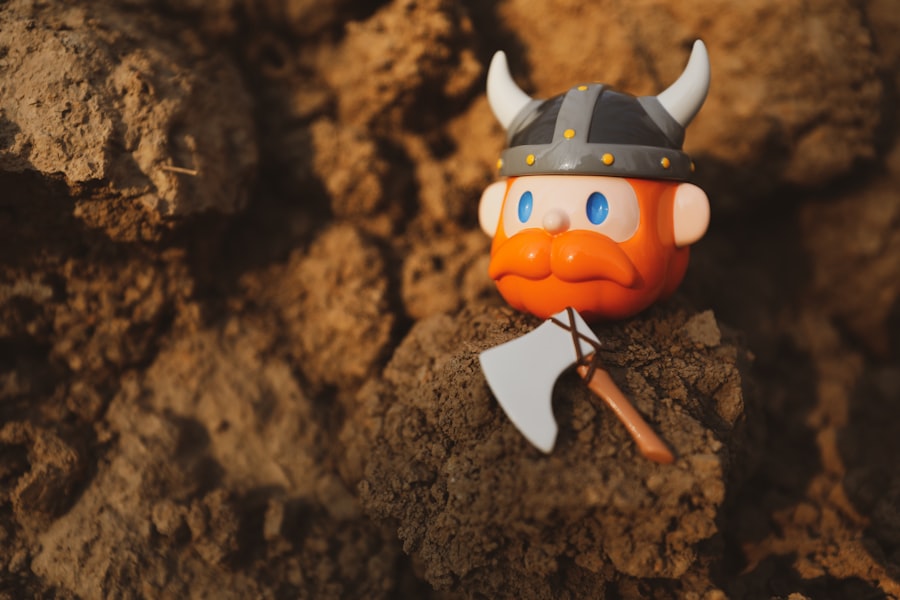
Given the lack of evidence, why has the myth of the Viking horned helmet proven so remarkably resilient? The answer lies in the potent combination of narrative appeal, symbolic weight, and the way myths can become more powerful than facts in the public imagination.
The Charisma of the Savage Warrior
The image of the horned Viking taps into a deep-seated fascination with the “barbarian” or the “savage” warrior. The horns add an almost demonic or animalistic aura, an amplification of ferocity that resonates with our primal instincts.
- Amplifying the “Other”: Historically, depictions of “outsiders” or enemies have often been exaggerated to emphasize their alienness and threat. The horns serve to further highlight the perceived savagery and untamed nature of the Vikings.
- A Visual Shortcut to Fear: In storytelling, a visual cue that immediately signifies danger and power is incredibly effective. The horned helmet acts as such a shortcut, instantly communicating a sense of menace.
The Appeal of the Exotic and the Dramatic
The Viking Age, with its distant shores, sea voyages, and raiding culture, already possesses an inherent exoticism. The addition of horned helmets injects a further layer of the dramatic and the fantastical, making the Vikings even more alluring and larger-than-life.
- Enhancing the Epic: The image of a Viking charging into battle with horns held high feels inherently epic and larger than life, fitting perfectly with the grand narratives that emerged around them.
- A Departure from Mundanity: In contrast to the often more mundane realities of warfare, the horned helmet offers a visually striking and otherworldly element, elevating the Viking to a mythical status.
The Self-Fulfilling Prophecy of Popular Culture
Once an image becomes entrenched in popular culture, it tends to perpetuate itself. Subsequent depictions will often draw upon the established trope, reinforcing the myth even if the origin is factually inaccurate.
- The Reinforcement Loop: Every new book, movie, or illustration featuring horned Vikings contributes to the ongoing acceptance of the image as fact, even among those who have never encountered a rigorous examination of the evidence.
- The Challenge of Dislodging a Strong Image: It is incredibly difficult to dislodge a deeply ingrained visual myth once it has taken root. The power of the visual often outweighs the quiet weight of historical fact for many.
The popular image of Viking horned helmets has captivated many, yet historical evidence suggests that these iconic headpieces were likely never worn by the Norse warriors. For those interested in exploring the origins and misconceptions surrounding Viking attire, a fascinating article can be found at this link. It delves into the true nature of Viking helmets and the myths that have developed over time, shedding light on the realities of their culture and warfare.
The True Face of the Viking Warrior: Reality and Nuance
| Aspect | Details |
|---|---|
| Historical Accuracy | There is no archaeological evidence that Vikings wore horned helmets in battle. |
| Origin of Myth | 19th-century Romanticism and Wagnerian opera costumes popularized the horned helmet image. |
| Actual Viking Helmets | Typically made of iron with a rounded or conical shape, often with a nose guard. |
| Purpose of Horns in Helmets | In other cultures, horns were symbolic or ceremonial, but not practical for combat. |
| Popular Culture Impact | Horned helmets are widely used in media, sports logos, and merchandise to represent Vikings. |
| Archaeological Finds | Few Viking helmets have been found; none with horns. The Gjermundbu helmet is the most complete. |
While the horned helmet is a fabrication, the true history of the Viking warrior is no less compelling. Their achievements in seafaring, exploration, trade, and warfare are well-documented and speak to a complex and sophisticated culture, albeit one that was certainly capable of brutal violence.
Skilled Seafarers and Explorers
The Vikings were not just raiders; they were masterful shipbuilders and navigators who traversed vast distances, reaching North America, the Middle East, and beyond. Their longships were marvels of engineering, allowing them to engage in both trade and warfare.
- Technological Prowess: The design of their ships, with their shallow drafts and sturdy construction, enabled them to venture into both open seas and inland waterways, opening up new routes for exploration and commerce.
- Global Reach: The extent of Viking voyages and their interaction with diverse cultures highlights their spirit of adventure and their ability to adapt to varied environments.
Complex Societies and Cultural Achievements
Viking society was not simply a collection of bloodthirsty warriors. They had established legal systems, complex social structures, and a rich oral tradition that has given us the sagas. Their craftsmanship in metalwork, woodworking, and jewelry was also highly sophisticated.
- The Importance of the Sagas: The Icelandic sagas, while often embellished, provide invaluable insights into Viking social structures, beliefs, and historical events, offering a window into their worldview.
- Artistic and Craftsmanship Skills: Archaeological finds reveal a high level of skill in artistic expression, evident in intricately carved artifacts, beautiful jewelry, and their advanced shipbuilding techniques.
The Pragmatism of Warfare
Viking warfare, while undoubtedly fierce, was characterized by a pragmatic approach. Their weaponry and defensive gear were designed for effectiveness on the battlefield, not for theatrical effect.
- Focus on Battlefield Utility: The helmets they did wear, the shields they carried, and the weapons they wielded (axes, swords, spears) were chosen for their practical application in combat.
- A Balance of Offense and Defense: Viking military success was a combination of their skilled horsemanship, their effective use of axes and swords, and their ability to coordinate attacks and defenses rather than relying on a single, symbolic piece of armor.
In conclusion, the myth of the Viking horned helmet serves as a powerful reminder of how popular culture can shape our understanding of history. While the image of the ferocious, horned warrior continues to capture the imagination, the reality of the Viking Age, with its skilled seafarers, complex societies, and pragmatic warriors, offers a history that is no less fascinating and is, in fact, far more substantiated by the evidence we have painstakingly unearthed. The horns, it seems, were never part of their war cry, but rather a later, fanciful addition to their legendary story.
FAQs
Did Vikings actually wear horned helmets?
No, there is no historical evidence that Vikings wore horned helmets in battle. The popular image of horned Viking helmets is a myth that originated in the 19th century, largely due to romanticized artwork and theatrical costumes.
Where did the idea of horned Viking helmets come from?
The idea likely originated from 19th-century Romanticism and Wagnerian opera costumes, where horned helmets were used for dramatic effect. Earlier archaeological finds show Viking helmets were typically simple, conical, and made of iron without horns.
What kind of helmets did Vikings actually use?
Vikings typically wore helmets made of iron or leather, often conical or rounded in shape. The most famous example is the Gjermundbu helmet, which is a rounded iron helmet with a simple nose guard, but no horns.
Were horned helmets used by any ancient cultures?
Yes, some ancient cultures, such as certain Bronze Age societies, used ceremonial horned helmets. However, these were not practical for battle and are distinct from the Viking era and culture.
Why do horned helmets remain associated with Vikings today?
Horned helmets remain popular in modern media, advertising, and sports mascots because they create a striking and easily recognizable image. Despite being historically inaccurate, this imagery has become deeply ingrained in popular culture.