
You understand that the port, a vital nexus in global trade, operates with a delicate balance of efficiency and capacity. Central to this equilibrium is the seemingly simple element of container size. You recognize that the dimensions and standardization of these corrugated steel boxes, far from being mere utilitarian vessels, profoundly influence every facet of port operations, from the initial loading onto a vessel to their subsequent storage and onward transportation. This seemingly straightforward aspect of logistics carries significant weight, impacting turnaround times, infrastructure requirements, and ultimately, the overall cost and speed of moving goods across continents.
You can trace the genesis of modern shipping back to the mid-20th century, a period marked by a revolutionary innovation: standardized containerization. Before this, cargo was handled piece by piece, a labor-intensive and time-consuming process prone to damage and theft.
The Birth of Standardization: ISO Standards and Their Significance
You acknowledge that the International Organization for Standardization (ISO) played a pivotal role in developing the standard dimensions for shipping containers. This move was not arbitrary; it was driven by the need for interoperability across different modes of transport – ships, trains, and trucks.
The 20-Foot Equivalent Unit (TEU) as a Universal Metric
You understand that the 20-foot container, often referred to as a TEU, became the de facto standard. Its dimensions – 20 feet long, 8 feet wide, and 8.5 feet high – offered a balance between capacity and ease of handling. You see how this unit has become the universal language of maritime trade, allowing for consistent comparison of vessel capacities and port throughput.
The Rise of the 40-Foot Container and its Advantages
You observe the subsequent introduction and widespread adoption of the 40-foot container. While twice the length of a TEU, it still maintains the same width and height, allowing for efficient use of quay space and ship decks.
Optimizing Payload with Larger Dimensions
You recognize that the 40-foot container allows for a greater payload for a similar handling effort. This translates to fewer containers to move per unit of cargo, potentially reducing labor and machinery requirements.
Implications for Loading and Unloading Sequences
You comprehend how the mix of 20-foot and 40-foot containers on a vessel necessitates complex loading and unloading plans. The stowage strategy must account for the different lengths to ensure stability and efficient access for each container.
The relationship between container size and port efficiency is a crucial aspect of modern shipping logistics, as larger containers can lead to increased throughput but may also pose challenges for port infrastructure. For a deeper understanding of this topic, you can explore the article that discusses various factors influencing port efficiency in relation to container sizes. To read more about it, visit this article.
Vessel Size and Container Stowage: A Symbiotic Relationship
You perceive that the size of the container directly dictates the size and configuration of the vessels that carry them. As container sizes evolved, so too did the ships designed to transport them.
The Impact of Container Dimensions on Ship Design
You understand that the length, width, and height of containers directly influence the design parameters of containerships. The beam of the ship, the number of container slots (bays) it can accommodate, and the overall structural integrity are all determined by the container dimensions.
Maximizing Stowage Density: The Pursuit of Full Bays
You see the perpetual drive to maximize stowage density on board vessels. This involves meticulously planning how containers are stacked both on deck and below deck to ensure stability and economic utilization of space.
The Challenge of Mixed Container Lengths in Stowage Planning
You acknowledge that the presence of both 20-foot and 40-foot containers, along with various specialized container types, complicates stowage. Efficient planning software is essential to avoid wasted space and to ensure that containers are accessible in the correct order.
The Role of Container Height in Vessel Stability and Capacity
You grasp that container height, while standardized, has implications for the center of gravity of the stacked containers and the overall stability of the vessel. This influences the permissible stacking height and the distribution of weight.
The Economies of Scale in Larger Vessels
You recognize that the ability to carry more containers due to standardized dimensions has fueled the trend towards larger and larger vessels. This allows for significant economies of scale.
Reduced Per-Unit Shipping Costs with Larger Vessels
You understand that fewer voyages are required to move a given volume of goods when larger vessels are employed. This reduces fuel consumption, port fees, and operational costs per container.
Increased Draft and Beam Requirements for Larger Ships
You observe that larger vessels necessitate deeper berths and wider channels within ports. This can place significant strain on existing port infrastructure and require substantial investment in dredging and structural upgrades.
Port Infrastructure and Handling Equipment: Adapting to Container Dimensions
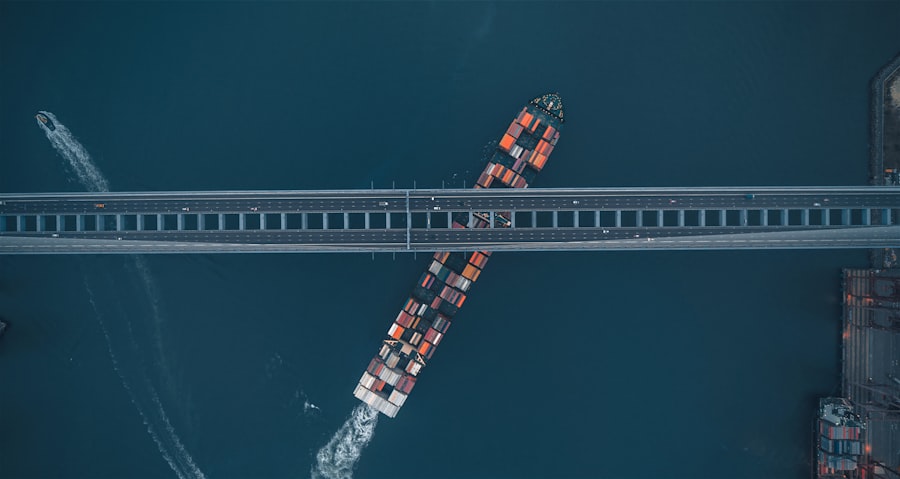
You realize that the physical infrastructure of the port and the machinery used to move containers are directly influenced by the size of the containers being handled.
Quay Crane Reach and Lifting Capacity
You understand that quay cranes, the iconic structures that bridge ships and land, must be designed with sufficient reach to service the widest vessels and sufficient lifting capacity to handle fully laden containers of various sizes.
The Evolution of Quay Crane Technology
You see how advancements in quay crane technology, driven by the need to handle larger vessels and denser container stacks, have led to taller, faster, and more sophisticated machines.
Adjusting for Container Length in Spreader Design
You comprehend that the spreader, the attachment that grips the container, must be adjustable to accommodate the different lengths of 20-foot and 40-foot containers, as well as other specialized types.
The Influence of Container Weight on Crane Load Limits
You recognize that the weight of fully laden containers, which is often close to the maximum permissible for a given container size, directly dictates the load limits of the cranes.
Yard Equipment and Storage Layouts
You understand that the equipment used to move and store containers within the port’s yard – such as reach stackers and straddle carriers – must be compatible with the dimensions of the containers they handle.
Optimizing Yard Space with Stack Heights and Layouts
You see how the standardized dimensions allow for efficient stacking of containers, maximizing yard capacity. The arrangement of these stacks, or “blocks,” is critical for efficient movement.
Designing for Container Interchanges and Stacking Configurations
You grasp that the layout must facilitate the smooth interchange of containers between different modes of transport and allow for the efficient stacking of containers of varying sizes to optimize space utilization.
The Automation of Yard Operations and Container Size Considerations
You acknowledge that as ports increasingly automate their yard operations, the precise dimensions and weight of containers become even more critical for the programming and operation of autonomous vehicles and gantry cranes.
Terminal Operations and Workflow: Streamlining Container Movement

You perceive that the efficiency of terminal operations, the day-to-day management of container flow, is intrinsically linked to the predictable nature of standardized container sizes.
Vessel Turnaround Times and Container Stacking Strategies
You understand that the time it takes for a vessel to load and unload its cargo, known as turnaround time, is directly impacted by how efficiently containers can be accessed and moved within the port.
The Impact of “Dead Space” from Mismatched Container Sizes
You recognize that any inefficiencies in stacking, such as leaving “dead space” due to incompatible container lengths, increase the time required to access specific containers, thus slowing down the entire process.
Balancing Throughput with Congestion Management
You see how terminal operators constantly strive to balance high throughput with effective congestion management, and how container size plays a role in this delicate act.
Gate Operations and Intermodal Connectivity
You understand that the flow of containers through the port’s gates, connecting with road and rail transport, is also influenced by container size.
Streamlining Truck and Train Loading Processes
You comprehend that the predictable dimensions of containers allow for the efficient design of loading and unloading processes for trucks and trains, minimizing wasted time.
The Importance of Slot Planning for Rail and Truck Bays
You grasp that effective slot planning for rail and truck bays, ensuring that the correct container size can be accessed efficiently, is crucial for maintaining smooth intermodal transfers.
The Role of Barcode Scanning and RFID in Identifying Container Dimensions
You acknowledge that modern port operations rely heavily on automated systems for identifying containers, and precise data on container dimensions is vital for these systems to function optimally.
The relationship between container size and port efficiency is a crucial topic in the shipping industry, as larger containers can lead to increased throughput and reduced handling times at ports. For a deeper understanding of this dynamic, you can explore a related article that discusses how advancements in container technology are reshaping logistics and port operations. This insightful piece can be found here, providing valuable perspectives on the ongoing evolution of maritime transport.
Economic and Environmental Implications: The Broader Significance of Container Size
| Container Size | Port Efficiency |
|---|---|
| 20 feet | Lower efficiency due to smaller capacity |
| 40 feet | Higher efficiency due to larger capacity |
| 45 feet | Varies depending on port infrastructure and handling capabilities |
You recognize that the impact of container size extends beyond the operational efficiency of the port itself, influencing broader economic and environmental considerations.
Cost Efficiency in Global Supply Chains
You understand that standardized container sizes contribute significantly to the overall cost efficiency of global supply chains. Predictable dimensions lead to predictable handling and transportation costs.
Reduced Pilferage and Damage Through Secure Containerization
You see how the standardized nature of containers provides a secure and relatively tamper-proof environment for goods, reducing losses due to pilferage and damage during transit.
The Impact of Container Size on Insurance Premiums
You recognize that the reduced risk associated with standardized and secure container handling can lead to lower insurance premiums for cargo.
The Influence of Container Size on Freight Rates
You comprehend that the efficiencies gained through standardized container sizes permit lower freight rates, making international trade more accessible and affordable.
Environmental Considerations and Sustainability
You perceive that while containerization has brought immense efficiency, its scale also presents environmental challenges, and container size plays a role.
Fuel Efficiency Gains Through Optimized Cargo Loading
You understand that by maximizing the payload within standardized container dimensions, vessels can achieve greater fuel efficiency per unit of cargo transported.
The Relationship Between Container Volume and Carbon Emissions
You grasp that the ability to consolidate more goods into fewer containers and therefore fewer voyages has a direct positive impact on reducing carbon emissions from shipping.
Challenges Associated with Empty Container Repositioning
You acknowledge that the standardized nature of container sizes, while beneficial, also leads to the challenge of empty container repositioning, where containers are shipped back empty to meet demand. This has environmental and economic costs.
FAQs
1. What is the relationship between container size and port efficiency?
The relationship between container size and port efficiency is that larger containers generally result in higher port efficiency. This is because larger containers can hold more cargo, reducing the number of containers that need to be handled at the port, thus increasing overall efficiency.
2. How do larger containers impact port operations?
Larger containers can impact port operations by reducing the number of container movements required, which can lead to faster loading and unloading times. This can result in increased throughput and overall efficiency at the port.
3. What are the potential challenges of handling larger containers at ports?
Handling larger containers at ports can present challenges such as the need for specialized equipment and infrastructure to accommodate the larger size. Additionally, larger containers may require more space for storage and handling, which can impact the layout and design of the port.
4. How do ports adapt to accommodate larger containers?
Ports can adapt to accommodate larger containers by investing in larger cranes, specialized handling equipment, and infrastructure upgrades. Additionally, ports may need to reconfigure their layout and storage areas to efficiently handle larger containers.
5. What are the potential benefits of using larger containers for shipping and port operations?
The potential benefits of using larger containers for shipping and port operations include increased efficiency, reduced handling costs, and improved overall throughput. Additionally, larger containers can lead to economies of scale for shipping lines and shippers, resulting in cost savings.