
The tale of Pinocchio, a seemingly innocent fable about a wooden puppet who yearns to become a real boy, carries a disquieting undercurrent that merits closer examination. Beneath the surface of magical transformation and moral lessons lies a narrative that, when viewed through a modern lens, reveals a disturbing truth about lies and their far-reaching consequences. The story, at its core, is not a simple celebration of truth-telling but a somber exploration of the intricate web of deception and the often-unseen ramifications that ensnare its protagonist.
Carlo Collodi’s 1883 novel, The Adventures of Pinocchio, introduces us to Geppetto, a lonely woodcarver who, in his desire for companionship, crafts a puppet. This puppet, imbued with life by a benevolent Fairy, is christened Pinocchio. His very existence is born from a singular wish, a desire to fill the void in Geppetto’s life. However, Pinocchio is not born with an inherent understanding of morality or the complexities of human interaction. He is a blank slate, susceptible to the myriad of temptations and poor influences he encounters.
The Unconventional Creation: A Spark of Life, Not Soul
Pinocchio’s creation is not that of a biological child, conceived and nurtured. He is an object brought to life, a testament to Geppetto’s skill and longing. This distinction is crucial. While he possesses sentience, his moral compass is not inherent. It is something he must arduously develop, a journey fraught with missteps and deviations. The initial spark of life is akin to kindling a fire; it requires careful tending and the right fuel to burn brightly and purposefully. Without discipline and guidance, the flame can easily become a destructive blaze.
Geppetto’s Parental Role: A Visionary Burden
Geppetto, despite his good intentions, is an ill-equipped parent for such an unusual child. He harbors grand expectations from the outset, envisioning his puppet as the son he never had. This vision, though born of love, places an immense burden on Pinocchio, a burden he is ill-prepared to bear. He is expected to embody virtues he has yet to comprehend, to navigate a world far more sophisticated than his wooden frame can initially grasp. This sets the stage for disappointment and a sense of inadequacy, breeding grounds for further deception.
In exploring the unsettling themes surrounding the classic tale of Pinocchio, readers may also find interest in the article titled “The Disturbing Truth About Pinocchio.” This piece delves into the darker aspects of the story, revealing the moral complexities and societal implications embedded within the narrative. For further insights, you can check out a related article that discusses the origins and interpretations of fairy tales in modern culture by visiting this link.
The Serpent’s Tongue: The Allure and Addiction of Lies
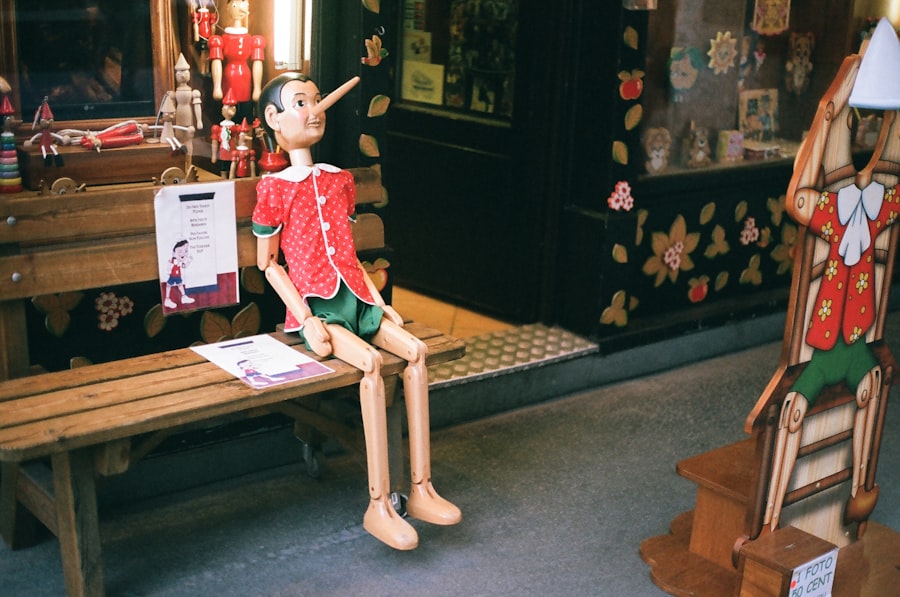
Pinocchio’s defining characteristic, and indeed the tragic engine of his narrative, is his innate tendency to lie. This is not presented as a deliberate malice but as a weakness, a reflex born from a desire to escape immediate discomfort or criticism. The story meticulously details how each lie, no matter how small, triggers a physical manifestation: his nose grows. This iconic consequence serves as a potent metaphor for the tangible evidence that deception inevitably leaves behind.
The Escalation of Untruths: A Slippery Slope
The narrative demonstrates with chilling accuracy how lies, once indulged, can become a habitual crutch. Pinocchio’s initial fibs are often to avoid punishment for skipping school or for engaging in frivolous pursuits. However, these small transgressions pave the way for more elaborate deceptions, as he attempts to cover up his burgeoning string of failures. Each lie is a small stone added to a growing edifice of deceit, making it increasingly difficult to dismantle.
The nose as a Barometer of Guilt: A Physical Manifestation of Moral Decay
The growing nose is perhaps the most enduring symbol in the Pinocchio tale. It is a stark, visual representation of the weight of a lie. It is not simply a cosmetic flaw; it is a physical manifestation of Pinocchio’s internal moral decay. As his nose elongates, so too does the distance between his words and the truth, creating a visible chasm that isolates him from genuine connection and understanding. This physical barometer of his dishonesty serves as a constant reminder, yet it rarely serves as a sufficient deterrent in itself. The allure of immediate relief from scrutiny often outweighs the eventual discomfort.
The Primrose Path: The Lure of Easy Illusions and False Freedoms

Pinocchio is repeatedly drawn away from the path of responsibility and towards seemingly appealing, yet ultimately destructive, illusions. The most prominent of these is the Land of Toys, a place where children can play and indulge their whims without consequence. This seductive paradise, however, is a carefully crafted trap, showcasing the dangerous allure of short-term gratification.
The Land of Toys: A Mirage of Perpetual Childhood
The Land of Toys represents the ultimate escape from responsibility. It promises an endless holiday, a world where work, school, and discipline are non-existent. For Pinocchio, who struggles with these very concepts, it is an irresistible siren call. This kingdom of irresponsibility, however, is a mirage. Its inhabitants are not truly free; they are ensnared by their own arrested development, their bodies transforming into donkeys, destined for labor and despair. This serves as a brutal allegory for the consequences of shirking one’s obligations, a delayed but inevitable reckoning.
The Serpent’s Embrace: The Influence of Fox and Cat
The characters of the Fox and the Cat are archetypal deceivers, preying on Pinocchio’s naivety and his desire for easy solutions. They are smooth-tongued manipulators who promise wealth and security, leading him down a path of exploitation. Their interactions with Pinocchio are a masterclass in how charm and insincerity can mask a predatory agenda. They represent the wolves in sheep’s clothing, those who offer poisoned chalices disguised as gifts.
The Weight of Redemption: The Perilous Journey Towards Truth
Pinocchio’s journey is not a linear progression towards virtue. It is a series of stumbles, falls, and painful lessons. He repeatedly finds himself in perilous situations, often of his own making, and the path to redemption is rarely straightforward. It requires immense personal sacrifice and a fundamental shift in his understanding of himself and the world.
The Transformation of the Donkey: A Physical Reckoning
The transformation of Pinocchio and other disobedient children into donkeys in the Land of Toys is by far the most grim consequence presented. This physical metamorphosis serves as a stark and unforgettable punishment for their irresponsibility. It is a brutal reminder that actions have tangible and often irreversible consequences, and that the pursuit of pleasure without responsibility can lead to a literal debasement of one’s being. The donkey, a creature of burden, symbolizes the fate of those who refuse to grow and learn, becoming mere beasts of labor.
The Rescue from the Sea Monster: A Test of Courage and Filial Love
Pinocchio’s eventual rescue from the belly of the sea monster, where he finds Geppetto, is a pivotal moment. This ordeal demands immense courage and a profound demonstration of filial love. It is in this crucible of danger and shared suffering that Pinocchio begins to shed his self-centeredness and embrace genuine empathy. This harrowing experience is the fire that tempers his wooden heart, forging a nascent understanding of true connection.
In exploring the darker themes present in classic children’s tales, one might find it intriguing to read about the unsettling origins of beloved characters. A related article discusses the hidden meanings and historical contexts behind these stories, shedding light on the often overlooked aspects of their narratives. For more insights into these fascinating interpretations, you can check out this article on the disturbing truth about Pinocchio and other fairy tales that reveal a more sinister side to their seemingly innocent facades.
The Enduring Message: Truth as the Foundation of Being
| Aspect | Details |
|---|---|
| Original Author | Carlo Collodi |
| First Publication | 1883 |
| Original Title | Le avventure di Pinocchio |
| Number of Chapters | 36 |
| Main Character | Pinocchio, a wooden puppet |
| Key Themes | Disobedience, consequences, morality, transformation |
| Disturbing Elements | Violence, cruelty, death, harsh punishments |
| Original Ending | Pinocchio dies and is resurrected as a real boy |
| Modern Adaptations | Numerous films, TV shows, and books with softened themes |
| Impact on Culture | Symbol of childhood innocence and moral lessons |
Ultimately, Pinocchio’s transformation into a real boy is contingent upon his embrace of truth and his rejection of deception. The Fairy’s final declaration that he has become “good” and “honest” underscores the central moral of the story. However, the harrowing journey he undertakes to reach this state suggests that the path to genuine humanity is paved with hardship and the painful recognition of one’s flaws.
The Cost of Deception: Isolation and Missed Opportunities
The story powerfully illustrates how lies lead to isolation. Pinocchio is repeatedly ostracized, betrayed, and misunderstood because of his untruths. The golden opportunities that arise are often squandered due to his inability to be straight-forward. He misses the chance to learn, to grow, and to connect authentically with others because his deceptions create a barrier between his true self and the world.
The True Meaning of Being Real: Beyond the Physical Form
The narrative suggests that being “real” is not merely about possessing flesh and blood. It is about possessing integrity, empathy, and the capacity for genuine connection. Pinocchio’s physical transformation is an outward manifestation of an inner change. He earns his humanity not through magic alone, but through the arduous process of learning to trust, to be trustworthy, and to understand the value of honesty, even when it is difficult. The story, therefore, serves as a timeless cautionary tale, reminding us that while the allure of deception may offer fleeting respite, the sustained embrace of truth is the only solid foundation upon which a meaningful and authentic existence can be built. The lies may twist and distort, but the truth, however sharp, ultimately offers the path to genuine freedom and self-realization.
FAQs
What is the original story of Pinocchio about?
The original story of Pinocchio, written by Carlo Collodi in 1883, follows a wooden puppet who dreams of becoming a real boy. The tale explores themes of honesty, obedience, and the consequences of one’s actions.
How does the original Pinocchio story differ from popular adaptations?
The original story is darker and more cautionary than many modern adaptations. It includes harsher punishments and moral lessons, whereas popular versions, like Disney’s, tend to be more lighthearted and family-friendly.
What are some disturbing elements found in the original Pinocchio tale?
The original tale contains scenes of violence, neglect, and cruelty, such as Pinocchio being hanged, beaten, and nearly killed. It also portrays a grim view of human nature and the consequences of bad behavior.
Why is Pinocchio’s nose growing when he lies significant?
Pinocchio’s growing nose symbolizes the visible consequences of dishonesty. It serves as a moral lesson about the importance of truthfulness and the social repercussions of lying.
What lessons does the story of Pinocchio aim to teach children?
The story teaches children about the value of honesty, responsibility, and the importance of making good choices. It warns against laziness, deceit, and disobedience, emphasizing that actions have consequences.