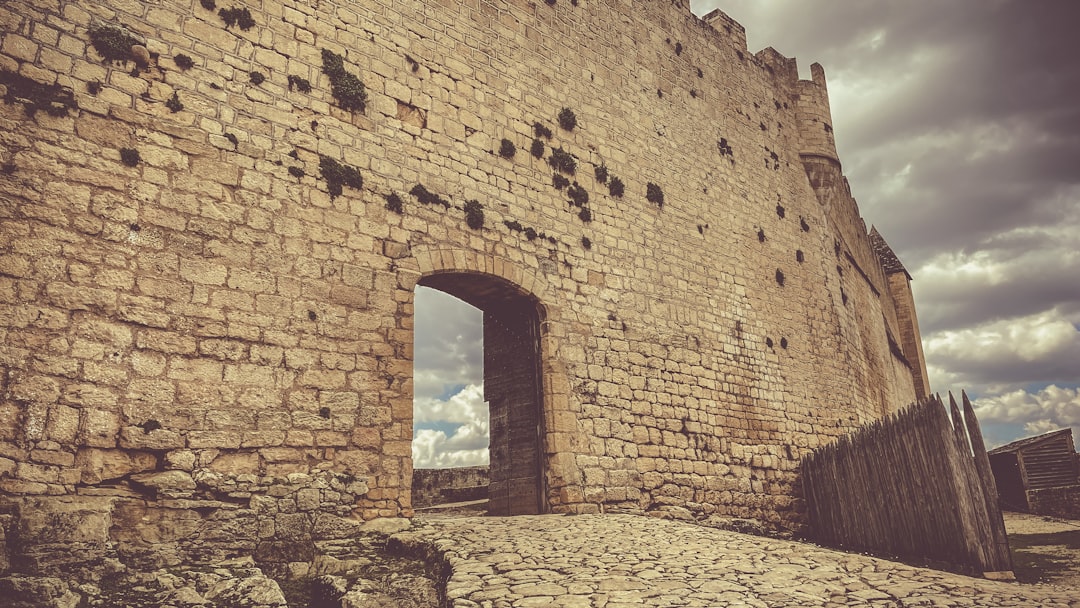
The period commonly referred to as the Dark Ages, spanning roughly from the 5th to the 10th century CE, represents a complex and often misunderstood epoch in European history. While traditionally characterized by intellectual and cultural decline following the collapse of the Western Roman Empire, contemporary scholarship increasingly understands this era as a period of profound transition, societal restructuring, and the laying of foundational elements for medieval Europe. It was not a void, but a crucible where new traditions, political entities, and belief systems were forged amidst considerable upheaval.
The year 476 CE, marking the deposition of Romulus Augustulus, the last Western Roman Emperor, is often cited as the symbolic end of the Roman Empire in the West. This event, however, was not a sudden catastrophe but the culmination of centuries of internal decay, economic strain, and external pressures.
Economic and Social Disruption
The Roman economic system, dependent on large-scale agriculture, trade, and slave labor, began to falter in the later empire.
- Decline in Trade: With the fragmentation of political authority and increased insecurity, long-distance trade routes became perilous. This led to a localized economy and a reduction in the circulation of goods and currency.
- Urban Decay: Roman cities, centers of administration, commerce, and culture, suffered significant population decline. Infrastructure, including aqueducts and public buildings, fell into disrepair due to lack of maintenance and resources. Many urban centers transformed into agrarian communities or were abandoned altogether.
- Ruralization: The focus of life shifted dramatically from urban centers to rural estates. Large landowners, often exercising quasi-independent authority, became the primary power brokers in many regions. This ruralization laid the groundwork for the feudal system.
Political Fragmentation and Barbarian Kingdoms
The political landscape of Western Europe was utterly transformed. The stable, centralized administration of Rome was replaced by a mosaic of successor states, often ruled by Germanic peoples who had migrated into the empire.
- Visigothic Kingdom: Established in Hispania and parts of Gaul, the Visigoths initially maintained many Roman administrative structures but eventually developed their own legal codes.
- Ostrogothic Kingdom: Under Theodoric the Great, the Ostrogoths briefly re-established a semblance of order and cultural flourishing in Italy, aiming to preserve Roman traditions while integrating his people.
- Frankish Kingdom: The Franks, under Clovis I, proved to be the most enduring of the barbarian kingdoms. Their conversion to Nicene Christianity (as opposed to Arianism practiced by many other Germanic tribes) facilitated their integration with the indigenous Gallo-Roman population and gained them the support of the papacy. This alliance would be profoundly significant for the subsequent development of Europe.
The Dark Ages, often characterized by a perceived cultural stagnation in Europe following the fall of the Roman Empire, has been the subject of much scholarly debate. For those interested in exploring this intriguing period further, a related article can be found at this link, which delves into the complexities and nuances of life during the Dark Ages, challenging the traditional narratives and highlighting the advancements that occurred despite the challenges of the time.
The Rise of Christianity and Monasticism
Amidst the political and social chaos, Christianity emerged as a powerful unifying force and the primary custodian of learning and culture in the West. The Church, with its established hierarchy and widespread presence, filled the vacuum left by the collapsing Roman state.
The Papacy’s Growing Influence
With the imperial capital in the East, the Bishop of Rome increasingly asserted his spiritual authority over the Western Church.
- Gregory the Great: Pope Gregory I (590-604 CE) is a pivotal figure. He strengthened the temporal power of the papacy, managed vast Church estates, negotiated with barbarian rulers, and played a crucial role in evangelizing pagan Anglo-Saxons. His administrative acumen and theological writings solidified the role of the papacy as a leading spiritual and political force.
- Conversion of Barbarian Peoples: Missionaries, often dispatched by Rome, worked tirelessly to convert the Germanic tribes. This process was gradual, often involving a syncretic blend of Christian and pagan practices, but it ultimately brought diverse peoples under a common religious banner, laying the groundwork for a broader European identity.
The Role of Monasteries
Monasteries became vital centers of learning, preservation, and economic activity during this turbulent period.
- Preservation of Knowledge: Monks meticulously copied ancient manuscripts, both classical and Christian, in scriptoria. Without their diligent efforts, much of the literary and philosophical heritage of Greece and Rome would have been lost to posterity. They were the lanterns in a world where the flames of literacy had dwindled.
- Economic Hubs: Monasteries were often self-sufficient communities, pioneering agricultural techniques and developing diverse crafts. They became significant landowners and centers of localized economic activity, offering stability in precarious times.
- Missionary Outposts: Monks were at the forefront of missionary efforts, spreading Christianity and establishing new monastic communities across Europe, acting as pioneers in untamed lands.
The Byzantine Empire: The Eastern Bastion
While the West fractured, the Eastern Roman Empire, centered in Constantinople (modern-day Istanbul), not only survived but flourished, preserving much of the Roman legacy and serving as a bulwark against external threats.
Justinian’s Reconquests and Legal Code
Emperor Justinian I (527-565 CE) was a monumental figure who attempted to restore the glory of the Roman Empire.
- Reconquista of the West: Justinian launched ambitious military campaigns to reclaim lost Roman territories in the West, notably North Africa from the Vandals and Italy from the Ostrogoths. While these campaigns were initially successful, they were ultimately unsustainable in the long term, draining the empire’s resources.
- Corpus Juris Civilis: Justinian’s most enduring legacy is his codification of Roman law, the Corpus Juris Civilis. This monumental work organized and clarified centuries of Roman legal precedent, and it would profoundly influence legal systems throughout Europe for centuries to come, forming the bedrock of civil law traditions.
Cultural and Artistic Flourishing
Constantinople was a vibrant metropolis, a crossroads of civilizations, and a center of unparalleled artistic and intellectual achievement.
- Hagia Sophia: The construction of the Hagia Sophia, a masterpiece of Byzantine architecture, stands as a testament to the empire’s spiritual and artistic prowess. Its massive dome and intricate mosaics symbolized the fusion of Roman engineering and Christian spirituality.
- Preservation of Greek Learning: Unlike the Latin-speaking West, the Byzantine Empire maintained a strong tradition of Greek scholarship, preserving and studying classical Greek texts that were largely unknown in the West. This intellectual continuity ensured that a significant portion of ancient knowledge remained accessible.
The Rise of Islam and its Impact

The 7th century witnessed the dramatic emergence of Islam from the Arabian Peninsula, a phenomenon that profoundly reshaped the political and cultural geography of the Mediterranean world and beyond.
Arab Conquests and the Mediterranean
Within a remarkably short period, Arab armies, fueled by religious fervor and military prowess, conquered vast territories from the Byzantine and Sassanid Empires.
- Fall of Sassanid Persia: The ancient Sassanid Persian Empire was completely overthrown and absorbed into the new Islamic caliphate.
- Byzantine Losses: The Byzantines lost significant provinces, including Syria, Palestine, Egypt, and North Africa. These regions, once integral parts of the Roman world, became Islamic.
- Impact on Trade: The expansion of Islam disrupted traditional Mediterranean trade routes, leading to a shift in economic power and further isolating Western Europe. While new trade networks emerged within the Islamic world, the old Roman-era connections were profoundly altered.
Cultural Exchange and Intellectual Advancements
Despite the military conflicts, the interaction between the Islamic world and Europe led to significant cultural and intellectual exchange.
- Transmission of Knowledge: Islamic scholars preserved, translated, and commented upon Greek philosophical and scientific texts that had been forgotten in the West. Through Cordoba and other centers in occupied Spain, this knowledge slowly began to filter back into Europe, especially in areas like medicine, mathematics, and astronomy.
- Innovations: The Islamic world made its own significant contributions to science, mathematics (including the adoption of Hindu numerals, mistakenly called “Arabic numerals” in the West), and medicine. This period of intellectual flourishing in the Islamic world stands in stark contrast to the intellectual decline often attributed to the contemporaneous Dark Ages in Europe.
The Dark Ages, often characterized by a perceived cultural stagnation in Europe following the fall of the Roman Empire, have been the subject of much debate among historians. Many argue that this period was not as bleak as once thought, with various advancements in agriculture and technology occurring during these centuries. For those interested in exploring more about this fascinating topic, you can read a related article that delves into the complexities of the era and challenges common misconceptions. Check it out here.
The Carolingian Renaissance and the Dawn of Medieval Europe
| Metric | Value | Notes |
|---|---|---|
| Time Period | 5th to 10th Century AD | Generally considered the early medieval period in Europe |
| Geographical Focus | Western Europe | Primarily post-Roman Empire territories |
| Population Decline | Estimated 15-30% | Due to wars, famines, and plagues |
| Literacy Rate | Below 10% | Significant decline compared to Roman times |
| Major Events | Fall of Western Roman Empire (476 AD), Viking invasions | Marked political and social instability |
| Technological Advancements | Limited | Some agricultural improvements like the heavy plow |
| Art and Culture | Predominantly religious | Manuscript illumination and early medieval architecture |
Towards the latter part of the “Dark Ages,” a significant revival, known as the Carolingian Renaissance, occurred under the leadership of Charlemagne, laying crucial groundwork for the High Middle Ages.
Charlemagne’s Empire and Legacy
Charlemagne’s reign marked a period of relative stability, political consolidation, and a deliberate effort to revive learning and culture.
- Coronation as Emperor (800 CE): Charlemagne’s coronation by Pope Leo III as “Emperor of the Romans” represented a symbolic attempt to revive the Western Roman Empire. This event cemented the alliance between the Frankish monarchy and the Papacy, shaping the future political landscape of Europe for centuries. It also created a fascinating dualism with the existing Byzantine Empire.
- Administrative Reforms: Charlemagne sought to impose a more centralized administration over his vast empire, utilizing missi dominici (royal envoys) to oversee local counts and bishops. He also standardized weights and measures and promoted economic activity.
- Cultural Revival: Charlemagne actively fostered a revival of learning. He imported scholars like Alcuin of York to his court at Aachen and encouraged the establishment of schools in monasteries and cathedrals. This initiative led to a more standardized script (Carolingian miniscule), improved literacy among the clergy, and the preservation of classical texts. This was a deliberate attempt to rekindle the dying embers of Roman learning, recognizing its value for effective governance and religious understanding.
Emergence of Feudalism
While not a monolithic system, the socio-political arrangements that came to be known as feudalism began to solidify during this period.
- Vassalage and Fiefs: In the absence of strong central authority, relationships of loyalty and protection became paramount. Lords granted land (fiefs) to vassals in exchange for military service and other obligations. This system, built on personal oaths and reciprocal duties, provided a framework for governance and defense in a fragmented world.
- Manorialism: The manorial system, where peasants (serfs) were tied to the land and owed labor and rent to their lords, became the dominant economic and social structure in rural areas. This system provided agricultural stability and local production, but also entrenched social hierarchies.
In conclusion, the “Dark Ages” were far from a period of unmitigated darkness and stagnation. They were a period of intense transformation, a crucible where classical traditions, Germanic customs, and Christian doctrine intermingled to forge a new European civilization. The structures, belief systems, and social hierarchies that emerged from this period would define medieval Europe and continue to influence Western societies for centuries to come. You can see, therefore, that beneath the rubble of the Roman Empire, new shoots were indeed beginning to grow, albeit slowly and often painfully.
FAQs
What time period is referred to as the Dark Ages?
The Dark Ages generally refer to the early medieval period in European history, roughly from the 5th to the 10th century AD, following the fall of the Western Roman Empire.
Why is this period called the Dark Ages?
The term “Dark Ages” was originally used because of the perceived cultural and economic decline, scarcity of historical records, and reduced scientific and artistic output compared to the Roman era.
Did any significant events or developments occur during the Dark Ages?
Yes, despite the name, the Dark Ages saw important developments such as the spread of Christianity, the formation of early medieval kingdoms, and the preservation of classical knowledge by monastic communities.
Is the term “Dark Ages” still widely used by historians today?
Many modern historians avoid the term “Dark Ages” because it implies a period of stagnation, which is now considered an oversimplification. Instead, they prefer terms like “Early Middle Ages.”
What caused the transition from the Dark Ages to the later medieval period?
The transition was marked by factors such as the revival of trade, the growth of towns, the establishment of universities, and the Carolingian Renaissance, which collectively led to increased cultural and economic activity.