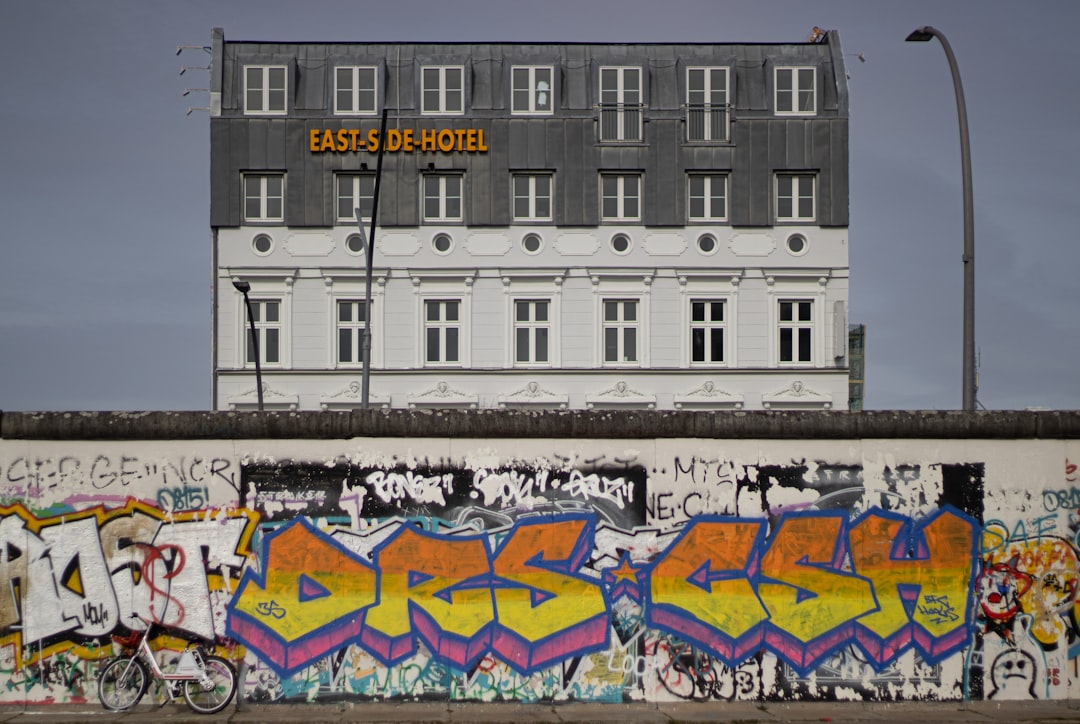
The year 1961 marked a watershed moment in the Cold War, a period of geopolitical tension between the United States and the Soviet Union and their respective allies. Within this broader conflict, the division of Germany, and specifically Berlin, became a particularly volatile flashpoint. The construction of the Berlin Wall, which commenced on August 13, 1961, was a physical manifestation of this ideological and political chasm, a stark barrier erected to staunch the flow of East Germans seeking refuge in the West.
The Potsdam Conference and the Four Occupation Zones
Following the unconditional surrender of Nazi Germany in May 1945, the victorious Allied powers – the United States, the United Kingdom, France, and the Soviet Union – met at the Potsdam Conference to determine the fate of the defeated nation. A key outcome of this conference was the decision to divide Germany into four occupation zones, each administered by one of the Allied powers. The rationale behind this division was to facilitate the denazification, demilitarization, and reconstruction of Germany.
The Unique Status of Berlin
Berlin, though located deep within the Soviet occupation zone, was also divided into four sectors, mirroring the broader partition of Germany. This arrangement created an anomaly: the capital city, a symbol of the nation’s past and future, was itself divided into sectors controlled by four different powers, creating a microcosm of the larger geopolitical struggle. This administrative division proved to be a constant source of friction, particularly as the Cold War intensified.
The Emergence of Two German States
The ideological differences between the Western Allies and the Soviet Union quickly became apparent, leading to divergent paths for their respective occupation zones. The Western powers, emphasizing democratic principles and market economies, fostered the development of the Federal Republic of Germany (FRG), also known as West Germany, established in 1949. In response, the Soviet Union consolidated its zone into the German Democratic Republic (GDR), or East Germany, also founded in 1949. This formal division of Germany solidified the political and economic separation, with Berlin remaining a divided city under a complex quadripartite administration.
The construction of the Berlin Wall in 1961 was a pivotal moment in Cold War history, symbolizing the division between East and West Germany. For a deeper understanding of the events leading up to its construction and the implications it had on global politics, you can read a related article that explores the historical context and the impact of the wall on the lives of Berliners. Check it out here: related article.
The Growing Emigration from East to West
Economic Disparities as a Driving Force
The disparity in economic prosperity between East and West Germany became a significant factor in motivating emigration. The Western sectors of Germany, with their reliance on Marshall Plan aid and a more market-oriented economic system, experienced a period of rapid recovery and growth. In contrast, the centrally planned economy of the GDR struggled to match the living standards and opportunities available in the West. This economic differential created a tangible incentive for East Germans to seek a better life across the border.
Political Repression and Lack of Freedoms
Beyond economic considerations, political factors played a crucial role in the decision of many East Germans to leave. The GDR was a one-party state under the dominance of the Socialist Unity Party (SED), which imposed strict controls on personal freedoms, freedom of speech, and freedom of assembly. The pervasive surveillance by the Ministry for State Security (Stasi) and the lack of democratic participation fueled a sense of discontent and a desire for the liberties enjoyed in the West.
The “Brain Drain” and its Impact on the GDR
The continuous outflow of skilled workers, professionals, and intellectuals from East to West, often referred to as a “brain drain,” presented a severe challenge to the GDR’s economic and societal development. Doctors, engineers, academics, and skilled laborers constituted a significant portion of those leaving, depleting the GDR’s human capital and hindering its ability to achieve its economic targets. This steady erosion of its workforce became an increasingly pressing concern for the East German government.
The Berlin Escape Route: A Pervasive Problem
West Berlin, geographically surrounded by East German territory, served as a de facto escape hatch for East Germans seeking to reach the Federal Republic. The open borders between the sectors of Berlin, while a symbol of Allied presence, also presented an exploitable loophole for those wishing to flee. Daily, thousands of East Germans would travel to Berlin, ostensibly for work or personal reasons, and then simply not return to the GDR. This constant influx of emigrants, particularly the loss of skilled labor, was a persistent and increasingly embarrassing problem for the East German regime and its Soviet patrons.
The Decision to Build the Wall
Mounting Pressure on the GDR Leadership
The mounting emigration crisis placed immense pressure on the leadership of the GDR, led by Walter Ulbricht. The continuous loss of population, especially among the younger and more skilled demographics, threatened the stability and viability of the socialist state. The economic consequences were severe, impacting industrial production, agricultural output, and the overall functioning of the planned economy. The prestige of the GDR on the international stage was also suffering from this palpable repudiation of its system by its own citizens.
Soviet Indecision and Shifting Policies
Initially, the Soviet Union, under Nikita Khrushchev, had been hesitant to endorse a complete sealing of the border within Berlin. The potential international ramifications and the risk of escalating tensions with the Western powers were significant concerns. However, as the emigration figures continued to rise, and with the GDR leadership persistently lobbying for decisive action, Soviet support for a fortification began to grow. Khrushchev’s primary motivation was to stabilize the GDR and prevent the collapse of the Soviet bloc’s eastern satellite states, which he feared could be triggered by a successful mass exodus from East Germany. The stability of the GDR was seen as crucial for maintaining Soviet influence in Central Europe.
The Forty-Eight Hour Ultimatum
The decision to proceed with the construction of the Wall was made in great haste and secrecy. In the early hours of August 13, 1961, East German border guards sealed off key crossing points between East and West Berlin. The operation, codenamed “Rose,” involved blocking streets, severing public transport links, and erecting barbed wire fences. The speed and surprise of the operation were intended to pre-empt any effective intervention from the Western powers, who were caught off guard by the swiftness of the action. The initial deployment was a crude but effective barrier, designed to halt the immediate flow of people.
The Justification: “Antifaschistischer Schutzwall”
The official propaganda of the GDR presented the construction of the Wall as a necessary defensive measure. It was dubbed the “Antifaschistischer Schutzwall,” or “Anti-Fascist Protection Rampart.” The regime claimed that the Wall was erected to protect East Germany from alleged Western aggression, espionage, and sabotage, portraying the West as inherently hostile and seeking to undermine the socialist state. This narrative, however, was widely seen as a thinly veiled attempt to justify the suppression of its own population’s freedom of movement.
The Construction and Evolution of the Wall
The Initial Barricades: Barbed Wire and Concrete Blocks
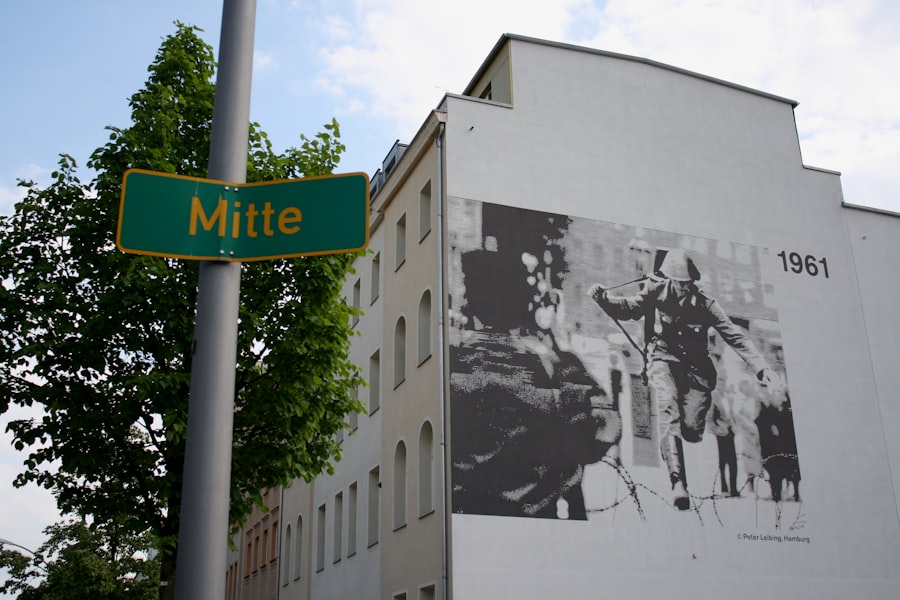
The initial construction of the Berlin Wall was a rapid and rudimentary affair. On the night of August 12-13, 1961, East German troops and border guards began to lay down barbed wire and erect concrete blocks, effectively cutting off road and rail traffic between East and West Berlin. Streets were torn up, and buildings that straddled the border were sealed off. The speed of this initial phase was designed to create a fait accompli, presenting the Western powers with a situation that was already in place before they could formulate a decisive response.
The Gradual Fortification and Expansion
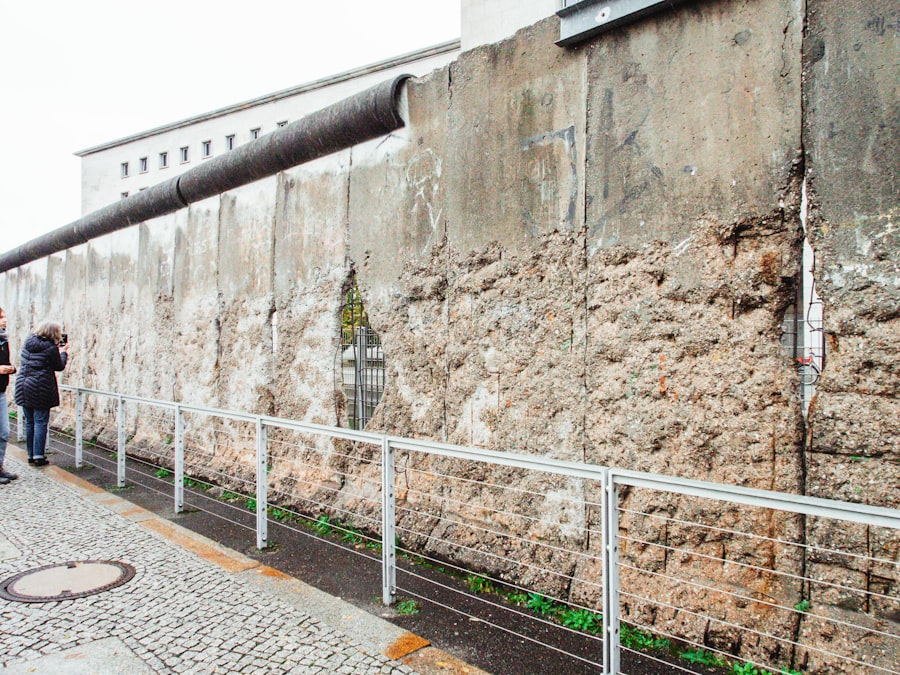
Over the following months and years, the initial barbed wire fences were systematically replaced and augmented with more formidable structures. The Wall evolved into a complex system of fortifications, including brick and concrete walls, watchtowers, armed patrols, and minefields. This gradual process of fortification was a response to the ongoing attempts by East Germans to breach the barriers and escape to the West. Each new innovation in escape tactics was met with a corresponding enhancement in the Wall’s defenses.
The “Death Strip” and its Brutality
A particularly chilling aspect of the Wall’s evolution was the creation of a heavily guarded “death strip” between the inner and outer walls. This area was meticulously cleared of any cover, flooded with anti-personnel mines and tripwires, and patrolled by armed guards with orders to shoot anyone attempting to cross. The stark, barren landscape of the death strip, often illuminated by searchlights, served as a stark warning of the lethal consequences of attempting to escape.
Variations along the Border
While the most famous depiction of the Berlin Wall is the continuous concrete barrier, the reality was more complex. The fortifications varied along the approximately 155-kilometer circumference of West Berlin. In some heavily urbanized areas, the Wall was a substantial concrete structure, while in others, particularly those bordering less populated areas or waterways, it consisted of a combination of fences, natural barriers, and guard posts. The sheer scale and multifaceted nature of the fortifications underscored the determination of the GDR to prevent any form of unauthorized exit.
The construction of the Berlin Wall in 1961 was a pivotal moment in history, symbolizing the division between East and West during the Cold War. For those interested in exploring the broader implications and the events leading up to this significant event, a related article can provide valuable insights. You can read more about the context and consequences of this division in the article here. Understanding the reasons behind the wall’s construction helps to grasp the complexities of the geopolitical landscape of that era.
Life on Both Sides of the Divide
| Aspect | Details |
|---|---|
| Construction Start Date | August 13, 1961 |
| Construction End Date | October 9, 1961 |
| Length of the Wall | 155 km (96 miles) |
| Height of the Wall | 3.6 meters (11.8 feet) |
| Materials Used | Concrete segments, barbed wire, guard towers |
| Guard Towers | 302 |
| Escape Attempts | Over 5,000 |
The Impact on East Berliners: Isolation and Control
For the citizens of East Berlin, the construction of the Wall brought immediate and profound changes. Families were separated overnight, friends were cut off, and the familiar streets of their city became a forbidden zone. The Wall served as a constant physical reminder of their confinement, reinforcing the state’s control over their lives. Travel outside the GDR became virtually impossible, and even movement within the country was subject to surveillance and restriction. The psychological impact of this isolation and constant control was significant, fostering a climate of fear and resignation for many.
The Impact on West Berliners: A Symbol of Freedom and Vulnerability
For the residents of West Berlin, the Wall was a stark symbol of their freedom, albeit within a besieged enclave. While they were not subjected to the same level of direct repression as their Eastern counterparts, they lived with the constant awareness of the Wall’s presence and the potential for further escalation of the Cold War. The Wall also represented the division of their city and the separation from friends and family in the East. Despite the challenges, West Berlin became a symbol of Western resistance and a beacon of freedom in the heart of the Soviet bloc.
The Economic Realities of the Divided City
The economic realities for East and West Berlin diverged significantly after 1961. West Berlin, despite its isolated location, benefited from West German and Allied investment, developing into a thriving commercial and cultural center. East Berlin, on the other hand, continued to grapple with the limitations of its centrally planned economy, its development hampered by the loss of skilled labor and access to Western markets. The outward appearance of the two halves of the city reflected these economic disparities, with the West generally appearing more prosperous and modern.
The Human Cost: Separated Families and Lost Lives
The human cost of the Berlin Wall was immense and deeply tragic. Families were torn apart, with parents unable to see their children, and siblings separated for decades. The Wall also became a deadly barrier, with an estimated 140 to over 200 people killed attempting to cross it. These were not just statistics; they were individuals who, in their desperate pursuit of freedom, paid the ultimate price. Their stories, often relayed through clandestine channels or discovered after the fact, served as a grim testament to the brutality of the division.
The Fall of the Wall and its Aftermath
The Weakening of the Soviet Bloc
By the late 1980s, the political landscape of Eastern Europe began to shift dramatically. Reforms initiated by Mikhail Gorbachev in the Soviet Union, including perestroika and glasnost, loosened the grip of communist regimes and encouraged greater openness. Across Eastern Europe, popular movements demanding democratic reforms gained momentum, challenging the authority of long-standing communist governments.
The Peaceful Revolution in the GDR
Inspired by the changes happening in neighboring countries, citizens of the GDR began to organize protests and demonstrations, demanding freedom to travel and democratic reforms. The peaceful protests, often referred to as the “Monday Demonstrations,” grew in size and intensity throughout 1989. The government’s attempts to suppress these movements proved increasingly futile, and the pressure for change became overwhelming.
The Opening of the Borders on November 9, 1989
On the evening of November 9, 1989, in a surprisingly abrupt turn of events, the East German government announced that its citizens would be allowed to visit West Germany and West Berlin. This announcement, somewhat mishandled by a government spokesman during a press conference, led to a spontaneous surge of East Berliners towards the border crossings. Border guards, overwhelmed and without clear orders to use force, eventually opened the gates.
Towards German Reunification
The fall of the Berlin Wall was a pivotal moment that paved the way for the reunification of Germany, which officially occurred on October 3, 1990. The dismantling of the Wall became a powerful symbol of the end of the Cold War and the triumph of freedom and democracy. The years that followed saw the complex process of integrating the two vastly different German societies, economies, and political systems, a process that continues to shape Germany and Europe to this day. The legacy of the Berlin Wall serves as a potent reminder of the human desire for freedom and the devastating consequences of ideological division.
FAQs
1. What was the purpose of building the Berlin Wall in 1961?
The Berlin Wall was built by the German Democratic Republic (GDR) to prevent East Germans from fleeing to West Berlin, which was under the control of the Western Allies.
2. How was the Berlin Wall constructed?
The Berlin Wall was constructed using barbed wire, concrete, and guard towers. It consisted of two concrete walls with a “death strip” in between, which was heavily guarded and fortified with anti-vehicle trenches and trip-wire machine guns.
3. When was the Berlin Wall built and how long did it stand?
The construction of the Berlin Wall began on August 13, 1961, and it stood for 28 years until it was finally demolished in 1989.
4. What were the consequences of the Berlin Wall’s construction?
The construction of the Berlin Wall led to the division of Berlin and Germany into East and West, and it became a symbol of the Cold War and the ideological divide between communism and capitalism.
5. How did the Berlin Wall impact the lives of people in East and West Berlin?
The Berlin Wall had a profound impact on the lives of people in East and West Berlin. Families and friends were separated, and many East Germans risked their lives trying to escape to the West. The wall also led to heightened tensions between the Soviet Union and the Western Allies.