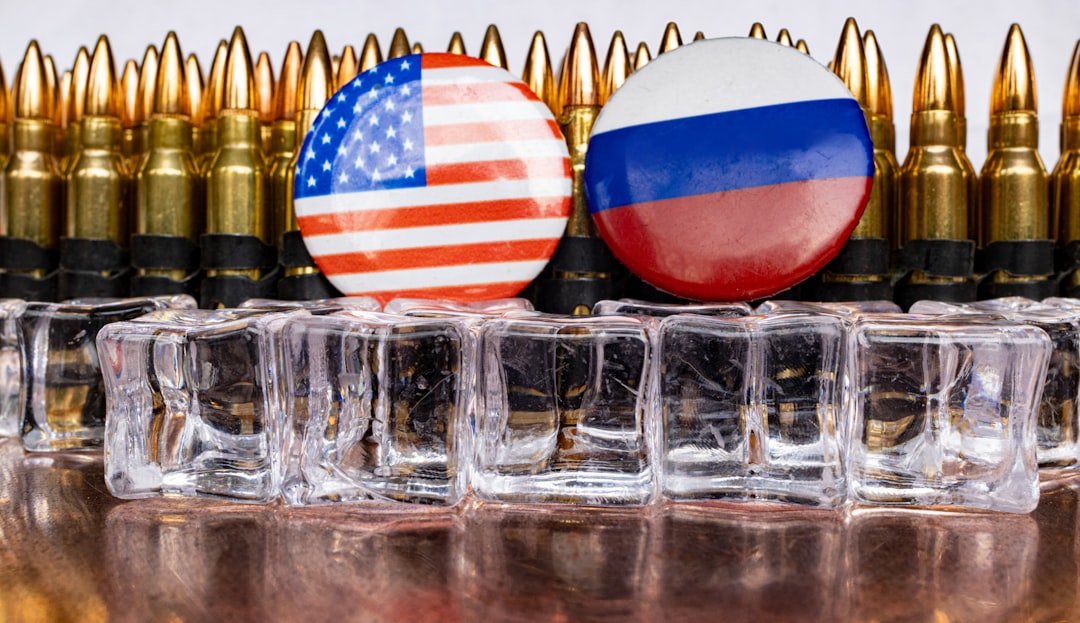
The Cold War, a period of geopolitical tension that spanned from the mid-1940s to the early 1990s, represented a monumental struggle between two diametrically opposed ideologies: capitalism, championed by the United States and its Western allies, and communism, spearheaded by the Soviet Union and its satellite states. This prolonged confrontation, characterized by an absence of direct military conflict between the superpowers but marked by proxy wars, an arms race, propaganda, and espionage, profoundly shaped the international landscape for nearly half a century. Understanding the Cold War requires delving into its origins, key events, and lasting impact on global affairs.
The roots of the Cold War are deeply embedded in the aftermath of World War II, a conflict that shattered existing power structures and left a vacuum for new geopolitical arrangements.
Post-War Power Vacuum and Ideological Divide
The defeat of Nazi Germany and Imperial Japan left two dominant powers standing: the United States and the Soviet Union. Their wartime alliance, a marriage of convenience against a common enemy, quickly dissolved as fundamental ideological differences resurfaced.
The Yalta and Potsdam Conferences
Even during the war, cracks began to show. The Yalta Conference in February 1945, and later the Potsdam Conference in July-August 1945, revealed deep suspicions and disagreements over the future of Eastern Europe, particularly regarding self-determination and spheres of influence. The Soviet Union, having borne the brunt of the land war against Germany, sought a buffer zone of friendly states, while the Western Allies advocated for democratic elections.
Containment Doctrine Emerges
The United States, witnessing Soviet consolidation of power in Eastern Europe, articulated its strategy of “containment.” This doctrine, formalized in George F. Kennan’s “Long Telegram” in 1946 and later in the Truman Doctrine, aimed to prevent the expansion of Soviet communist influence across the globe. It became the bedrock of American foreign policy for decades.
The Iron Curtain Descends
Winston Churchill’s famous “Iron Curtain” speech in March 1946, delivered in Fulton, Missouri, vividly described the division of Europe, solidifying the perception of a continent split into two hostile blocs.
Soviet Expansion in Eastern Europe
Following the war, the Soviet Union orchestrated the establishment of communist regimes in Poland, Hungary, Czechoslovakia, East Germany, Romania, and Bulgaria. These states, often through coercion and suppression of dissent, became satellites, their foreign policies and economies largely dictated by Moscow.
The Cominform and Comecon
To solidify its control, the Soviet Union established the Cominform (Communist Information Bureau) in 1947 to coordinate the activities of European communist parties and Comecon (Council for Mutual Economic Assistance) in 1949 to integrate the economies of its satellite states into a Soviet-dominated bloc. These institutions served as instruments of Soviet hegemony.
The Cold War, a period of geopolitical tension between the Soviet Union and the United States, has had a lasting impact on global politics and society. For those interested in exploring this topic further, a related article can be found at this link, which delves into the various events and ideologies that shaped the Cold War era. Understanding these dynamics is crucial for comprehending contemporary international relations and the legacy of this significant historical period.
The Escalation of Tensions
The initial post-war unease rapidly escalated into a full-blown Cold War, marked by a series of crises and the formation of opposing military alliances.
The Berlin Blockade and Airlift (1948-1949)
One of the first major confrontations occurred over Berlin, a city divided into four occupation zones deep within Soviet-controlled East Germany.
Soviet Attempts to Isolate West Berlin
In June 1948, the Soviets blockaded all land and water routes into West Berlin, aiming to force the Western Allies to abandon their presence in the city. The city became a metaphorical island in a hostile sea.
Western Response and the Berlin Airlift
The United States and its allies responded with the unprecedented Berlin Airlift, flying in tonnes of supplies to sustain West Berlin’s population for over a year. This logistical feat ultimately forced the Soviets to lift the blockade in May 1949, demonstrating Western resolve.
Formation of Alliances
The fear of Soviet aggression led to the creation of formidable military alliances.
NATO’s Establishment (1949)
In April 1949, the North Atlantic Treaty Organization (NATO) was formed, an intergovernmental military alliance between North American and European states. Article 5 of the treaty, a cornerstone of collective security, stipulated that an attack on one member would be considered an attack on all. NATO served as a powerful deterrent against Soviet expansion in Western Europe.
The Warsaw Pact’s Counterpart (1955)
In response to West Germany’s rearmament and integration into NATO, the Soviet Union established the Warsaw Pact in 1955. This military alliance cemented Soviet control over its Eastern European satellites and provided a unified military command structure under Moscow’s leadership.
The Global Reach of the Cold War
The Cold War was not confined to Europe; it became a global struggle, with proxy conflicts erupting in various regions.
The Korean War (1950-1953)
The Korean Peninsula became the site of the Cold War’s first major hot conflict.
Division of Korea and Northern Invasion
After World War II, Korea was divided at the 38th parallel, with a Soviet-backed communist North and a US-backed capitalist South. In June 1950, North Korea invaded the South, aiming to unify the peninsula under communist rule.
UN Intervention and Chinese Involvement
The United Nations, led by the United States, intervened to defend South Korea. The conflict escalated dramatically with the entry of Chinese forces, who pushed UN troops back. The war ended in a stalemate, reinforcing the idea of containment and demonstrating the devastating potential of proxy conflicts between the superpowers.
The Vietnam War (1955-1975)
Another protracted and brutal proxy war unfolded in Southeast Asia.
French Colonialism and Division
Following French colonial rule, Vietnam was divided into a communist North and a non-communist South. The United States became deeply involved in supporting the South, fearing a domino effect where communism would spread across Southeast Asia.
Prolonged Conflict and US Withdrawal
The Vietnam War became a quagmire for the United States, marked by intense guerrilla warfare, heavy casualties, and growing domestic opposition. The eventual withdrawal of US forces and the fall of Saigon in 1975 represented a significant setback for American containment policy.
The Arms Race and Brinkmanship
The Cold War was defined by a relentless arms race, particularly in nuclear weapons, which brought humanity to the brink of annihilation on several occasions.
Nuclear Proliferation and Deterrence
The development of atomic bombs by the United States in 1945 and the Soviet Union in 1949 ushered in a new era of warfare.
Mutually Assured Destruction (MAD)
The concept of Mutual Assured Destruction (MAD) emerged, predicated on the idea that a full-scale nuclear attack by either superpower would result in the annihilation of both the attacker and the defender. This terrifying equilibrium, a sword of Damocles hanging over the world, ironically served as a deterrent against direct military confrontation between the superpowers.
Strategic Arms Limitation Treaties (SALT)
Despite the inherent danger, both sides continued to develop more powerful and sophisticated nuclear weapons. Later, efforts were made to reduce the risk through Strategic Arms Limitation Treaties (SALT I and SALT II) in the 1970s, which aimed to curb the proliferation of certain types of nuclear missiles.
The Cuban Missile Crisis (1962)
The most perilous moment of the Cold War occurred in October 1962.
Soviet Missiles in Cuba
The Soviet Union secretly deployed nuclear missiles in Cuba, just 90 miles off the coast of Florida, in response to US missiles in Turkey and the failed Bay of Pigs invasion.
Thirteen Days of Confrontation
The discovery of these missiles triggered a tense 13-day standoff between the US and the USSR. The world held its breath as both sides came perilously close to nuclear war. The crisis was ultimately resolved through secret negotiations, with the Soviets agreeing to remove the missiles in exchange for a US pledge not to invade Cuba and a secret agreement to remove US missiles from Turkey. The Cuban Missile Crisis served as a stark reminder of the razor’s edge upon which global peace rested.
The Cold War was a complex period marked by political tension and ideological conflict between the United States and the Soviet Union, influencing global affairs for decades. For those interested in exploring the intricate dynamics of this era, a related article can provide valuable insights into the various events that shaped the Cold War landscape. You can read more about it in this informative piece on Cold War history, which delves into key moments and figures that defined this significant chapter in world history.
The End of the Cold War
| Aspect | Details |
|---|---|
| Time Period | 1947 – 1991 |
| Main Participants | United States, Soviet Union |
| Ideologies | Capitalism vs. Communism |
| Major Conflicts | Korean War, Vietnam War, Cuban Missile Crisis |
| Nuclear Arms Race | Development and stockpiling of nuclear weapons by both sides |
| Space Race | Competition to achieve space exploration milestones |
| Key Alliances | NATO (West), Warsaw Pact (East) |
| Estimated Military Spending (US, 1980s) | Approximately 300 billion USD annually |
| End of Cold War | Collapse of the Soviet Union in 1991 |
The decades of tension eventually culminated in the collapse of the Soviet Union and the end of the Cold War.
Internal Weaknesses of the Soviet System
While external pressures played a role, the internal contradictions and weaknesses of the Soviet system were ultimately its undoing.
Economic Stagnation
The centrally planned Soviet economy, burdened by excessive military spending, inefficiency, and a lack of innovation, increasingly lagged behind Western economies. Shortages of consumer goods and food became commonplace, contributing to widespread discontent.
Nationalist Movements and Dissidents
Within the Soviet bloc, nationalist sentiments simmered, and dissident movements challenged the legitimacy of communist rule. Figures like Andrei Sakharov in the Soviet Union and Václav Havel in Czechoslovakia became symbols of resistance.
Gorbachev’s Reforms (Glasnost and Perestroika)
Mikhail Gorbachev, who became General Secretary of the Communist Party of the Soviet Union in 1985, recognized the dire need for reform.
Glasnost (Openness)
Gorbachev introduced “glasnost,” a policy of increased openness and transparency in government activities, along with greater freedom of speech and press. This allowed for public criticism of the government and a more accurate portrayal of Soviet history.
Perestroika (Restructuring)
“Perestroika” aimed to restructure the Soviet economy, introducing elements of market-based reforms, such as decentralization and some private enterprise. However, these reforms were often too little, too late, and difficult to implement effectively within the existing system.
The Fall of the Berlin Wall (1989) and Soviet Collapse (1991)
Gorbachev’s reforms inadvertently unleashed forces that ultimately led to the unraveling of the Soviet empire.
Revolutions of 1989
Inspired by glasnost and perestroika, a series of popular upheavals swept across Eastern Europe in 1989, leading to the collapse of communist regimes. The most iconic moment was the fall of the Berlin Wall in November 1989, a physical and symbolic barrier dismantled by jubilant citizens.
Dissolution of the Soviet Union
The process culminated in the dissolution of the Soviet Union itself in December 1991. The Baltic States declared independence, and other republics followed suit, leading to the creation of 15 independent nations. The red flag with the hammer and sickle was lowered over the Kremlin for the last time, signaling the end of an era.
The Cold War stands as a testament to the power of ideology and the fragility of peace. It was a time when the world was effectively divided, a chessboard where two superpowers played a high-stakes game. While the direct military conflict between them was averted, its ripples affected countless nations and left an indelible mark on the global political, economic, and social fabric. Understanding its complexities offers crucial insights into contemporary international relations and the enduring challenges of power, ideology, and cooperation.
FAQs
What was the Cold War?
The Cold War was a period of geopolitical tension between the United States and its allies, and the Soviet Union and its allies, lasting from roughly 1947 to 1991. It was characterized by political, military, and ideological rivalry without direct large-scale fighting between the two superpowers.
What were the main causes of the Cold War?
The main causes of the Cold War included ideological differences between capitalism and communism, the power vacuum left after World War II, mutual distrust, and competition for global influence and military superiority.
What were some key events during the Cold War?
Key events of the Cold War include the Berlin Blockade (1948-1949), the Korean War (1950-1953), the Cuban Missile Crisis (1962), the Vietnam War (1955-1975), the Space Race, and the eventual dissolution of the Soviet Union in 1991.
How did the Cold War affect global politics?
The Cold War led to the formation of military alliances such as NATO and the Warsaw Pact, influenced numerous proxy wars around the world, spurred an arms race including nuclear weapons development, and shaped international relations for decades.
When and how did the Cold War end?
The Cold War ended in the late 1980s and early 1990s, marked by the fall of the Berlin Wall in 1989, the liberalization reforms in the Soviet Union under Mikhail Gorbachev, and the official dissolution of the Soviet Union in 1991, which ended the ideological and political rivalry.