The period in European history typically referred to as the “Dark Ages” – roughly from the 5th to the 10th century CE – is often depicted as a time of decline and stagnation. This moniker, largely a product of later Renaissance thinkers who saw the intervening centuries as a dim interlude between the glories of classical antiquity and their own reawakening, paints a picture of widespread ignorance, barbarism, and societal collapse. However, this conventional narrative is a significant oversimplification. While it is undeniable that the fall of the Western Roman Empire brought about considerable disruption, leading to a fragmentation of political structures, economic contractions in some regions, and a decline in centralized learning compared to the peak of Roman administration, it is by no means accurate to portray this era as devoid of innovation, progress, or significant cultural and intellectual achievements. Instead, a closer examination reveals a period that, under the simmering embers of imperial collapse, fostered new developments, preserved crucial knowledge, and laid the groundwork for the future.
The perception of the “Dark Ages” as an age of illiteracy and lost knowledge is arguably the most pervasive misconception. While the immediate aftermath of the Roman Empire’s fall saw a decline in large-scale, state-sponsored education and the disappearance of many public libraries and intellectual centers, it was far from a cultural desert. The monasteries, in particular, became bastions of learning, acting as crucial repositories for ancient texts.
Monastic Scriptoria and the Transmission of Classical Texts
The Role of the Scriptorium
Within the cloistered walls of monasteries, monks meticulously copied manuscripts. These scriptoria were more than just preservation workshops; they were active centers of scholarship. Monks were not merely transcribing but often illuminating manuscripts, adding their own artistic interpretations and, crucially, compiling and organizing existing knowledge. This painstaking work, often carried out over years for a single volume, was essential for the survival of classical literature, philosophy, scientific treatises, and religious texts that might otherwise have been lost to decay and neglect. The sheer volume of copied works, from Virgil and Ovid to Plato and Aristotle (albeit often in Latin translation), demonstrates a sustained engagement with the intellectual heritage of the past.
The Impact of Illuminated Manuscripts
Beyond mere transcription, the art of illuminated manuscripts flourished. These were not just decorative; the intricate illustrations and stylistic innovations added levels of meaning and preserved visual traditions. The Book of Kells, though later in the period, exemplifies the exquisite craftsmanship and artistic vision that characterized monastic book production. These illuminated texts were not just for the clergy; they served as educational tools, visual aids, and tangible links to a richer past.
The Rise of Vernacular Literature
While Latin remained the language of scholarship and the Church, the “Dark Ages” also witnessed the nascent stages of vernacular literature. Storytelling and epic poems, such as Beowulf in Anglo-Saxon England and the Nibelungenlied in Germanic lands, began to be recorded and circulated. These works, while often drawing on older oral traditions, represent a significant cultural shift, as they began to capture the experiences, values, and imaginations of the burgeoning European populations in their own languages. This was not the death of literature, but a diversification and localization, a seed from which later national literatures would sprout.
Many historians argue that the so-called “Dark Ages” were not as bleak as they are often portrayed, highlighting a period of significant cultural and intellectual activity. For a deeper understanding of this perspective, you can explore the article titled “Why the Dark Ages Weren’t Actually Dark” on Hey Did You Know This. This article delves into various advancements in art, science, and philosophy that emerged during this time, challenging the traditional narrative of stagnation. To read more, visit here.
Technological Innovations and Agricultural Advancements
The notion that this period saw a cessation of technological progress is also inaccurate. While the scale of monumental construction and complex engineering projects seen in the Roman Empire declined, crucial innovations and refinements occurred, particularly in the realm of agriculture, which had a profound impact on the sustainability and growth of European populations.
The Horse Collar and Improved Plows
The Liberty of the Horse Collar
Perhaps one of the most significant agricultural innovations of this era was the development and widespread adoption of the horse collar. Prior to this, oxen were the primary draft animals, often harnessed with a yoke that pressed on their windpipe, limiting their efficiency and the amount of weight they could pull. The horse collar, designed to distribute the pulling force across the horse’s shoulders, allowed horses to exert significantly more power. This meant heavier plows could be used, and horses, being faster than oxen, could plow fields more quickly and a greater acreage could be cultivated. This seemingly simple invention was a game-changer, essentially tripling the arable land that could be worked with the same labor force.
The Heavy Plow and Its Effect
The advent of the heavy plow, often with a moldboard that turned the soil over, was another transformative development. This plow was far more effective than the lighter scratch plows of antiquity, especially in the heavier, clay-rich soils prevalent in Northern Europe. It allowed for the cultivation of land that was previously too difficult to work, opening up new agricultural frontiers and increasing food production. This was not a minor tweak; it was a fundamental enhancement of humanity’s ability to harness the land, a vital step in supporting a growing population.
The Three-Field System
Closely linked to the advancements in plowing technology was the gradual adoption of the three-field system of crop rotation. In the traditional two-field system, half the land lay fallow each year, limiting productivity. The three-field system, dividing the land into three sections, allowed for two-thirds to be cultivated annually. One field would be sown with winter crops, another with spring crops, and the third would lie fallow. This significantly increased the yield and provided a more consistent food supply throughout the year, mitigating the risk of famine, which had loomed large in earlier agricultural practices.
The Development of New Political Structures and Legal Systems
The collapse of the Western Roman Empire did not lead to anarchy in the long term. Instead, it catalyzed the emergence of new political entities and the evolution of legal frameworks. The fragmented kingdoms that arose from the ashes of Rome developed their own administrative systems, legal codes, and methods of governance.
The Rise of Feudalism
A New Order from Chaos
While often associated with later periods, the foundations of feudalism were laid during the “Dark Ages.” In a time of weak central authority and limited communication, land ownership and loyalty became the primary currency of power. Lords granted land (fiefs) to vassals in exchange for military service and other obligations. This hierarchical system, while creating local power centers, provided a degree of stability and a framework for governance in the absence of a strong imperial bureaucracy. It was a pragmatic response to the realities of the era, a way of organizing society when grand, centralized structures had crumbled.
The Development of Common Law
Seeds of Justice
In England, the Anglo-Saxon kingdoms began to develop a system of law that would eventually evolve into English common law. Royal courts were established, and judges began to make decisions based on custom and precedent. This process, though slow and localized, laid the groundwork for a legal system that was adaptable and responsive to the needs of the people, a stark contrast to the potentially more rigid imperial legal codes. The development of juries, though in their embryonic stages, can also be traced back to this period.
The Influence of Germanic Law Codes
The various Germanic tribes that settled in the former Roman territories brought with them their own legal traditions. These were often codified, such as the Visigothic Code or the Salic Law. While these codes were distinct from Roman law, they represented a systematic attempt to establish order and justice within their societies, contributing to the complex tapestry of legal development in post-Roman Europe.
Architectural and Engineering Advancements
The “Dark Ages” are not known for the grand aqueducts or colosseums of Rome, but this does not mean that architectural and engineering skills vanished. Instead, they adapted, evolved, and found new expressions, often on a smaller scale but with significant impact.
The Flourishing of Romanesque Architecture
A New Majesty in Stone
While the grand scale of Roman basilicas might have been beyond reach in many areas, the Romanesque architectural style emerged during the later part of this period. Characterized by its round arches, massive stone pillars, barrel vaults, and thick walls, Romanesque architecture, especially in its ecclesiastical buildings, brought a sense of solidity, grandeur, and permanence. Churches and abbeys were built with a newfound robustness, designed to last and to inspire awe. These structures were not simply shelters; they were statements of faith, technological prowess, and the enduring spirit of communities.
Innovations in Military Engineering
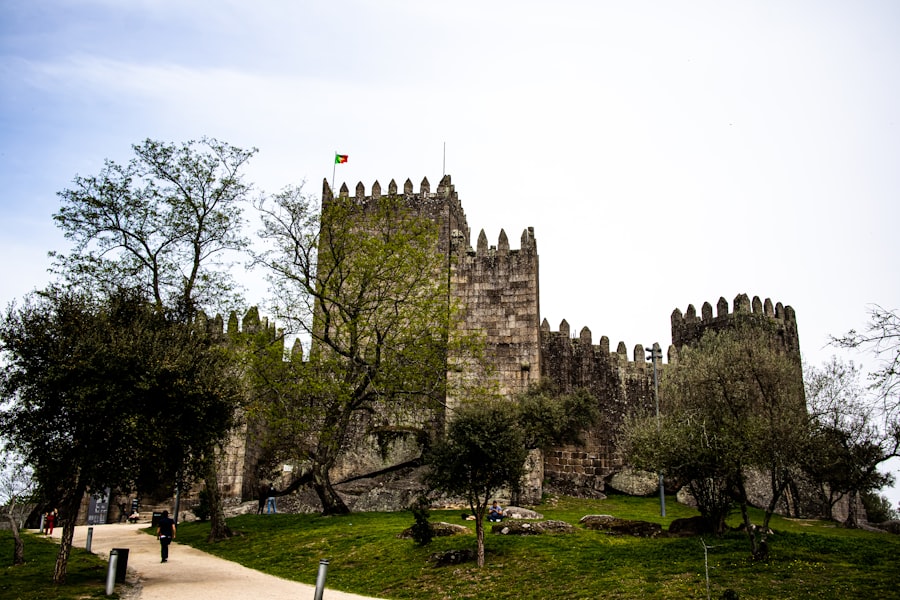
While not always overtly visible, military engineering continued. The construction of fortifications, motte-and-bailey castles (in their early forms), and defensive earthworks demonstrates a continued understanding of siege warfare and defensive strategies. The development of technologies for constructing stronger walls, digging moats, and employing siege engines, while perhaps not as sophisticated as in Roman times, was essential for survival and the establishment of nascent kingdoms.
The notion that the Dark Ages were a period of cultural stagnation is increasingly being challenged by historians who argue that this era was actually marked by significant advancements in various fields. For instance, innovations in agriculture, architecture, and philosophy flourished during this time, contradicting the stereotype of a bleak and unproductive period. To explore this perspective further, you can read a related article that delves into the complexities of the Middle Ages and highlights the achievements that often go unnoticed. Check it out here.
The Evolution of European Identity and Culture
| Aspect | Common Misconception | Reality | Supporting Data / Metrics |
|---|---|---|---|
| Literacy Rates | Literacy declined drastically | Literacy was maintained and even grew in some regions | Monastic schools increased from 200 in 500 AD to over 700 by 900 AD |
| Technological Innovation | Technological progress stalled | Significant inventions and improvements occurred | Invention of the heavy plough (~8th century), water mills increased by 50% between 700-1000 AD |
| Art and Culture | Artistic output was minimal | Rich cultural and artistic developments took place | Over 1,000 illuminated manuscripts produced between 800-1100 AD |
| Urbanization | Cities disappeared | Some cities grew and new towns emerged | Population of cities like Paris grew from 10,000 in 500 AD to 50,000 by 1000 AD |
| Scientific Knowledge | Science was ignored | Preservation and advancement of knowledge occurred | Monasteries preserved over 5,000 classical texts; translations of Arabic works increased by 30% in 9th century |
Perhaps one of the most profound, yet often overlooked, achievements of the “Dark Ages” was the forging of a new European identity. The fragmentation of the Roman Empire allowed for the independent development of distinct cultures and languages across the continent. Christianity, already a powerful force, became a unifying element, providing a shared cultural and religious framework that transcended political boundaries.
The Christianization of Europe
The Unifying Force of Faith
The spread of Christianity was a defining process of this era. Missionaries, often working in dangerous and remote regions, converted pagan populations, bringing with them literacy, a moral framework, and a shared sense of belonging. Churches became centers of community and learning, and the monastic orders played a crucial role in disseminating Christian teachings and practices. This process of Christianization was not merely a spiritual conversion; it was a fundamental cultural transformation that helped to bind together the diverse peoples of Europe.
The Formation of National Identities
The emergence of various kingdoms, such as the Frankish kingdoms, Anglo-Saxon England, and the Visigothic kingdom in Spain, laid the groundwork for the formation of later national identities. These kingdoms developed their own distinct languages, legal systems, and cultural traditions. While not yet modern nation-states, these were the embryonic forms that would eventually evolve into the diverse nations of Europe. The tales, sagas, and legal traditions developed in this period became the foundational narratives of these emerging identities.
The Arab and Byzantine Influence
It is also crucial to remember that Europe was not an isolated entity during this period. The Byzantine Empire in the East preserved much of classical knowledge and developed its own unique culture and technologies. Furthermore, the Islamic world, during its Golden Age, was a hotbed of scientific, philosophical, and artistic innovation. Contact with the Arab world, particularly through trade and conflict in the Mediterranean, led to the transmission of knowledge and technologies into Europe, enriching its intellectual and material landscape. While this influence became more pronounced in later centuries, its roots can be found in this period.
In conclusion, the “Dark Ages” were not a period of utter darkness, but rather a crucible in which new ideas, technologies, and societal structures were forged. While the grandeur of the Roman Empire faded, its legacy was not extinguished. Instead, it was transformed, adapted, and built upon by the peoples and institutions of the medieval period. The advancements in agriculture, the preservation of ancient knowledge, the development of legal and political systems, and the slow, steady emergence of a distinct European culture are all testaments to the ingenuity, resilience, and forward-looking spirit of this often-misunderstood era. To dismiss it as merely “dark” is to ignore the steady, persistent glow of progress that illuminated its path towards the future.
FAQs
What time period is referred to as the Dark Ages?
The Dark Ages generally refer to the early medieval period in Europe, roughly from the 5th to the 10th century, following the fall of the Western Roman Empire.
Why were the Dark Ages originally considered “dark”?
The term “Dark Ages” was used because this period was thought to be marked by cultural and economic decline, reduced literacy, and a lack of scientific and artistic progress compared to the Roman era.
What evidence challenges the idea that the Dark Ages were truly “dark”?
Archaeological discoveries, preserved manuscripts, and historical records show that there were significant advancements in agriculture, architecture, and learning during this time, indicating continued cultural development.
How did the Church contribute to knowledge during the Dark Ages?
Monasteries preserved classical texts, promoted literacy, and served as centers of learning and education, helping to maintain and transmit knowledge throughout the period.
What are some examples of progress made during the so-called Dark Ages?
Innovations such as the heavy plow, the three-field crop rotation system, and the establishment of universities began during this era, demonstrating ongoing technological and intellectual growth.