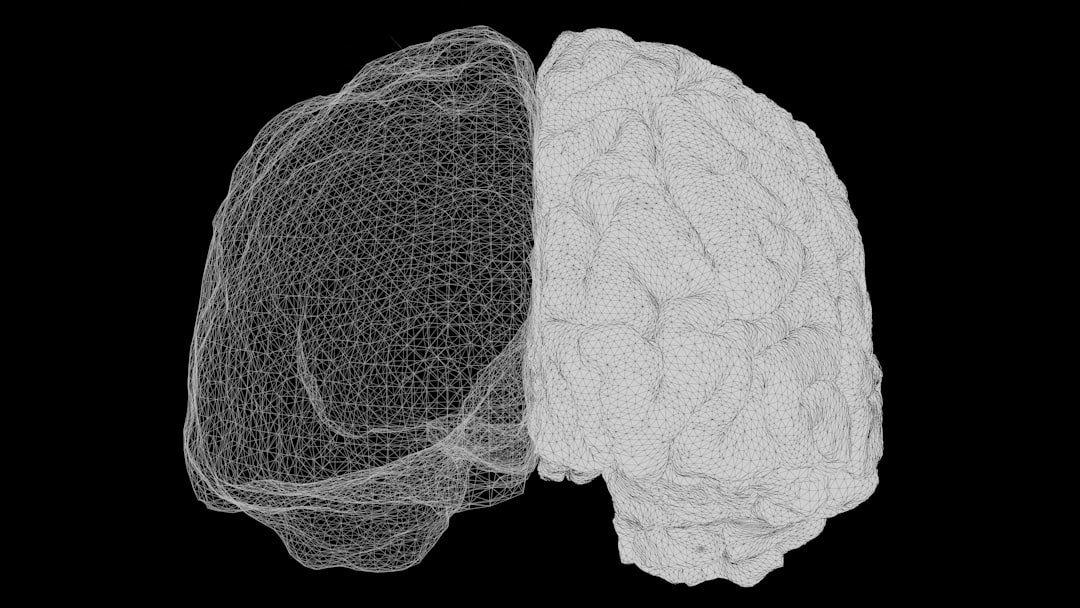
Your brain, that intricate network of neurons, is a remarkable architect of your reality, and one of its most profound, yet often unrecognized, feats is its ability to edit time. You experience life as a continuous stream of moments, but the reality of how you store and recall those moments is far more dynamic and, frankly, less objective than you might assume. Your memories are not precise recordings; they are reconstructions, actively shaped and molded by your brain’s inherent drive to create a coherent narrative. This process of time-editing is not a flawless rewind button, but rather a sophisticated filtering and reordering mechanism that allows you to make sense of the past.
You perceive time as a straight line, a progression from past to present to future. This linear perception is fundamental to your understanding of causality, your ability to plan, and your very sense of self. However, your brain’s operation is not as strictly bound by this linearity when it comes to memory formation and retrieval.
The Nature of Memory Encoding
When you experience an event, your brain doesn’t simply log it like a video camera. Instead, it breaks down the sensory input – sights, sounds, smells, emotions – into constituent parts. These components are then processed in different brain regions, such as the hippocampus for declarative memories (facts and events) and the amygdala for emotional coloring. The encoding process itself is influenced by a multitude of factors, including your attention span, emotional state, and existing knowledge. This means that what you encode in the first place is already a subjective interpretation, not an objective capture.
- Selective Attention and its Impact: You are constantly bombarded with sensory information. Your brain, for efficiency, prioritizes what it deems important. This selective attention means that significant portions of any given experience are never fully encoded, effectively being “edited out” before they even become potential memories. What you remember is often a highlight reel, not the entire film.
- Emotional Salience as a Timestamp: Strong emotions, whether positive or negative, tend to anchor memories more firmly. The intensity of the emotional response acts as a powerful cue for retrieval, often making these emotionally charged events feel more vivid and accessible. However, this can also lead to distortions, where the emotional impact overshadows other details of the event.
The Malleability of Retrieved Memories
The true extent of your brain’s time-editing abilities becomes apparent when you retrieve a memory. The act of remembering is not a passive replay. Instead, your brain reconstructs the event, drawing on fragments of stored information, filling in gaps with plausible additions, and even reinterpreting past events in light of present understanding.
- Reconsolidation: The Act of Remembering Changes the Memory: Every time you recall a memory, you are not accessing a static file. Instead, the memory is temporarily reactivated and then re-stored. This process, known as reconsolidation, makes the memory vulnerable to modification. New information, current emotions, or even suggestions from others can subtly alter the original memory trace. This is why eyewitness testimony, while crucial, can be prone to inaccuracies.
- The Influence of Suggestibility: Your suggestibility plays a significant role in shaping your memories. If someone suggests you did something, or remembers an event in a particular way, your brain can, over time, incorporate that suggestion into your own recollection, blurring the lines between genuine memory and implanted information. This demonstrates how external influences can actively edit your internal timeline.
The phenomenon of how our brains edit time after the fact is a fascinating topic that delves into the intricacies of memory and perception. This process can lead to altered recollections of events, making them seem more coherent or significant than they actually were. For a deeper understanding of this intriguing subject, you can explore the article available at Hey Did You Know This, which discusses the cognitive mechanisms behind our perception of time and memory.
The Purpose Behind the Edits: Creating Coherence
Your brain’s time-editing abilities are not arbitrary glitches; they serve a crucial evolutionary purpose: to construct a coherent and predictable narrative of your life. A seamless, logical progression of events is essential for decision-making, social interaction, and navigating the complexities of the world.
Constructing a Personal Narrative
You are, in essence, the author of your own life story. Your memories are the building blocks of this narrative, and your brain actively stitches them together to create a consistent and understandable account of who you are and where you have come from. This narrative helps you maintain a sense of identity and continuity.
- The “Self” as a Temporal Construct: Your sense of self is intrinsically linked to your memories. The ability to recall past experiences and understand them in relation to your present self is what allows you to feel like a continuous entity. When memories are disrupted, as in certain neurological conditions, this sense of self can also be profoundly affected.
- Narrative Bias and Self-Esteem: Your brain often edits memories in a way that favors your self-esteem. You are more likely to remember past successes and downplay past failures, contributing to a more positive self-image. This form of self-serving bias is a subtle but pervasive aspect of your brain’s time management.
Predicting and Planning for the Future
By understanding past patterns and sequences of events, your brain uses your temporally edited memories to make predictions about the future. This predictive capability is vital for survival and for effective action-taking.
- Causal Reasoning and Temporal Anchors: The order in which you remember events is crucial for understanding cause and effect. Your brain prioritizes the temporal sequencing to infer causality, allowing you to learn from consequences and anticipate outcomes. Even if the exact timing is fuzzy, the perceived order is critical.
- Schema Formation and Temporal Expectations: Your brain forms mental frameworks, or schemas, based on recurring patterns in your experiences. These schemas include temporal expectations. For example, you expect to eat after feeling hungry, or to go to sleep after being awake for a long period. These expectations are built on the temporal regularities you have encoded and edited into your memory.
Common Editing Tactics Employed by Your Brain

Your brain employs several recurring strategies to edit your temporal experiences into a more digestible form. Recognizing these tactics can offer insight into why your memories might not always align with objective reality.
Temporal Compression and Expansion
The perceived duration of events in your memory is highly fluid. Some events might feel as if they happened yesterday, while others, despite being closer in time, feel like they occurred in a distant past.
- The “Vacation Effect”: Trips and holidays often feel longer in retrospect than they actually were. This is because you are exposed to novel stimuli and experiences, which creates more distinct memory traces. The sheer volume of new information can lead to a perceived expansion of time.
- The “Boring Day” Phenomenon: Conversely, uneventful days can feel like they sped by. When little new information is encoded, there are fewer distinct memory anchors, leading to a feeling of temporal compression. Your brain has less to “work with” in recreating these periods.
Blurring of Specific Dates and Times
While you may recall the sequence of events, the precise dates and times of past experiences often become fuzzy. Your brain prioritizes the relational aspect of time – what happened before what – over precise temporal markers.
- “About a Year Ago” Syndrome: You might accurately recall that an event happened in a particular year, but pinpointing the exact month or day can be challenging. Your brain creates a temporal neighborhood rather than a precise pin.
- The Role of Contextual Cues: The retrieval of a memory is often cued by its context. If you recall a conversation, you might remember the setting, the people involved, and the general topic, but the exact time of day might be less important to the overall memory reconstruction.
Blending and Assimilating Similar Experiences
Your brain is adept at grouping similar experiences together. This can lead to the blending of details from multiple similar events into a single, composite memory.
- The “General Vacation” Memory: You might have gone on several similar beach vacations. Over time, the details from each trip might merge into a generalized memory of “going to the beach,” losing the unique characteristics of each individual trip.
- Repetitive Tasks and Distorted Durations: When you engage in repetitive tasks, the individual instances can become blurred. You might recall the general experience of performing the task, but have difficulty recalling specific instances or the total time spent. This makes it easy for your brain to edit out the monotony.
The Impact of Time-Editing on Your Perception of the Past
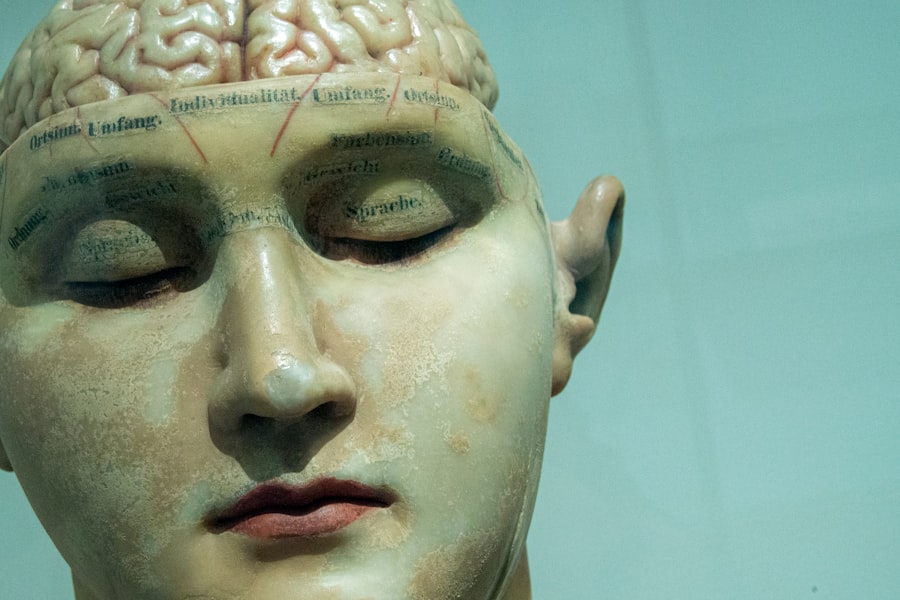
Understanding your brain’s time-editing abilities is critical for appreciating the subjective nature of your memories and how they shape your perception of your own past. This is not about intentional deception, but about the fundamental mechanisms of memory.
The “Flashbulb Memory” Phenomenon and its Fallibility
You may believe that certain highly emotional or significant events are perfectly preserved in your mind, like a “flashbulb memory.” While these memories often feel vivid and accurate, research has shown that they are also susceptible to the same editing processes as less dramatic memories.
- Emotional Intensity vs. Accuracy: The strong emotional components of flashbulb memories can create a powerful subjective feeling of accuracy, even when details are distorted or inaccurate. The emotional resonance can overshadow the factual content.
- The “Now Print” Hypothesis and its Limitations: Early theories suggested that flashbulb memories were like immediate photographs, so well-preserved due to the shock of the event. However, subsequent research has demonstrated that even these memories are subject to reconstruction and change over time.
The Distortion of Personal History
Your brain’s constant editing can lead to a distorted perception of your personal history. Your narrative might become more positive, more linear, or more dramatic than the objective reality of your experiences.
- The Rosy Retrospection Effect: You tend to remember past events, especially those from your youth, more positively than they may have actually been. This can create an idealized view of your past that may not be grounded in fact.
- The Narrative Arc of Life: Your brain may impose a narrative arc on your life, looking for a beginning, rising action, a climax, and a resolution, even if your actual experiences were more chaotic or uneventful. This forces your past into a literary structure.
Our perception of time is often more fluid than we realize, leading to intriguing phenomena where our brains edit memories after events have occurred. This fascinating topic is explored in depth in a related article that discusses how our cognitive processes can reshape our experiences, making them seem more coherent or significant than they actually were. For those interested in understanding the complexities of memory and time perception, you can read more about it in this insightful piece here.
Navigating the Edited Landscape of Your Memories
| Reasons for Brain Editing Time | Explanation |
|---|---|
| Memory Consolidation | The brain may alter the perception of time to better fit with the memories it is consolidating. |
| Emotional Intensity | Strong emotions can cause the brain to distort the perception of time, making events seem longer or shorter than they actually were. |
| Attention and Focus | When the brain is highly focused on a task, it may alter the perception of time, making it seem to pass more quickly or slowly. |
| Neurological Processes | Neurological processes in the brain can lead to time distortion, such as the dilation of time during a perceived threat or danger. |
While you cannot fundamentally change how your brain edits time, you can develop strategies to navigate this edited landscape and cultivate a more nuanced understanding of your own past.
Cultivating Mindfulness and Present Moment Awareness
By paying attention to your present experiences as they unfold, you can create more detailed and reliable memory traces. This heightened awareness can provide a more solid foundation for future recall.
- The Power of Detailed Observation: Consciously observing your surroundings, your thoughts, and your feelings in the present moment can lead to richer encoding. Try to notice specific details, sounds, and emotions.
- Journaling as a Memory Anchor: Regularly journaling your experiences can provide an external record that can help to ground your memories and cross-reference your recollections. It acts as a form of pre-editing your own life.
Critical Self-Reflection and External Validation
Engaging in critical self-reflection about your memories and seeking external validation from trusted sources can help you to identify potential distortions.
- Questioning Your Own Recollections: Don’t accept your memories at face value. Ask yourself: Is this how I truly remember it, or is this how I want to remember it? Are there any biases at play?
- Comparing Notes with Others: Discussing past events with friends, family, or colleagues can reveal discrepancies in your memories and offer different perspectives. This can highlight the subjective nature of your personal timeline.
Accepting the Imperfect Nature of Memory
Ultimately, accepting the inherent imperfection of your brain’s time-editing abilities is a crucial step. Your memories are not perfect recordings, but they are invaluable tools for understanding yourself and navigating the world.
- Embracing the Subjectivity: Your memories are your own, shaped by your unique experiences and your brain’s internal processes. This subjectivity is what makes them personal and meaningful.
- Focusing on Lessons Learned: Rather than striving for absolute factual accuracy, focus on the lessons and insights you have gained from your experiences. The emotional and thematic resonance of your memories often holds more value than precise temporal details.
FAQs
What is time editing in the brain?
Time editing in the brain refers to the phenomenon where the brain alters the perception of time after an event has occurred. This can lead to inaccuracies in our memory of the timing of events.
What causes the brain to edit time after the fact?
The brain edits time after the fact due to a combination of factors, including the way memories are formed and stored, as well as the influence of emotions and attention on our perception of time.
How does the brain edit time affect our memory?
The brain’s editing of time can affect our memory by distorting our recollection of when events occurred. This can lead to inaccuracies in our memory of the sequence and timing of past events.
Can the brain’s editing of time be influenced by external factors?
Yes, the brain’s editing of time can be influenced by external factors such as stress, distractions, and the significance of the event. These factors can impact our perception of time and subsequently affect our memory of when events occurred.
What are the implications of the brain’s editing of time?
The implications of the brain’s editing of time include potential inaccuracies in eyewitness testimony, as well as challenges in accurately recalling the timing of events in our personal lives. Understanding this phenomenon can help improve the reliability of memory and perception.