
The Industrial Revolution, a period of profound transformation that swept across the globe from roughly the mid-18th to the mid-19th centuries, was not a singular event but rather a complex, interwoven tapestry of change. At its heart lay a series of technological innovations, each acting as a spark that ignited a cascade of advancements, fundamentally reshaping human society, its economies, and its relationship with the natural world. Understanding these innovations is crucial to grasping the very foundations of our modern industrialised existence.
The steam engine stands as the colossus of the Industrial Revolution, a bedrock upon which much of the era’s progress was built. Before its advent, human and animal power, augmented by wind and water, were the primary energy sources. These were often unreliable, geographically constrained, and limited in their capacity. The steam engine offered a revolutionary alternative: a consistent, portable, and immensely powerful source of energy that could be harnessed almost anywhere.
James Watt’s Crucial Refinements
While rudimentary steam engines existed prior to James Watt, it was his series of patented improvements, beginning in the 1760s and continuing through the 1780s, that transformed the technology from a moderately useful, albeit inefficient, device into a truly industrial workhorse.
The Separate Condenser: Efficiency’s Quantum Leap
Watt’s most significant contribution was the introduction of the separate condenser. Previous engines, such as Thomas Newcomen’s atmospheric engine, cooled the steam within the cylinder itself. This meant that a considerable amount of heat energy was lost with each cycle as the cylinder itself had to be re-heated. Watt’s innovation involved conducting the steam from the cylinder to a separate vessel where it could be condensed. This kept the main cylinder hot, thereby dramatically reducing fuel consumption and increasing the engine’s overall efficiency. This was not merely an incremental improvement; it was akin to discovering a more efficient fuel for a fire that burned brighter and longer for the same amount of wood.
Rotary Motion and Universal Application
Watt also developed mechanisms, such as the sun-and-planet gear and later the crank and connecting rod, to convert the reciprocating (back and forth) motion of the piston into rotary motion. This was a crucial step because it allowed the steam engine to power a wide array of machinery that required rotational movement, such as spinning wheels, looms, and millstones. This opened the door for the mechanization of numerous industries.
Beyond Watt: Evolution and Diversification
Watt’s designs were not the end of the story. Subsequent inventors and engineers continued to refine and adapt the steam engine, leading to higher pressures, increased power, and more specialized applications.
High-Pressure Engines and Their Impact
The development of high-pressure steam engines, notably by Richard Trevithick and later George Stephenson, significantly boosted power output and enabled entirely new forms of transportation and industrial machinery. These engines, while initially more dangerous due to the increased pressures involved, were lighter and more compact, making them suitable for locomotives and steamboats.
The Steam Pump and Drainage
Before the widespread adoption of the steam engine, mining operations were severely hampered by flooding. Steam-powered pumps, such as those developed by Newcomen and later improved by Watt, could effectively drain mines, allowing for deeper extraction of coal and other valuable minerals. This was a critical feedback loop: the engine that powered industry also enabled the extraction of the very fuel that powered it.
The Industrial Revolution marked a significant turning point in history, characterized by groundbreaking technological advancements that transformed industries and societies. For a deeper understanding of these innovations and their impact on modern technology, you can explore a related article that delves into the various inventions and their implications during this era. Check it out here: Technological Advancements During the Industrial Revolution.
The Revolution in Textiles: Mechanization of Spinning and Weaving
The textile industry was arguably the first to be dramatically reshaped by technological innovation during the Industrial Revolution. Before mechanization, yarn production and cloth weaving were labor-intensive cottage industries, each thread spun and each thread woven by hand. The advent of new machines, driven by water and later steam power, completely transformed this landscape.
Innovations in Spinning: From Hand to Machine
The demand for yarn consistently outstripped the capacity of hand spinners. Inventions that amplified the speed and efficiency of yarn production were therefore critically important.
The Spinning Jenny: Multiplying Bobbins
Invented by James Hargreaves around 1764, the Spinning Jenny allowed a single worker to operate multiple spindles simultaneously. While its yarn was relatively coarse, it represented a significant increase in productivity over the single-spindle spinning wheel. It was as if one weaver suddenly found they could spin eight threads at once.
The Water Frame: Stronger and Smoother Yarn
Richard Arkwright’s Water Frame, patented in 1769, was a significant step forward. Powered by waterwheels, it produced a stronger and smoother yarn than the Spinning Jenny. This was achieved through a system of rollers that attenuated the cotton fibers before they were twisted. Arkwright’s invention not only increased the quantity of yarn but also improved its quality, making it suitable for warp threads in weaving.
The Spinning Mule: The Best of Both Worlds
Samuel Crompton’s Spinning Mule, developed in the 1770s, ingeniously combined the best features of the Spinning Jenny and the Water Frame. It could produce a fine, strong, and consistent yarn, revolutionizing the quality and quantity of textiles that could be manufactured. The Mule was capable of drafting and spinning a single thread that was both fine and strong, creating a superior product.
Innovations in Weaving: The Power Loom
With the increased output of yarn, the bottleneck shifted to weaving. The development of the power loom, though facing early resistance and technical challenges, ultimately solved this problem.
Edmund Cartwright’s Power Loom: Early Challenges and Later Success
Edmund Cartwright patented his first power loom in 1785. However, his initial designs were crude and inefficient, prone to breaking threads and requiring significant manual intervention. It took decades of refinement by numerous inventors, most notably William Horrocks and later Richard Roberts, to develop a robust and commercially viable power loom. The adoption of the power loom marked the transition of weaving from the domestic setting to the factory floor. This was the harbinger of the factory system, concentrating production under one roof.
Metallurgy and Iron Production: Forging a New Age
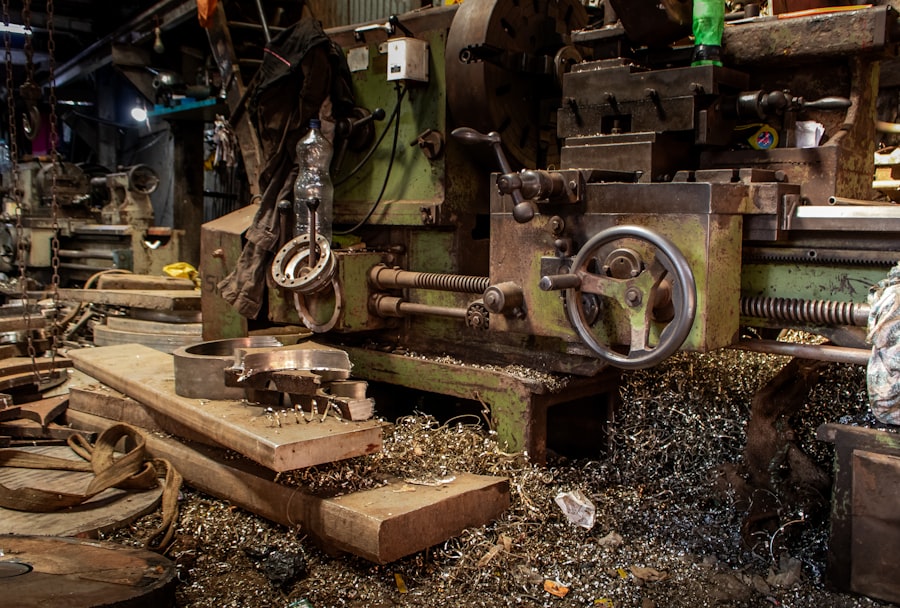
The Industrial Revolution was not just about machines, but also about the materials from which those machines, and the very infrastructure of industry, were built. Advancements in metallurgy, particularly in the production of iron and steel, were indispensable.
Breaking the Charcoal Barrier: The Rise of Coke Smelting
For centuries, iron was smelted using charcoal, a fuel derived from wood. This method had a significant limitation: the supply of wood was finite, and large-scale iron production led to deforestation. The development of coke, a fuel derived from coal, as a substitute for charcoal in blast furnaces was a monumental breakthrough.
Abraham Darby’s Pioneering Use of Coke
Abraham Darby I, around 1709, successfully used coke to smelt iron. However, his early coke-iron was brittle and unsuitable for many applications. It was only later in the 18th century that Isaac Wilkinson and later his son John Wilkinson developed methods to produce a purer, more malleable cast iron using coke. This allowed for the mass production of iron objects, from pots and pans to the very components of the new machinery.
Puddling and Rolling: Refining Iron for Industry
While coke smelting improved iron production, the resulting cast iron was still somewhat brittle. The puddling process, developed by Henry Cort in the 1780s, was a crucial innovation for producing wrought iron in large quantities.
Cort’s Puddling Furnace: Removing Impurities
The puddling process involved heating pig iron in a reverbatory furnace and then stirring it with long iron rods (puddlers) to expose it to air. This oxidized and removed excess carbon and other impurities, resulting in a more ductile and malleable wrought iron. Alongside the puddling process, Cort also developed grooved rolling mills, which allowed for the mechanical shaping of the puddled iron into bars and rods with greater efficiency and consistency. This was like taking a lump of rough clay and being able to shape it with precision and speed.
New Forms of Transportation: Bridging Distances

The ability to move goods and people more efficiently and rapidly was a crucial consequence and driver of the Industrial Revolution. Prior to these advancements, transportation was slow, costly, and limited.
The Dawn of the Railway Age
The development of the steam locomotive and the associated infrastructure of railways was a transformative force. For the first time, journeys that once took days or weeks could be completed in hours.
Richard Trevithick and George Stephenson: Pioneers of the Locomotive
Richard Trevithick built the first full-scale working railway steam locomotive in 1804. Though it proved too heavy for its tracks, it was a significant proof of concept. George Stephenson, building on the work of others, is often considered the father of the modern railway. His “Locomotion No. 1” powered the Stockton and Darlington Railway, the world’s first public steam railway, in 1825. His “Rocket” won the Rainhill Trials in 1829, demonstrating the superiority of his locomotive design and paving the way for widespread railway construction. The railway network became the arteries of industrial society, pumping raw materials to factories and finished goods to markets.
The Steamboat: Navigating Waterways
Just as railways conquered land, the steamboat revolutionized water transportation.
Robert Fulton and the Commercial Viability of Steamboats
While early experiments with steam-powered boats occurred before him, Robert Fulton’s “Clermont,” which successfully navigated the Hudson River in 1807, is widely credited with making the steamboat commercially viable. Steamboats could travel upstream against currents, opening up inland waterways for trade and travel in ways previously unimaginable. This meant rivers, once mere boundaries, became highways.
The Industrial Revolution marked a significant turning point in history, characterized by remarkable technological advancements that transformed industries and societies. Innovations such as the steam engine and mechanized textile production not only increased efficiency but also reshaped the workforce and urban landscapes. For a deeper understanding of these transformative changes, you can explore a related article that delves into the impact of these advancements on modern society. Check it out here to learn more about how the legacy of the Industrial Revolution continues to influence our lives today.
Communication and Information: The Telegraph and Beyond
| Technological Advancement | Inventor/Developer | Year | Impact/Metric |
|---|---|---|---|
| Spinning Jenny | James Hargreaves | 1764 | Increased yarn production from 1 to 8 spools simultaneously |
| Water Frame | Richard Arkwright | 1769 | Enabled mechanized spinning powered by water, boosting textile output |
| Steam Engine (Improved) | James Watt | 1776 | Increased efficiency by 75%, powering factories and transportation |
| Power Loom | Edmund Cartwright | 1785 | Automated weaving, increasing fabric production speed |
| Cotton Gin | Eli Whitney | 1793 | Separated cotton fibers from seeds 50 times faster than manual labor |
| Railway Locomotive | George Stephenson | 1814 | Enabled faster transportation of goods and people, reducing travel time |
| Telegraph | Samuel Morse | 1837 | Revolutionized long-distance communication, messages sent in minutes |
While perhaps not as immediately tangible as a steam engine or a power loom, innovations in communication were equally profound in their impact on the pace and nature of industrial society. The ability to transmit information rapidly across distances was a vital lubricant for the gears of commerce and governance.
The Electric Telegraph: Instantaneous Communication
The development of the electric telegraph in the mid-19th century was a paradigm shift in communication.
Samuel Morse and the Dot-and-Dash Language
Samuel Morse, along with his collaborators, developed a practical electric telegraph system and the famous Morse code. The first successful long-distance telegraph line was established between Washington D.C. and Baltimore in 1844. This allowed for near-instantaneous communication over vast distances, revolutionizing business, news dissemination, and even warfare. This was the dawn of instantaneity, collapsing geographical barriers into a network of electrical impulses.
Beyond the Telegraph: Precursors and Future Visions
The telegraph built upon earlier experiments and laid the groundwork for future communication technologies. The desire to transmit messages quickly and efficiently fueled continuous innovation.
Early Semaphore Systems: The Seeds of Signalling
Before electricity, simpler optical telegraph systems, such as the semaphore, were used. These systems, employing movable arms to signal letters or words, allowed for communication over relatively long distances, provided there was a clear line of sight between stations. While slower than the electric telegraph, they demonstrated the fundamental principle of long-distance signalling.
The technological innovations of the Industrial Revolution were not isolated incidents. They were part of a dynamic ecosystem of invention and improvement, each breakthrough feeding into the next. The steam engine powered the textile mills, which produced cloth that clothed the workers who built the railways. The iron produced by new metallurgical processes formed the tracks and locomotives that transported the raw materials and finished goods. The telegraph, in turn, enabled the coordination of this increasingly complex and interconnected industrial machine. This intricate interplay highlights that progress was rarely linear, but rather a multifaceted explosion of human ingenuity.
In conclusion, the Industrial Revolution was a period of unparalleled technological advancement. The innovations discussed, from the harnessed power of steam to the instantaneous reach of the telegraph, were the engines of change that propelled humanity into a new era. They fundamentally altered the way we work, live, and interact with each other and the world around us, casting a long shadow that continues to shape our present and future.
FAQs
What were some key technological advancements during the Industrial Revolution?
Key technological advancements during the Industrial Revolution included the steam engine, spinning jenny, power loom, and the development of iron and steel production techniques. These innovations significantly increased manufacturing efficiency and productivity.
How did the steam engine impact the Industrial Revolution?
The steam engine, improved by James Watt, provided a new source of power that was not dependent on water or wind. It enabled factories to be located anywhere, powered locomotives and ships, and revolutionized transportation and industry.
What role did the textile industry play in technological advancements?
The textile industry was central to the Industrial Revolution, with inventions like the spinning jenny, water frame, and power loom mechanizing the production of cloth. These technologies greatly increased output and reduced the need for manual labor.
How did technological advancements affect society during the Industrial Revolution?
Technological advancements led to urbanization as people moved to cities for factory work, changed labor patterns, increased production and economic growth, but also caused challenging working conditions and environmental changes.
Were there any significant advancements in transportation during the Industrial Revolution?
Yes, significant advancements included the development of the steam locomotive and steamships, which improved the speed and efficiency of transporting goods and people, facilitating trade and expansion of markets.