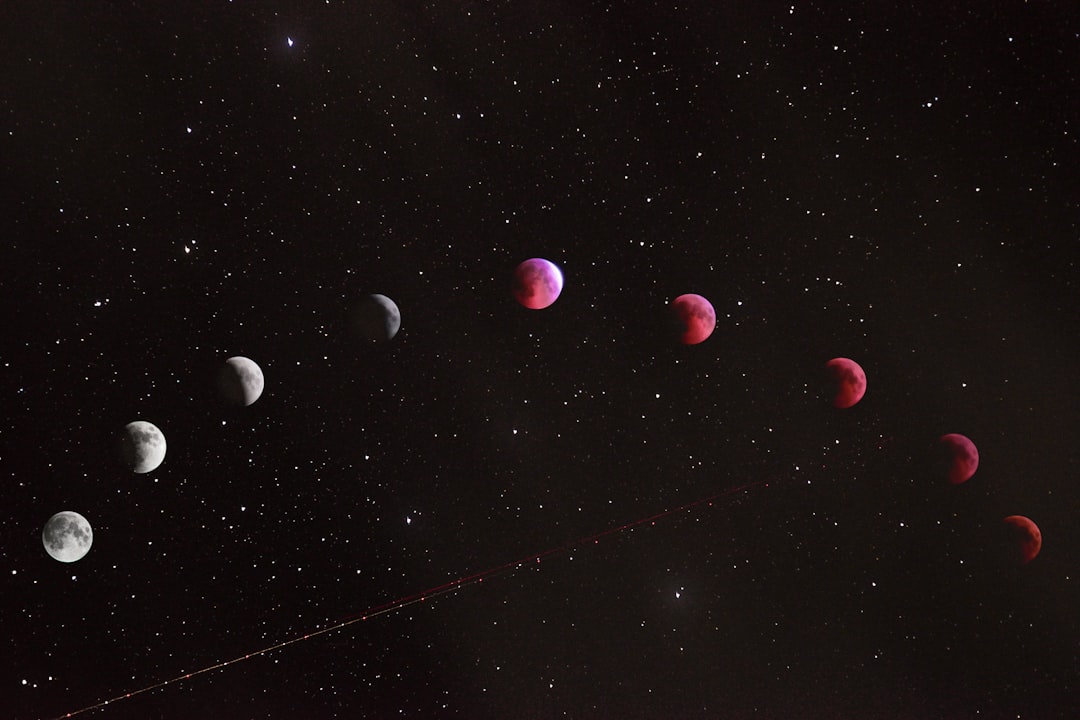
Planetary orbits are fundamental to the structure and dynamics of solar systems. They describe the paths that celestial bodies, such as planets, moons, and asteroids, take as they revolve around a star. The nature of these orbits is dictated by a variety of factors, including gravitational forces, the mass of the celestial bodies involved, and their initial velocities.
The laws of celestial mechanics, particularly those formulated by Johannes Kepler in the early 17th century, provide a framework for understanding how planets move in elliptical paths around their stars. Kepler’s laws not only describe the shape of these orbits but also reveal how the speed of a planet varies depending on its distance from the star. In addition to Kepler’s laws, Newton’s law of universal gravitation plays a crucial role in explaining planetary motion.
According to this law, every mass attracts every other mass with a force that is proportional to the product of their masses and inversely proportional to the square of the distance between them. This gravitational interaction leads to complex orbital dynamics, where planets can influence each other’s orbits through gravitational interactions. Understanding these principles is essential for astronomers and astrophysicists as they seek to unravel the intricate dance of celestial bodies in various systems across the universe.
Key Takeaways
- Resonance migration significantly influences the arrangement and stability of planetary orbits.
- Gravitational forces drive resonance migration, altering planetary positions over time.
- Observational evidence supports the occurrence of resonance migration in both our solar system and exoplanetary systems.
- Understanding resonance migration aids in identifying potentially habitable exoplanets by revealing stable orbital configurations.
- Ongoing research and theoretical models are crucial for deepening knowledge of planetary system evolution and dynamics.
The Concept of Resonance Migration
Resonance migration is a fascinating phenomenon that occurs when two or more celestial bodies exert gravitational influences on each other, leading to changes in their orbits over time. This process often results in a synchronization of their orbital periods, creating a resonance that can significantly alter their trajectories. For instance, if two planets are in a 2:1 resonance, one planet completes two orbits for every one orbit of the other.
Such resonances can lead to dramatic shifts in orbital eccentricity and inclination, ultimately affecting the stability of the entire planetary system. The concept of resonance migration is particularly important in understanding how planetary systems evolve over time. As planets interact gravitationally, they can exchange angular momentum, which can cause them to migrate inward or outward from their original positions.
This migration can lead to a variety of outcomes, including the formation of gaps in protoplanetary disks or the ejection of planets from their systems altogether. By studying resonance migration, scientists can gain insights into the processes that shape planetary systems and the potential for habitability within them.
The Role of Gravitational Forces
Gravitational forces are at the heart of resonance migration and play a pivotal role in shaping planetary orbits. The gravitational pull between celestial bodies is not only responsible for keeping planets in orbit around their stars but also for facilitating interactions between planets themselves. When two planets come close enough to each other, their gravitational fields can influence one another, leading to changes in their velocities and trajectories.
This interaction can result in complex orbital dynamics that are essential for understanding how planetary systems evolve. Moreover, gravitational forces can lead to phenomena such as tidal locking and orbital resonances, which further complicate the behavior of celestial bodies. Tidal forces can cause deformation in planets and moons, leading to energy dissipation that affects their rotational and orbital characteristics.
In cases where planets are locked in resonance, their gravitational interactions can amplify these effects, leading to significant changes in their orbits over time. Thus, understanding gravitational forces is crucial for unraveling the complexities of resonance migration and its impact on planetary systems.
Effects of Resonance Migration on Planetary Orbits
The effects of resonance migration on planetary orbits can be profound and far-reaching. As planets interact gravitationally and enter into resonant relationships, their orbits can become more eccentric or inclined. This change in orbital shape can lead to increased variations in temperature and climate on the planets involved, potentially affecting their ability to support life.
For example, if a planet’s orbit becomes highly elliptical due to resonance migration, it may experience extreme seasonal changes that could challenge the stability of any ecosystems present. Additionally, resonance migration can lead to the redistribution of material within a protoplanetary disk. As planets migrate inward or outward, they can create gaps in the disk where material is cleared away.
The interplay between resonance migration and material distribution is a key area of study for astronomers seeking to understand the formation and evolution of planetary systems.
Exoplanets and Resonance Migration
| Parameter | Description | Typical Values | Units |
|---|---|---|---|
| Orbital Resonance Ratio | Ratio of orbital periods between two planets in resonance | 2:1, 3:2, 5:3 | Dimensionless |
| Migration Rate | Rate at which a planet’s orbit changes due to disk interactions | 10^-5 to 10^-3 | AU per year |
| Orbital Eccentricity | Measure of orbit deviation from circularity | 0.0 to 0.3 | Dimensionless |
| Planet Mass | Mass of the migrating planet | 0.1 to 10 | Jupiter Masses |
| Disk Surface Density | Mass per unit area of the protoplanetary disk | 10 to 1000 | g/cm² |
| Resonance Capture Probability | Likelihood of planets becoming locked in resonance during migration | 0.3 to 0.9 | Dimensionless |
| Orbital Semi-major Axis | Average distance from the planet to the star | 0.05 to 5 | AU |
The study of exoplanets—planets located outside our solar system—has revealed numerous instances of resonance migration at play. Many exoplanetary systems exhibit configurations that suggest resonant relationships between multiple planets. For instance, some systems have been found with closely spaced planets that are locked in resonances, indicating that they have undergone significant orbital evolution due to gravitational interactions.
These findings provide valuable insights into how planetary systems form and evolve over time. Moreover, resonance migration may play a crucial role in determining the habitability of exoplanets. In systems where planets are locked in resonances, their orbital dynamics can create stable environments conducive to life.
Conversely, unstable resonant configurations may lead to chaotic orbits that could jeopardize any potential for habitability. By studying exoplanets and their resonant relationships, scientists can better understand the conditions necessary for life beyond Earth and refine their search for habitable worlds.
The Importance of Studying Planetary Orbits in Motion
Studying planetary orbits in motion is essential for several reasons. First and foremost, it enhances our understanding of celestial mechanics and the fundamental laws governing the universe. By observing how planets move and interact with one another, scientists can test existing theories and develop new models that explain these complex dynamics.
This knowledge not only enriches our understanding of our own solar system but also provides insights into distant systems across the galaxy. Furthermore, understanding planetary orbits has practical implications for space exploration and navigation. As humanity ventures further into space, accurate predictions of planetary positions become crucial for mission planning and spacecraft navigation.
Knowledge gained from studying planetary motion can inform future missions to other planets and moons within our solar system as well as guide efforts to explore exoplanets in distant star systems.
Resonance Migration and the Stability of Planetary Systems
The stability of planetary systems is intricately linked to resonance migration. When planets enter into resonant relationships, they can experience both stabilizing and destabilizing effects on their orbits. In some cases, resonances can help maintain orderly configurations among planets, preventing chaotic interactions that could lead to collisions or ejections from the system.
For example, certain resonant configurations have been observed in our own solar system that contribute to its overall stability. Conversely, resonance migration can also lead to instability under certain conditions. If gravitational interactions become too strong or if planets are forced into highly eccentric orbits due to resonance effects, the long-term stability of the system may be compromised.
Understanding these dynamics is crucial for predicting the future evolution of planetary systems and assessing their potential for supporting life.
Theoretical Models of Resonance Migration
Theoretical models play a vital role in advancing our understanding of resonance migration and its effects on planetary orbits. These models utilize mathematical frameworks to simulate the gravitational interactions between celestial bodies over time. By incorporating various parameters such as mass, distance, and initial velocities, scientists can explore different scenarios and predict how planetary systems might evolve under various conditions.
One prominent model used in this field is N-body simulations, which allow researchers to study the interactions between multiple celestial bodies simultaneously. These simulations have provided valuable insights into how resonance migration occurs and its implications for planetary stability and habitability. As computational power continues to increase, researchers are able to refine these models further, leading to more accurate predictions about the behavior of planetary systems.
Observational Evidence of Resonance Migration
Observational evidence supporting the concept of resonance migration has been gathered through various astronomical techniques. One key method involves monitoring the transit of exoplanets across their host stars, which allows scientists to determine their orbital periods and relationships with other planets in the system. By analyzing these transit data, researchers have identified numerous instances where planets exhibit resonant behavior.
Additionally, radial velocity measurements have provided insights into the masses and distances of exoplanets from their stars, further elucidating their orbital dynamics. These observations have confirmed theoretical predictions regarding resonance migration and have revealed complex interactions among multiple planets within a single system. As observational technology continues to advance, scientists expect to uncover even more evidence supporting the role of resonance migration in shaping planetary orbits.
Implications for the Search for Habitable Exoplanets
The study of resonance migration has significant implications for the search for habitable exoplanets. Understanding how planets interact gravitationally can inform scientists about which configurations are most likely to support stable environments conducive to life. For instance, systems with planets locked in resonances may exhibit more predictable climates than those with chaotic orbital patterns.
Moreover, insights gained from studying resonance migration can help refine criteria used to identify potentially habitable exoplanets during surveys conducted by telescopes such as the James Webb Space Telescope (JWST) and future missions like NASA’s Habitable Worlds Observatory (HWO). By focusing on systems where resonant relationships exist among planets, researchers may increase their chances of discovering worlds that possess conditions suitable for life.
Future Research and Exploration of Resonance Migration
Future research into resonance migration promises to deepen humanity’s understanding of planetary systems across the universe. As observational techniques improve and theoretical models become more sophisticated, scientists will be able to explore new questions regarding how different factors influence resonance behavior among celestial bodies. This research will not only enhance knowledge about our own solar system but also provide insights into distant exoplanetary systems.
Moreover, ongoing missions aimed at exploring our solar system will continue to shed light on resonance migration’s effects on planetary bodies within it. As spacecraft gather data from various celestial objects—such as asteroids, comets, moons, and planets—scientists will be better equipped to understand how these bodies interact gravitationally over time. Ultimately, this research will contribute significantly to humanity’s quest for knowledge about our place in the cosmos and the potential for life beyond Earth.
Resonance migration is a fascinating phenomenon that plays a crucial role in the evolution of planetary orbits, influencing the stability and arrangement of celestial bodies in a system. For a deeper understanding of this topic, you can explore the article on planetary dynamics and their implications for orbital stability at this link. This resource provides valuable insights into how resonance can affect the paths of planets and other celestial objects over time.
WATCH THIS! 🌍 They Lied About When Earth Dies 🌍
FAQs
What is resonance migration in planetary orbits?
Resonance migration refers to the process where planets in a planetary system gradually change their orbital distances due to gravitational interactions, often becoming locked in orbital resonances. This migration can cause planets to move closer to or farther from their host star while maintaining specific orbital period ratios.
How do orbital resonances form between planets?
Orbital resonances occur when two or more planets exert regular, periodic gravitational influences on each other, typically because their orbital periods are in a ratio of small integers (e.g., 2:1 or 3:2). These resonances can stabilize their orbits and often arise during the migration phase of planetary system evolution.
What causes planets to migrate in their orbits?
Planetary migration is primarily caused by interactions with the protoplanetary disk of gas and dust from which the planets formed. Gravitational forces between the planets and the disk can transfer angular momentum, causing the planets to move inward or outward. Additionally, gravitational interactions between planets can also lead to migration.
Why is resonance migration important in planetary system formation?
Resonance migration plays a crucial role in shaping the architecture of planetary systems. It can explain the observed orbital configurations of exoplanets, including tightly packed systems and resonant chains. Understanding resonance migration helps scientists learn how planets form, evolve, and maintain stable orbits over time.
Can resonance migration affect the habitability of planets?
Yes, resonance migration can influence planetary habitability by altering a planet’s distance from its star, which affects surface temperatures and conditions necessary for life. Migration can also impact the stability of orbits, which is important for maintaining long-term habitable environments.
Are resonance migrations observed in our Solar System?
Yes, resonance relationships exist in our Solar System. For example, the orbital periods of Jupiter’s moons Io, Europa, and Ganymede are in a 4:2:1 resonance. Additionally, some asteroid groups are trapped in resonances with Jupiter. These examples provide insight into resonance migration processes.
How do scientists study resonance migration in planetary orbits?
Scientists use computer simulations, observations of exoplanetary systems, and theoretical models to study resonance migration. By analyzing the orbital configurations and dynamics of planets, researchers can infer past migration events and understand the mechanisms driving resonance capture.
Does resonance migration only occur in multi-planet systems?
Resonance migration primarily occurs in systems with multiple planets or moons because gravitational interactions between bodies are necessary to establish resonances. However, migration itself can happen in single-planet systems due to interactions with the protoplanetary disk, but resonance capture requires at least two orbiting bodies.