The horrific events of September 11, 2001, forever etched themselves into the collective memory of the United States. For those tasked with safeguarding the nation’s highest office, these attacks represented an unprecedented challenge, a seismic shift that demanded a fundamental re-evaluation of security protocols. You, as a citizen, likely recall the images of smoke billowing from the World Trade Center and the Pentagon, the fear that rippled through the country, and the uncertainty that hung heavy in the air. This article delves into the sweeping security measures implemented in the wake of 9/11 to protect the President, illustrating how the very foundations of presidential security were rebuilt and reinforced, creating a more robust bulwark against evolving threats.
Before 9/11, presidential security, while sophisticated, operated under a different paradigm. The threats, though serious, were often perceived through the lens of assassinations or isolated bombing incidents. The coordinated, multi-pronged aerial assaults of 9/11, however, demonstrated a capacity for destruction and a strategic ambition that went far beyond previous imaginings. The immediate aftermath saw an intense period of reassessment, a period where the existing security framework was dissected, analyzed, and found wanting. The invisible shield that had protected presidents was suddenly exposed, and the need for a more comprehensive, adaptable approach became starkly clear.
The Oval Office Under Siege: Initial Vulnerabilities
You might have assumed that the President, the most protected individual in the nation, was invulnerable. However, 9/11 brutally illustrated the interconnectedness of threats. The attacks weren’t aimed solely at a single individual, but at the symbolic and operational heart of American power. This realization meant that the President’s security could no longer be viewed in isolation. The infrastructure supporting the presidency, the air travel industry, and even civilian airspace itself became part of the security equation. The speed at which the attackers adapted their tactics also highlighted a critical vulnerability: traditional intelligence gathering and response mechanisms struggled to keep pace with the dynamic nature of evolving terrorist methodologies.
A New Threat Landscape: Recalibrating Risk
The intelligence community, a crucial cog in the presidential security machine, was forced to undergo a profound transformation. The familiar threat of a lone gunman or a car bomb was now overshadowed by the specter of sophisticated, ideologically motivated groups capable of orchestrating attacks on a massive scale. This recalibration of risk involved a more holistic approach, integrating intelligence from a wider array of sources, and fostering a culture of proactive threat identification rather than reactive crisis management. The sheer audacity of 9/11 forced a reconsideration of the “unthinkable,” pushing security planners to consider scenarios previously relegated to the realm of speculative fiction.
In the wake of the 9/11 attacks, presidential security underwent significant transformations to address the evolving threats to national safety. An insightful article that delves into these changes and their implications can be found at Hey Did You Know This. This resource provides a comprehensive overview of the measures implemented to enhance the security protocols surrounding the presidency, highlighting the balance between safeguarding leaders and maintaining public accessibility.
Fortifying the Perimeter: Enhanced Airspace and Transportation Security
The skies, once perceived as a relative sanctuary, became a primary vector of attack on 9/11. The hijacking of commercial airliners and their use as weapons revealed a critical vulnerability in civilian aviation that had direct implications for presidential transportation and the security of the Presidential Emergency Operations Center (PEOC). The subsequent overhaul of air traffic control and airport security measures was a monumental undertaking, a vast undertaking that aimed to lock down the airspace, ensuring that America’s skies, and by extension, the President’s ability to travel, were as secure as possible.
No-Fly Zones and the Presidential Bubble
Immediately following 9/11, you would have noticed a dramatic shift in air travel. Temporary flight restrictions were imposed across the United States, effectively grounding civilian air traffic. This immediate, albeit temporary, no-fly zone around key government installations and cities served as a precursor to more permanent and nuanced security measures. The concept of a “Presidential Bubble” expanded beyond a physical perimeter to encompass a dynamic, multi-layered airspace defense system. This meant that any flight operating near the President, or in proximity to critical infrastructure, would be subject to intense scrutiny and potential interception. The skies above the President, once open to the public, became a highly regulated and monitored domain, a testament to the lessons learned from those devastating attacks.
Securing the President’s Wings: Air Force One and Beyond
Air Force One, the iconic symbol of presidential power and mobility, became an even more critical asset for secure transit. The flight deck of Air Force One, always a highly controlled environment, saw enhanced security protocols implemented. This included more stringent vetting of flight crews and support personnel, as well as advanced threat detection systems integrated into the aircraft itself. Beyond Air Force One, the security of all aircraft used for presidential travel, including Marine One helicopters and alternate government planes, was significantly fortified. This involved reinforcing aircraft hulls against potential attacks, developing advanced jamming capabilities, and ensuring that contingency plans for mid-air emergencies were more robust than ever before. Imagine the President’s plane as a fortress in the sky, armed with advanced defenses and piloted by a crew trained for every conceivable threat.
The Ground Game: Fortifying Presidential Movements
While the skies became a focus, the ground beneath the President’s feet also demanded immediate attention. The security of presidential motorcades, typically a swift and efficient procession, was re-examined with a critical eye. The potential for roadside ambushes, vehicle-borne improvised explosive devices (VBIEDs), and coordinated ground assaults became a grave concern. This led to the development of more agile and responsive motorcade formations, the integration of advanced surveillance technology within the fleet, and the establishment of rapid response teams capable of neutralizing threats on the move. The streets, once a familiar backdrop to presidential appearances, transformed into a carefully orchestrated dance of security, where every intersection and every building was part of a calculated defensive perimeter.
The White House Perimeter: A Fortress Reimagined
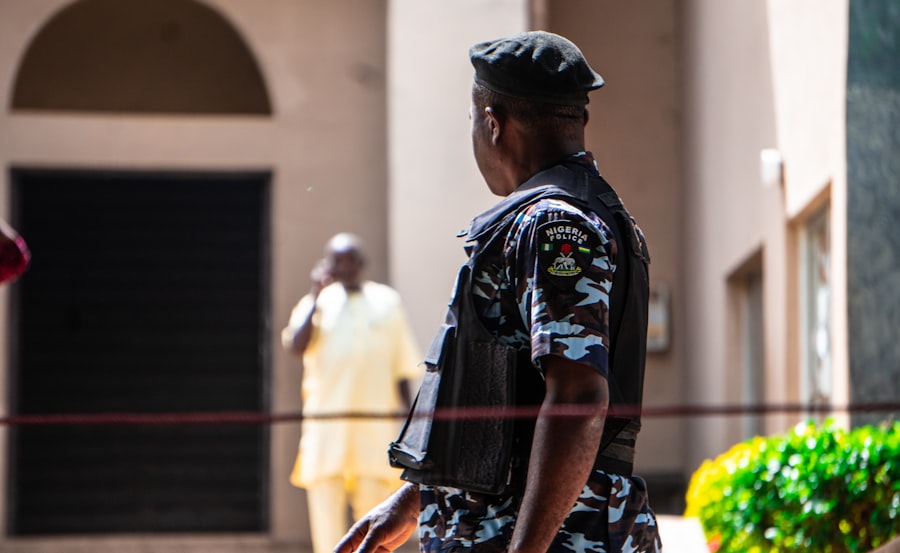
The White House, the physical embodiment of the American presidency, faced an existential threat on 9/11. While it was not directly attacked on that day, the potential for it to become a target was undeniable. The iconic building, a symbol of democracy, needed to be re-envisioned as an impenetrable fortress, capable of withstanding direct assault and functioning as a command center even under duress. The existing security measures, while significant, were augmented and expanded to create a formidable defense.
Physical Barriers and the Layered Defense
You may have noticed the increased presence of security personnel and the visible reinforcement of the White House grounds in the years following 9/11. This was not merely an aesthetic change, but a strategic enhancement of a layered defense system. The outer perimeter was fortified with stronger fencing and more sophisticated surveillance technology, creating an initial deterrent. Beyond this, the grounds themselves were transformed into a series of overlapping security zones, each designed to detect, delay, and neutralize any potential threat before it reached the inner sanctum. Think of it as a series of concentric circles, each offering a progressively higher level of protection, with the President at the very heart of this meticulously guarded space.
Advanced Surveillance and Intelligence Integration
The integration of cutting-edge surveillance technology became paramount. A complex network of cameras, sensors, and listening devices was deployed across and around the White House, providing real-time monitoring of every inch of the perimeter and its surroundings. This data was fed into sophisticated command and control centers, where intelligence analysts worked around the clock, sifting through information, identifying anomalies, and flagging potential threats. The White House became a hub of intelligence, where information from the field was analyzed and disseminated to inform tactical security decisions.
The Presidential Emergency Operations Center (PEOC): A Subterranean Sanctuary
Beneath the White House lies a largely unseen but critically important facility: the Presidential Emergency Operations Center (PEOC). While its existence was known before 9/11, its capabilities and importance were profoundly amplified in the wake of the attacks. The PEOC, a hardened underground bunker, was conceived as a survival space, a command and control center capable of allowing the President to continue governing in the event of a catastrophic attack on the surface. In the post-9/11 era, the PEOC was not just a refuge; it was a vital operational node, equipped with advanced communication systems, secure data links, and the capacity to house essential personnel for extended periods. It represents the ultimate fail-safe, a testament to the understanding that the continuity of government itself is a crucial aspect of national security.
Technological Advancements: The Invisible Shield
The fight against terrorism is a constant arms race, and in the post-9/11 era, technology became an indispensable weapon in the arsenal of presidential security. From advanced surveillance tools to sophisticated cyber defenses, technology was employed to create an invisible shield, anticipating and neutralizing threats before they could materialize. The silent hum of servers and the glow of screens replaced some of the visible security measures, creating a more comprehensive and proactive approach.
Biometrics and the Identification Imperative
The ability to accurately identify individuals and distinguish friend from foe became a critical imperative. Following 9/11, the implementation of biometric technologies – fingerprint scanning, iris recognition, and facial recognition – was accelerated across all security-sensitive areas. This meant that not only those entering the White House, but also individuals working within the presidential protective detail, and even those involved in presidential travel logistics, were subject to rigorous biometric screening. This technological leap aimed to create a digital fingerprint for every person of interest, making it significantly harder for unauthorized individuals to infiltrate secure zones.
Cyber Security: The Digital Fortress
The attacks of 9/11 revealed a vulnerability in the physical realm, but the interconnected nature of modern government also demanded a robust defense in the digital domain. The President and their administration rely heavily on sophisticated computer systems for communication, intelligence analysis, and operational command. The threat of cyber attacks, aimed at disrupting these systems, stealing sensitive information, or even manipulating critical infrastructure, became a significant concern. Consequently, the cyber security protocols surrounding the President and the White House were dramatically enhanced, employing advanced firewalls, intrusion detection systems, and constant vigilance against evolving digital threats. The digital realm became as important a battlefield as any physical one, and protecting it was essential to protecting the President.
Intelligence Fusion and Predictive Analysis
The sheer volume of data generated by modern surveillance and intelligence-gathering operations is immense. The post-9/11 era saw a significant investment in technologies and methodologies for “intelligence fusion” – the process of integrating disparate data streams from various sources to create a more comprehensive threat picture. Predictive analysis, a more advanced form of this, sought to use algorithms and historical data to anticipate potential future threats. This technological shift aimed to move security from a reactive posture to a proactive one, allowing security agencies to identify patterns and potential threats before they escalated into concrete dangers.
In the wake of the 9/11 attacks, the importance of presidential security became a focal point for national discussions, leading to significant changes in protocols and procedures. An insightful article that delves into these developments can be found here, where it explores the evolution of security measures and their implications for future administrations. Understanding the historical context of these changes is crucial for grasping the current state of presidential safety and the ongoing challenges faced by security agencies. For more details, you can read the full article here.
The Secret Service: Adapting to a Transformed Threat
| Metric | Details |
|---|---|
| Date of Incident | September 11, 2001 |
| President at the time | George W. Bush |
| Location of President during attacks | Emma E. Booker Elementary School, Sarasota, Florida |
| Secret Service Agents Assigned | Approximately 30 agents in close protection detail |
| Immediate Security Actions Taken | Evacuation to secure locations, Air Force One departure |
| Duration of Heightened Security | Several months following 9/11 |
| Changes in Presidential Security Post-9/11 | Increased coordination with military, enhanced communication protocols |
| Use of Air Force One | Evacuated President to secure locations multiple times on 9/11 |
| Security Budget Increase | Significant increase in funding for Secret Service and related agencies |
The United States Secret Service has a long and storied history of protecting presidents. However, the events of 9/11 presented them with challenges that tested their adaptability and resilience to the extreme. The agency, the primary guardians of the President, had to undergo a significant evolution, embracing new technologies, refining their tactics, and expanding their operational scope to meet the demands of a post-9/11 world.
Training and Tactics: A Constant Evolution
The training regimens for Secret Service agents were significantly revised. The focus shifted from primarily addressing assassination attempts to preparing for a wider range of threats, including coordinated attacks and the potential use of advanced weaponry. This involved more intense physical conditioning, advanced combat training, and the simulation of complex crisis scenarios. The tactics employed by protective details also evolved, with an increased emphasis on understanding and mitigating emerging threats, such as the use of drones or the potential for insider threats.
Interagency Cooperation: A Seamless Network
On 9/11, the lack of seamless interagency cooperation was a stark revelation. In the aftermath, a monumental effort was made to foster stronger partnerships between the Secret Service, the FBI, the CIA, and other intelligence and law enforcement agencies. This involved establishing joint task forces, shared intelligence platforms, and coordinated training exercises. The goal was to create a unified front, where information flowed freely and resources were deployed efficiently, ensuring that the President was protected by a cohesive and well-coordinated security network. Imagine all the different branches of government as individual threads; after 9/11, these threads were woven together to create a single, strong tapestry of protection.
The Human Element: Vigilance and Dedication
Technology and strategy are vital, but at the heart of presidential security lies the human element. The agents of the Secret Service, often working in the shadows, dedicate their lives to ensuring the President’s safety. The post-9/11 era placed an even greater emphasis on the psychological preparedness, unwavering vigilance, and extraordinary dedication of these individuals. The stress and pressure of operating in a heightened threat environment are immense, and their commitment to their mission, often at great personal sacrifice, remains the ultimate guarantor of presidential security. They are the silent sentinels, the unwavering guardians who stand between the President and the forces that would seek to do them harm.
FAQs
What security measures were in place for the President on 9/11?
On September 11, 2001, the President was protected by the Secret Service, which had established protocols for emergency situations, including immediate evacuation and secure transportation to safe locations.
Where was President George W. Bush during the 9/11 attacks?
President George W. Bush was visiting an elementary school in Sarasota, Florida, when the attacks occurred. He was quickly moved to secure locations by the Secret Service.
How did the Secret Service respond to the 9/11 attacks?
The Secret Service implemented emergency procedures, including evacuating the President from public locations, coordinating with military and intelligence agencies, and ensuring his safety throughout the crisis.
Were there any changes to presidential security protocols after 9/11?
Yes, the 9/11 attacks led to significant enhancements in presidential security, including improved communication systems, increased coordination with other agencies, and more rigorous threat assessment procedures.
Did the President have any direct communication with security agencies during the attacks?
Yes, President Bush maintained communication with the Secret Service, military officials, and national security advisors to stay informed and coordinate responses during the unfolding events.