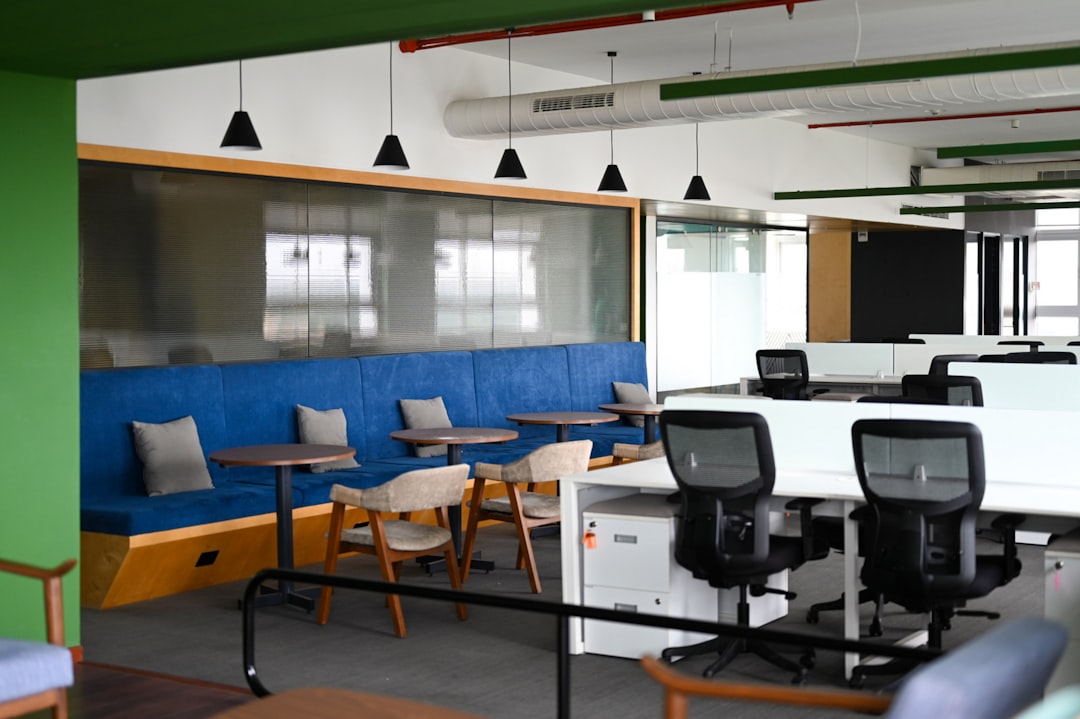
You’ve likely seen them, perhaps even experienced them. The vast expanses where desks are clustered, partitions are minimal, and the hum of activity is ever-present. Open-plan offices have been lauded as the epitome of modern workspaces, promising enhanced communication, increased productivity, and a democratized environment. You’ve probably heard the rhetoric yourself: “This will foster collaboration!” or “It’s a more connected way to work!” You might even feel a nudge towards believing it, especially if your own company has embraced this popular design. However, a growing body of research, and perhaps your own quiet observations, suggest that this idyllic picture might be far from the reality for many.
This article delves into the findings of a significant study that directly challenges the prevailing narrative surrounding open-plan offices. You will discover that beneath the veneer of connectivity, a stark reality of decreased face-to-face collaboration often lurks. We will explore the nuances of this phenomenon, dissecting the mechanisms by which these seemingly collaborative spaces can, ironically, lead to less direct interpersonal interaction. Prepare to re-evaluate your perceptions of the modern workspace and understand the often-unseen drawbacks of its most popular design.
You walk into a new office, or perhaps your existing one has undergone a transformation. Gone are the walls, the cubicle farms. In their place, you find rows of desks, shared work areas, and maybe even a communal coffee station designed to be a hub of spontaneous interaction. This is the modern open-plan office, a design that has swept through corporate landscapes with remarkable speed and conviction. The initial promise is undeniably attractive.
The Ideological Roots of the Open Plan
The concept isn’t entirely new, drawing inspiration from earlier ideas of shared workspaces and the desire to break down hierarchies. You can trace its lineage to various management philosophies that champion transparency and fluid communication.
Breaking Down Silos
The underlying assumption is that physical proximity directly translates to increased communication. You’re told that by removing physical barriers, you’re also removing metaphorical ones. This is intended to foster a sense of unity and purpose.
The “Serendipity” Factor
A commonly cited benefit is the concept of “serendipitous encounters.” You’re supposed to bump into colleagues, spark impromptu discussions, and generate new ideas simply by being in close proximity. This is the romanticized notion of innovation happening organically.
The Unquestioned Adoption
Despite its popularity, the widespread adoption of open-plan offices has often been driven more by trend and perceived cost-efficiency (fewer walls often mean more desks) than by empirical data rigorously supporting its effectiveness. You may have witnessed its implementation without a thorough exploration of the potential consequences.
Cost and Space Efficiency
From an organizational perspective, open-plan layouts are often seen as a way to maximize usable square footage and reduce real estate costs. This can be a powerful motivator for decision-makers.
The “Modern” Image
Embracing an open-plan design can also be about projecting an image of being progressive and forward-thinking. It’s about aligning with what is perceived as the cutting edge of workplace design.
Research has shown that open plan offices can actually decrease face-to-face collaboration among employees, contrary to their intended purpose of fostering communication and teamwork. A related article discusses how the lack of privacy and increased noise levels in these environments can lead to distractions and reduced productivity, ultimately hindering effective collaboration. For more insights on this topic, you can read the article here: Why Open Plan Offices Decrease Face-to-Face Collaboration.
Deciphering the Paradox: The Study’s Core Findings
Now, let’s turn to the specific study that provides the empirical evidence to counter the widespread assumptions. This research doesn’t rely on anecdotes or assumptions; it’s grounded in data collected through observation and analysis of actual workplace behavior. You will find that the conclusions are, for many, counterintuitive.
The Quantitative Evidence of Reduced Interaction
The study employed a rigorous methodology to measure face-to-face interactions in different office environments. You will learn how they went beyond self-reported data to capture actual behavioral patterns.
Measuring Face-to-Face Contact
Through wearable sensors or observational techniques, researchers quantified the frequency and duration of in-person conversations between colleagues. This is where the impact of the open-plan environment becomes quantifiable.
The Open Plan vs. Traditional Layouts
The comparison between open-plan spaces and more traditional layouts (such as cellular offices or cubicles) revealed a significant difference. You should pay close attention to these comparative statistics.
The Unexpected Decline in Meaningful Conversations
The most striking finding is not just a slight dip, but a substantial reduction in face-to-face interactions within open-plan settings. This goes against the very premise that drives their adoption.
Fewer, Shorter Conversations
The data indicated that individuals in open-plan offices tended to have fewer direct, in-person conversations, and those that did occur were often shorter in duration. You might be wondering why this is the case.
A Shift Towards Digital Communication
Perhaps the most significant consequence is the observed shift. When face-to-face interaction becomes less natural or more challenging, you or your colleagues are likely to seek alternative modes of communication.
The Mechanisms Driving the Decline in Collaboration
The study didn’t just present the problem; it also sought to understand why it happens. You will explore the specific environmental and psychological factors within open-plan offices that can stifle genuine face-to-face collaboration.
Noise and Distractions as Barriers
The constant hum of activity, the proximity of conversations, and the general lack of acoustic privacy create an environment that is far from conducive to in-depth discussion. You’ve likely experienced this yourself.
Auditory Overload
The sheer volume of background noise can make it difficult to hold a sustained conversation. You might find yourself raising your voice, which then becomes another source of distraction for others.
Visual Clutter and Interruption
Beyond the auditory, the visual landscape of an open-plan office can also be a deterrent. The constant movement and the visibility of others can make you hesitant to initiate a conversation, fearing interruption or being perceived as interrupting.
The Impact on Perceived Privacy and Focus
The lack of physical and psychological privacy in open-plan offices has a profound effect on how you can engage with your work and your colleagues. You need a sense of personal space to feel comfortable.
The “Fishbowl” Effect
When you feel constantly observed, you may become more self-conscious and less willing to engage in open-ended discussions or brainstorming. This can lead to a more guarded and less authentic interaction.
Reduced Concentration and Deeper Engagement
Sustained concentration is crucial for many tasks, especially those requiring deep thought or complex problem-solving. The constant barrage of stimuli in an open-plan office makes achieving this focus incredibly difficult, and therefore, engaging in deep collaborative work becomes a challenge.
The Rise of Avoidance Behaviors
Ironically, the very proximity designed to foster connection can lead to behaviors aimed at avoiding interaction. You may unconsciously develop strategies to minimize unwanted engagement.
The Use of Headphones
This is perhaps the most visible manifestation. Headphones, often perceived as a sign of deep work, can also serve as a universal signal for “do not disturb,” effectively creating a personal barrier.
Strategic Seating and Movement
You might find yourself choosing seats that offer a degree of perceived privacy or planning your movements to minimize accidental encounters. This is a subtle but powerful way you adapt to the environment.
The Shift to Digital Communication: A Double-Edged Sword

The decline in face-to-face interaction in open-plan offices doesn’t mean communication ceases; it merely changes its form. This shift to digital channels is a crucial aspect of the phenomenon.
Increased Reliance on Electronic Communication
When face-to-face conversations become less appealing or feasible, you and your colleagues will inevitably turn to other tools. This is a natural adaptive response.
Email and Instant Messaging
These become the default for quick questions, updates, and even extended discussions that would have previously happened in person. You likely have an inbox and messaging apps that are constantly active.
Video Conferencing
While seemingly a replacement for in-person meetings, relying heavily on video conferencing can introduce its own set of challenges, particularly in terms of non-verbal cues and the organic flow of conversation.
The Trade-offs of Digital Interaction
While digital communication offers speed and convenience, it comes with its own set of limitations when it comes to fostering genuine collaboration and building strong interpersonal relationships.
Loss of Non-Verbal Cues
A significant portion of communication is non-verbal – body language, tone of voice, facial expressions. You lose much of this richness when engaging solely through text-based platforms or even video.
Reduced Spontaneity and Depth
The serendipitous, free-flowing nature of in-person brainstorming is difficult to replicate digitally. It can become more transactional and less about exploration.
The Illusion of Connection
While digital tools can facilitate task completion, they may not be as effective in building the strong interpersonal bonds and trust that underpin truly effective long-term collaboration. You might feel connected to systems, but not necessarily to your colleagues on a deeper level.
Open plan offices, often praised for their potential to foster collaboration, may actually hinder face-to-face interactions among employees. A related article discusses how the lack of privacy and constant distractions in these environments can lead to decreased communication and collaboration, ultimately impacting productivity. For more insights on this topic, you can read the article here.
Reconsidering the Open Plan: Towards More Effective Collaboration
“`html
| Reasons | Impact |
|---|---|
| Increased noise levels | Decreases concentration and communication |
| Lack of privacy | Reduces personal interactions and discussions |
| Visual distractions | Impairs focus and engagement |
| Difficulty in finding quiet spaces | Reduces opportunities for private conversations |
“`
The study’s findings are not a call for the complete abandonment of open-plan offices, but rather a compelling argument for a more nuanced and evidenced-based approach to workspace design. You should understand that the goal is not to simply revert to old models but to create environments that truly support collaboration.
The Importance of Choice and Control
Giving employees some agency over their work environment can significantly mitigate the negative effects of open-plan designs. You need to feel that you have some control over your surroundings.
Quiet Zones and Dedicated Meeting Spaces
The inclusion of designated quiet areas for focused work and well-equipped meeting rooms for collaborative sessions is crucial. This provides an alternative when the open plan becomes overwhelming.
Flexible Work Arrangements
Allowing for variations in where and how individuals work can also contribute to better outcomes. Perhaps some days in the office, some days remote, or having the option to book private spaces.
Designing for Human Needs, Not Just Trends
The future of successful workplace design lies in understanding the complex needs of human interaction and cognitive function, rather than simply following the latest architectural trends. You need environments that foster both focused work and meaningful connection.
Balancing Proximity with Privacy
The key is to find a balance. You need proximity for certain types of collaboration, but you also need opportunities for privacy and focused work. This means thoughtful zoning and clear designations of space.
The Role of Management and Culture
Ultimately, any office design, open-plan or otherwise, is only as effective as the culture it supports. You cannot simply redesign a space and expect collaboration to magically materialize. Management must actively cultivate a culture that encourages open communication and mutual respect, regardless of the physical layout. The study serves as a reminder that physical space is a tool, but it is the human elements that truly drive collaboration. You should advocate for environments that recognize this fundamental truth.
FAQs
What is an open plan office?
An open plan office is a workspace layout that typically features a large, open area without dividing walls or cubicles, where employees work in close proximity to one another.
How do open plan offices affect face to face collaboration?
Research has shown that open plan offices can actually decrease face to face collaboration among employees. The lack of privacy and constant distractions can make it difficult for employees to have meaningful, focused conversations with their colleagues.
What are the potential drawbacks of open plan offices for collaboration?
Some potential drawbacks of open plan offices for collaboration include increased noise levels, lack of privacy, and difficulty in finding a quiet space for discussions. These factors can hinder effective communication and collaboration among employees.
Are there any benefits to open plan offices for collaboration?
While open plan offices may promote casual interactions and spontaneous conversations, they can also lead to decreased productivity and hinder more focused, in-depth collaboration. It’s important to weigh the potential benefits against the drawbacks when considering this type of office layout.
What are some alternative office layouts that may promote face to face collaboration?
Some alternative office layouts that may promote face to face collaboration include flexible workspaces with designated quiet areas, private meeting rooms, and collaborative workstations. These layouts provide employees with the option to work in a variety of settings that best suit their needs for collaboration and focus.