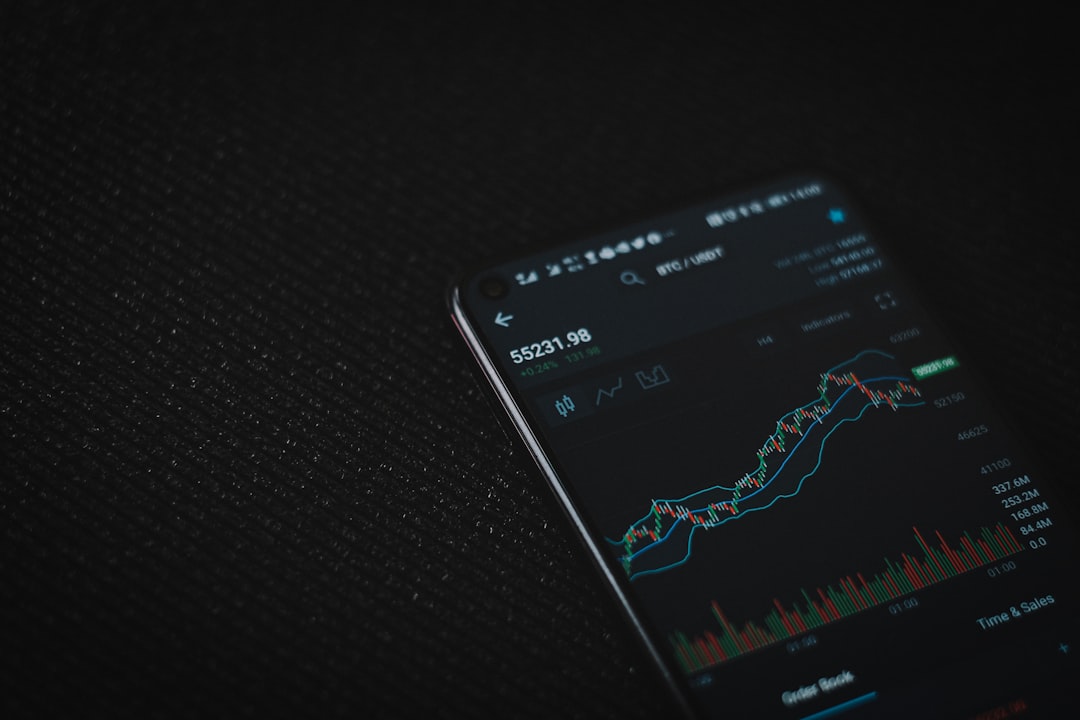
High-frequency trading (HFT) represents a sophisticated and increasingly dominant force within contemporary financial markets. It is characterized by the execution of a large volume of orders at extremely high speeds, often within fractions of a second. This algorithmic trading strategy leverages advanced technology, powerful computing resources, and complex mathematical models to identify and exploit fleeting market inefficiencies. For institutional investors and sophisticated traders, understanding and potentially implementing HFT strategies can be a pathway to significant profit generation, though it is not without its considerable prerequisites and risks.
The Fundamental Mechanics of High-Frequency Trading
At its core, HFT is about seizing tiny price discrepancies that exist for ephemeral moments. Imagine the market as a vast, ever-shifting ocean. Most participants navigate this ocean using conventional vessels, charting familiar routes. HFT, however, employs a fleet of super-charged hydrofoils, capable of weaving through the waves at astonishing speeds, picking up microscopic treasures that larger ships would never even perceive. These treasures are the minuscule profit margins available from executing trades in rapid succession.
Algorithmic Predetermination: The Brains of the Operation
The foundation of any HFT strategy lies in its algorithms. These are not mere sets of instructions; they are intricate, self-learning systems designed to analyze market data in real-time, identify specific trading opportunities, and execute trades automatically. The development and refinement of these algorithms are ongoing processes, demanding a deep understanding of quantitative finance, statistical analysis, and programming. The algorithms scan for patterns, deviations from expected price movements, and correlations between different assets that can be exploited for profit.
Pattern Recognition and Statistical Arbitrage
One of the most common HFT strategies is statistical arbitrage. This involves exploiting the temporary divergence of prices between historically correlated assets. For instance, if two stocks have historically moved in lockstep, but for a brief period, one significantly outperforms the other, an HFT algorithm might detect this anomaly. It would then swiftly buy the underperforming stock and sell the outperforming one, anticipating a convergence back to their historical relationship. The profit margin from each trade might be minuscule, but executed at high frequency, these small gains can accumulate substantially.
Market Making: Providing Liquidity for Profit
Another prominent HFT strategy is market making. Market makers are crucial for the smooth functioning of any exchange. They simultaneously place buy (bid) and sell (sell) orders for a particular asset, effectively providing liquidity to the market. They profit from the “bid-ask spread,” the difference between the highest price a buyer is willing to pay and the lowest price a seller is willing to accept. HFT allows market makers to manage their inventory of assets efficiently across numerous positions and to adjust their bids and offers instantaneously based on real-time market sentiment and volume.
Technological Infrastructure: The Speed of Execution
Speed is the absolute currency of HFT. The premise is that the faster an order can be processed and executed, the more likely it is that the anticipated price discrepancy will still be present. This necessitates a cutting-edge technological infrastructure that goes far beyond what a typical retail trader would employ.
Co-location: Minimizing Latency
To achieve the necessary speed, HFT firms often engage in co-location. This involves physically placing their trading servers in the same data centers as the stock exchanges. By minimizing the physical distance the trading signals must travel, latency – the delay in data transmission – is dramatically reduced. This is akin to having a direct pipeline to the exchange’s heart, bypassing the traffic jams of the wider internet. The difference between a few microseconds and even milliseconds can be the difference between a profitable trade and a losing one.
High-Performance Computing and Networking
Beyond co-location, HFT demands immense processing power and ultra-fast networking capabilities. This includes specialized hardware, such as field-programmable gate arrays (FPGAs), which can be programmed to perform specific computational tasks with unparalleled speed. The network infrastructure must be robust and capable of handling an enormous volume of data with minimal interruption. It is a finely tuned engine, where every component is optimized for maximum velocity.
Profitable Strategies in the HFT Landscape
The success of HFT hinges on the skillful deployment of specific trading strategies that capitalize on the rapid fluctuations of the market. These strategies are not static; they require constant adaptation and innovation to stay ahead of the curve.
Arbitrage Opportunities: Exploiting Price Discrepancies
Arbitrage strategies form a cornerstone of HFT. These strategies aim to profit from price differences of the same or similar assets in different markets or at different points in time. The infinitesimal nature of these discrepancies necessitates high-frequency execution to aggregate small profits.
Cross-Exchange Arbitrage
This strategy involves identifying and exploiting price differences for the same asset listed on different exchanges. For example, if a stock is trading at slightly different prices on the New York Stock Exchange and the London Stock Exchange, an HFT system can simultaneously buy on the cheaper exchange and sell on the more expensive one, profiting from the spread before the prices equalize.
Index Arbitrage
Index arbitrage involves exploiting price differences between a stock market index (like the S&P 500) and the underlying basket of stocks that constitute it. If the futures contract for an index is trading at a price different from the aggregate price of its constituent stocks, HFT algorithms can execute trades to capture this difference.
Volatility Arbitrage
This strategy capitalizes on the difference between the implied volatility of an option and the actual realized volatility of the underlying asset. HFT can be used to quickly enter and exit positions in options and underlying securities to profit from these discrepancies, particularly during periods of heightened market uncertainty.
Event-Driven Trading: Reacting to Market Shocks
HFT also excels at reacting with extreme speed to significant market events. These events can range from economic data releases to corporate news announcements. The ability to process information and execute trades instantaneously in response to such events can unlock substantial profit potential.
News Arbitrage
This involves algorithms that can parse news feeds, identify key pieces of information that are likely to affect asset prices, and trade accordingly before other market participants can fully react. This requires sophisticated natural language processing and real-time sentiment analysis capabilities.
Earnings Announcement Trading
When companies release their earnings reports, their stock prices can experience significant volatility. HFT algorithms can be designed to analyze the earnings data as it becomes available, predict the likely market reaction, and execute trades to profit from the subsequent price movement.
The Role of Data and Analytics in HFT
The lifeblood of HFT is data, and its interpretation is paramount. Without advanced analytical capabilities, even the most sophisticated technological infrastructure would be rudderless.
Predictive Analytics and Machine Learning
Machine learning algorithms are increasingly being employed in HFT to identify complex patterns that are not easily discernible through traditional statistical methods. These algorithms can learn from vast datasets of historical and real-time market data to predict price movements with a higher degree of accuracy. This is like having a super-powered oracle that can forecast the tides with uncanny precision.
Deep Learning for Pattern Identification
Deep learning, a subset of machine learning, is particularly adept at identifying intricate, non-linear relationships within data. This can be applied to discover subtle trading signals from the noise of the market, such as predicting micro-movements in stock prices based on unusual trading volumes or order book imbalances.
Sentiment Analysis for Market Prediction
Analyzing market sentiment – the overall mood or attitude of investors – can provide valuable insights into future price movements. HFT firms utilize algorithms that can process vast amounts of text data from news articles, social media, and analyst reports to gauge sentiment and incorporate this into their trading decisions.
Real-Time Data Processing and Backtesting
The ability to process massive amounts of data in real-time is a non-negotiable requirement for HFT. This data needs to be cleaned, organized, and analyzed at lightning speed. Furthermore, HFT strategies are rigorously backtested on historical data to evaluate their performance and identify potential weaknesses before they are deployed in live trading.
High-Throughput Data Feeds
HFT firms subscribe to high-throughput data feeds that provide them with a constant stream of market information, including tick-by-tick price data, order book levels, and trade execution details. The speed and accuracy of these feeds are critical.
Rigorous Backtesting and Simulation
Before any algorithm is deployed, it undergoes extensive backtesting. This involves simulating the strategy’s performance on historical market data to assess its profitability, risk-adjusted returns, and robustness across different market conditions. This is comparable to a pilot rehearsing a flight path countless times in a simulator before taking to the skies.
Risks and Regulatory Considerations in HFT
While HFT offers significant profit potential, it is also accompanied by inherent risks and is subject to increasing regulatory scrutiny. The high-speed nature of these operations can amplify losses as quickly as they generate profits.
Systemic Risk and Market Volatility
The proliferation of HFT has been linked to increased market volatility. In certain scenarios, the synchronized actions of numerous HFT algorithms can lead to rapid and dramatic price swings, potentially amplifying market downturns. The “flash crash” of May 6, 2010, is a notable example where HFT was implicated in a sudden market collapse.
Algorithmic Errors and “Fat Finger” Events
Despite the sophistication of algorithms, errors can occur, leading to unintended consequences. A flaw in an algorithm, or a human error in inputting parameters (a “fat finger” trade), can result in the execution of a massive volume of erroneous trades, causing significant market disruption and financial losses.
Amplified Losses due to Leverage
Many HFT strategies employ leverage, which magnifies both potential profits and potential losses. In fast-moving markets, where positions can turn against traders in seconds, leverage can quickly lead to substantial financial depletion.
Regulatory Oversight and Compliance
Regulators worldwide are actively monitoring and seeking to regulate HFT to ensure market stability and fairness. This has led to the implementation of various rules and measures designed to mitigate the risks associated with HFT.
Circuit Breakers and Kill Switches
Exchanges have implemented circuit breakers and kill switches that can temporarily halt trading in a security or the entire market if prices move too rapidly. These are designed to provide a pause for reflection and prevent runaway algorithmic trading.
Transaction Taxes and Order Type Restrictions
Some jurisdictions have considered or implemented transaction taxes to curb excessive trading activity. Additionally, regulators have introduced restrictions on certain order types frequently used by HFT firms to manage potential market manipulation or excessive volatility.
The Future of High-Frequency Trading
The landscape of HFT is in a perpetual state of evolution. Advancements in technology, evolving market structures, and the ongoing pursuit of competitive advantage will continue to shape its future.
Artificial Intelligence and Quantum Computing
The integration of more advanced artificial intelligence, beyond current machine learning techniques, holds the promise of even more sophisticated predictive capabilities. Furthermore, the advent of quantum computing, while still in its nascent stages, could theoretically revolutionize computational power, opening up entirely new possibilities for HFT algorithms and their ability to analyze complex market dynamics.
Evolving Market Structures and New Asset Classes
As financial markets continue to evolve, with the emergence of new asset classes (like cryptocurrencies and decentralized finance instruments) and changes in market microstructure (e.g., fragmentation and new trading venues), HFT strategies will need to adapt. The ability to identify opportunities and execute trades efficiently across these evolving landscapes will be crucial for continued profitability.
The Arms Race for Speed and Intelligence
The HFT industry is often described as an “arms race.” Firms continuously invest in faster technology and more intelligent algorithms to gain even the slightest edge. This relentless pursuit of marginal advantages will likely continue, driving innovation and pushing the boundaries of what is technologically possible in financial trading. The pursuit of speed and intelligence is a ceaseless endeavor, seeking to outpace the market and fellow competitors.
FAQs
What is high-frequency trading (HFT)?
High-frequency trading (HFT) is a type of algorithmic trading that uses powerful computers and sophisticated algorithms to execute a large number of orders at extremely high speeds, often in fractions of a second.
How does high-frequency trading work?
HFT works by using advanced algorithms to analyze multiple markets and execute orders based on market conditions. These algorithms can identify trading opportunities and place orders faster than human traders, capitalizing on small price discrepancies.
What types of assets are commonly traded using high-frequency trading?
High-frequency trading is commonly used in trading stocks, options, futures, currencies, and other financial instruments that have high liquidity and volume, allowing for rapid buying and selling.
What are the benefits of high-frequency trading?
Benefits of HFT include increased market liquidity, tighter bid-ask spreads, and more efficient price discovery. It can also reduce transaction costs for investors due to the high volume of trades.
What are some criticisms or risks associated with high-frequency trading?
Criticisms of HFT include concerns about market fairness, as it may give an advantage to firms with faster technology. Risks include increased market volatility and the potential for flash crashes caused by rapid, automated trading activity.