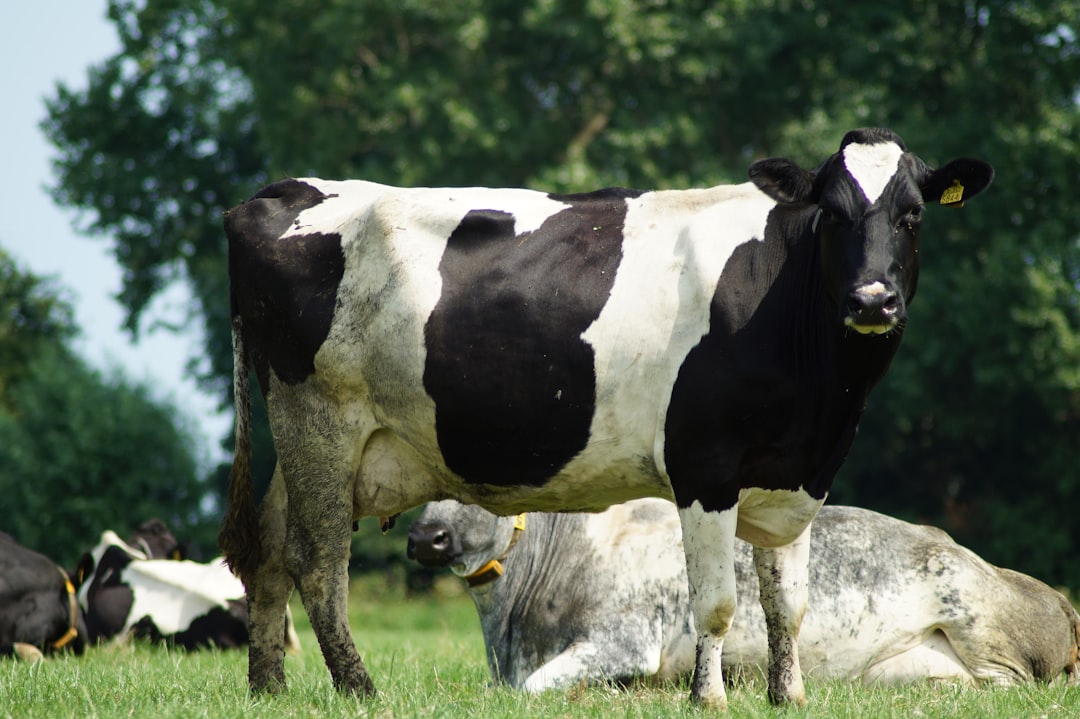
Methane, a potent greenhouse gas, is a significant component of dairy cow enteric emissions. These emissions are a natural byproduct of ruminant digestion, a complex process involving microbial fermentation in the rumen. Understanding and mitigating these emissions is a growing area of focus for the agricultural sector due to their contribution to atmospheric methane concentrations and the associated climate impacts. This article explores the sources of methane in dairy cows, current management strategies, and emerging research aimed at reducing these emissions.
The digestive system of a dairy cow is a marvel of biological engineering, designed to break down fibrous plant material. This process, however, is not without its environmental implications. Methane is produced primarily as a result of methanogenesis, a metabolic process carried out by archaea, single-celled microorganisms that reside in the rumen. These microbes break down carbohydrates from the forage and feedstuffs consumed by the cow, releasing methane as a byproduct.
The Rumen Ecosystem and Methanogenesis
The rumen acts as a fermentation vat, housing a diverse population of microorganisms, including bacteria, protozoa, and fungi, in addition to the methanogens. These microbes collectively digest the feed, making nutrients available to the cow. The anaerobic (oxygen-free) environment of the rumen is crucial for the activity of methanogens. They utilize hydrogen and carbon dioxide, which are also byproducts of carbohydrate fermentation, to produce methane (CH4). This conversion is a vital process for the cow’s digestive efficiency, as it removes excess hydrogen that would otherwise accumulate and inhibit microbial fermentation.
Factors Influencing Methane Yield
The amount of methane produced by an individual dairy cow, often referred to as methane yield, is influenced by a variety of factors related to both the animal and its diet.
Diet Composition and Digestibility
The most significant driver of methane production is diet. Diets high in rapidly fermentable carbohydrates, such as those found in some grains and ensiled forages, tend to lead to higher methane yields. This is because these feeds are more readily broken down by rumen microbes, producing more hydrogen and carbon dioxide for methanogens to utilize. Conversely, diets higher in structural carbohydrates (fiber) and those that are less digestible may result in lower methane yields per unit of feed consumed, though overall feed intake might decrease. The digestibility of the feed is critical; more digestible feed leads to more fermentation and potentially more methane.
Forage-to-Concentrate Ratio
The balance between forage (like grass and hay) and concentrate (grains, protein meals) in the diet plays a crucial role. Increasing the proportion of concentrates in the diet generally increases methane production, as concentrates are typically more digestible and lead to a faster fermentation rate. While concentrates are essential for meeting the high energy demands of lactating dairy cows, their inclusion needs to be carefully managed to balance nutritional requirements with methane mitigation.
Feed Additives and Their Impact
Certain feed additives have been explored for their potential to modulate rumen fermentation and reduce methane production. Ionophores, for example, can alter the microbial population in the rumen, favoring the production of volatile fatty acids that are less conducive to methane synthesis. Other compounds, such as essential oils and plant extracts, are being investigated for their antimicrobial properties against methanogens or their ability to divert hydrogen away from methane production and towards other metabolic pathways. The efficacy and consistency of these additives can vary, and their long-term impacts on animal health and productivity require ongoing research.
Animal Factors: Age, Breed, and Productivity
While diet is the primary determinant, certain animal-specific characteristics can also influence methane emissions. Younger animals tend to produce less methane per kilogram of body weight compared to mature cows, simply because their overall feed intake is lower. While breed differences in methane production exist, they are generally less pronounced than dietary influences. Highly productive animals, such as high-yielding dairy cows, consume larger quantities of feed to meet their energy demands, which in turn can lead to higher absolute methane emissions. However, when normalized per unit of milk produced, their emissions might be lower due to increased efficiency.
Methane emissions from dairy cows have become a significant concern in discussions about climate change and agricultural practices. A related article that delves deeper into this issue can be found at this link, where various strategies for reducing methane production in the dairy industry are explored. By implementing innovative feeding practices and improving herd management, the dairy sector can play a crucial role in mitigating its environmental impact.
Measurement and Quantification of Methane Emissions
Accurate measurement of methane emissions from dairy cows is essential for understanding their contribution to greenhouse gas inventories and for evaluating the effectiveness of mitigation strategies. Several methodologies exist, each with its own advantages and limitations. The choice of method often depends on the scale of the study, available resources, and the desired level of precision.
Direct Measurement Techniques
Direct measurement involves capturing and analyzing the methane exhaled by the animal. This is typically done using specialized equipment.
Respiration Chambers
Respiration chambers are highly controlled environments where individual animals are housed for a period, allowing for the precise measurement of gas exchange, including methane production. Air is circulated through the chamber, and the concentrations of methane in the incoming and outgoing air are analyzed. These chambers provide detailed data but are expensive to build and operate, limiting their use to research settings. They are considered the gold standard for accurate methane measurement at the individual animal level.
Head Boxes and Hoods
Less expensive than full chambers, head boxes or hoods are placed over the animal’s head, collecting expelled breath for analysis. While they capture a significant portion of exhaled gases, it can be challenging to account for all methane produced, especially if leaks occur. These methods are more practical for field studies or larger groups of animals when precise individual measurements are not paramount.
Sulfur Hexafluoride (SF6) Tracer Method
This technique involves releasing a known, constant amount of an inert gas, sulfur hexafluoride (SF6), from a sealed device worn by the animal. SF6 is not naturally produced or metabolized by the animal. Simultaneously, ambient air samples are collected around the animal, and the ratio of SF6 to methane in these samples is used to calculate the amount of methane the animal has emitted. This method is less intrusive and can be used in field conditions, making it suitable for larger herd studies, but it relies on assumptions about atmospheric mixing and gas dispersion.
Indirect Estimation and Modeling
When direct measurement is not feasible, indirect methods and mathematical models are used to estimate methane emissions based on diet, animal characteristics, and production data.
Empirical Models
Various empirical models have been developed based on large datasets. These models relate factors like feed intake, diet composition (e.g., neutral detergent fiber content, organic matter digestibility), and animal parameters (e.g., body weight, milk yield) to methane production. The Intergovernmental Panel on Climate Change (IPCC) provides methodologies for estimating enteric methane emissions from livestock, which are widely adopted globally. These models provide a standardized approach for national inventories but may lack the precision for evaluating specific farm-level interventions.
Mechanistic Models
More complex mechanistic models attempt to simulate the rumen ecosystem and its fermentation processes. These models aim to predict methane production by simulating microbial activity, volatile fatty acid production, and hydrogen flow within the rumen. While offering a deeper understanding of the underlying biological processes, these models require detailed input data and can be computationally intensive. They are valuable for research and for exploring the potential impacts of novel mitigation strategies.
Strategies for Reducing Methane Emissions
Mitigating methane emissions from dairy cows is a multifaceted challenge that involves optimizing diet, improving animal health and productivity, and exploring novel feed additives and breeding programs. No single solution is universally applicable; a combination of approaches tailored to specific farm conditions is often most effective.
Dietary Modifications
Adjusting the composition and feeding strategies for dairy cows can significantly influence methane production. The goal is to alter rumen fermentation to favor pathways that produce less methane.
Improving Feed Digestibility
Increasing the digestibility of the feed, particularly forages, can lead to a reduction in methane emissions. This can be achieved through improved forage crop management, ensiling techniques that preserve nutritional quality, and processing methods that make fiber more accessible to the cow’s digestive enzymes. Higher digestibility means less substrate is available for fermentation and, therefore, less methane is produced per unit of feed consumed.
Altering the Forage-to-Concentrate Ratio
As mentioned earlier, increasing the proportion of forage in the diet relative to concentrates can, in some cases, lower methane yield per unit of feed. However, this needs to be carefully balanced with the cow’s energy requirements. Highly digestible forages can be key to this strategy, providing energy without excessive methane production. The optimal ratio will depend on the specific forage quality and the production stage of the cow.
Including Specific Feed Components
Certain feed ingredients can have a direct impact on methane production. For instance, including fats and oils in the diet can reduce methane yield. This is because fats are less fermentable in the rumen and can exert a direct inhibitory effect on methanogens. However, excessive fat inclusion can negatively impact rumen function and milk fat production, so careful consideration is necessary. Other feed components, such as certain pulses or grains, might have different fermentation characteristics compared to typical concentrates, offering potential for methane reduction.
Feed Additives and Supplements
A range of feed additives is being developed and tested for their ability to reduce methane emissions. These additives often work by targeting the methanogens or by altering the rumen environment.
Inhibitors of Methanogenesis
Several compounds are known to inhibit the activity of methanogens. Nitrates, for example, can act as electron acceptors, diverting hydrogen away from methanogenesis, but their use can also lead to undesirable side effects like methemoglobinemia. Certain synthetic compounds, such as halogenated hydrocarbons, have shown potent methane-inhibiting effects in research but raise concerns about safety and regulatory approval.
Essential Oils and Plant Extracts
Extracts from plants like garlic, oregano, and cinnamon, as well as specific essential oils, have demonstrated antimicrobial properties that can selectively reduce methanogen populations in the rumen. Some of these compounds may also alter volatile fatty acid production. The effectiveness of these natural products can vary depending on the specific plant, extraction method, and the cow’s diet.
Seaweeds and Algal Products
Certain types of red seaweed, particularly Asparagopsis taxiformis, contain compounds like bromoform that have shown remarkable efficacy in reducing methane emissions. Bromoform interferes with the enzyme that methanogens use to produce methane. While initial research is highly promising, large-scale production of these seaweeds, the long-term effects on animal health, and potential environmental concerns related to harvesting or cultivation require further investigation.
Other Promising Additives
Research continues into other additives such as 3-nitrooxypropanol (3-NOP). 3-NOP is a chemical inhibitor that targets the enzyme responsible for methane production in methanogens. It has shown significant and consistent reductions in methane emissions in various studies and is one of the few feed additives to gain regulatory approval in some regions for methane reduction.
Breeding and Genetic Selection
In the long term, breeding programs can play a significant role in reducing methane emissions. By identifying and selecting animals with inherently lower methane production, the overall emissions intensity of a dairy herd can be reduced over generations.
Identifying Genetic Markers for Methane Production
Researchers are working to identify genetic markers associated with methane yield. This involves analyzing the genomes of individual animals and correlating specific genetic variations with their measured methane emissions. Understanding these genetic linkages allows for more targeted breeding strategies.
Phenotypic Selection for Low Methane Emitters
Even without detailed genetic markers, farmers can practice phenotypic selection. This involves routinely measuring methane emissions from their herd (if feasible) or using proxy indicators that are correlated with lower methane production and selecting breeding stock from those animals. Over time, this can lead to a gradual decline in herd-level emissions.
Manure Management
While enteric fermentation is the primary source of methane from dairy cows, methane can also be produced from manure. Anaerobic conditions in manure storage can lead to methanogenesis.
Anaerobic Digesters
Installing anaerobic digesters on dairy farms is a well-established method for managing manure and capturing biogas, which contains methane. The biogas can then be used to generate electricity or heat, offsetting energy costs and reducing the net release of methane into the atmosphere. This strategy addresses methane from both manure and provides an energy benefit.
Composting and Aerobic Treatments
Composting manure involves controlled aerobic decomposition, which minimizes methane production. Other aerobic treatment methods for manure can also reduce methane emissions compared to traditional anaerobic storage. The effectiveness and feasibility of these methods depend on farm size, climate, and available infrastructure.
Challenges and Opportunities in Methane Mitigation

Implementing strategies to reduce methane emissions from dairy cows is not without its challenges. However, these challenges also present opportunities for innovation, economic development, and improved environmental sustainability in the dairy sector.
Economic Viability and Farmer Adoption
One of the foremost challenges is ensuring that methane mitigation strategies are economically viable for dairy farmers. Many of the potentially effective feed additives can be costly, and their impact on milk production and cow health needs to be thoroughly understood to justify the investment. Farmer education and access to reliable information about the effectiveness and return on investment of different mitigation practices are crucial for widespread adoption. Demonstrating tangible benefits, whether through cost savings, improved efficiency, or access to new markets that value low-emission products, can drive uptake.
Research and Development Gaps
Despite significant progress, there remain gaps in our understanding of the complex interactions within the rumen and how various interventions affect long-term animal health and productivity. More research is needed to:
- Optimize additive efficacy: Many feed additives show promising results in research settings, but their consistency and effectiveness under varying farm conditions and diets need further investigation. Understanding the mechanisms of action and potential synergistic effects with other management practices is also important.
- Develop robust and affordable measurement tools: While precise measurement methods exist, they are often expensive and labor-intensive, limiting their use in routine farm management. Developing more accessible and cost-effective tools for monitoring methane emissions at the farm level would be a significant advancement.
- Understand long-term impacts: The long-term effects of new feed additives or genetic selection on animal health, fertility, and longevity need thorough evaluation to ensure no unintended negative consequences arise.
Policy and Regulatory Frameworks
Effective policy and regulatory frameworks can play a critical role in incentivizing methane reduction. This could include:
- Carbon pricing or incentives: Implementing carbon pricing mechanisms that account for methane emissions or offering direct financial incentives for farmers who implement proven mitigation strategies can provide economic motivation.
- Support for research and development: Government funding for research into new technologies and practices for methane reduction is essential.
- Clear guidelines and standards: Establishing clear guidelines and standards for methane reporting and mitigation can provide farmers with a roadmap for action.
Consumer Demand and Market Opportunities
Growing consumer awareness of climate change is leading to increased demand for sustainably produced food products. Dairy farmers who can demonstrate reduced methane emissions may find new market opportunities and potentially command premium prices for their milk. This creates a market-driven incentive for mitigation efforts. The development of credible labeling schemes or certifications for low-emission dairy products could further accelerate this trend.
Opportunities for Innovation
The focus on methane mitigation is spurring innovation across various sectors:
- Feed additive development: The demand for effective and safe methane inhibitors is driving innovation in the development of new feed additives, including those derived from natural sources and novel synthetic compounds.
- Precision agriculture technologies: Advancements in sensors, data analytics, and farm management software can enable farmers to better monitor feed intake, animal health, and environmental impact, facilitating more informed decision-making regarding methane reduction.
- Breeding technologies: Genetic selection tools and genomic analysis are becoming more sophisticated, offering new possibilities for identifying and breeding animals with lower methane footprints.
Recent studies have highlighted the significant impact of methane emissions from dairy cows on climate change, prompting researchers to explore innovative solutions for reducing these emissions. For a deeper understanding of this issue, you can read a related article that discusses various strategies and technologies being developed to mitigate methane production in the dairy industry. This article provides valuable insights into the challenges and potential solutions that can help create a more sustainable future for dairy farming. To learn more, visit this informative article.
Future Directions and Conclusion
| Year | Methane Emissions (million metric tons) |
|---|---|
| 2010 | 115.7 |
| 2015 | 118.7 |
| 2020 | 121.3 |
The management of methane emissions from dairy cows is an evolving field, driven by the imperative to address climate change alongside the need to maintain a productive and sustainable dairy industry. While enteric fermentation remains the primary source, a combination of dietary adjustments, novel feed additives, genetic selection, and improved manure management offers a path towards significant emission reductions.
Integrating Mitigation Strategies
The most effective approach to methane mitigation is likely to involve an integrated strategy that combines multiple interventions. For example, optimizing forage quality (dietary modification) can enhance digestibility, while the simultaneous use of a proven feed additive could further reduce the remaining methane potential. Similarly, improved manure management through anaerobic digestion not only captures methane but also provides a renewable energy source, creating a synergistic benefit.
The Role of Technology and Data
Technological advancements will play an increasingly important role. The development of real-time methane monitoring systems for individual animals or small groups could allow for more dynamic management decisions. Advanced data analytics can help farmers optimize feed formulations, identify the most productive animals, and track the effectiveness of mitigation measures. The integration of on-farm data with national or regional emission inventories will also be crucial for tracking progress and informing policy.
Long-Term Outlook and Sustainability
The long-term sustainability of the dairy sector is intrinsically linked to its environmental performance. Proactive management of methane emissions is not just an environmental necessity but also a strategic imperative for ensuring the industry’s social license to operate and its continued economic viability. Continued investment in research, development, and extension services will be critical to support farmers in adopting these beneficial practices. Education and knowledge transfer are paramount to ensure that scientific advancements translate into practical on-farm solutions.
In conclusion, managing methane emissions from dairy cows is a complex but achievable objective. By embracing a science-based, integrated approach that leverages technological innovation, informed dietary choices, effective additives, and strategic breeding, the dairy industry can significantly reduce its environmental footprint while continuing to provide essential food products to a growing global population. The journey towards a lower-methane dairy sector is ongoing, requiring continued collaboration between researchers, industry stakeholders, policymakers, and farmers.
FAQs
What are methane emissions from dairy cows?
Methane emissions from dairy cows refer to the release of methane gas during the digestive process of cows, particularly during the fermentation of feed in their stomachs.
Why are methane emissions from dairy cows a concern?
Methane is a potent greenhouse gas that contributes to global warming and climate change. Dairy cows are one of the largest agricultural sources of methane emissions.
How do methane emissions from dairy cows occur?
Methane emissions from dairy cows occur primarily through enteric fermentation, which is the microbial fermentation of feed in the cow’s digestive system, particularly in the rumen.
What are some ways to reduce methane emissions from dairy cows?
There are several strategies to reduce methane emissions from dairy cows, including improving feed quality, dietary additives, and genetic selection for lower methane-producing cows.
What are the potential impacts of reducing methane emissions from dairy cows?
Reducing methane emissions from dairy cows can help mitigate climate change, improve air quality, and enhance the sustainability of dairy farming. It can also lead to more efficient production and potentially lower costs for farmers.