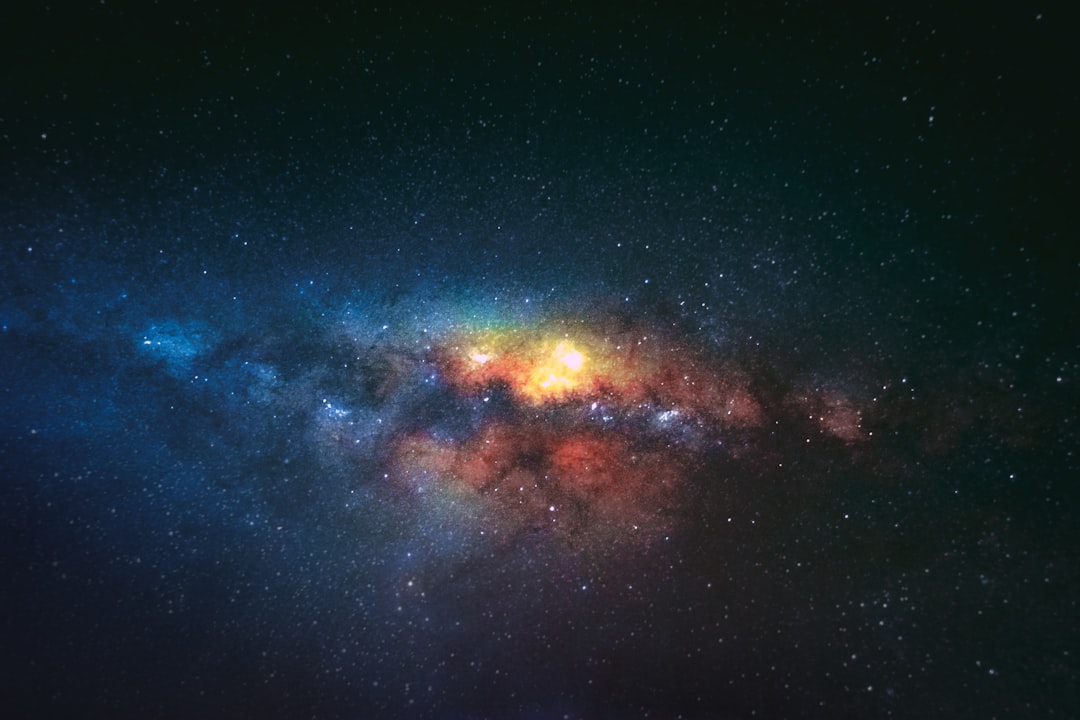
The boundless expanse of the cosmos continues to captivate humanity, with NASA at the forefront of unraveling its many mysteries. Through an array of sophisticated missions and cutting-edge technologies, the agency systematically expands the frontiers of human knowledge, offering unprecedented insights into the origins, evolution, and potential future of the universe. This exploration is not merely an academic pursuit; it fundamentally reshapes our understanding of our place within a grander cosmic tapestry.
The search for planets beyond our solar system, known as exoplanets, has revolutionized astronomical understanding. NASA’s dedicated observatories have played a pivotal role in identifying and characterizing these alien worlds, transforming the abstract concept of other planetary systems into a quantifiable reality.
The Kepler Space Telescope’s Legacy
The Kepler Space Telescope, though no longer operational, remains a cornerstone of exoplanet research. Its mission, which concluded in 2018, was to survey a portion of our galaxy to detect Earth-size planets orbiting sun-like stars.
Detection Method: Transit Photometry
Kepler primarily utilized the transit photometry method. This technique involves observing the slight dimming of a star’s light as an exoplanet passes in front of it from our vantage point. Imagine a tiny shadow momentarily crossing a distant light source; that fleeting dimming signals the presence of an orbiting body.
Statistical Insights and Habitable Zone Candidates
Kepler’s data yielded an astonishing statistical result: there are likely more planets than stars in our galaxy. This implies that planetary systems, far from being a rarity, are a ubiquitous feature of the cosmos. Furthermore, a significant number of these detected planets fall within their stars’ “habitable zones” – regions where conditions could potentially allow for liquid water on a planet’s surface, a key ingredient for life as we know it. These candidates, however, require further spectroscopic analysis to confirm their atmospheric composition and true habitability.
The Transiting Exoplanet Survey Satellite (TESS)
Building upon Kepler’s pioneering work, the Transiting Exoplanet Survey Satellite (TESS) operates as a wide-field survey mission, monitoring stars across almost the entire sky for transiting exoplanets.
All-Sky Survey and Bright Star Focus
Unlike Kepler’s focused field of view, TESS conducts an all-sky survey, observing sectors of the sky for approximately 27 days each. Its primary target stars are brighter and closer than those observed by Kepler, which facilitates more detailed follow-up observations using ground-based telescopes and the James Webb Space Telescope. This strategic focus ensures that the exoplanets it discovers are excellent candidates for further characterization.
Super-Earths and Mini-Neptunes: New Categories of Worlds
TESS has been particularly successful in identifying “super-Earths” – planets larger than Earth but smaller than Neptune – and “mini-Neptunes” – planets smaller than Neptune but with substantial atmospheres. These categories of planets are not present in our solar system, offering invaluable insights into the diverse mechanisms of planet formation and evolution.
NASA continues to push the boundaries of space exploration, and a fascinating article discussing the latest advancements in their Mars missions can be found at this link. The article delves into the innovative technologies being developed to enhance our understanding of the Martian environment and the potential for future human colonization. As NASA prepares for its next steps on the Red Planet, insights from such articles help illuminate the challenges and triumphs of space exploration.
Probing Cosmic Origins: Early Universe Studies
Understanding the universe’s genesis and its earliest moments is fundamental to comprehending its current structure and evolution. NASA’s instruments are pushing the boundaries of observable space and time, offering glimpses into the primordial universe.
The James Webb Space Telescope (JWST)
The James Webb Space Telescope (JWST) represents a monumental leap in observational astronomy. Operating primarily in the infrared spectrum, it is designed to observe extremely distant and faint objects, including the first galaxies formed after the Big Bang.
Infrared Capabilities and Redshifted Light
The universe is expanding, causing light from distant objects to “stretch” towards longer, redder wavelengths – a phenomenon known as redshift. JWST’s infrared capabilities are crucial for detecting this highly redshifted light, allowing it to penetrate through cosmic dust and observe objects that are effectively invisible to optical telescopes. Think of looking at a distant light source through a fog; infrared light can often cut through that fog more effectively.
First Galaxies and Cosmic Reionization
JWST has already provided unprecedented views of the earliest galaxies, revealing a surprising number of bright, massive galaxies existing much sooner than theoretical models predicted. This data is critical for understanding the epoch of reionization, a period when the neutral hydrogen gas that pervaded the early universe was ionized by the radiation from the first stars and galaxies, making the universe transparent to light.
Cosmic Microwave Background (CMB) Research
While not a new mission, ongoing analysis of data from missions like the Wilkinson Microwave Anisotropy Probe (WMAP) and the Planck satellite (a European Space Agency mission with significant NASA collaboration) continues to refine our understanding of the Cosmic Microwave Background (CMB).
Relic Radiation from the Big Bang
The CMB is the afterglow of the Big Bang, a faint radiation permeating the entire universe. It represents the oldest light we can observe, dating back to approximately 380,000 years after the Big Bang, when the universe cooled sufficiently for atoms to form and light to travel freely. This CMB acts as a cosmic baby picture of the universe.
Anisotropies and Cosmological Parameters
Minute temperature fluctuations, or anisotropies, in the CMB provide crucial information about the early universe, including its age, composition, and geometry. By meticulously analyzing these subtle variations, scientists can constrain fundamental cosmological parameters with remarkable precision, charting the universe’s large-scale structure evolution.
Investigating Our Solar System: Planetary Science Missions
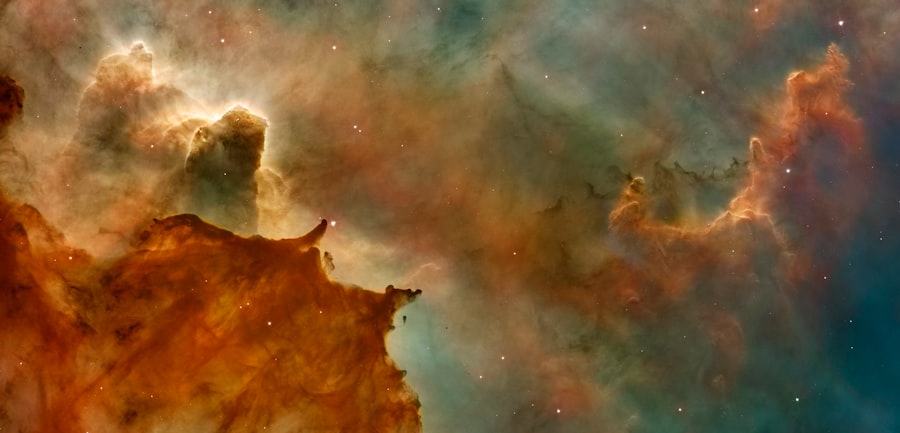
Beyond the distant cosmos, NASA maintains a robust portfolio of missions exploring our own solar system, offering insights into planetary formation, geological processes, and the potential for life within our celestial backyard.
Mars Exploration Program
The Mars Exploration Program is a cornerstone of NASA’s planetary science, with a continuous presence of orbiters, landers, and rovers studying the Red Planet.
Perseverance Rover: Seeking Biosignatures and Sample Collection
The Perseverance rover is the centerpiece of current Mars exploration. It is meticulously exploring Jezero Crater, an ancient lakebed, for signs of past microbial life (biosignatures). Crucially, Perseverance is also collecting and caching rock and regolith samples, which are intended to be returned to Earth by future missions for detailed laboratory analysis – a truly ambitious endeavor that promises to unlock secrets of Martian history.
Jupiter Icy Moons Explorer (JUICE) and Europa Clipper
The focus on icy moons, particularly those of Jupiter, has intensified due to the potential for subsurface oceans, which could harbor conditions for life. While JUICE is an ESA-led mission, NASA provides significant contributions. The Europa Clipper mission, however, is purely NASA-led.
Evidence for Subsurface Oceans
Missions like Galileo provided tantalizing evidence for vast saltwater oceans beneath the icy shells of Jupiter’s moons, particularly Europa, Ganymede, and Callisto. These oceans represent potential habitable environments, protected from harsh surface radiation. Europa Clipper will conduct detailed surveys of Europa, using radar to probe the subsurface and characterize its ocean.
Understanding Our Home Star: Heliophysics Research
The Sun, our life-giving star, is a dynamic and powerful entity that profoundly influences Earth’s environment and technological systems. NASA’s heliophysics missions are dedicated to understanding solar activity and its effects on space weather.
Solar Orbiter and Parker Solar Probe
These two missions are providing unprecedented close-up observations of the Sun, offering new perspectives on its outer atmosphere and the solar wind.
Mapping the Sun’s Poles and Solar Wind Origins
The Solar Orbiter, a collaboration with ESA, captures images of the Sun’s unobserved polar regions, which are critical for understanding the solar dynamo – the mechanism that generates the Sun’s magnetic field. Meanwhile, the Parker Solar Probe is literally “touching the Sun,” flying closer to its surface than any spacecraft before it, to directly sample the solar wind and understand its acceleration mechanisms. This daring mission is like dipping a thermometer into the Sun’s fiery atmosphere.
NASA continues to push the boundaries of space exploration, and recent advancements have sparked widespread interest in the scientific community. A fascinating article discusses how NASA’s innovative technologies are paving the way for future missions to Mars and beyond. For more insights on this topic, you can read the full article here. These developments not only enhance our understanding of the universe but also inspire the next generation of scientists and engineers.
Future Endeavors and Their Implications
| Metric | Value | Unit |
|---|---|---|
| Founded | 1958 | Year |
| Number of Employees | 17,000 | People |
| Annual Budget (2023) | 25.4 | Billion USD |
| Number of Missions Launched | 200+ | Missions |
| International Space Station (ISS) Partners | 15 | Countries |
| Number of Astronauts Trained | 350+ | Astronauts |
| First Human Moon Landing | 1969 | Year |
| Current Major Programs | Artemis, Mars Exploration, James Webb Space Telescope | Programs |
NASA’s relentless pursuit of knowledge continues with plans for ambitious future missions, each designed to push the boundaries of discovery even further.
Crewed Missions to the Moon and Mars (Artemis Program)
The Artemis program aims to return humans to the Moon, establishing a sustainable presence there as a stepping stone for future missions to Mars.
Lunar Gateway and Sustained Human Presence
The Lunar Gateway, a small space station orbiting the Moon, will serve as a science laboratory, a waystation for lunar expeditions, and a testbed for technologies needed for deep-space travel. This sustained human presence will enable unprecedented geological and astrobiological research on the Moon and foster the development of critical skills for Mars voyages.
Next-Generation Observatories and Beyond
Beyond crewed exploration, the development of future space telescopes and observatories promises to further revolutionize our understanding of the universe.
Large Ultraviolet Optical Infrared Surveyor (LUVOIR) and Habitable Exoplanet Observatory (HabEx)
Concepts like LUVOIR and HabEx represent the next generation of space telescopes, designed with significantly larger mirrors and enhanced capabilities compared to JWST. Their primary goals include the direct imaging and atmospheric characterization of Earth-like exoplanets, potentially revealing the first unambiguous signs of life beyond Earth. These telescopes are humanity’s eyes peering into the deepest, most complex corners of the universe, each new discovery a beacon illuminating our cosmic context.
FAQs
What is NASA?
NASA, the National Aeronautics and Space Administration, is a United States government agency responsible for the nation’s civilian space program and for aeronautics and aerospace research.
When was NASA established?
NASA was established on July 29, 1958, by the National Aeronautics and Space Act, and it began operations on October 1, 1958.
What are some of NASA’s major achievements?
NASA’s major achievements include the Apollo moon landings, the Space Shuttle program, the Mars rover missions, the Hubble Space Telescope, and the International Space Station partnership.
What is NASA’s current focus in space exploration?
NASA’s current focus includes the Artemis program to return humans to the Moon, Mars exploration missions, developing new space technologies, and studying Earth and space science.
How does NASA collaborate with other countries?
NASA collaborates internationally through partnerships on projects like the International Space Station, joint scientific research, and sharing data and technology with space agencies around the world.