The Industrial Revolution, a period of profound technological and social transformation, emerged in Great Britain during the late 18th century and subsequently spread across the globe. Its genesis was not a singular event but rather a confluence of interconnected factors that acted as a catalyst for unprecedented change. Understanding these underlying causes is crucial for comprehending the societal shifts that have defined the modern era. This analysis aims to dissect these factors, presenting a methodical examination of the forces that propelled humanity from an agrarian existence into the age of industry.
Before Britain could embark on an industrial journey, its agricultural foundations needed to be irrevocably altered. The traditional, inefficient farming practices prevalent for centuries had to give way to more productive methods. This transition, often termed the Agricultural Revolution, provided the necessary prerequisites for industrial growth.
Enclosure Movement and Land Ownership
One of the most significant changes was the Enclosure Movement. This process involved the consolidation of scattered landholdings into larger, individually owned and fenced farms, often at the expense of communal land and tenant farmers. Parliament passed numerous Enclosure Acts, which legally sanctioned this practice. While controversial, the enclosure transformed land from a communal resource into private property, incentivizing investment and innovation.
- Impact on Productivity: Larger, enclosed fields allowed for more efficient crop rotation and the adoption of new farming techniques, leading to increased yields.
- Displacement of Labor: Conversely, many small farmers and landless laborers were displaced, creating a surplus labor force that would later be drawn to burgeoning industrial centers.
Technological Innovations in Agriculture
The Agricultural Revolution also witnessed a surge in innovative farming techniques and tools. These advancements significantly boosted food production, ensuring a steady supply for a growing population.
- Crop Rotation (Four-Field System): Developed by Charles Townshend, this system involved rotating wheat, turnips, barley, and clover, replenishing soil nutrients and allowing for year-round cultivation. This eliminated the need for fallow fields, dramatically increasing arable land.
- Seed Drill: Jethro Tull’s invention of the seed drill in 1701 revolutionized planting by allowing seeds to be sown in neat rows at specific depths, leading to higher germination rates and reduced waste compared to broadcasting.
- Improved Livestock Breeding: Robert Bakewell pioneered selective breeding techniques, resulting in larger, more productive livestock, further enhancing the food supply.
The cumulative effect of these agricultural transformations was a substantial increase in food production, which in turn supported a larger, healthier population. This surplus population, no longer tied to the land, became available for work in other sectors, acting as a crucial demographic reservoir for nascent industries.
The Industrial Revolution was a pivotal period that transformed economies and societies across the globe, driven by various factors such as technological advancements, agricultural improvements, and changes in labor dynamics. For a deeper understanding of the underlying causes of this monumental shift, you can explore a related article that delves into these aspects in detail. Check it out here: Causes of the Industrial Revolution.
Technological Advancements and Innovation: The Engine of Change
The Industrial Revolution is often synonymous with groundbreaking inventions that revolutionized production methods. These innovations were not isolated sparks of genius but rather a continuous chain reaction, each invention often addressing limitations of its predecessor and opening avenues for further progress.
Innovations in Textile Production
The textile industry, particularly cotton manufacturing, served as the primary incubator for many early industrial innovations. Demand for cotton goods was soaring, and existing methods were unable to keep pace.
- Flying Shuttle (John Kay, 1733): This invention dramatically sped up the weaving process, creating a bottleneck in yarn production.
- Spinning Jenny (James Hargreaves, 1764): Designed to produce multiple spools of thread simultaneously, the spinning jenny alleviated the yarn shortage to some extent.
- Water Frame (Richard Arkwright, 1769): A water-powered spinning machine that produced stronger, more consistent yarn, leading to the establishment of the first factories.
- Crompton’s Mule (Samuel Crompton, 1779): Combined the best features of the spinning jenny and water frame, producing fine, strong thread in large quantities.
- Power Loom (Edmund Cartwright, 1785): Mechanized weaving, further accelerating textile production and completing the cycle of innovation in this sector.
These inventions, operating like gears in a complex machine, progressively amplified textile output, driving down costs and making cotton goods accessible to a broader market.
The Steam Engine: The Quintessential Industrial Technology
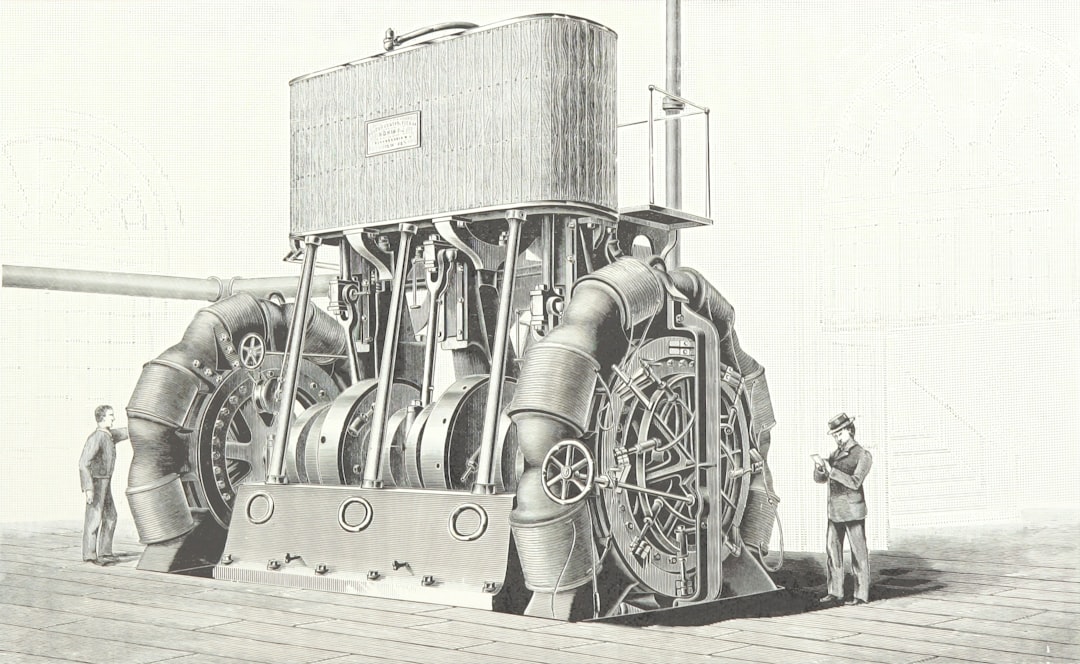
Perhaps no invention symbolizes the Industrial Revolution more profoundly than the steam engine. Its development and refinement provided a versatile and powerful energy source that transcended the limitations of water and animal power.
- Newcomen Engine (Thomas Newcomen, 1712): Initially used for pumping water out of mines, this early steam engine was inefficient but demonstrated the potential of steam power.
- Watt’s Steam Engine (James Watt, 1769): Watt’s improvements, including the separate condenser, dramatically increased the efficiency and power of the steam engine, making it suitable for a wider range of industrial applications, including powering factories, locomotives, and ships.
The steam engine was, in essence, the muscle of the Industrial Revolution, providing a reliable and scalable source of power that could drive machinery in any location, not just alongside rivers. It liberated industry from geographical constraints and enabled the establishment of factories in urban centers.
Capital and Investment: Fueling Industrial Growth
Industrialization is an inherently capital-intensive process, requiring significant financial resources for machinery, factories, raw materials, and infrastructure. Great Britain, fortunate in its economic and political landscape, possessed a robust capital base that could be leveraged for industrial development.
Access to Capital and Credit
A sophisticated financial system, including a growing network of banks and a thriving stock market, provided the mechanisms for pooling and allocating capital. Investors, both domestic and foreign, were willing to risk capital in promising industrial ventures.
- Accumulated Wealth from Trade: Britain’s extensive global trading empire had generated substantial wealth, much of which could be reinvested into domestic industries.
- Low Interest Rates: Relatively low interest rates made borrowing more attractive for entrepreneurs seeking to expand their operations.
- Joint-Stock Companies: These companies allowed for the pooling of capital from numerous investors, spreading risk and enabling larger-scale projects.
This financial infrastructure acted as the circulatory system of the burgeoning industrial economy, channeling funds to where they were most needed and fostering an environment conducive to entrepreneurial risk-taking.
Entrepreneurial Spirit and Risk-Taking
The drive for innovation and the willingness to invest in new technologies were fueled by a strong entrepreneurial spirit. Individuals and groups were prepared to take significant financial risks in the pursuit of profit and technological advancement.
- Culture of Innovation: Britain’s scientific societies and intellectual climate encouraged inquiry and practical application of knowledge.
- Social Mobility: The promise of wealth and elevated social status through industrial success motivated many to innovate and invest.
Without individuals willing to convert abstract scientific principles into tangible industrial applications, and without investors willing to back their ventures, the technological potential would have remained largely untapped.
Abundance of Natural Resources: The Raw Materials of Progress
Great Britain was uniquely endowed with critical natural resources that were indispensable for industrialization. These resources provided the fundamental building blocks for the new industrial economy.
Coal and Iron Ore
The presence of vast quantities of coal and iron ore, often in close proximity, was a decisive advantage. Coal served as the primary fuel source, powering steam engines and providing heat for industrial processes. Iron ore was the fundamental raw material for machinery, tools, and infrastructure.
- Energy Source: Coal replaced wood as the dominant fuel, offering a more concentrated and efficient energy source for steam engines and industrial furnaces.
- Building Blocks for Industry: Iron was crucial for constructing machines, railways, bridges, and factory buildings, forming the skeletal structure of the industrial age.
The symbiosis between coal and iron, where coal was used to smelt iron, and iron was used to build coal-mining equipment, created a powerful feedback loop that accelerated industrial output.
Navigable Waterways and Ports
Britain’s geography, characterized by numerous navigable rivers and a long coastline with excellent natural harbors, facilitated the transportation of raw materials and finished goods.
- Inland Transportation: Rivers and subsequently canals provided an efficient and cost-effective means of transporting heavy, bulky goods like coal and iron.
- International Trade: Well-developed ports enabled easy access to colonial resources and global markets, connecting British industry to a worldwide economic network.
These natural transportation arteries were paramount in minimizing the costs and time associated with moving goods, acting as the arteries and veins of the industrial economy.
The Industrial Revolution was a transformative period that reshaped economies and societies, driven by various factors such as technological advancements and changes in agricultural practices. For a deeper understanding of these influences, you can explore a related article that delves into the causes of the Industrial Revolution. This resource provides valuable insights into how innovations and social changes converged to create a new industrial landscape.
Political Stability and Economic Policies: A Favorable Environment
| Cause | Description | Impact on Industrial Revolution | Example |
|---|---|---|---|
| Agricultural Revolution | Introduction of new farming techniques and crop rotation | Increased food production, leading to population growth and labor availability | Enclosure Acts in England |
| Access to Natural Resources | Abundance of coal and iron ore | Provided essential materials and energy for machinery and factories | Coal mines in Northern England |
| Technological Innovations | Invention of machines like the spinning jenny and steam engine | Increased production speed and efficiency | James Watt’s steam engine |
| Capital and Investment | Availability of financial resources for industrial ventures | Enabled the building of factories and purchase of machinery | Banking system in Britain |
| Political Stability | Stable government and legal system | Encouraged entrepreneurship and protected property rights | British constitutional monarchy |
| Transportation Infrastructure | Development of canals, roads, and later railways | Facilitated movement of goods and raw materials | Bridgewater Canal |
| Colonial Markets | Access to overseas markets and raw materials | Expanded demand and supply for industrial goods | British colonies in India and America |
Beyond the purely economic and technological factors, the political and societal context in Britain played a crucial role in fostering industrialization. A relatively stable government, coupled with supportive economic policies, created an environment where industrial growth could flourish.
Stable Government and Rule of Law
Unlike many other European nations at the time, Britain experienced a period of relative political stability following the Glorious Revolution of 1688. This stability provided a predictable legal and economic framework for businesses.
- Protection of Property Rights: A robust legal system protected private property rights, offering entrepreneurs security for their investments and innovations. This encouraged invention and commercialization, as individuals could reap the rewards of their efforts without fear of arbitrary confiscation.
- Limited Government Interference: While not entirely laissez-faire, the British government generally adopted policies that favored trade and industry, with less direct intervention compared to some continental monarchies.
This environment, characterized by a commitment to the rule of law and the sanctity of contracts, acted as a bedrock upon which industrial enterprises could build and expand with confidence.
Favorable Economic Policies and Free Trade
British economic policies, particularly its emphasis on trade and relatively free markets, stimulated demand and provided access to resources.
- Mercantile System and Colonies: The British Empire provided a vast source of raw materials (such as cotton from India and the Americas) and captive markets for finished goods. While often exploitative, this system demonstrably fueled industrial growth.
- Absence of Internal Tariffs: Unlike some continental states with numerous internal customs barriers, Britain had a unified national market, allowing for the free flow of goods and services within the country.
These policies created a fertile ground for industrial growth, both by providing raw materials and by guaranteeing markets for the continually increasing output of British factories.
In essence, the Industrial Revolution was not a singular phenomenon, but rather a complex tapestry woven from threads of agricultural transformation, technological ingenuity, financial acumen, natural abundance, and a stable political environment. Each factor, like instruments in an orchestra, played its part in creating the symphony of industrial change. To truly grasp the magnitude of this revolution, one must appreciate the intricate interplay of these diverse elements, which together forged a new world order driven by innovation and industry.
FAQs
What were the main causes of the Industrial Revolution?
The main causes of the Industrial Revolution included technological innovations, availability of natural resources like coal and iron, agricultural improvements, population growth, and economic factors such as capital investment and expanding markets.
How did technological advancements contribute to the Industrial Revolution?
Technological advancements such as the invention of the steam engine, spinning jenny, and power loom increased production efficiency and enabled mass manufacturing, which were key drivers of the Industrial Revolution.
Why was the availability of natural resources important for the Industrial Revolution?
Natural resources like coal and iron were essential for powering machines and building infrastructure. Their abundance in countries like Britain provided the raw materials needed to fuel industrial growth.
What role did agriculture play in causing the Industrial Revolution?
Agricultural improvements, including crop rotation and selective breeding, increased food production and freed up labor. This allowed more people to work in factories and supported a growing urban population.
How did economic factors influence the start of the Industrial Revolution?
Economic factors such as capital accumulation, banking systems, and expanding domestic and international markets provided the financial resources and demand necessary for industrial investment and growth.