
You’ve likely experienced the peculiar phenomenon of time dilation. Perhaps a thrilling adventure flew by in what felt like mere minutes, or a tedious wait stretched out into an eternity. But what happens when you strip away all external cues for the passage of time? This is where the pioneering work of Michel Siffre, a French speleologist and scientist, becomes particularly compelling. His series of isolation experiments, most notably his 48-hour day concept, aimed to unravel the intricate mechanisms by which your internal clock operates, free from the tyranny of clocks and calendars.
Siffre’s fascination with time wasn’t born in a sterile laboratory. It was forged in the deep, silent darkness of the Earth’s subterranean realms. His early expeditions into caves, driven by a thirst for exploration and a keen scientific curiosity, exposed him to environments devoid of natural light and external temporal markers. These experiences planted the seed for his groundbreaking investigations into human circadian rhythms.
Subterranean Serenity and the Absence of Temporal Cues
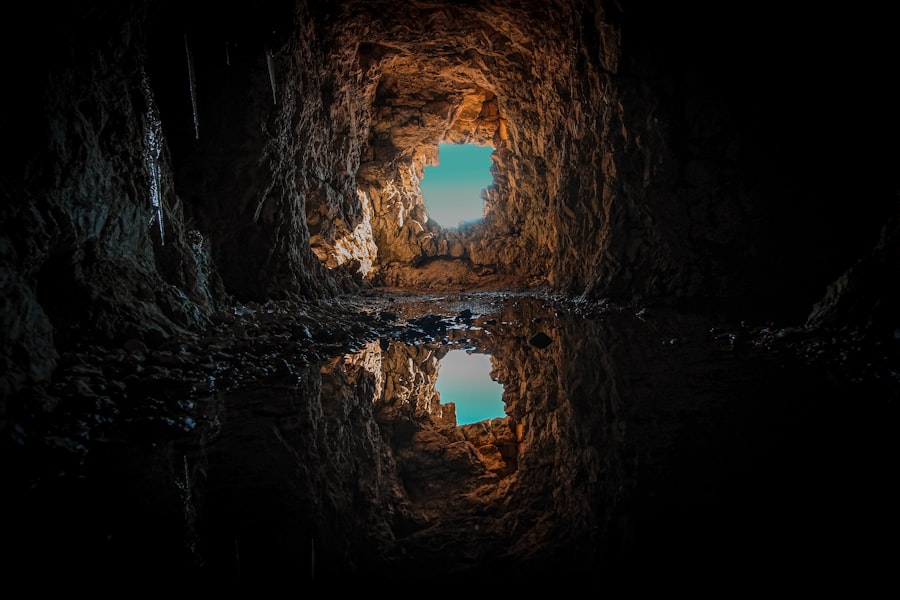
Imagine yourself descending into a cave. The daylight recedes, replaced by a pervasive, unchanging darkness. The sounds of the surface world – traffic, birdsong, distant conversations – fade into an eerie silence. In such an environment, your usual anchors for time – the sun rising and setting, the changing patterns of daylight – are absent. You are left with an internal sense of time, a subjective experience that, Siffre suspected, would begin to diverge from the objective, clock-measured reality.
The Initial Spark: Observing Internal Rhythms
During these early spelunking adventures, Siffre began to notice anomalies. He found himself waking and sleeping at intervals that didn’t align with a standard 24-hour cycle. His bodily functions, too, seemed to follow their own rhythm, a rhythm dictated by something internal rather than external stimuli. This observation was crucial; it hinted at a biological clock, an endogenous pacemaker, that continued to tick even when external cues were removed. This early, informal research laid the groundwork for more structured investigations.
The Michel Siffre cave experiment, which demonstrated the human body’s ability to adapt to a 48-hour day, has intrigued researchers for decades. For those interested in exploring more about the implications of this experiment on our understanding of circadian rhythms and the nature of time perception, a related article can be found at this link. This article delves into the fascinating findings of Siffre’s work and its relevance to modern science.
Designing the Temporal Cage: The Isolation Epoch
Siffre’s research evolved from observational notes during expeditions to meticulously designed experiments. His most famous undertaking involved self-imposed isolation in a subterranean environment, a controlled space where he could directly observe the effects of temporal deprivation on his perception and bodily functions.
The Scarasson Cave: A Natural Laboratory
The Scarasson Cave, located in the French Pyrenees, became Siffre’s chosen laboratory. It offered a constant temperature, high humidity, and, critically, complete darkness. To enter this environment was to symbolically sever ties with the external world and its temporal structures. You, as the subject, would be completely reliant on your own internal mechanisms.
The Protocol: Disconnecting from the Outside World
The experiment was designed with extreme rigor. Siffre would descend into the cave, equipped with basic necessities and scientific instruments. He would communicate with the outside world via a telephone, but this communication was strictly controlled. He would report his perceived time, his sleep-wake cycles, and his bodily functions. Crucially, a team on the surface would be coordinating his activities, feeding him meals at pre-determined intervals by the team’s clock, and ensuring his well-being, all without Siffre knowing the actual time. The objective was to isolate the variable of external temporal information.
The 48-Hour Day: A Radical Experiment in Subjective Time
The core of Siffre’s most celebrated experiment was the attempt to impose a 48-hour cycle onto his own perception of time. This wasn’t about living for two days at a time, but about experiencing a day that, in his subjective estimation, lasted twice as long as a standard 24-hour period. This required a profound re-calibration of his internal clock.
The “Long Day”: Redefining Existence
Imagine waking up and believing you have an entire 48-hour period ahead of you before your next sleep. Every activity, every sensation, would be filtered through this altered temporal lens. Your perception of duration would be fundamentally different. This was the essence of Siffre’s “long day.” He would attempt to mark out activities, meals, and rest periods within this self-imposed, extended cycle.
The Role of the Surface Team: The Invisible Hand
The team stationed on the surface played a vital, albeit invisible, role. They would determine when Siffre should eat, when he should communicate, and when he should signal the end of his “day.” Crucially, they would never reveal the actual time. Siffre was left in a state of temporal limbo, his internal clock his sole guide, augmented by the carefully orchestrated interventions of the external team. This required immense trust and a precise understanding of the experimental parameters.
The Evolving Rhythm: Observations and Deviations from the Norm
As the experiment progressed, Siffre’s internal clock began to exhibit fascinating and, at times, perplexing behaviors. His observations provided invaluable insights into the plasticity and resilience of the human circadian system.
The Drift of the Internal Clock: A Wandering Rhythm
Initially, Siffre’s internal clock attempted to adhere to the imposed 48-hour cycle. However, as time wore on, it became evident that his biological rhythms were not as malleable as he might have hoped. The 24-hour cycle, deeply ingrained through millennia of evolution, proved to be a powerful baseline. You would observe your own internal clock attempting to synchronize with its familiar rhythm, even in the absence of external cues.
Sleep-Wake Cycles: A Muddled Mess
One of the most significant observations was the disruption of Siffre’s sleep-wake cycles. While he attempted to conform to the 48-hour period, his body often asserted its inherent 24-hour needs. He experienced periods of wakefulness that stretched beyond what felt natural within the longer cycle, followed by bouts of sleep that were shorter or longer than intended for the “long day.” This highlights the inherent robustness of the 24-hour biological rhythm.
Subjective Time Estimates: The Elusive 48-Hour Mark
Siffre’s subjective estimations of time also deviated from the intended 48-hour cycle. While he would strive to mark out activities within this longer day, his perception of duration would often revert to a more familiar 24-hour scale, or even exhibit a more fragmented pattern. This demonstrated that while conscious effort could influence his temporal experience, the underlying biological rhythms exerted a powerful influence.
Michel Siffre’s cave experiment, which explored the effects of isolation on the human circadian rhythm by simulating a 48-hour day, has fascinated researchers and the public alike. His findings have significant implications for our understanding of how the body perceives time in the absence of natural light. For those interested in learning more about the intricacies of human perception and the science behind timekeeping, you can read a related article that delves into similar experiments and their outcomes. Check it out here to explore further.
The Lasting Legacy: Implications for Sleep, Health, and Technology
| Subject | Michel Siffre |
|---|---|
| Experiment | Cave Experiment |
| Duration | 48 hours |
| Findings | Disrupted sleep patterns, altered perception of time |
| Impact | Contributed to understanding of circadian rhythms and human adaptation to extreme environments |
Michel Siffre’s experiments, including the iconic 48-hour day, were more than just an intellectual curiosity. They have had profound implications for our understanding of human physiology, impacting fields ranging from chronobiology to space exploration.
Understanding Circadian Disruptions: Jet Lag and Shift Work
The insights gained from Siffre’s isolation vividly illustrate the physiological and psychological effects of disrupted circadian rhythms. You can readily connect his experiences to the challenges faced by individuals suffering from jet lag or those working irregular shift patterns. The disorientation, fatigue, and potential health consequences observed in these situations find a parallel in Siffre’s meticulously documented descent into temporal isolation.
The Future of Space Exploration: Temporal Adaptation
For astronauts embarking on long-duration space missions, maintaining healthy circadian rhythms is paramount. The absence of Earth’s natural day-night cycle in space presents significant challenges. Siffre’s experiments provided a foundational understanding of how the human body copes with temporal deprivation, informing the design of living environments and sleep protocols for space travelers. This research helps us prepare for extended periods away from familiar temporal cues.
Technological Applications: Beyond the Clock
The study of Siffre’s experiments extends beyond purely biological contexts. Understanding how the brain processes and perceives time, even when deprived of external markers, has potential applications in areas such as virtual reality, artificial intelligence, and even therapeutic interventions for conditions involving temporal distortions. Your perception of time is a complex cognitive function, and Siffre’s work offers a unique window into its inner workings.
FAQs
What was the Michel Siffre cave experiment?
The Michel Siffre cave experiment was a study conducted by French scientist Michel Siffre in 1962, in which he spent two months living in a cave to study the effects of isolation and a 48-hour day on the human body.
Why did Michel Siffre conduct the cave experiment?
Michel Siffre conducted the cave experiment to study the effects of isolation and a 48-hour day on the human body, as well as to understand the body’s natural circadian rhythms and how they are affected by environmental factors.
What were the findings of the cave experiment?
The cave experiment revealed that without external cues such as daylight, the human body’s natural circadian rhythms would adjust to a 48-hour day, with participants experiencing longer periods of wakefulness and sleep.
How did the cave experiment contribute to our understanding of human biology?
The cave experiment contributed to our understanding of human biology by demonstrating the body’s ability to adapt to different environmental conditions and the importance of external cues, such as daylight, in regulating our natural circadian rhythms.
What are the implications of the cave experiment’s findings?
The implications of the cave experiment’s findings include the potential for further research into how our environment and daily routines impact our biological rhythms, as well as the importance of maintaining regular exposure to natural light for our overall health and well-being.