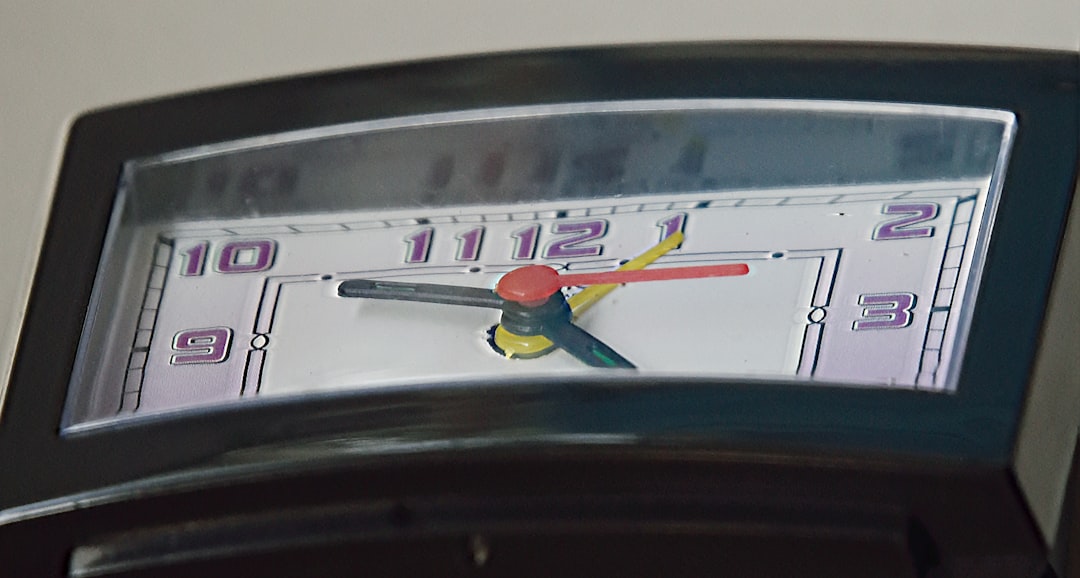
You stand in awe, perhaps, before a relic of a bygone era: the 1894 Workman’s Time Recorder. It’s not just a piece of antiquated machinery; it’s a tangible testament to a pivotal moment in the history of labor, commerce, and the relentless pursuit of efficiency. To truly understand this device, you must journey back to a time when the industrial revolution was not a finished chapter, but a roiling, transformative force reshaping societies and economies. The 1894 Workman’s Time Recorder, in its robust, utilitarian form, signifies a shift from subjective estimations of labor to a quantified, verifiable system. It speaks to the burgeoning need for accountability, for the precise measurement of every minute spent on the factory floor, in the workshop, or even in the burgeoning offices of the late 19th century.
The Industrial Crucible: A World Demanding Order
The latter half of the 19th century was characterized by an unprecedented surge in industrial production. Factories, once small workshops, transformed into sprawling complexes powered by steam, then electricity. The sheer scale of these operations introduced complexities that earlier, more intimate forms of work did not possess. You witness the proliferation of factory towns, the migration of populations from rural areas to urban centers in search of employment, and the emergence of a distinct working class. This rapid expansion, while a driver of progress, also presented significant challenges for employers.
The Rise of the Factory System
Imagine the cacophony of the early factories: the relentless clatter of machinery, the shouts of foremen, the sheer physical exertion required of every worker. The assembly line, in its nascent stages, was becoming a recognized method of organizing production, breaking down complex tasks into simpler, repetitive steps. This specialization of labor, while increasing output, also blurred the lines of individual contribution and the direct correlation between effort and reward. Employers needed a way to ensure that the time paid for was the time actually worked.
The Problem of Absenteeism and Lateness
Prior to the widespread adoption of time recording devices, managing attendance was a largely manual and often imprecise affair. Foremen might keep tally sheets, relying on their memory and observation. This system was susceptible to error, to favoritism, and to deliberate manipulation. Absenteeism, even for short periods, could disrupt production flow, leading to significant financial losses. Lateness was equally problematic, causing delays in the start of shifts and impacting the synchronized rhythm of the factory. The 1894 Workman’s Time Recorder offered a solution to this lingering problem, an objective arbiter of presence.
The history of the 1894 workman’s time recorder is a fascinating exploration of how technology has shaped labor practices over the years. For those interested in delving deeper into this topic, a related article can be found at this link, which provides additional insights into the evolution of timekeeping devices and their impact on workforce management.
Birth of a Concept: Early Forays into Time Tracking
The idea of systematically recording employee attendance did not originate with the 1894 model. The seeds were sown much earlier, driven by the same practical concerns that fueled industrial growth. You can trace a lineage of innovation, each iteration building upon the limitations of its predecessors.
Precursors to the Recorder
Before fully automated or semi-automated devices, simpler methods were employed. Often, workers would be issued a punched card or a metal tag with an individual number. Upon arrival, they would place their tag into a designated box or a primitive clock mechanism. However, these methods still relied on manual recording or were prone to issues like lost tags or disputes over their placement. The desire was for a system that was more integrated and less reliant on individual worker participation in the recording process itself.
The Quest for Automation
The late 19th century was an era of invention, particularly in the mechanization of everyday tasks. The principles of clockwork, already well-established, were being adapted to a variety of new applications. Inventors and entrepreneurs were keenly observing the inefficiencies in existing systems and seeking mechanical solutions. This innovative spirit, coupled with the growing economic imperatives of industrial manufacturing, created fertile ground for the development of a robust time recording device. The 1894 Workman’s Time Recorder was not an isolated flash of inspiration, but rather the culmination of such ongoing experimentation and refinement.
The 1894 Workman’s Time Recorder: Engineering Efficiency
Now, let us turn our attention to the specific 1894 Workman’s Time Recorder itself. While designs may have varied slightly between manufacturers, its core functionality and underlying principles remain consistent. You are encountering a machine designed for a singular purpose: to accurately and irrefutably document the arrival and departure of each worker.
Mechanical Ingenuity at Play
The typical 1894 Workman’s Time Recorder was a sturdy, often cast-iron contraption. Its heart was a clock mechanism, a reliable timekeeping engine that drove the recording process. This clock was linked to a printing or stamping mechanism. Workers would typically insert a pre-numbered card into a slot on the machine. At specific intervals, or when activated by the worker pressing a lever or button, the machine would imprint the time of day onto the card. This imprint served as an official record, a timestamp for an individual’s presence.
The Clockwork Core
The accuracy of the clockwork was paramount. These were not the digital marvels of today, but intricate arrangements of gears, springs, and escapements. They required regular winding and occasional maintenance to ensure their reliability. The quality of the clockwork directly determined the trustworthiness of the entire system.
The Imprinting Mechanism
The method of imprinting varied. Some machines used a metal die that struck the card, embedding the time. Others employed an inked ribbon, similar to early typewriters, to transfer the time onto the card. The stark, indelible nature of the imprint was a key feature, designed to prevent alteration or falsification.
The Worker’s Role: A Simple Interaction
For the worker, interacting with the 1894 Time Recorder was a straightforward, if sometimes monotonous, task. Upon arriving at the factory, they would locate their designated time recorder (if multiple units were present) or the single central unit. They would then take their individual time card, which bore their unique employee number, and insert it into the machine. A swift action – a pull of a lever, a press of a button – would then secure the timestamp. The same process would be repeated at the end of the shift.
Navigating the Card System
Each worker was issued a supply of these cards, designed to cover a specific period, perhaps a week or a fortnight. The cards were typically printed with spaces for each day, and multiple entry and exit times could be recorded. This meant that a worker’s card could become quite full over a busy work period.
The Ritual of Punching In and Out
This daily ritual, while simple, became an ingrained part of the workday for millions of industrial laborers. It represented a direct, quantifiable interface between their time and their wages. The absence of this ritual, or a malfunctioning machine, could lead to considerable anxiety and a potential loss of pay.
The Impact on Industrial Management and Labor Relations
The introduction and widespread adoption of the 1894 Workman’s Time Recorder had a profound impact on the dynamics of industrial management and, consequently, on labor relations. It provided employers with a powerful tool for control and efficiency, but also became a focal point of contention for workers.
Enhanced Efficiency and Productivity
The primary benefit for employers was the quantifiable data the time recorder provided. They could now accurately track the hours worked by each employee, identify patterns of lateness and absenteeism, and compare the productivity of different shifts or departments. This data allowed for more informed scheduling, more effective allocation of labor, and a clearer understanding of labor costs. The precise measurement of time translated directly into a more predictable and often increased level of output.
Data-Driven Decision Making
Managers could move beyond anecdotal evidence and rely on concrete figures. This facilitated better resource planning, allowing them to anticipate labor needs for upcoming production cycles. It also enabled them to identify bottlenecks in the production process that might be linked to staffing levels or shift coordination.
Reducing Time Theft and Waste
The term “time theft” – essentially being paid for time not worked – became a concept that the 1894 recorder directly addressed. By providing indisputable proof of arrival and departure, it significantly curtailed opportunities for employees to claim wages for periods of inactivity or unauthorized absence. This, in turn, was seen as a direct contribution to profitability.
The Evolving Landscape of Labor Relations
For the worker, the time recorder was a double-edged sword. While it could ensure they were paid for every hour they worked, it also subjected them to constant surveillance and a rigid adherence to schedules. The inherent power imbalance between employer and employee was amplified by this objective measurement of their labor.
A Symbol of Control
The time recorder became a potent symbol of the employer’s dominion over the worker’s time. It represented a shift from a more personal, perhaps even paternalistic, relationship to a purely transactional one, where labor was measured and compensated with stark accuracy. This objective measurement could feel dehumanizing to some, reducing individuals to mere data points on a card.
The Groundwork for Grievances
Disputes over time records were inevitable. A malfunctioning machine, a worker’s urgent need to leave for a personal emergency, or even a simple clerical error could lead to grievances. The employer, armed with the time card, often held the upper hand in these disputes, as the machine’s imprint was generally considered irrefutable evidence. This could breed resentment and a sense of injustice among the workforce.
The history of the workman’s time recorder, which was first introduced in 1894, marks a significant advancement in labor management and productivity tracking. This innovative device not only streamlined the process of recording employee hours but also laid the groundwork for modern timekeeping systems. For those interested in exploring more about the evolution of workplace technology, you can read a related article that delves into various inventions that have transformed how we work. This fascinating piece can be found here.
Legacy and Evolution: The Enduring Influence
The 1894 Workman’s Time Recorder, though now largely relegated to muse-ums and private collections, represents a crucial stepping stone in the evolution of workplace technology. Its principles continue to resonate in the sophisticated time and attendance systems we use today.
The Path to Modern Systems
From the electromechanical to the digital, the core purpose of accurately tracking working time has remained. The 1894 recorder paved the way for more advanced systems, including punch clocks that automatically advanced the time, later evolving into electronic systems using magnetic stripe cards, proximity cards, and ultimately, biometric scanners. Each innovation built upon the foundational need for verifiable time data.
From Mechanical to Digital
The transition from purely mechanical devices to electronic and then digital systems represented a leap in accuracy, data processing capabilities, and integration with other business systems like payroll. The clunky, physical card was replaced by more discreet and efficient methods of data capture.
The Ubiquity of Time Tracking
Today, time tracking is a ubiquitous feature of most workplaces, not just in manufacturing but also in service industries, retail, and even remote work environments. The 1894 Workman’s Time Recorder, in its primitive glory, laid the groundwork for this pervasive aspect of modern employment.
A Reflection of Societal Change
The story of the 1894 Workman’s Time Recorder is not just about a machine; it’s about the changing nature of work, the development of industrial capitalism, and the ongoing negotiation between labor and capital. It serves as a reminder that even the most mundane technologies are often born out of significant societal shifts and possess a rich history that reflects our evolving understanding of value, productivity, and the human element within the workforce. You are not simply looking at a piece of metal and gears; you are glimpsing the very genesis of modern work documentation.
FAQs
1. What is the 1894 Workman’s Time Recorder?
The 1894 Workman’s Time Recorder is a historical timekeeping device invented by Willard Le Grand Bundy. It was one of the earliest mechanical time clocks used to record the attendance and working hours of employees.
2. How did the 1894 Workman’s Time Recorder work?
The 1894 Workman’s Time Recorder used a mechanical system to print the time on a card when an employee inserted it into the machine. This allowed employers to accurately track the hours worked by their employees.
3. What impact did the 1894 Workman’s Time Recorder have on the workforce?
The invention of the 1894 Workman’s Time Recorder revolutionized the way employers tracked employee attendance and working hours. It provided a more accurate and efficient method of timekeeping, leading to increased productivity and accountability in the workplace.
4. How did the 1894 Workman’s Time Recorder contribute to the development of modern timekeeping systems?
The 1894 Workman’s Time Recorder laid the foundation for modern timekeeping systems by introducing the concept of automated time tracking. Its success paved the way for further advancements in time clock technology, ultimately leading to the digital timekeeping systems used today.
5. What is the significance of the 1894 Workman’s Time Recorder in industrial history?
The 1894 Workman’s Time Recorder played a significant role in shaping industrial history by improving the efficiency and accuracy of timekeeping in the workplace. Its impact on workforce management and productivity has had a lasting influence on the development of labor practices and employee rights.