
You’ve always perceived time as a river, flowing inexorably from past to future, carrying you along its currents. It’s a fundamental construct of your experience, shaping your memories, your plans, and your very sense of self. Yet, what if this deeply ingrained perception is, in essence, an illusion? What if time isn’t a fundamental entity, but rather a sophisticated coordination system, a framework you’ve constructed to navigate the universe? This article challenges that intuitive understanding, proposing that time, as you know it, is less a bedrock of reality and more an emergent property of how you organize and process information.
Your daily life is a testament to the pervasive influence of time. You wake to an alarm, schedule meetings, and plan for retirement. Every action, every event, is situated within a temporal context. This continuity, this flow, feels as real as the ground beneath your feet.
The Arrow of Time: Why Does It Only Go Forward?
The most striking aspect of your temporal experience is its unidirectional nature. You remember the past, anticipate the future, but the present is a fleeting doorway that you can never revisit. This “arrow of time” is a profound mystery that has puzzled physicists and philosophers for centuries.
Entropy and the Second Law of Thermodynamics
One prominent explanation for the arrow of time lies in the concept of entropy, often described as a measure of disorder. The Second Law of Thermodynamics states that in any closed system, entropy tends to increase over time. This increase in disorder is inherently irreversible, and many argue that it provides the fundamental directionality you observe in time.
Causality: The Chain of Events
Your understanding of cause and effect is intrinsically linked to temporal progression. A cause must precede its effect. This principle of causality forms the backbone of your reasoning and your ability to make predictions. Without this ordered sequence, consistent interaction with the world would be impossible.
Memory and Anticipation: Your Temporal Horizon
Your consciousness is not a static point; it encompasses a span of past experiences and future expectations. Memory serves as your anchor to what has been, while anticipation allows you to project yourself into what might be. This mental landscape is entirely dependent on a coherent temporal framework.
Subjective vs. Objective Time
You experience time subjectively. Moments of joy can feel fleeting, while periods of boredom can stretch into an eternity. This subjective dilation and contraction of time, though impactful on your personal experience, stands in contrast to the more uniform, objective time measured by clocks.
In exploring the concept that time is a coordination system rather than an absolute reality, one can refer to an insightful article on the topic found at Hey Did You Know This. This article delves into the philosophical and scientific perspectives that challenge our conventional understanding of time, suggesting that it serves more as a framework for organizing events and experiences rather than a definitive measure of existence. By examining various theories and viewpoints, it encourages readers to rethink their perceptions of time and its role in our lives.
Deconstructing Time: A Framework for Measurement and Interaction
If time is not a fundamental river, what is it then? The prevailing scientific viewpoint, particularly within the realm of physics, suggests that time is a dimension, interwoven with space to form a four-dimensional spacetime. Your experience of time is then your movement through this dimension.
Spacetime: The Fabric of Reality
Albert Einstein’s theories of relativity revolutionized your understanding of space and time, revealing them as interconnected and relative entities. They are not independent backdrops against which events unfold, but active participants in the universe’s dynamics.
The Relativity of Simultaneity
A key consequence of relativity is that there is no absolute, universal “now.” What one observer perceives as simultaneous events can appear to happen at different times for another observer, depending on their relative motion and gravitational fields. This challenges the notion of a shared, objective present moment.
Time Dilation in Special and General Relativity
As you approach the speed of light or experience strong gravitational fields, your perception and even the passage of time itself slows down relative to observers in different frames of reference. This phenomenon, time dilation, directly demonstrates that time is not an absolute constant but is influenced by physical conditions.
Causality as a Relational Property
Instead of time dictating causality, perhaps causality is a fundamental property that imposes a temporal order. The very fabric of reality, governed by physical laws, dictates that certain states can only arise from preceding states. This ordered progression is what you interpret as the flow of time.
Information Processing and the Emergence of Temporal Order
Your brain, bombarded by sensory data, must organize this information into a coherent sequence to make sense of the world. The act of processing, of correlating events and forming narratives, could be the mechanism by which you construct your subjective experience of time.
The Illusion of Flow: A Construct of Consciousness and Perception
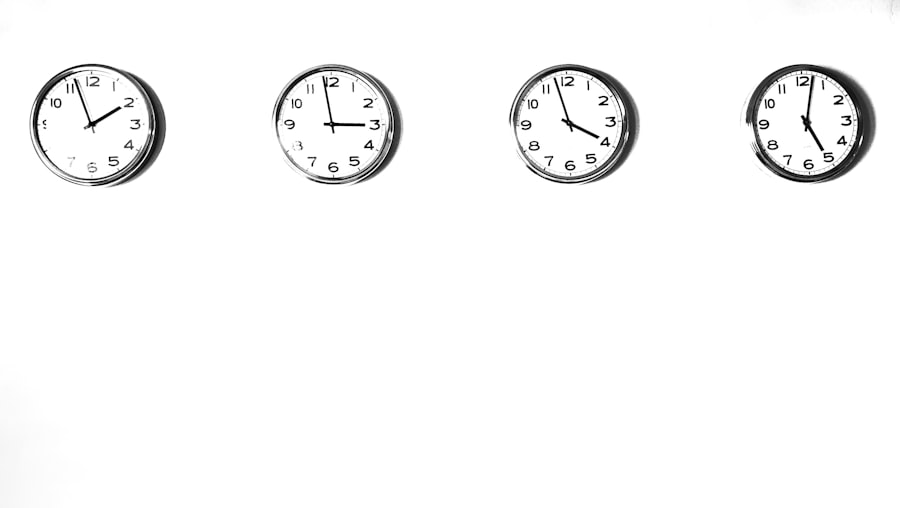
The most challenging aspect of the “illusion of time” is the feeling of flow, that relentless march from past to future. If time is merely a dimension to traverse, this sense of movement becomes a subjective experience rather than an objective reality.
The Present Moment: A Moving Boundary
Your awareness is constantly anchored to what you perceive as the “present.” However, this present is not a static point but a constantly shifting interface between what has just happened and what is about to happen. It’s the frontier of your interaction with reality.
The Persistence of Vision and Auditory Memory
The way your sensory systems process information contributes to the illusion of continuous flow. Your eyes retain an image for a fraction of a second (persistence of vision), and your auditory system maintains sound for a short duration. These brief “hang-overs” of sensory input blend together to create a smooth, continuous experience.
The Neural Basis of Temporal Perception
Neuroscience is beginning to unravel the complex neural mechanisms that underpin your perception of time. Researchers are identifying brain regions and processes involved in timing, sequencing, and integrating information over short durations, all of which contribute to the subjective sense of temporal flow.
The Role of Consciousness in Constructing Time
Your conscious awareness acts as the central processing unit, weaving together disparate sensory inputs and memories into a unified, temporal narrative. This narrative is essential for your ability to navigate the world, learn from experience, and plan for the future.
Narrative Coherence and Personal Identity
Your sense of self is deeply intertwined with your personal history, a story you constantly reconstruct and update. This narrative requires a temporal framework, giving coherence to your life’s events and shaping your identity.
Time as a Coordination System: Synchronizing Interactions

If time is not an inherent property of the universe, but a system for organizing and coordinating events, then its primary function is to bring order to complexity. It’s the invisible scaffolding that allows you to interact effectively with your surroundings and with each other.
Synchronizing Actions and Events
For you to navigate your environment, interact with other individuals, and for physical processes to occur in a predictable manner, a degree of synchronization is necessary. Time, as a universal measurement system, provides this coordination.
Clocks and Calendars: Human-Made Tools
The invention of clocks and calendars are prime examples of humans creating, and agreeing upon, systems to measure and coordinate temporal intervals. These are not discoveries of a pre-existing temporal flow but rather inventions designed to manage and predict events.
The Importance of Shared Temporal Reference
From the simple act of meeting someone at a specific time to the complex synchronization required for global communication and navigation, a shared temporal reference is indispensable. This is where the utility of time as a coordination system becomes most apparent.
Predicting and Planning: The Pragmatic Value of Temporal Order
Your ability to forecast future events and plan accordingly is a cornerstone of your intelligence and survival. This predictive capacity hinges on the assumption of a consistent and ordered temporal progression.
The Principle of Causality in Prediction
The predictable relationship between cause and effect, which you perceive as temporal, allows you to make educated guesses about what will happen next. If events were truly random in their temporal ordering, prediction would be impossible.
Decision-Making and Future Orientation
Every decision you make, from the mundane to the life-altering, carries an implicit temporal component. You weigh potential outcomes across a timeline, making choices based on anticipated consequences.
The concept of time as a coordination system rather than a fundamental aspect of reality is explored in depth in a fascinating article that delves into the philosophical implications of our perception of time. This perspective challenges traditional views and suggests that time may merely serve as a framework for organizing events rather than an intrinsic element of the universe. For a more comprehensive understanding of this intriguing idea, you can read the full article here.
Rethinking Time: Implications for Understanding Reality
| Reasons | Explanation |
|---|---|
| Subjectivity | Time perception varies from person to person, making it subjective and not an absolute reality. |
| Relativity | Time is relative and can be experienced differently based on factors such as speed and gravity. |
| Time Zones | Time is divided into different zones for coordination purposes, showing its artificial nature. |
| Daylight Saving Time | Adjusting time for daylight saving shows that it is a man-made concept for coordination. |
| Time as a Measurement | Time is measured using clocks and calendars, indicating its role as a coordination system rather than a natural reality. |
Accepting time as a coordination system, rather than a fundamental reality, has profound implications for your understanding of the universe and your place within it. It shifts the focus from an external, unfolding entity to an internal, organizational principle.
The Block Universe Model
In some interpretations of physics, the “block universe” model suggests that all of spacetime, past, present, and future, exists simultaneously. Your perception of time’s flow is then an artifact of your limited perspective, your consciousness moving through this pre-existing block.
Implications for Determinism and Free Will
If the future already exists, as suggested by the block universe, it raises complex questions about free will and determinism. Are your choices predetermined, or is there still room for genuine agency within this framework?
The Nature of Consciousness
This perspective on time also prompts a re-examination of consciousness. Is consciousness the mechanism that creates the experience of time, or is it simply a passenger moving through a pre-existing temporal dimension?
The Role of Observation in Shaping Temporal Perception
Your act of observing and interacting with the universe may play a more active role in shaping its observed temporal characteristics than you currently acknowledge. The very act of measurement can influence the state of a system, and this extends to how you perceive temporal events.
The Potential for Future Technologies
Understanding time as a malleable construct, rather than an immutable force, could unlock novel technological advancements. Imagine systems that can manipulate temporal perception or even achieve forms of temporal displacement, though these remain speculative.
In conclusion, while the river of time may be a potent metaphor for your life’s journey, scientific inquiry and philosophical contemplation suggest a more intricate reality. Time, as you experience it, is likely a sophisticated coordination system, an emergent property of how you organize information, interact with the universe, and construct your consciousness. By deconstructing this deeply ingrained illusion, you open yourself to a more nuanced and potentially more accurate understanding of the fundamental nature of reality.
FAQs
What is the concept of time as a coordination system?
Time as a coordination system refers to the idea that time is a tool used to organize and synchronize events and activities. It is a way for people to measure and compare the duration of events and the intervals between them.
How does the concept of time as a coordination system differ from time as reality?
The concept of time as a coordination system emphasizes the practical and functional aspects of time, focusing on its use as a reference for scheduling and organizing activities. In contrast, the idea of time as reality suggests that time is an inherent and fundamental aspect of the universe, with a fixed and objective existence.
What are some examples of time as a coordination system in everyday life?
Examples of time as a coordination system include using clocks and calendars to schedule appointments, meetings, and events, as well as coordinating activities with others based on agreed-upon times and deadlines.
How does the concept of time as a coordination system impact human behavior and society?
The concept of time as a coordination system influences human behavior and societal norms by providing a framework for organizing and planning activities, as well as facilitating communication and collaboration among individuals and groups.
What are some criticisms of the concept of time as a coordination system?
Critics of the concept of time as a coordination system argue that it overlooks the philosophical and metaphysical implications of time, as well as its potential subjective and cultural variations. They also question whether time is purely a human invention or if it has a deeper, intrinsic nature.