
The Science of Angular Sand Grains: Understanding Nature’s Geometric Beauty
Sand, a ubiquitous material that covers vast swathes of Earth’s surface, from deserts to shorelines, is often perceived in its aggregate form. Its texture, its feel, and its behavior as a collective are its most commonly recognized attributes. However, beneath this macroscopic presentation lies a complex world of microscopic geometry, particularly evident in the individual grains that compose it. While rounded grains, shaped by prolonged abrasion, are familiar, the presence and formation of angular sand grains present a distinct and scientifically intriguing aspect of granular materials. Understanding the science behind these geometrically sharper particles not only illuminates geological processes but also offers insights into material science and engineering applications.
Sand is not a singular substance but rather a classification based on particle size, typically ranging from 0.0625 millimeters to 2 millimeters in diameter. The composition of sand is highly variable, dictated by the parent rock from which it originates and the geological history of its transport and deposition.
Mineralogical Diversity in Sand
The most common mineral found in sand, particularly on continental landmasses and many beaches, is quartz (silicon dioxide, SiO₂). Quartz is a robust mineral, resistant to chemical weathering and physical breakdown, which explains its prevalence. However, sand can also be composed of feldspar minerals, rock fragments, and even biogenic materials such as shell fragments and coral. The specific mineralogy of a sand deposit has a significant influence on the morphology of the individual grains.
Quartz: The Dominant Player
Quartz sand grains are often the focus when discussing angularity. Their crystalline structure, characterized by interlocking silicon-oxygen tetrahedra, contributes to their inherent hardness and tendency to fracture along cleavage planes. When quartz-rich rocks undergo weathering and erosion, the released mineral fragments can retain much of their original crystalline sharpness, especially if the transport history is short or the erosional forces are less aggressive.
Feldspars and Other Silicates
Feldspars, another abundant group of minerals, exhibit different cleavage angles compared to quartz. This can lead to the formation of grains with distinct, often planar, surfaces and sharper edges when they break. Other silicate minerals present in sand will contribute their own characteristic fracture patterns and thus influence grain shape.
Beyond Silicates: Carbonate Sands
In tropical and subtropical regions, carbonate sands, derived from the skeletal remains of marine organisms like corals, mollusks, and foraminifera, are common. These sands often possess highly irregular shapes due to their biological origin, with fragments of shells and coral skeletons breaking in ways that are not dictated by mineral cleavage but by the organic structure. While not always strictly “angular” in the geometric sense of mineral crystals, these fragments can exhibit sharp edges and complex surface topographies.
The fascinating science of angular sand grains has been explored in various studies, shedding light on their formation and implications in geological processes. For a deeper understanding of this topic, you can read a related article that discusses the characteristics and significance of angular sand grains in sedimentology. To learn more, visit the article at this link.
Formation Mechanisms of Angular Sand Grains
The angularity of sand grains is a direct consequence of the processes that liberate them from their parent rock and transport them to their depositional environment. Unlike rounded grains, which have undergone extensive abrasion, angular grains suggest a more recent or less abrasive history.
Mechanical Weathering: The Primary Source
Mechanical weathering is the process by which rocks are broken down into smaller pieces without a change in their chemical composition. This is the most significant contributor to the initial formation of angular mineral fragments.
Freeze-Thaw Cycles (Frost Wedging)
In regions experiencing repeated temperature fluctuations above and below freezing, water seeping into rock cracks can freeze and expand. This expansion exerts pressure, widening the cracks. With each freeze-thaw cycle, the cracks deepen and enlarge, eventually leading to the fragmentation of the rock. The resulting fragments, particularly from brittle rocks like granite, often retain sharp edges and angular features corresponding to the natural fracture patterns of the constituent minerals.
Thermal Expansion and Contraction
Similar to freeze-thaw, diurnal or seasonal temperature changes can cause rocks to expand when heated and contract when cooled. This differential expansion and contraction, especially in rocks with varying mineral compositions and thermal expansion coefficients, can create stresses that lead to joint propagation and eventual fracturing, producing angular debris.
Pressure Release (Exfoliation)
When overlying rocks are removed by erosion, the underlying rock mass is subjected to reduced confining pressure. This pressure release can cause the rock to expand and fracture in layers parallel to the surface, a process known as exfoliation or unloading. The cracks formed during this process can result in the detachment of large, often angular, blocks that are subsequently broken down into smaller fragments.
Tectonic Activity and Fracturing
Geological processes involving significant stress, such as faulting and seismic activity, can also contribute to the fragmentation of rocks. The intense forces associated with these events can cause rocks to shatter, producing sharp, angular pieces of minerals and rock fragments that will eventually be weathered into sand.
Limited Transport and Abrasion
A key factor in the preservation of angularity is the distance and environment of transport. If sand grains are transported over short distances by relatively gentle agents like wind in arid regions or sluggish streams, they have less opportunity for the corners and edges to be abraded and smoothed.
Short-Distance Wind Transport
Aeolian (wind-driven) transport in desert environments can move sand grains. While wind can cause some abrasion, especially in saltation (where grains bounce along the surface), a direct, short-range transport of freshly weathered material can result in a significant proportion of angular grains.
Glacial Transport
Glaciers are powerful erosional agents that can grind rocks into fine powders (rock flour). However, the larger material transported by glaciers, especially in the basal till, can include angular fragments of rock and minerals that have been plucked and carried with limited opportunity for extensive rounding.
Fluvial Transport in Steep Environments
Rivers flowing through mountainous or steep terrain can carry sediment rapidly. While some rounding will occur, the high energy of the flow and the short time available for abrasion before deposition, especially in high-gradient environments, can lead to the presence of angular grains in the riverbed load.
Morphological Characteristics of Angular Sand Grains

The term “angular” in the context of sand grains refers to their macroscopic shape, characterized by a lack of rounded edges and the presence of distinct corners, facets, and planar surfaces. These features are a direct reflection of their formation processes.
Sharp Edges and Corners
The most defining characteristic of angular sand grains is the presence of sharp, well-defined edges and corners. These are often formed along the cleavage planes of minerals or as a result of brittle fracture.
Cleavage Planes and Fracture Surfaces
Minerals like quartz and feldspar exhibit specific cleavage planes where they break more readily. When a mineral breaks along these planes, it creates flat surfaces, and the intersection of these surfaces forms sharp edges and vertices. Brittle fracture, independent of inherent cleavage, can also produce irregular but sharp surfaces.
Faceted Surfaces
Angular grains often display multiple flat or nearly flat surfaces, referred to as facets. These facets are the result of the original breaking event and can be preserved if subsequent abrasion is minimal.
Geometric Precision vs. Irregularity
While the term “geometric beauty” might evoke precise geometric shapes like cubes or tetrahedra, natural angular sand grains are rarely perfect polyhedra. They are more typically irregular in shape but possess sharp breaks and distinct facets that deviate significantly from a rounded sphere.
Surface Texture
The surface of an angular grain can also provide clues to its origin. Freshly broken surfaces are often rough and can exhibit conchoidal fractures (curved break surfaces with ripple marks) in glassy minerals like quartz.
Microscopic Features
Under magnification, the surfaces of angular grains might show striations from the original rock layering, evidence of impact marks if the transport was energetic, or the relatively unmarred surfaces of a recent fracture.
The Science of Rounding: The Contrast to Angularity
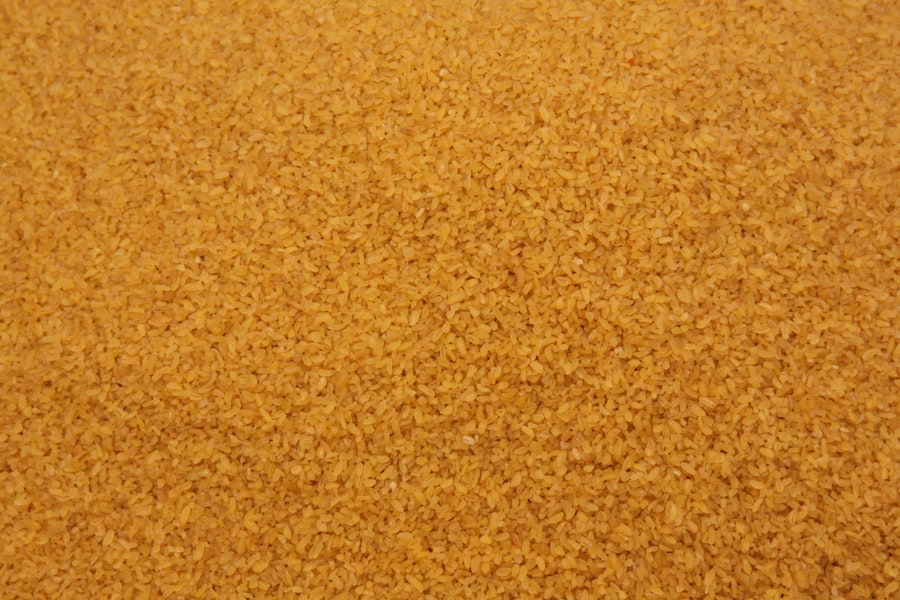
Understanding angular sand grains is amplified by contrasting them with their rounded counterparts. The processes that lead to rounding are essentially the inverse of those that create angularity, involving the continuous removal of material from the grain’s surface.
Abrasion: The Great Smoother
Abrasion is the process of wearing away by friction and impact. When sand grains are transported over long distances or through environments with significant collision rates, their corners and edges are repeatedly struck against other grains, rocks, or the substrate.
Saltation in Wind and Water
Saltation, the bouncing and hopping motion of sand grains propelled by wind or water, is a primary mechanism for abrasion. Each impact with the surface or another grain contributes to the gradual smoothing of the grain’s contours.
Grinding in Rivers and Coastal Zones
Rivers, particularly during floods, and energetic coastal environments like surf zones, subject sand grains to intense grinding and impact. This sustained mechanical action effectively rounds off the sharper features, leading to the characteristic smoothly curved surfaces of well-traveled sand.
Chemical Weathering: A Secondary Role in Rounding
While mechanical weathering is dominant in shaping sand grains, chemical weathering can also play a role, albeit a less direct one in the rounding process. Chemical dissolution and etching can alter the surface of grains over geological timescales, potentially contributing to a smoother appearance. However, for most common sand minerals like quartz, chemical weathering is a slow process compared to mechanical abrasion.
Differential Weathering
If a sand deposit contains minerals with varying resistance to weathering, some minerals might dissolve or alter more readily than others, leaving behind more resistant grains that may appear relatively smoother. However, this is a process that tends to remove material and thus contribute to a decrease in overall grain size rather than a direct rounding effect on the remaining angular fragments.
The Continuum of Grain Morphology
It is important to recognize that sand grains exist on a continuum of shapes, from highly angular to perfectly spherical. Most natural sand deposits contain a mixture of grain morphologies, reflecting the complex interplay of their geological history. The proportion of angular grains in a sample is an indicator of the recency of its formation and the nature of its transport.
The fascinating study of angular sand grains reveals important insights into sediment transport and erosion processes. Researchers have found that the shape and angularity of these grains can significantly affect their movement in wind and water, influencing everything from dune formation to riverbed dynamics. For a deeper understanding of this topic, you might find the article on the science of sediment dynamics interesting, which can be found here. This research not only enhances our knowledge of geological processes but also has implications for environmental management and construction practices.
Applications and Significance of Angular Sand Grains
| Property | Measurement |
|---|---|
| Shape | Angular |
| Size | Grains |
| Composition | Silica |
| Porosity | High |
| Surface Area | Large |
While often viewed through a geological lens, the distinct properties of angular sand grains have implications beyond sedimentology. Their geometry influences their packing behavior, flow characteristics, and engineering properties, making them relevant in various scientific and industrial fields.
Material Science and Engineering
The shape of granular materials significantly affects their bulk properties. Angular grains, due to their interlocking nature and irregular surfaces, tend to pack more densely than well-rounded grains, assuming a similar size distribution.
Packing Density and Void Space
Angular grains exhibit higher internal friction due to their rough surfaces and the ability of their facets to interlock. This interlocking means that for a given volume, angular sand can hold less interstitial (pore) space compared to rounded sand. This has implications for properties like permeability and the efficiency with which a granular material can be compacted.
Shear Strength and Stability
In geotechnical engineering, the shear strength of granular materials is crucial for the stability of foundations, slopes, and earth structures. Angular grains, with their greater interlocking, generally exhibit higher shear strength than rounded grains of the same material. This makes them valuable in applications where load-bearing capacity and resistance to deformation are paramount.
Filtration and Permeability
The interconnected pore spaces within a bed of sand determine its permeability, or how easily fluids can flow through it. The high degree of interlocking in angular sand can lead to tortuous flow paths, potentially reducing permeability compared to rounded sand where flow paths are more direct. This characteristic can be exploited in filtration systems.
Industrial Uses
The unique packing and flow properties of angular sand make it suitable for specific industrial applications.
Foundry Sands
In the casting industry, molds are often made using sand as a primary component. Angular sand grains can provide excellent mold strength and refractory properties due to their ability to interlock and withstand the high temperatures of molten metal.
Abrasives
While often associated with rounded particles for polishing, some abrasive applications utilize sharp, angular grains to achieve more aggressive cutting or surface preparation. Crushed quartz, with its inherent angularity, is a common abrasive material.
Concrete and Mortar Additives
The inclusion of angular aggregate, such as sharp-edged sand, in concrete and mortar mixes can influence their strength and workability. The interlocking nature of the aggregate contributes to the overall structural integrity of the hardened material.
Geological Interpretation
The presence and characteristics of angular sand grains in sedimentary rocks or modern deposits provide valuable information about the geological history of the material.
Provenance Studies
By analyzing the mineralogy and morphology of sand grains, geologists can infer the types of rocks from which the sand originated (provenance) and the processes that have acted upon it. A higher proportion of angular grains suggests a nearby source rock and limited transport or abrasion.
Depositional Environment Reconstruction
The shape and composition of sand can also help in understanding the depositional environment. For instance, sand found in the foothills of a mountain range might be expected to be more angular than sand found on a distant, ancient coastline.
In conclusion, the seemingly simple sand grain, when examined at a microscopic level, reveals a fascinating story of geological processes. The angular sand grain, in particular, is a testament to the power of mechanical weathering and the dynamics of sediment transport. Its sharp edges and faceted surfaces are not merely aesthetic curiosities but are direct indicators of its formation history and possess properties that are of considerable value in both understanding the Earth’s processes and in various technological applications. The scientific study of these geometrically distinct particles continues to deepen our appreciation for the intricate beauty and functional importance of nature’s granular materials.
FAQs
What are angular sand grains?
Angular sand grains are sand particles that have sharp, jagged edges and corners, as opposed to rounded or smooth grains. These angular grains are typically formed through processes such as crushing, weathering, and erosion.
What causes sand grains to become angular?
Sand grains become angular through processes such as mechanical weathering, where larger rocks are broken down into smaller particles, and abrasion, where particles are worn down by friction and impact with other materials.
What are the properties of angular sand grains?
Angular sand grains tend to have a higher coefficient of friction compared to rounded grains, making them more stable and less likely to shift or move when compacted. They also have a greater interlocking ability, which can contribute to the stability of soil and sediment.
How are angular sand grains used in various industries?
Angular sand grains are used in industries such as construction, foundry, and oil and gas. In construction, angular sand grains are used in concrete and asphalt mixtures to provide stability and strength. In foundry applications, they are used as molding and core sands. In the oil and gas industry, angular sand grains are used in hydraulic fracturing, or “fracking,” to prop open fissures in rock formations and allow for the extraction of oil and gas.
What are the environmental implications of angular sand grains?
The extraction and use of angular sand grains can have environmental implications, such as habitat destruction, air and water pollution, and increased sedimentation in waterways. Additionally, the demand for angular sand grains in industries such as construction and fracking has led to concerns about sand mining and its impact on ecosystems and communities.