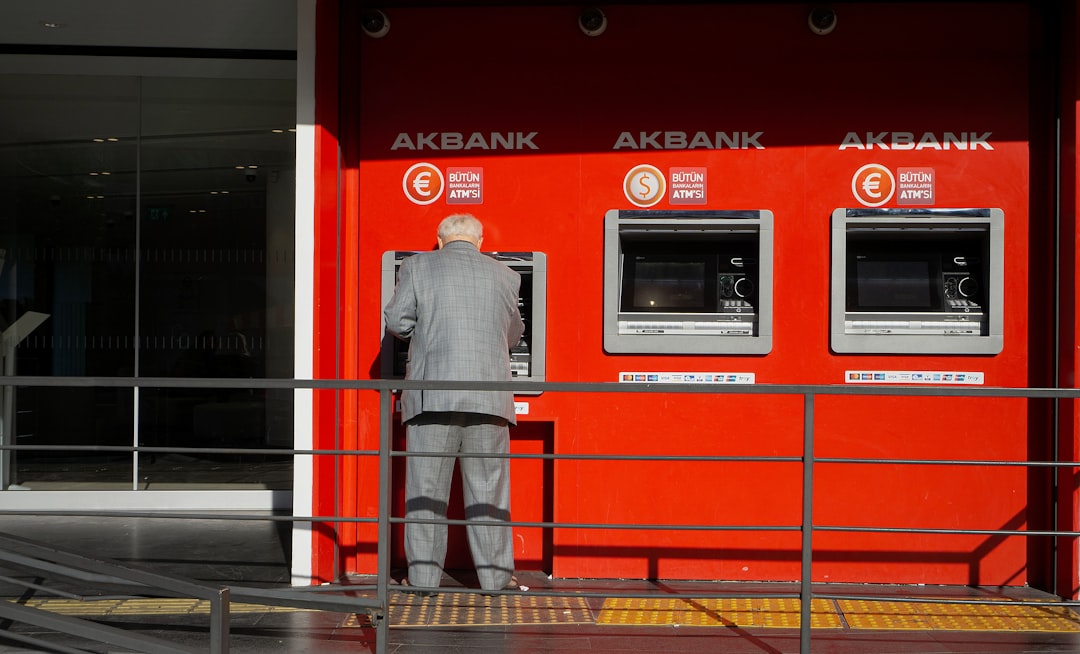
You walk into a bank, deposit your paycheck, and feel a sense of security. Your money is safe, right? Well, yes, it is generally safe, but its journey from your account to the broader economy is more complex than you might imagine. This complexity is largely thanks to a system called fractional reserve banking, a cornerstone of modern finance. If you’ve ever wondered how banks make money, how loans are created, or why economic booms and busts happen, you’re in the right place. This guide will demystify fractional reserve banking, breaking down its mechanics in a straightforward way.
The Foundation: What is Fractional Reserve Banking?
At its core, fractional reserve banking is a system where banks are only required to hold a fraction of their customer deposits in reserve. The rest, they can lend out. This might sound counterintuitive – if everyone suddenly wants their money back, won’t the bank run out? This is a valid concern, and we’ll explore the implications, but understanding the basic principle is the first step.
The Reserve Requirement
The “reserve requirement” is the percentage of deposits that banks must keep on hand, either as physical cash in their vault or as balances at the central bank. This requirement is set by the central bank of a country (like the Federal Reserve in the United States or the European Central Bank in the Eurozone). It’s a crucial tool for monetary policy, influencing the amount of money available in the economy.
Historical Context
The concept isn’t entirely new. Historically, goldsmiths in medieval times found they could lend out some of the gold deposited with them, as most depositors didn’t withdraw all their gold at once. This practice evolved over centuries, leading to the formalized system we have today.
Central Bank’s Role
The central bank acts as a regulator and supervisor. It sets the reserve ratio, observes bank lending practices, and, importantly, acts as a lender of last resort to provide liquidity to banks in times of stress. This oversight is designed to mitigate the inherent risks of the system.
The Deposit
Your journey into fractional reserve banking often begins with a deposit. When you deposit money into your checking or savings account, it becomes a liability for the bank. The bank owes you that money. However, the bank doesn’t simply put your money into a safe and wait for you to ask for it back.
Checking and Savings Accounts
These are the most common forms of deposits. When you deposit $1,000 into your checking account, the bank now has $1,000 in its possession. However, for you, that $1,000 is still accessible.
Certificates of Deposit (CDs)
CDs are time deposits, meaning you agree to leave your money in the bank for a fixed period. This offers a slightly higher interest rate but restricts your access to the funds. For the bank, this money is more predictable for lending.
Fractional reserve banking can be a complex topic for beginners, but there are resources available to help simplify the concepts. For a clear and concise explanation, you can check out this informative article on fractional reserve banking, which breaks down the fundamentals and provides examples that are easy to understand. To learn more, visit this article for a beginner-friendly overview of how fractional reserve banking works and its implications for the economy.
The Engine of Money Creation: Lending and the Money Multiplier
This is where the magic, or perhaps the mechanics, of fractional reserve banking truly come into play. When a bank lends out a portion of your deposited money, that money doesn’t disappear. Instead, it enters the economy, and the process of money creation begins.
The Loan Creation Process
Imagine you deposit $1,000, and the reserve requirement is 10%. The bank must keep $100 in reserve and can lend out $900. This $900 is crucial.
From Deposit to Loan
The bank doesn’t give the borrower $900 in cash as often imagined. Instead, it credits the borrower’s account with $900. This $900 now exists as a demand deposit for the borrower.
The Borrower Spends
The borrower then uses this $900 to buy something, perhaps a new appliance. The seller of the appliance then deposits that $900 into their bank.
The Money Multiplier Effect
Now, the seller’s bank has a $900 deposit. If its reserve requirement is also 10%, it must keep $90 in reserve and can lend out $810. This $810 is then deposited, lent out again, and so on.
The Chain Reaction
Each time money is lent out and re-deposited, a new deposit is created, and a portion of that new deposit can be lent out again. This creates a cascading effect, expanding the initial deposit far beyond its original amount.
Calculating the Multiplier
The theoretical maximum amount of money that can be created from an initial deposit is determined by the money multiplier formula: 1 / Reserve Requirement Ratio. In our example with a 10% reserve ratio, the money multiplier is 1 / 0.10 = 10. So, an initial $1,000 deposit could theoretically lead to $10,000 in the money supply.
Limitations to the Multiplier
While the multiplier effect is powerful, it’s crucial to understand that it’s a theoretical maximum. In reality, several factors limit its reach.
Cash Leakage
Not all money is re-deposited. Individuals and businesses might hold some cash, which removes it from the banking system and reduces the amount available for lending.
Excess Reserves
Banks may choose to hold more reserves than legally required, especially during uncertain economic times. These “excess reserves” are not lent out.
Demand for Loans
Even if banks have the capacity to lend, there needs to be sufficient demand for loans from creditworthy borrowers. If there aren’t many people or businesses looking to borrow, the multiplier effect slows down.
The Role of Central Banks in Fractional Reserve Banking
Central banks are not passive observers in this system. They are active participants, using various tools to manage the money supply and influence economic activity.
Monetary Policy Tools
These are the primary levers central banks pull to control the amount of money in circulation.
Reserve Requirements
As mentioned, changing the reserve requirement directly impacts how much banks can lend. Increasing the requirement shrinks the money supply, while decreasing it expands it. This is a powerful but often blunt tool.
Open Market Operations
This involves the central bank buying or selling government securities (like bonds) in the open market.
- Buying securities: The central bank injects money into the banking system, increasing liquidity and potentially encouraging lending.
- Selling securities: The central bank withdraws money from the banking system, reducing liquidity and potentially curbing lending.
Discount Rate
This is the interest rate at which commercial banks can borrow money directly from the central bank. A lower discount rate makes it cheaper for banks to borrow, encouraging lending. A higher rate has the opposite effect.
Lender of Last Resort
In times of financial crisis, when banks might face a sudden and severe liquidity shortage (meaning they don’t have enough cash to meet immediate withdrawal demands), the central bank can step in as a “lender of last resort.” It provides emergency loans to solvent banks, preventing a wider collapse of the financial system. This is a critical backstop that provides confidence.
Risks and Benefits of Fractional Reserve Banking
Like any economic system, fractional reserve banking has its advantages and disadvantages. Understanding these helps paint a complete picture.
Benefits
The primary benefit of fractional reserve banking is its contribution to economic growth and stability.
Economic Growth
By enabling banks to lend out deposited funds, fractional reserve banking facilitates investment and consumption. This increased flow of credit fuels business expansion, job creation, and overall economic activity.
Liquidity
The system provides liquidity to the economy, meaning there’s enough money for transactions to occur smoothly. Without the ability of banks to lend, money would be largely static, hindering economic progress.
Efficient Allocation of Capital
Banks, in theory, act as intermediaries, channeling savings from depositors to borrowers who have productive uses for that capital. This efficient allocation can lead to more optimal investment decisions across the economy.
Risks
The inherent leverage in fractional reserve banking also carries significant risks.
Bank Runs
This is the classic fear. If a large number of depositors lose confidence in a bank’s solvency and try to withdraw their money simultaneously, the bank, which has lent out most of its deposits, will not have enough cash to meet all demands. This can lead to a bank’s failure.
Financial Crises
A domino effect can occur if one bank fails, causing panic and leading to runs on other banks, even healthy ones. This can spiral into a systemic financial crisis, impacting the entire economy.
Inflationary Pressures
If the money supply expands too rapidly without a corresponding increase in goods and services, it can lead to inflation – a general rise in prices. Central banks constantly monitor this to maintain price stability.
Asset Bubbles
Excessive credit growth fueled by fractional reserve banking can sometimes contribute to speculative bubbles in asset markets (like housing or stocks). When these bubbles burst, they can cause significant economic damage.
Fractional reserve banking is a fundamental concept in modern finance that can be quite complex for beginners to grasp. To help simplify this topic, you might find it useful to read a related article that breaks down the principles and implications of this banking system. Understanding how banks operate with only a fraction of their deposits can provide valuable insights into the economy and your personal finances. For a clearer explanation, check out this informative piece on fractional reserve banking here.
Safeguarding the System: Regulation and Insurance
To mitigate the risks associated with fractional reserve banking, various safeguards have been put in place.
Deposit Insurance
Many countries have government-backed deposit insurance schemes (like the FDIC in the United States). These schemes guarantee a certain amount of each depositor’s money in the event of a bank failure, significantly reducing the incentive for large-scale bank runs.
How it Works
If a bank fails, the deposit insurance agency steps in and reimburses depositors up to the insured limit. This provides a critical safety net for individuals and small businesses.
Limitations
Deposit insurance typically has a limit per depositor per insured bank. Larger corporate deposits or amounts exceeding the limit may not be fully protected.
Banking Regulation and Supervision
Beyond reserve requirements, governments and central banks impose a range of regulations on banks.
Capital Requirements
Banks are required to hold a certain amount of their own capital (equity) relative to their risk-weighted assets. This capital acts as a buffer to absorb potential losses, making the bank more resilient.
Stress Tests
Central banks and regulators conduct regular stress tests on major banks. These simulations assess how banks would fare under adverse economic conditions, such as a severe recession or a sharp drop in asset prices.
Liquidity Coverage Ratios
These ratios ensure that banks have enough high-quality liquid assets to cover their short-term obligations during a period of liquidity stress.
The Importance of Confidence
Ultimately, fractional reserve banking relies heavily on confidence. Depositors must have confidence that their money is safe and accessible. Banks must have confidence in the stability of the financial system and the support of the central bank.
Public Perception
News of financial instability, even if rumors, can quickly erode confidence. This is why transparent communication and robust regulatory oversight are so vital.
Role of Credit Rating Agencies and Market Sentiment
These external factors also play a role in shaping confidence about the banking sector.
In conclusion, fractional reserve banking is a complex but essential mechanism for modern economies. It allows for the creation of credit, fueling economic growth. However, its inherent leverage necessitates careful management by central banks and robust regulatory oversight to mitigate the associated risks and ensure stability. By understanding these principles, you gain a clearer perspective on how your money circulates and contributes to the broader economic landscape.
FAQs
What is fractional reserve banking?
Fractional reserve banking is a banking system in which banks are only required to hold a fraction of customer deposits in reserve and can lend out the rest.
How does fractional reserve banking work?
When a customer deposits money in a bank, the bank is required to keep only a portion of that deposit in reserve and can lend out the remaining amount to other customers or businesses.
What are the benefits of fractional reserve banking?
Fractional reserve banking allows banks to create credit and expand the money supply, which can stimulate economic growth and provide access to capital for businesses and individuals.
What are the risks of fractional reserve banking?
One of the main risks of fractional reserve banking is the potential for bank runs, where a large number of customers withdraw their deposits at the same time, leading to a liquidity crisis for the bank.
How does fractional reserve banking impact the economy?
Fractional reserve banking can impact the economy by influencing the availability of credit, interest rates, and the overall money supply, which in turn can affect economic growth and stability.