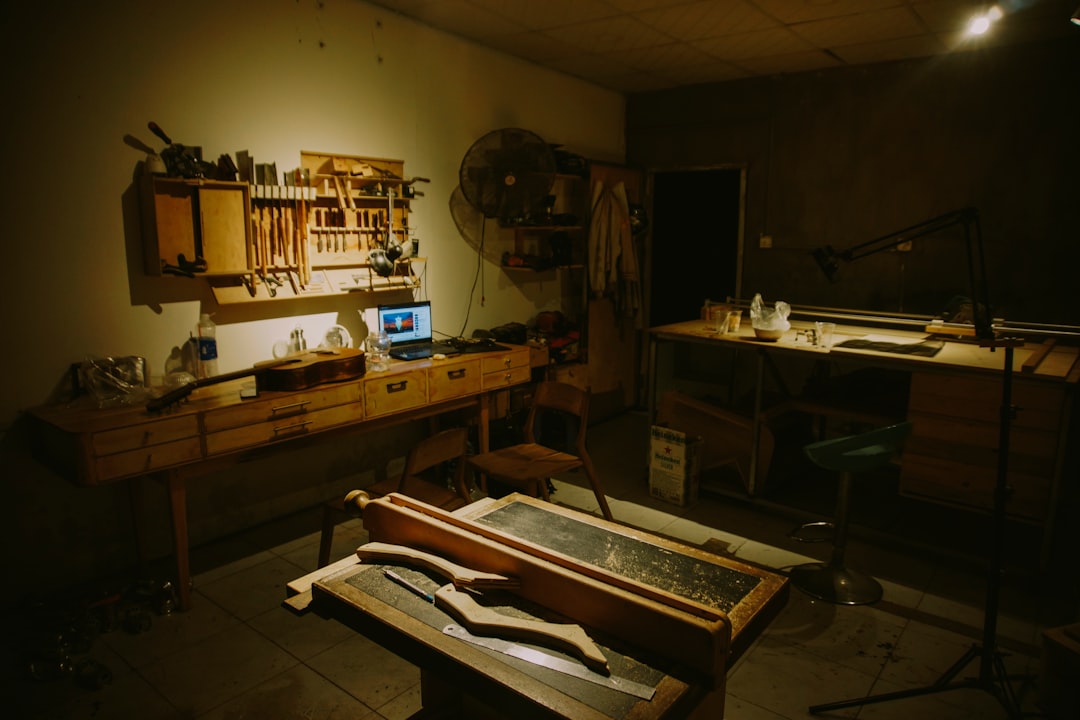
You stand at the precipice of understanding not just how you see, but how humanity’s very perception of the world has been shaped, refined, and expanded through centuries of focused effort. This is a journey that begins in the humble confines of an optical workshop and culminates in the vast reach of what we now consider an empire of knowledge and technology – all built on the foundation of understanding and manipulating light. This is the history of vision and innovation, a story woven through the threads of discovery, craftsmanship, and the relentless human drive to comprehend the unseen.
Before spectacles graced your nose and telescopes revealed distant galaxies, the human understanding of vision was a nascent, often philosophical, endeavor. The very act of seeing was a marvel, attributed to a complex interplay of forces that were only beginning to be deciphered.
Ancient Theories of Vision
You can trace the earliest attempts to explain sight back to the ancient Greeks. Philosophers like Empedocles proposed the idea of “vision rays” emanating from the eye, which then interacted with objects in the external world. This theory, while flawed by modern standards, represented a significant step towards conceptualizing vision as an active, rather than purely passive, process. Plato, in his Timaeus, further developed these ideas, suggesting that the eye contained fire and air, which could mingle with external fire and light to produce perception. While metaphorical, these early theories laid the groundwork for later scientific inquiry by framing vision as a phenomenon amenable to explanation.
Aristotle, a towering figure in Greek philosophy, offered a different perspective. He proposed that light itself was a necessary condition for vision, but that it was the air between the eye and the object that conveyed the form of the seen object. This “diaphanous” quality of air, capable of transmitting impressions, was a crucial element in his theory. It wasn’t just about rays hitting the eye; it was about a medium facilitating the transmission of information. This idea, though not fully accurate, introduced the concept of a medium playing a role in visual perception, a notion that would have echoes in later understandings of wave propagation.
Early Lenses and the Pragmatic Approach
While theoretical discussions raged, practical experimentation with lenses was also occurring. Ground pebbles and polished glass, found naturally or fashioned with rudimentary tools, demonstrated the capacity to magnify or focus light. You might not have had a dedicated “optical workshop” in the modern sense, but skilled artisans and craftsmen were likely experimenting with materials that could alter the path of light. These early, often serendipitous, discoveries were driven by practical needs – perhaps for scribes to see finer details or for individuals with age-related vision impairments. The existence of artifacts suggesting the use of simple lenses predates their widespread theoretical understanding, highlighting the persistent human desire to improve upon natural limitations.
The Roman writer Seneca, for instance, noted that letters appeared larger and more distinct when viewed through a glass globe filled with water. This observation, while not a scientific explanation, demonstrates a practical understanding of the magnifying power of curved surfaces. These early examples, however isolated, represent the nascent stages of manipulating light through physical objects, a crucial precursor to the more sophisticated optical instruments to come.
The history of the optical workshop is intricately linked to the rise and expansion of empires, as advancements in lens-making and optical instruments played a crucial role in navigation, astronomy, and military strategy. For a deeper understanding of this fascinating connection, you can explore the article that delves into the evolution of optical technologies and their impact on empires throughout history. To read more, visit this article.
The Rise of the Craftsman: Grinding and Shaping Light
The true genesis of the optical industry as you know it lies in the meticulous, often painstaking, work of craftsmen who learned to grind and polish glass with increasing precision. This was not merely about creating decorative objects; it was about systematically shaping light to serve a purpose.
Early Spectacle Makers and the Quest for Clarity
The invention of eyeglasses, around the late 13th century in Italy, marks a pivotal moment. Imagine the world before clear vision was readily achievable for those with declining eyesight. The development of convex lenses, initially for the correction of presbyopia (age-related farsightedness), was a practical revolution. You, as a wearer of glasses, owe a debt to these early artisans who painstakingly ground lenses by hand, experimenting with curvature and thickness until they achieved the desired effect.
The process was labor-intensive. Artisans would use abrasive powders like sand and emery mixed with water to grind the glass against molds. Polishing followed, using finer abrasives and leather to achieve a smooth, clear surface. Each lens was a unique creation, tailored to the individual’s needs through trial and error. The early opticians were as much craftsmen as they were vision specialists. Their workshops were filled with grinding wheels, polishing cloths, and a growing array of lens blanks.
The Development of the Lens Grinding Wheel
The evolution of the lens grinding wheel was a significant technological leap. From simple hand-driven tools, the process gradually became more mechanized. This allowed for greater consistency in curvature and the production of lenses with more predictable optical properties. The ability to mass-produce lenses, however crude by today’s standards, opened up the possibility of wider adoption and had a profound impact on literacy and the dissemination of knowledge.
The precision required was immense. Even slight imperfections could significantly distort vision. The artisans had to develop a keen understanding of materials and techniques to overcome these challenges. This period saw the gradual accumulation of tacit knowledge within workshops, passed down from master to apprentice. This embodied knowledge, focused on the physical manipulation of glass, was the bedrock upon which future optical advancements would be built.
Expanding Horizons: Telescopes and Microscopes

With a more refined understanding of lens making, the stage was set for instruments that would dramatically expand human perception, both outwards to the cosmos and inwards to the unseen microscopic world.
Galileo and the Revolutionary Telescope
You stand in awe of the night sky, and thanks to Galileo Galilei, you can do so with greater clarity and understanding. While he didn’t invent the telescope, Galileo was the first to systematically and deliberately use it for astronomical observation. His modifications to existing designs, which involved improving the lens grinding and mounting, allowed him to achieve higher magnification and better image quality.
Galileo’s telescope, though modest by modern standards, revealed a universe far grander and more complex than previously imagined. He observed the phases of Venus, the moons of Jupiter, the craters on the Moon, and the Milky Way as a collection of stars. These observations challenged established cosmological models and provided compelling evidence for the heliocentric view of the solar system. His meticulous record-keeping and dissemination of his findings through works like “Sidereus Nuncius” were instrumental in shifting scientific paradigms. The optical workshop, in this context, becomes a crucible for scientific revolution.
The Microscopic Revelation: Seeing the Unseen
Just as the telescope opened up the vastness of space, the microscope revealed the intricate, hidden world of the infinitesimally small. Antonie van Leeuwenhoek, a Dutch draper and self-taught microscopist, is a key figure here. Working with simple, single-lens microscopes he crafted himself, he was able to achieve magnifications far exceeding those of his contemporaries.
His lenses were incredibly small and precisely ground, often no larger than a poppy seed. The “optical workshop” for Leeuwenhoek was his own home, where he meticulously ground and polished lenses with astonishing skill. He discovered microorganisms, which he called “animalcules,” observing bacteria, protozoa, and sperm cells. His detailed drawings and descriptions of these discoveries, initially met with skepticism, laid the foundation for the fields of microbiology and cell biology. Your understanding of health, disease, and the fundamental building blocks of life is directly linked to his pioneering work.
The Age of Precision: Aberrations and Refinements
As optical instruments became more sophisticated, so too did the understanding of their limitations. The dream of perfect vision, free from distortion, spurred further innovation in lens design and manufacturing.
Understanding Optical Aberrations
You may not directly experience them, but optical aberrations are the subtle flaws that can mar an otherwise clear image. Chromatic aberration, where different wavelengths of light are refracted at different angles, leads to color fringing. Spherical aberration occurs when light rays hitting the edge of a lens are focused at a different point than those passing through the center.
The identification and theoretical understanding of these aberrations were crucial. Scientists like Chester Moore Hall in the 18th century began to theorize that combining lenses made of different types of glass could correct for chromatic aberration. This was a significant step beyond simply grinding single lenses. The challenge lay in finding materials with the right optical properties.
The Newtonian Reflector and Beyond
The development of the reflecting telescope, famously pioneered by Isaac Newton, offered an alternative to lens-based refractors. By using mirrors to focus light, Newton circumvented the chromatic aberration inherent in lenses. His design employed a parabolic primary mirror and a flat secondary mirror to direct the light to the eyepiece.
While Newton’s reflector was a breakthrough, its construction also presented challenges. Grinding and polishing parabolic mirrors with sufficient accuracy required new techniques and greater precision in the workshop. This period saw a continuous interplay between theoretical advancements in optics and the practical skills of craftsmen to translate these theories into functional instruments. The pursuit of perfection drove the refinement of tools, materials, and techniques.
The history of optical workshops has played a significant role in the development of empires, particularly in how advancements in lens-making and optical instruments influenced navigation and scientific discovery. For a deeper understanding of this fascinating topic, you can explore a related article that delves into the intricate relationship between optical technology and the rise of empires throughout history. This article provides valuable insights into how these workshops contributed to the expansion of knowledge and power. To read more, visit this link.
The Industrial Revolution and Mass Production
| Year | Event |
|---|---|
| 1609 | Galileo Galilei develops the first known telescope |
| 1787 | Optical workshop established in London by Jesse Ramsden |
| 1808 | Joseph von Fraunhofer invents the spectroscope |
| 1836 | Carl Zeiss opens his own workshop in Germany |
| 1917 | Zeiss optical workshop becomes a global empire |
The Industrial Revolution, with its embrace of mechanization and mass production, fundamentally transformed the optical industry. The painstaking individual craftsmanship began to be supplemented, and in some areas, replaced by more efficient, large-scale manufacturing processes.
Mechanized Grinding and Polishing
The development of mechanized grinding and polishing machines allowed for the production of lenses at a scale unimaginable to earlier artisans. You can envision large factories filled with powerful machinery, capable of shaping and finishing thousands of lenses per day. This automation led to a significant reduction in cost, making eyeglasses and other optical devices more accessible to a wider population.
The precision of these machines, while still requiring skilled operators and quality control, allowed for greater uniformity in lens production. This uniformity was essential for the development of standardized optical components used in complex instruments. The “empire” of optical technology began to expand its reach through sheer volume and affordability.
The Rise of the Optical Industry
The late 19th and early 20th centuries saw the emergence of dedicated optical companies. These corporations invested heavily in research and development, scientific expertise, and advanced manufacturing techniques. They employed teams of scientists, engineers, and skilled technicians, moving beyond the individual craftsman to a more structured, collaborative approach.
This industrialization led to rapid advancements in lens coatings, new glass compositions, and the development of more complex optical systems for applications ranging from photography and cinematography to scientific research and military technology. The humble optical workshop had, in many ways, morphed into a global industry, shaping not only how you see but also how you capture, record, and transmit visual information. From the precise grinding of a single lens to the intricate design of a camera lens or a sophisticated piece of medical equipment, the legacy of that early pursuit of clear vision continues to permeate your modern world.
FAQs
1. What is the history of the optical workshop to empire?
The history of the optical workshop to empire refers to the evolution of optical workshops from their early beginnings to their expansion and influence as empires grew and developed.
2. When did optical workshops first emerge in history?
Optical workshops first emerged in history during the Middle Ages, with the development of lenses and optical instruments in Europe.
3. How did optical workshops contribute to the growth of empires?
Optical workshops contributed to the growth of empires by producing high-quality lenses and optical instruments that were used for navigation, exploration, and military purposes, thus aiding in the expansion and dominance of empires.
4. What were some key advancements in optical technology during this period?
During this period, key advancements in optical technology included the development of the telescope, microscope, and improved lens-making techniques, which revolutionized scientific exploration and observation.
5. What impact did the optical workshop have on the scientific and industrial revolutions?
The optical workshop had a significant impact on the scientific and industrial revolutions by providing the tools and instruments necessary for advancements in astronomy, biology, and other scientific fields, as well as contributing to the development of precision manufacturing techniques.