
The nuclear ramjet represents a fascinating intersection of advanced propulsion technology and nuclear engineering. This innovative concept combines the principles of jet propulsion with the immense energy potential of nuclear reactions, aiming to create a propulsion system capable of sustained flight at high speeds. Unlike traditional jet engines that rely on combustion, the nuclear ramjet harnesses the power of nuclear fission to generate thrust.
This unique approach not only promises to enhance the efficiency and range of aerial vehicles but also opens up new possibilities for high-speed travel in both military and civilian applications. The idea of a nuclear ramjet has been around since the mid-20th century, capturing the imagination of scientists and engineers alike. The potential for such a system to operate at hypersonic speeds—far exceeding the capabilities of conventional engines—has led to extensive research and development efforts.
As nations continue to explore advanced aerospace technologies, the nuclear ramjet stands out as a compelling solution for overcoming the limitations of current propulsion systems. However, its successful implementation hinges on addressing several technical and safety challenges, particularly in the realm of motionless operation.
Key Takeaways
- The nuclear ramjet is a propulsion system that uses nuclear energy to heat and expel propellant for thrust.
- Motionless operation refers to the ability of the nuclear ramjet to operate without moving parts, allowing for continuous and efficient propulsion.
- Challenges of motionless operation include managing heat transfer, controlling nuclear reactions, and ensuring safety in a stationary environment.
- Technical barriers can be overcome through advanced materials, innovative cooling systems, and precise control mechanisms.
- Safety measures for motionless operation include redundant safety systems, fail-safe mechanisms, and rigorous testing and monitoring protocols.
The Concept of Motionless Operation
Motionless operation refers to the ability of a propulsion system to generate thrust without the need for traditional aerodynamic lift or forward motion. In the context of a nuclear ramjet, this concept is particularly intriguing, as it suggests that such a system could maintain stability and control while remaining stationary in the air. This capability could revolutionize aerial operations, allowing for extended surveillance, reconnaissance, or even combat scenarios without the constraints imposed by conventional flight dynamics.
The principle behind motionless operation lies in the unique design of the nuclear ramjet engine. By utilizing nuclear reactions to produce heat, which is then converted into thrust through a series of carefully engineered nozzles, the engine can theoretically achieve a state of equilibrium where it remains airborne without forward motion. This would enable a range of applications, from military operations requiring stealth and precision to scientific missions that demand prolonged observation periods.
The implications of such technology are vast, potentially transforming how aerial vehicles are deployed and utilized in various fields.
The Challenges of Motionless Operation
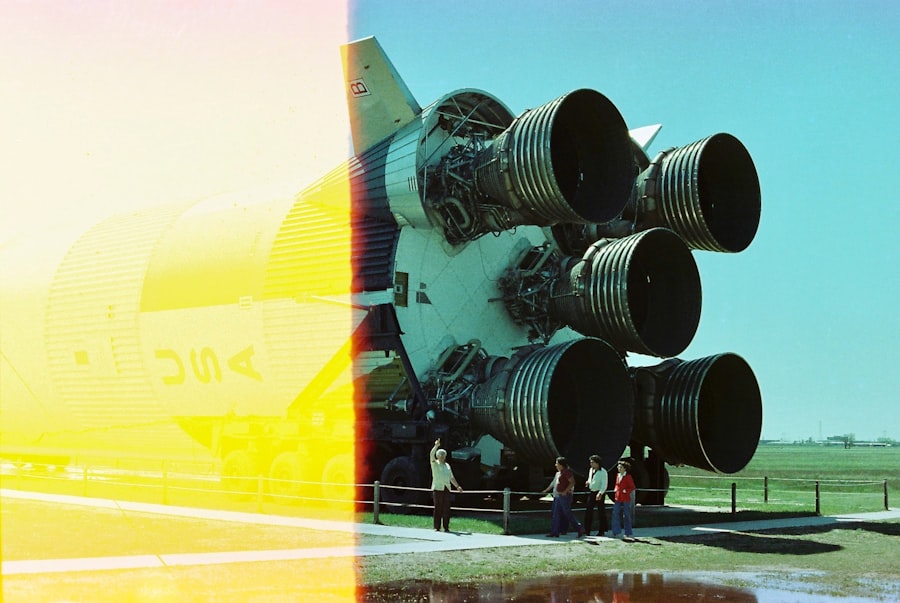
Despite its promising potential, motionless operation presents a host of challenges that must be addressed before practical implementation can occur. One significant hurdle is the need for precise control over thrust generation and direction. In a motionless state, any fluctuations in thrust could lead to instability, making it crucial for engineers to develop sophisticated control systems that can respond rapidly to changes in conditions.
This requires advanced algorithms and sensors capable of monitoring the engine’s performance in real-time. Another challenge lies in the thermal management of the nuclear ramjet engine. The intense heat generated by nuclear reactions must be effectively dissipated to prevent damage to the engine components.
In a motionless operation scenario, where airflow is minimal, maintaining optimal temperatures becomes even more critical. Engineers must devise innovative cooling solutions that can handle the extreme conditions associated with nuclear propulsion while ensuring safety and reliability.
Overcoming Technical Barriers
| Technical Barrier | Impact | Solution |
|---|---|---|
| Legacy Systems | Slow processes, lack of integration | Upgrade or replace with modern systems |
| Skills Gap | Low productivity, errors | Training and upskilling programs |
| Security Concerns | Data breaches, loss of trust | Implement robust security measures |
To realize the vision of motionless operation in nuclear ramjets, researchers are actively exploring various technical solutions. One approach involves enhancing the design of the engine’s nozzles to optimize thrust vectoring capabilities. By allowing for greater maneuverability and control over thrust direction, these advanced nozzles could help stabilize the vehicle during motionless operation.
Additionally, integrating artificial intelligence into control systems may provide the necessary adaptability to respond to dynamic flight conditions. Another avenue being pursued is the development of advanced materials that can withstand the extreme temperatures and radiation associated with nuclear propulsion. Innovations in ceramics and composites could lead to lighter, more durable components that enhance overall engine performance.
By addressing these technical barriers, engineers aim to create a nuclear ramjet capable of achieving motionless operation while maintaining safety and efficiency.
Safety Measures for Motionless Operation
Safety is paramount when dealing with nuclear technology, particularly in aviation applications. The implementation of motionless operation in nuclear ramjets necessitates rigorous safety measures to mitigate potential risks associated with radiation exposure and engine failure. One critical aspect involves establishing robust containment systems that prevent the release of radioactive materials in the event of an accident.
These systems must be designed to withstand extreme conditions while ensuring that any potential leaks are contained effectively. Moreover, comprehensive training programs for personnel involved in operating and maintaining nuclear ramjets are essential. Operators must be well-versed in emergency protocols and safety procedures to respond swiftly to any incidents that may arise during motionless operation.
Regular safety drills and simulations can help reinforce these protocols, ensuring that all team members are prepared for various scenarios.
Advantages of Motionless Operation
The advantages of motionless operation in nuclear ramjets extend beyond mere convenience; they encompass significant strategic benefits as well. One notable advantage is the ability to conduct prolonged missions without the need for constant movement. This capability could be invaluable for surveillance and reconnaissance operations, allowing aerial vehicles to remain stationary over target areas for extended periods while gathering critical intelligence.
Additionally, motionless operation could enhance stealth capabilities by reducing noise and heat signatures associated with traditional flight. A stationary vehicle would be less detectable by radar and infrared sensors, making it an ideal platform for covert operations. This advantage could shift the balance in military engagements, providing operators with unprecedented tactical flexibility.
Potential Applications of Motionless Operation
The potential applications for motionless operation in nuclear ramjets are vast and varied. In military contexts, these systems could be employed for intelligence gathering, surveillance, and reconnaissance missions where remaining undetected is paramount. The ability to hover silently over strategic locations would provide military planners with real-time data without exposing assets to enemy fire.
In civilian applications, motionless operation could revolutionize disaster response efforts by enabling aerial vehicles to remain stationary while assessing damage or delivering aid. This capability would allow for more efficient resource allocation during emergencies, ensuring that assistance reaches those in need promptly. Furthermore, scientific research missions could benefit from this technology by allowing researchers to conduct prolonged observations of environmental phenomena without interruption.
Environmental Impact of Motionless Operation
As concerns about environmental sustainability continue to grow, the environmental impact of motionless operation in nuclear ramjets warrants careful consideration. While nuclear propulsion offers significant advantages in terms of fuel efficiency and reduced greenhouse gas emissions compared to traditional fossil fuels, potential risks associated with radiation must be addressed comprehensively. The development of stringent safety protocols and containment measures will be essential in minimizing any adverse environmental effects associated with nuclear ramjets.
Additionally, ongoing research into alternative propulsion technologies may yield solutions that further reduce environmental impacts while maintaining operational effectiveness. Striking a balance between technological advancement and environmental stewardship will be crucial as nations explore the future of aerial propulsion systems.
Future Developments in Motionless Operation Technology
The future of motionless operation technology within nuclear ramjets holds great promise as researchers continue to push the boundaries of what is possible. Ongoing advancements in materials science, control systems, and propulsion engineering are paving the way for more efficient and reliable designs. As these technologies mature, they may lead to prototypes capable of demonstrating motionless operation under controlled conditions.
Moreover, collaboration between government agencies, private industry, and academic institutions will play a vital role in accelerating development efforts. By pooling resources and expertise, stakeholders can address technical challenges more effectively while ensuring that safety remains a top priority throughout the research process.
International Regulations and Oversight
Given the inherent risks associated with nuclear technology, international regulations and oversight will be critical in guiding the development and deployment of motionless operation in nuclear ramjets. Organizations such as the International Atomic Energy Agency (IAEA) play a pivotal role in establishing safety standards and protocols for nuclear applications worldwide. As nations pursue advancements in this field, it will be essential to foster collaboration among regulatory bodies to ensure consistent oversight across borders.
Establishing clear guidelines for testing, operation, and emergency response will help mitigate risks while promoting innovation within the industry.
The Future of Nuclear Ramjet’s Motionless Operation
In conclusion, the concept of motionless operation within nuclear ramjets represents an exciting frontier in aerospace technology. While significant challenges remain, ongoing research and development efforts hold promise for overcoming technical barriers and ensuring safety in this innovative field. The potential applications range from military operations to disaster response and scientific research, highlighting the versatility of this technology.
As nations continue to explore advanced propulsion systems, it is imperative that they prioritize safety measures and adhere to international regulations governing nuclear technology. By doing so, they can harness the benefits of motionless operation while minimizing risks associated with radiation exposure and environmental impact. The future of nuclear ramjets may very well depend on collaborative efforts among researchers, regulators, and industry stakeholders committed to advancing this groundbreaking technology responsibly.
The concept of a nuclear ramjet, which operates without moving parts, is a fascinating topic that delves into the innovative use of nuclear energy for propulsion. This technology, primarily explored during the Cold War era, aimed to harness the immense power of nuclear reactions to heat air and produce thrust. For those interested in exploring more about the intricacies of nuclear propulsion and its historical context, a related article can be found on the Hey Did You Know This website. This article provides additional insights into the technological advancements and challenges faced during the development of nuclear-powered engines. You can read more about it by visiting this page.
WATCH THIS! The Flying Nuclear Disaster: The Untold Story of the Cold War’s Most Dangerous Aircraft
FAQs
What is a nuclear ramjet?
A nuclear ramjet is a type of nuclear thermal rocket engine that uses a nuclear reactor to heat a propellant, such as hydrogen, to generate thrust.
How does a nuclear ramjet work without moving parts?
A nuclear ramjet works without moving parts by using the heat from a nuclear reactor to heat a propellant, such as hydrogen, and expel it at high velocity through a nozzle to generate thrust. This eliminates the need for traditional moving parts, such as turbines or pumps, found in conventional jet engines.
What are the advantages of a nuclear ramjet without moving parts?
The advantages of a nuclear ramjet without moving parts include reduced complexity, increased reliability, and potentially higher efficiency compared to traditional jet engines. Additionally, the absence of moving parts reduces the risk of mechanical failure.
What are the challenges of a nuclear ramjet without moving parts?
Challenges of a nuclear ramjet without moving parts include the development of safe and reliable nuclear reactor technology, as well as addressing potential environmental and safety concerns associated with nuclear propulsion systems.
Has a nuclear ramjet without moving parts been successfully developed and tested?
As of now, no nuclear ramjet without moving parts has been successfully developed and tested for practical use. Research and development in this area are ongoing, with various technical and regulatory challenges to be addressed.