You’re staring at your lamp, the warm glow a familiar comfort. But have you ever paused to consider the quiet marvel within that bulb, the intricate science that dictates its lifespan? It’s not just a matter of randomly burning out; there’s a complex dance of physics and chemistry at play. Understanding this dance can demystify those moments when your light flickers and dies, and perhaps even offer a glimpse into the future of illumination.
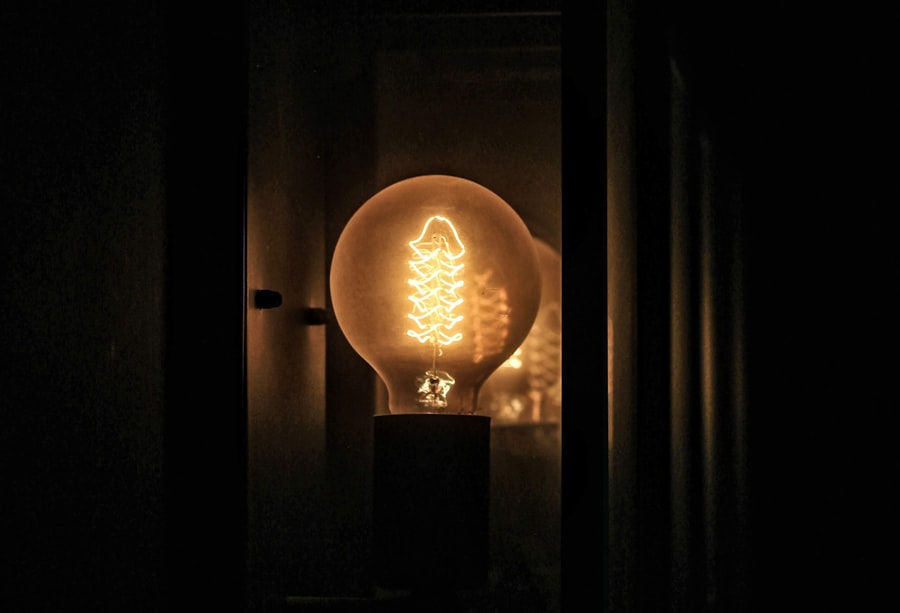
At the heart of many traditional incandescent bulbs lies the filament, often a thin strand of tungsten. This filament is the workhorse, responsible for transforming electrical energy into light. However, it’s also the primary bottleneck for your bulb’s lifespan.
Why Tungsten?
You might wonder why tungsten is the material of choice. Tungsten boasts an exceptionally high melting point, exceeding 3,400 degrees Celsius (6,152 degrees Fahrenheit). This is crucial because the filament needs to get incredibly hot – around 2,700 degrees Celsius (4,892 degrees Fahrenheit) – to produce visible light. If the material couldn’t withstand such extreme temperatures, it would simply vaporize instantly. It’s like trying to build a furnace out of ice; it just won’t work.
Incandescent Operation: A Controlled Evaporation
The process of producing light in an incandescent bulb is, in essence, a controlled form of evaporation. When electricity flows through the tungsten filament, it encounters resistance. This resistance causes the filament to heat up, radiating energy in the form of light and heat. However, even at its incredibly high operating temperature, a tiny amount of tungsten does evaporate, or sublimate, from the filament and deposit on the cooler inner walls of the glass bulb. This gradual loss of material is the primary adversary to your bulb’s longevity. Over time, the filament becomes thinner, its resistance increases, and eventually, it becomes so weak that it breaks, signifying the end of its service.
The Illusion of “Burning Out”
The term “burning out” is a bit of a misnomer. The filament doesn’t actually combust in the way a piece of wood burns. Instead, it’s the result of this gradual sublimation and thinning. Imagine a thread that’s been repeatedly stretched and heated; eventually, it snaps. The tungsten filament undergoes a similar, albeit much more extreme, physical degradation.
Filament Design: A Balancing Act
Engineers painstakingly design the filament to optimize both light output and lifespan. The thickness, length, and coiling pattern of the filament are all critical factors. A thicker filament can withstand more heat and last longer, but it also offers more resistance, producing less light for the same amount of power. A thinner filament produces more light but evaporates faster. The coiling of the filament allows a longer piece of tungsten to be packed into a small space, increasing resistance and light output while managing the evaporation process. It’s a delicate tightrope walk between brightness and endurance.
The limited lifespan of lightbulbs can be attributed to several factors, including the materials used in their construction and the way they generate light. For a deeper understanding of this topic, you can explore the article that discusses the science behind lightbulb longevity and the various technologies that impact their durability. To read more, visit this article.
The Environment Inside the Bulb: A Crucial Factor
While the filament is the star of the show, the environment within the glass bulb plays a supporting, yet equally vital, role in determining its lifespan. The composition of the gas inside, or the absence thereof, directly impacts the rate at which the filament degrades.
The Vacuum Approach: Early Challenges
Early incandescent bulbs were evacuated, meaning they were filled with a vacuum. The idea was to prevent the filament from reacting with any gases. However, this approach had a significant drawback. Without any gas molecules to impede it, the tungsten vaporized and deposited on the bulb walls much more rapidly, leading to very short lifespans. It was like trying to contain steam in an empty bottle; it would immediately dissipate.
The Inert Gas Advantage: Slowing Down Vaporization
The introduction of inert gases into the bulb revolutionized incandescent technology. Gases like argon or nitrogen, or a mixture of both, are used. These gases are chosen because they are chemically unreactive, meaning they won’t oxidize or degrade the tungsten filament. The presence of these inert gas molecules has a crucial effect: they collide with the evaporating tungsten atoms, slowing down their journey and causing them to deposit back onto the filament rather than escaping completely. This process, known as the “gas-filled bulb,” significantly extends the filament’s life. Think of it as a gentle buffer, cushioning the escape of tungsten atoms and sending most of them back home.
The Role of Halogen Gas: A Regenerative Cycle
A further advancement came with the development of halogen lamps. These bulbs contain a small amount of a halogen gas, such as iodine or bromine. This is where the science gets particularly interesting. The halogen gas creates a regenerative cycle that helps to preserve the filament. When tungsten evaporates from the hot filament, it combines with the halogen gas to form a tungsten halide compound. This compound then circulates within the bulb. When it comes into contact with the extremely hot filament, the tungsten halide breaks down, releasing the tungsten back onto the filament and freeing the halogen gas to participate in another cycle. This effectively “cleans” the filament and slows down its degradation. It’s akin to a self-repairing mechanism, albeit a microscopic one, constantly working to patch up the filament.
The Trade-offs of Gas Fillings
While inert and halogen gases significantly improve lifespan, they aren’t without their own trade-offs. Higher gas pressures can lead to brighter light but also increase the stress on the filament and potentially decrease its life. Conversely, lower gas pressures might extend life but reduce light output. The specific mixture and pressure of gas are carefully calibrated to achieve a desired balance between brightness, lifespan, and energy efficiency.
The Curse of Heat: Energy Loss and Degradation
One of the most significant limitations of incandescent light bulbs is their inefficiency, a direct consequence of the high temperatures required to produce light. This excessive heat is not only a wasted form of energy but also a major contributor to the degradation of the bulb’s components and, ultimately, its lifespan.
Incandescent Bulbs: Masters of Heat, Not Light
Incandescent bulbs are, by their nature, inefficient. Estimates suggest that only about 5-10% of the electrical energy consumed is converted into visible light. The vast majority, around 90-95%, is lost as heat. This is why an incandescent bulb feels so hot to the touch. It’s like pouring water into a sieve; most of it leaks out before you can use it.
Thermal Stress on the Filament
This intense heat creates immense thermal stress on the tungsten filament. The filament expands and contracts repeatedly as the bulb is switched on and off. These repeated expansions and contractions, known as thermal cycling, weaken the tungsten over time, making it more susceptible to breaking. Imagine bending a metal wire back and forth repeatedly; eventually, it will fatigue and snap. The filament experiences a similar, though far more rapid, process.
Degradation of Other Components
The excessive heat generated by incandescent bulbs doesn’t just affect the filament; it can also degrade other components within the bulb. The glass envelope itself can become brittle and prone to cracking over prolonged exposure to high temperatures. The base of the bulb, where the electrical connections are made, can also experience heat-related degradation, potentially leading to poor electrical contact and further power loss.
The “Shock” of Cold Air
Switching on a cold incandescent bulb exposes the filament to a sudden surge of current, which causes it to rapidly heat up. This abrupt change can be particularly stressful. Similarly, if the bulb is still hot and is then exposed to a sudden draft of cold air (for example, if a window is opened nearby), the rapid temperature change can cause thermal shock, potentially leading to micro-fractures in the filament. This is why some manufacturers recommend allowing incandescent bulbs to cool down completely before attempting to replace them, a practical application of understanding these thermal stresses.
The Evolution of Lighting: Beyond the Incandescent
The understanding of the limitations of incandescent technology spurred innovation, leading to entirely new ways of generating light that bypass many of the inherent weaknesses of the filament-based approach.
The Fluorescent Revolution: A Different Principle
Fluorescent lamps operate on a fundamentally different principle. Instead of heating a filament, they use electricity to excite a gas (typically mercury vapor) within a tube. This excited gas emits ultraviolet (UV) radiation. This UV radiation then strikes a phosphor coating on the inside of the glass tube, causing the phosphor to glow and produce visible light. This process is far more efficient than incandescence. It’s like comparing a hot coal to a glow stick; one generates light through intense heat, the other through a chemical reaction.
The Compact Fluorescent Lamp (CFL): A More Familiar Form
CFLs are essentially miniaturized fluorescent tubes, designed to fit into standard screw-in sockets. While they brought significant energy savings and longer lifespans compared to incandescent bulbs, they still contained mercury and could suffer from issues related to the starting mechanism and the gradual degradation of the phosphor coating.
The Dawn of LEDs: Solid-State Illumination
Light Emitting Diodes (LEDs) represent the latest significant leap in lighting technology. LEDs are semiconductor devices that emit light when an electric current passes through them. They are exceptionally efficient, durable, and offer a wide range of color temperatures and brightness levels. Unlike incandescent bulbs that rely on heating a material to incandescence, LEDs generate light through a process called electroluminescence, a phenomenon that doesn’t involve high temperatures. This solid-state nature means there are no filaments to break or gases to escape.
The Importance of Heat Management in LEDs
While LEDs produce much less heat than incandescent bulbs, heat management is still a critical factor in their lifespan. The semiconductor material that produces the light can degrade if it overheats. Therefore, LEDs often incorporate heat sinks – structures designed to dissipate heat away from the LED chip. Effective heat management ensures that the LED operates within its optimal temperature range, maximizing its lifespan. It’s like keeping a powerful engine cool to ensure it runs smoothly and reliably for years.
The limited lifespan of lightbulbs can be attributed to several factors, including the materials used in their construction and the way they generate light. For a deeper understanding of this topic, you might find it interesting to explore a related article that discusses the science behind lightbulb longevity and the innovations aimed at extending their life. You can read more about it here.
The Future of Light: Durability and Intelligence
| Factor | Description | Impact on Lifespan | Typical Metric |
|---|---|---|---|
| Filament Evaporation | The tungsten filament slowly evaporates when heated, thinning over time until it breaks. | Major cause of filament failure | Filament life: ~1,000 hours (incandescent) |
| Thermal Stress | Repeated heating and cooling cycles cause expansion and contraction, leading to filament fatigue. | Reduces filament durability | Typical on/off cycles: 1,000 – 10,000 |
| Voltage Fluctuations | Higher than rated voltage increases filament temperature, accelerating evaporation and failure. | Shortens bulb life significantly | 10% voltage increase can reduce life by ~50% |
| Gas Fill Quality | Inert gases inside the bulb reduce filament evaporation and improve efficiency. | Extends lifespan compared to vacuum bulbs | Gas types: Argon, Nitrogen |
| Manufacturing Defects | Impurities or weak spots in filament or glass can cause premature failure. | Variable impact depending on defect severity | Failure rate varies by manufacturer |
| Operating Temperature | Higher operating temperatures accelerate filament degradation. | Directly affects lifespan | Typical filament temp: ~2,500°C |
The trajectory of lighting technology is clearly pointing towards greater durability, energy efficiency, and increasingly intelligent features. The limitations we’ve explored in older technologies have paved the way for these advancements.
Extending Lifespan Through Material Science
Ongoing research in material science continues to push the boundaries of durability for all types of lighting. For LEDs, this involves developing new semiconductor materials that are more resistant to heat and electrical stress. For future lighting technologies, the focus may shift to entirely new methods of light generation that are inherently more robust and less prone to degradation.
The Role of Smarter Electronics
The “intelligence” of modern lighting often resides in its electronic components – the drivers and control systems. These electronics are designed to operate within specific parameters, protect the light source from power surges, and optimize its performance for maximum lifespan. Think of these electronics as the sophisticated guardian of your light source, ensuring it operates under ideal conditions.
Predicting and Managing Failure
While “burning out” may become a less common phenomenon, understanding the failure modes of any lighting technology is crucial for predicting lifespan and ensuring reliability. This involves detailed testing, simulation, and analysis of component degradation. For some applications, predictive maintenance systems might even alert you before a light source fails, allowing for planned replacements rather than unexpected disruptions.
Sustainability and Longevity
The drive for longer-lasting lighting technologies is not just about convenience; it’s also a significant factor in sustainability. Bulbs that last longer mean less waste, fewer manufacturing resources consumed, and reduced energy consumption over their lifetime. The science behind bulb lifespan is, therefore, directly intertwined with our efforts to create a more sustainable future. As you continue to flick switches and illuminate your world, remember the complex science working diligently behind the scenes, ensuring that light, in its ever-evolving forms, can continue to brighten your life.
FAQs
Why do lightbulbs have a limited lifespan?
Lightbulbs have a limited lifespan because their components degrade over time due to heat, electrical stress, and material fatigue. For example, in incandescent bulbs, the filament gradually evaporates and thins until it breaks, while in LED bulbs, the semiconductor materials and electronic components can deteriorate.
What factors affect the lifespan of a lightbulb?
Several factors influence a lightbulb’s lifespan, including the type of bulb (incandescent, fluorescent, LED), operating temperature, voltage fluctuations, frequency of switching on and off, and the quality of materials used in manufacturing.
How does the type of lightbulb impact its longevity?
Different types of lightbulbs have varying lifespans due to their design and technology. Incandescent bulbs typically last around 1,000 hours, fluorescent bulbs last about 7,000 to 15,000 hours, and LED bulbs can last 25,000 hours or more because they generate less heat and have more durable components.
Can frequent switching on and off reduce a lightbulb’s lifespan?
Yes, frequently turning a lightbulb on and off can shorten its lifespan, especially for fluorescent and some LED bulbs. The startup process causes thermal and electrical stress on the components, which can lead to earlier failure.
Is it possible to extend the lifespan of a lightbulb?
To extend a lightbulb’s lifespan, use bulbs appropriate for the fixture and environment, avoid frequent switching, ensure stable voltage supply, and keep the bulb cool by providing adequate ventilation. Using energy-efficient bulbs like LEDs also helps reduce wear and tear.