
You stand at a precipice, not of rock and wind, but of potential and consequence. Before you lies a new technology, a revolutionary medicine, a policy that promises societal advancement. But with this promise comes an shadow: the unknown. How do you navigate this landscape, where the desire for progress clashes with the imperative of safety? This is the heart of the Precautionary Principle versus the “prove harm” approach, a fundamental dilemma in decision-making across science, policy, and ethics.
You’ve likely encountered situations where you’ve had to make a significant decision with incomplete information. Imagine you’re planning a camping trip in a remote area. You know the weather forecast is uncertain, with a small chance of severe storms. Do you pack for every possible scenario, lugging extra gear and making your journey more arduous? Or do you travel light, hoping for the best, and risk being unprepared if the worst occurs? This is, in essence, the Precautionary Principle at play.
Defining the Principle: A Shield Against the Unforeseen
At its core, the Precautionary Principle suggests that if an action or policy has a suspected risk of causing harm to the public or the environment, in the absence of scientific consensus that harm would not ensue, the burden of proof falls on those taking the action. It’s a proactive stance, a form of anticipatory governance. Think of it as installing safety nets before the tightrope walker begins their performance, rather than waiting for a fall to occur.
The “In Absence of Scientific Consensus” Clause
This phrase is crucial. It doesn’t demand absolute certainty before any action is taken. Instead, it acknowledges the limitations of scientific knowledge. It’s like asking a doctor about a new, experimental treatment: they might not be able to definitively say it will work or won’t have side effects, but if there are plausible concerns, they’ll proceed with caution, monitoring closely.
The “Suspected Risk of Harm” Threshold
The principle is triggered by a suspected risk, not necessarily a proven one. This is where it diverges from the “prove harm” approach. The suspicion doesn’t need to be based on definitive evidence of past damage, but rather on plausible scientific reasoning or preliminary indicators. It’s akin to smelling smoke; you don’t need to see the fire to investigate.
Historical Roots and Evolution
The Precautionary Principle isn’t a fleeting fad. Its intellectual lineage can be traced back to considerations of public health and environmental protection that have evolved over centuries. Early public health measures, like quarantine during pandemics, were rooted in a similar logic: acting to prevent potential harm even without absolute proof of contagion pathways.
Early Environmental Stirrings
In the latter half of the 20th century, as our understanding of complex ecological systems grew, the principle found a stronger foothold in environmental policy. The recognition that ecosystems are interconnected and can suffer irreversible damage from seemingly minor interventions led to calls for caution.
International Adoption and Frameworks
The principle has been enshrined in numerous international treaties and declarations, including the Rio Declaration on Environment and Development (1992) and the Treaty on European Union. These agreements reflect a global recognition of the need for a more cautious approach to potentially damaging activities. You see it in declarations about climate change, biodiversity loss, and the introduction of genetically modified organisms.
Applications Across Diverse Fields
The Precautionary Principle is not confined to a single domain. You’ll find its influence in:
- Environmental Policy: Regulating chemicals, managing waste, and setting standards for industrial emissions often incorporate precautionary measures.
- Public Health: Decisions about food safety, vaccine introductions, and the regulation of new medical technologies can be guided by its tenets.
- Technology and Innovation: The development and deployment of nanotechnology, artificial intelligence, and other novel technologies can face precautionary scrutiny.
- Climate Change Mitigation: The urgency of climate action, even with ongoing scientific debate about precise impacts, often invokes a precautionary approach.
The ongoing debate between the precautionary principle and the “prove harm first” approach continues to shape discussions in environmental policy and public health. For a deeper understanding of these contrasting viewpoints, you can explore a related article that delves into the implications of each stance and their impact on decision-making processes. To read more, visit this article.
The Burden of Proof: The “Prove Harm” Doctrine
Now, turn your attention to the counterpoint: the “prove harm” approach, also known as the evidentiary standard or the polluter pays principle in certain contexts. This perspective demands concrete evidence of harm before regulatory action is taken. It’s a philosophy rooted in a more traditional, often legalistic, interpretation of justice and responsibility.
The Foundation of Evidence: What Constitutes Proof?
Imagine you are a judge presiding over a lawsuit. You cannot convict someone based on suspicion alone. You need evidence – testimony, forensic reports, witness accounts – that clearly demonstrates guilt. The “prove harm” approach operates on a similar principle, but applied to potential future harm.
Scientific Rigor and Causation
This perspective emphasizes robust scientific evidence, including controlled studies, statistical analysis, and a clear demonstration of a causal link between an action and the alleged harm. It’s not enough to show a correlation; you must demonstrate that A directly leads to B. This requires meticulous research and often lengthy, expensive validation processes.
The Cost of Delay: Waiting for Undisputed Evidence
The core argument for this approach is that excessive caution can stifle innovation and impose unnecessary burdens. If every new development must wait until every conceivable negative outcome is definitively disproven, progress grinds to a halt. Think of the early days of penicillin; if the stringent requirements of “prove harm” had been in place, its life-saving potential might have been delayed significantly.
Risk Assessment: Quantifying the Danger
A key component of the “prove harm” approach is risk assessment. This involves identifying potential hazards, analyzing the likelihood of their occurrence, and estimating the severity of their impact. The goal is to quantify the risk and make informed decisions based on these calculations.
Probability and Severity Matrix
This method often involves a matrix where the probability of a negative event is cross-referenced with the severity of its consequences. Actions with high probability and high severity might be flagged for immediate action, while those with low probability and low severity might be deemed acceptable.
Economic Considerations and Cost-Benefit Analysis
This approach frequently incorporates economic considerations. A cost-benefit analysis might be performed to determine if the potential benefits of a new technology or policy outweigh the potential costs of implementing precautionary measures. This can be a delicate balancing act, as human health and environmental well-being are not always easily quantifiable in monetary terms.
Criticisms of the “Prove Harm” Approach
Despite its emphasis on evidence, the “prove harm” doctrine faces significant criticism, particularly in contexts of uncertainty.
The Inertia of Damage
One of the most potent criticisms is that by the time harm is definitively proven, it may be too late to reverse the damage. Ecosystems can collapse, diseases can become endemic, and societal structures can be irrevocably altered. This is like waiting for the house to be engulfed in flames before calling the fire department.
The Difficulty of Proving Negativity
It is often exponentially more difficult and resource-intensive to prove that something will not cause harm than it is to demonstrate that it has caused harm, especially for complex, long-term, or indirect effects. The scientific community may find it challenging to definitively disprove every potential negative outcome for novel technologies.
Finding the Balance: Navigating the Grey Areas
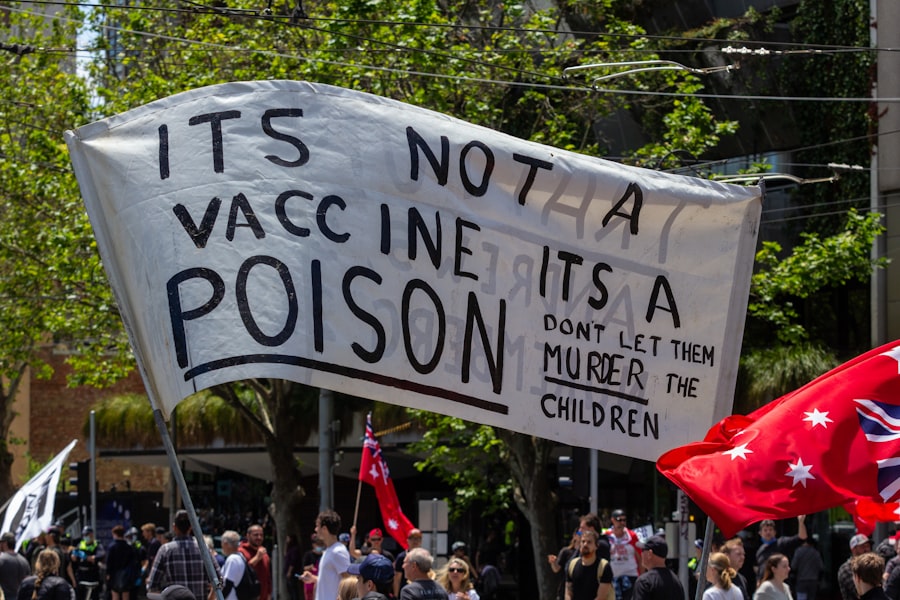
You stand at the crossroads, the Precautionary Principle on one path, the “prove harm” doctrine on the other. Which way do you turn? The reality is, neither extreme offers a perfect solution. The most effective path often lies in finding a dynamic balance between these two philosophies.
Integrating Precaution and Evidence
The most pragmatic approach is not to choose one over the other, but to integrate their strengths. You can implement a system where initial steps are guided by precaution, and then as evidence emerges, the level of strictness can be adjusted.
Phased Introduction of New Technologies
Imagine launching a new vaccine. A precautionary approach might involve initial rigorous testing on smaller populations and close monitoring for adverse effects. As more data is gathered and analyzed (proving harm or lack thereof), more widespread deployment can be considered.
Adaptive Management Strategies
This involves setting environmental or safety targets, implementing a policy or technology, and then continuously monitoring the outcomes. If the outcomes are negative, the strategy is adapted. This is like carefully steering a ship, constantly adjusting the rudder based on the waves and currents.
The Role of Scientific Uncertainty
Scientific uncertainty is not a void to be avoided, but a landscape to be navigated. Both the Precautionary Principle and the “prove harm” approach grapple with this uncertainty, but in different ways.
Acknowledging the Limits of Knowledge
Recognizing that science is a process, not a fixed destination, is crucial. There will always be questions that science cannot definitively answer in the short term. The challenge is to make decisions in the face of this inherent ambiguity.
Communicating Uncertainty Effectively
Clear and honest communication about scientific uncertainty is paramount. Stakeholders need to understand what is known, what is not known, and the implications of these unknowns for decision-making. This prevents either undue alarm or dangerous complacency.
Stakeholder Engagement and Democratic Deliberation
Decisions with broad societal implications should not be made in isolation. Engaging a diverse range of stakeholders, from scientists and policymakers to affected communities and industry representatives, is essential for finding a balanced approach.
Different Perspectives, Diverse Risks
Each stakeholder group may experience potential risks and benefits differently. A farmer whose land is affected by a new agricultural technology will have a different perspective than a consumer of the resulting product, or a scientist developing the technology. Inclusive dialogue helps to identify and address these varied concerns.
Building Consensus and Trust
Open and transparent dialogue can help build consensus around risk management strategies and foster trust between different groups. This deliberative process allows for the consideration of ethical, social, and economic factors alongside purely scientific ones.
The Dynamic Nature of Risk Assessment

Risk is not a static entity. What was once considered a negligible risk can become a significant concern as new information emerges or as the context changes. Therefore, risk assessment needs to be a dynamic and iterative process.
Re-evaluating Precautionary Measures
As scientific understanding evolves, precautionary measures may need to be strengthened, relaxed, or modified. A technology initially deemed too risky for widespread adoption might become acceptable with further research and safeguards.
The Case of Genetically Modified Organisms (GMOs)
The debate around GMOs often exemplifies this dynamic. Early concerns about potential environmental and health impacts, prompting a precautionary approach from some regulators, have been met with subsequent research and risk assessments that have informed a more nuanced, and in some regions, less restrictive, regulatory framework.
The Importance of Ongoing Monitoring and Research
The commitment to ongoing monitoring and research is non-negotiable. This is where the “proving harm” element can, and should, feed back into the precautionary framework.
Post-Market Surveillance
For new products, medicines, or technologies, post-market surveillance is a critical tool. It allows for the detection of rare side effects or unintended consequences that may not have been apparent during pre-market testing.
Funding of Independent Research
Ensuring adequate funding for independent research into the potential impacts of new developments is vital to continually inform the risk assessment process and to address lingering scientific uncertainties.
The ongoing debate between the precautionary principle and the “prove harm first” approach continues to shape discussions in environmental policy and public health. A recent article on this topic highlights the complexities of balancing innovation with safety measures. For a deeper understanding of these contrasting viewpoints, you can explore the article found here, which delves into the implications of each stance and offers insights into how they influence regulatory decisions.
Ethical Frameworks and Societal Values
| Aspect | Precautionary Principle | Prove Harm First |
|---|---|---|
| Definition | Take preventive action in the face of uncertainty to avoid potential harm. | Require evidence of harm before taking regulatory or preventive action. |
| Approach | Proactive and preventive. | Reactive and evidence-based. |
| Risk Tolerance | Low tolerance for potential risks, even if uncertain. | Higher tolerance until harm is demonstrated. |
| Burden of Proof | On proponents to demonstrate safety before approval. | On opponents to demonstrate harm before restriction. |
| Examples of Application | Environmental policies, chemical regulations, public health measures. | Product liability, drug approvals, legal cases. |
| Advantages | Prevents irreversible damage, encourages safer innovation. | Prevents unnecessary restrictions, supports innovation and economic growth. |
| Disadvantages | May hinder technological progress, can be costly and overly cautious. | Potentially allows harm before action, slower response to emerging risks. |
Ultimately, the debate between the Precautionary Principle and the “prove harm” approach is not purely a technical or scientific one. It is deeply rooted in ethical considerations and the values a society chooses to prioritize.
The Value of Human Life and Health
How much value do you place on a single human life or the health of a community? The Precautionary Principle tends to err on the side of protecting these values, even at the cost of potential economic opportunity or technological advancement.
The “Safe Bet” vs. The “Calculated Risk”
You might consider the Precautionary Principle as a “safe bet” when the stakes are extremely high. The “prove harm” approach, conversely, is often viewed as a “calculated risk,” where the potential rewards justify a higher degree of uncertainty.
Intergenerational Equity and Environmental Stewardship
Decisions made today can have profound consequences for future generations. This concept, known as intergenerational equity, is a cornerstone of the Precautionary Principle.
Leaving a Habitable Planet for Our Descendants
The idea of environmental stewardship encapsulates the ethical responsibility to protect the planet’s resources and ecosystems for those who will come after us. This often necessitates a precautionary stance on activities that could cause irreversible environmental damage.
The Rights of Nature
In some philosophical discussions, this extends to considering the rights of nature itself, suggesting that natural ecosystems have inherent value independent of their utility to humans, further bolstering the case for a precautionary approach to their protection.
The Precautionary Principle as a Moral Imperative
For many, the Precautionary Principle is not merely a policy tool, but a moral imperative. It reflects a deep-seated responsibility to act with care and foresight in a world where the consequences of our actions can be far-reaching and long-lasting.
Responsibility for the Unknown
When you don’t know the full extent of a risk, the ethically responsible action is often to proceed with caution. This is about acknowledging your responsibility for the potential, even if unproven, harm your actions might cause.
The Cost of Inaction
While the “prove harm” approach focuses on the cost of action, a precautionary framework also considers the often-unforeseen and catastrophic cost of inaction in the face of potential, unaddressed risks.
You stand at this precipice not to be paralyzed by indecision, but to be empowered by thoughtful consideration. By understanding the nuances of the Precautionary Principle and the “prove harm” doctrine, and by actively seeking to find a balanced and adaptive approach, you can navigate the complex terrain of progress and responsibility with greater wisdom and foresight, ensuring that your journey forward is both innovative and secure.

WATCH NOW ▶️ WARNING: 50 Chemicals Banned Overseas (In Your Home)
FAQs
What is the precautionary principle?
The precautionary principle is a strategy for approaching issues of potential harm when extensive scientific knowledge is lacking. It suggests that if an action or policy has a suspected risk of causing harm to the public or the environment, precautionary measures should be taken even if some cause-and-effect relationships are not fully established scientifically.
What does “prove harm first” mean in regulatory contexts?
“Prove harm first” refers to a regulatory approach where action is only taken after clear evidence demonstrates that a substance, activity, or policy causes harm. This approach requires scientific proof of damage before restrictions or interventions are implemented.
How do the precautionary principle and “prove harm first” differ?
The key difference lies in the timing and burden of proof. The precautionary principle advocates for preventive action in the face of uncertainty to avoid potential harm, while the “prove harm first” approach waits for conclusive evidence of harm before taking regulatory measures.
In what situations is the precautionary principle typically applied?
The precautionary principle is often applied in environmental protection, public health, and emerging technologies where scientific uncertainty exists but the potential risks could be significant or irreversible. Examples include chemical regulation, climate change policies, and genetically modified organisms.
What are some criticisms of the precautionary principle?
Critics argue that the precautionary principle can lead to overly cautious policies that hinder innovation and economic development. It may also result in regulatory paralysis due to the difficulty of proving a lack of harm, potentially causing unnecessary fear or misallocation of resources.