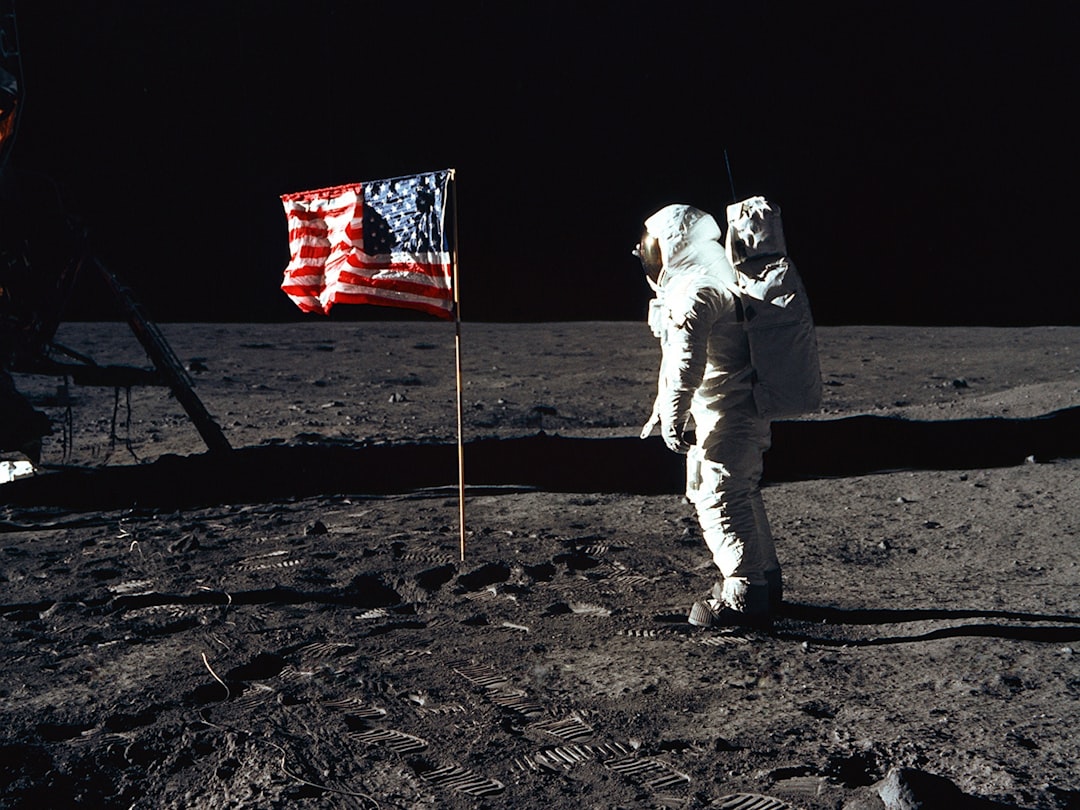
The moon landing, a feat of human ingenuity and daring, remains one of the most celebrated achievements of the 20th century. For many, the image of Neil Armstrong’s boot touching lunar soil is an indelible symbol of progress. However, this historic event has also been a fertile ground for skepticism and elaborate conspiracy theories, positing that the entire endeavor was a staged fabrication. This article delves into the various claims and counter-arguments, examining the evidence and the enduring appeal of these theories.
The seeds of doubt regarding the authenticity of the moon landings were sown not long after the Apollo 11 mission. While the majority of the world celebrated, a small but vocal minority began to question the official narrative. These initial doubts often stemmed from a combination of factors: the unprecedented nature of the achievement, the intense geopolitical climate of the Cold War, and a lingering public mistrust of governmental institutions. The sheer scale and ambition of the Apollo program, coupled with the inherent dangers of space travel, made it a natural target for skepticism, especially for those prone to questioning established narratives.
The Cold War Context
The space race was an undeniable proxy battle between the United States and the Soviet Union, a grand arena for technological prowess and ideological superiority. In such an environment, the stakes were incredibly high. Some theorists suggest that the pressure to beat the Soviets to the moon was so immense that a staged landing became a plausible, albeit extreme, solution. This narrative often paints NASA as a desperate organization willing to deceive the world to maintain America’s global standing. However, this argument tends to overlook the enormous human and financial investment in the actual space program, an investment that would have been largely wasted if the entire project were a charade. The intricate network of thousands of scientists, engineers, and technicians involved in the Apollo missions across various government agencies and private companies would have made a secret staging operation an organizational nightmare of unprecedented scale.
Early Skepticism and Media Influence
Early criticisms often appeared in niche publications and later gained traction through the burgeoning alternative media landscape. Publications like Bill Kaysing’s 1974 self-published book “We Never Went to the Moon: America’s Thirty Billion Dollar Swindle” served as foundational texts for the conspiracy movement. Kaysing, a former technical writer for Rocketdyne, a company involved in the Apollo program, repurposed his insider knowledge to fuel speculative claims. While his arguments were largely anecdotal and lacked concrete evidence, they captured the public imagination. The media, too, inadvertently played a role, with some sensationalist reporting unintentionally lending credibility to these fringe theories in their pursuit of captivating headlines. The human tendency to be drawn to the subversive and the extraordinary means that narratives challenging accepted truths often find an audience, regardless of their evidential basis.
Moon landing conspiracy theories have long captivated the public imagination, leading many to question the authenticity of the historic Apollo missions. A related article that delves deeper into these theories and examines the evidence supporting the moon landings can be found at this link. This resource provides insights into the various claims made by conspiracy theorists and the scientific rebuttals that affirm the reality of humanity’s journey to the moon.
Examining the Core Arguments of the Conspiracy Theorists
The moon landing conspiracy theories are built upon a series of recurring arguments, often pointing to perceived anomalies in photographic evidence, physics, and technological capabilities. These arguments, while superficially compelling to the untrained eye, often unravel under closer scrutiny.
Photographic Anomalies: Flags, Stars, and Shadows
One of the most frequently cited pieces of “evidence” against the moon landing involves photographs and videos from the missions. Theorists often point to the American flag appearing to “wave” in the vacuum of space, the absence of visible stars in the lunar sky, and parallel shadows that appear to contradict the idea of a single light source (the sun).
• The Waving Flag: The “waving” flag is a common misconception. The flag was mounted on an L-shaped pole, with a horizontal bar extended along its top edge to make it appear to wave in the wind. This was necessary to ensure the flag was unfurled and visible in the airless environment of the moon. The wrinkles and creases in the flag, therefore, are a result of its packaging and the way it was mounted, not due to wind.
• Absence of Stars: The lack of visible stars in the Apollo mission photographs is entirely consistent with photographic principles. The lunar surface and the astronauts’ suits were brightly lit by the sun. To capture these bright subjects, the cameras used fast shutter speeds and small apertures, which effectively blocked out the faint light from distant stars. It’s akin to taking a picture of a brightly lit stage – the performers are clear, but the background lights of the distant theatre are not.
• Parallel Shadows: The human eye can be easily deceived by perspective. On the moon, with its unique terrain and lack of atmosphere to diffuse light, shadows can appear to diverge or converge in ways that seem counterintuitive. However, careful analysis of lunar topography and the geometry of light consistently shows that observed shadows are indeed cast by a single, distant light source – the sun. The varying angles are a natural consequence of uneven ground and differing perspectives of the photographic lens, not evidence of multiple light sources or a staged set.
Radiation and Van Allen Belts
A significant concern raised by skeptics revolves around the Van Allen radiation belts, regions of energetic charged particles trapped by Earth’s magnetic field. Theorists contend that the radiation levels within these belts would have been lethal to the astronauts, making a safe passage impossible.
• Navigating the Radiation Belts: While the Van Allen belts do pose a radiation hazard, the Apollo missions were carefully planned to minimize exposure. The spacecraft passed through the weakest parts of the belts, and the transit time was relatively short. The Apollo command module’s aluminum hull provided sufficient shielding against the majority of the radiation. Furthermore, extensive research and testing were conducted to understand and mitigate these risks, well before the first manned missions. The concept of “radiation dose” is crucial here; astronauts received a dose well within acceptable safety limits established by scientific consensus. Comparing it to a swift dash through a sprinkler versus a prolonged shower in a downpour helps illustrate the difference.
• Debunking Radiation Fatalities: The idea that astronauts would have died from radiation exposure is not supported by scientific data or the experiences of subsequent space missions. Numerous uncrewed probes and satellites have traversed the belts, and later missions with human astronauts have also passed through them safely, employing similar shielding and trajectory planning. The assertion that the radiation was an insurmountable barrier is a misinterpretation of the actual physical challenges and the engineering solutions implemented.
Lack of blast crater and Dust on Lander Pads
Another point of contention is the supposed absence of a blast crater beneath the lunar module and the pristine nature of its landing pads. Theorists argue that the powerful descent engine should have created a visible crater and kicked up significant amounts of dust.
• Lunar Engine Thrust and Vacuum: The lunar module’s descent engine was throttling down considerably as it approached the lunar surface. In a vacuum, the exhaust gases expand rapidly, creating a wide, diffuse plume rather than a concentrated jet that would excavate a deep crater. The engine’s thrust was precisely controlled to ensure a soft landing, not to blast a hole.
• Dust Dynamics in a Vacuum: The behavior of dust on the moon is also different from Earth. Without an atmosphere, there are no air currents to carry dust away in a cloud. The dust that was unsettled by the engine would have largely moved outwards radially, settling quickly due to the moon’s lower gravity. While some dust was certainly disturbed, the vast “crater” imagined by conspiracists is not what real-world physics in a vacuum would predict. The landing pads indeed collected some dust, but not in the dramatic manner some theorists expect, again owing to the absence of atmospheric dynamics. It’s like gently breathing on a dusty surface versus blowing into it; the former causes minimal disturbance.
The Enduring Appeal of Conspiracy Theories
Despite overwhelming evidence and scientific explanations, moon landing conspiracy theories persist. Their longevity speaks to deeper psychological and sociological factors that make such narratives so compelling.
Psychological Factors: Cognitive Dissonance and Confirmation Bias
Human beings are prone to cognitive biases, which can significantly influence their perception of reality. Confirmation bias, for instance, leads individuals to seek out and interpret information in a way that confirms their existing beliefs, while ignoring contradictory evidence. When confronted with overwhelming evidence for the moon landings, those adhering to conspiracy theories may experience cognitive dissonance – the mental discomfort of holding conflicting beliefs. To resolve this dissonance, they might reject the scientific explanations, framing them as part of the “cover-up.”
• Narrative Cohesion: Conspiracy theories often offer a coherent, albeit fabricated, narrative that explains perceived discrepancies and provides a sense of understanding in a complex world. They can be more emotionally satisfying than the often intricate and technically demanding scientific explanations. The idea of a simple, nefarious plot can be more appealing than the nuanced complexities of reality.
• Sense of Agency and Special Knowledge: Believing in a conspiracy can also give individuals a sense of special knowledge or insight, making them feel superior to the “duped” masses. This feeling of being privy to a secret truth can be a powerful motivator for adhering to and spreading such theories. It offers a unique identity and a distinction from the mainstream.
Sociological Factors: Distrust of Authority and The Internet’s Role
The rise of the internet has been a double-edged sword for public discourse. While it provides unprecedented access to information, it also facilitates the rapid spread of misinformation and the formation of echo chambers.
• Erosion of Trust in Institutions: A general decline in public trust in governmental institutions, scientific bodies, and mainstream media has created fertile ground for conspiracy theories. When institutions are perceived as untrustworthy, any official explanation, no matter how well-supported, becomes suspect. The internet amplifies this distrust by providing platforms for alternative narratives that often challenge established authority.
• Echo Chambers and Algorithmic Reinforcement: Online communities dedicated to moon landing conspiracies often act as echo chambers, where members reinforce each other’s beliefs and filter out dissenting opinions. Algorithms on social media platforms can further exacerbate this by feeding users more content that aligns with their existing views, creating a self-perpetuating cycle of misinformation. This creates a virtual fortress where dissenting facts struggle to penetrate.
Unassailable Evidence: Beyond Photos and Videos
The evidence supporting the moon landings extends far beyond the photographic and video records, encompassing a diverse array of independent verifications and scientific corroborations. To deny the moon landings is to essentially deny a vast spectrum of independent scientific data.
Lunar Samples and Geochemical Analysis
Perhaps the most compelling physical evidence consists of the 382 kilograms of lunar rocks, core samples, pebbles, dust, and soil collected by Apollo missions and brought back to Earth. These samples have been meticulously studied by scientists worldwide, entirely independent of NASA.
• Unique Composition: The samples exhibit unique geological and chemical characteristics distinctly different from Earth rocks. They lack any evidence of weathering by water or atmosphere, confirming their extraterrestrial origin. Their isotopic composition matches that of lunar meteorites found on Earth, which are not subject to the same “conspiracy” claims. Hundreds of scientific papers have been published on these samples, each building upon a foundation of their authentic lunar origin. To suggest these were fabricated requires an elaborate scheme involving the creation of entirely new types of rocks, a scientific impossibility given our understanding of geochemistry.
• Verification by International Scientists: These samples have been shared with researchers in numerous countries, including those that were not allies of the United States during the Cold War. Independent analysis by thousands of scientists across the globe has consistently confirmed their lunar origin. This international scrutiny acts as a powerful safeguard against any localized fabrication.
Laser Ranging Retroreflectors
The Apollo 11, 14, and 15 missions left behind arrays of retroreflectors on the lunar surface. These passive devices reflect laser beams sent from Earth directly back to their source.
• Independent Verification of Lunar Presence: Scientists from various observatories around the world regularly bounce lasers off these reflectors, precisely measuring the distance to the moon. This is an ongoing experiment, continually confirming the presence of man-made objects on the moon at the precise locations of the Apollo landing sites. If the landings were faked, logically these reflectors would not be there to return the signals. This is strong, undeniable, real-time evidence accessible to any suitably equipped observatory. It is a beacon of truth in the cosmos, constantly beaming back confirmation.
• Third-Party Observations: These observations are not limited to NASA or American institutions. Observatories in France, Germany, and other countries have all conducted successful laser ranging experiments, independently confirming the presence and location of these reflectors.
Satellite Imagery of Landing Sites
More recently, various international space agencies have launched probes that have orbited the moon, capturing high-resolution images of the Apollo landing sites.
• LRO and Chandrayaan-1: NASA’s Lunar Reconnaissance Orbiter (LRO), along with other international missions like India’s Chandrayaan-1, has captured incredibly detailed images of the Apollo landing sites. These images clearly show the residual ascent stages of the lunar modules, scientific instruments, astronaut footprints, and even the tracks of the lunar rovers.
• Irrefutable Visual Confirmation: These images serve as direct, visual confirmation of the Apollo missions, independently captured by modern technology. To negate their authenticity would require claiming that multiple international space agencies are also part of the grand deception, an increasingly implausible scenario that strains credulity beyond breaking point. The footprints, like faint whispers in the cosmic dust, offer silent, undeniable testimony to humanity’s journey to the moon.
The notion that the moon landings were faked is a compelling narrative that taps into a primal human urge to question authority and uncover secrets. However, when subjected to rigorous scientific scrutiny, these theories crumble under the weight of overwhelming evidence. From independently verified lunar samples and laser ranging retroreflectors to modern satellite imagery, the truth of humanity’s journey to the moon stands firm, a testament to scientific endeavor and human achievement. The real conspiracy, perhaps, lies in the deliberate distortion of facts and the undermining of objective truth.
FAQs
What are moon landing conspiracy theories?
Moon landing conspiracy theories are claims that the Apollo moon landings were faked by NASA and the U.S. government, suggesting that humans never actually landed on the moon.
When did moon landing conspiracy theories first emerge?
These theories began circulating shortly after the first moon landing in 1969, gaining more attention in the 1970s with books and documentaries questioning the authenticity of the missions.
What evidence do conspiracy theorists cite to support their claims?
Conspiracy theorists often point to perceived anomalies in photos and videos, such as shadows, flag movement, and lack of stars, as well as alleged technical impossibilities and motives related to the Cold War.
How has NASA responded to moon landing conspiracy theories?
NASA and experts have thoroughly debunked these claims by providing scientific explanations, detailed mission data, and evidence from multiple independent sources confirming the moon landings.
Have any independent sources verified the moon landings?
Yes, the moon landings have been independently verified by other countries’ space agencies, lunar rock analysis, retroreflectors left on the moon, and recent lunar missions that have photographed Apollo landing sites.