
The lunar surface, a desolate landscape long observed from Earth, became the destination for humanity’s most audacious journey half a century ago. The 50th anniversary of the Apollo 11 mission marks a poignant reflection on a pivotal moment in human endeavor, a period when the seemingly impossible was rendered tangible. This article delves into the historical context, technological innovations, and enduring legacy of humanity’s maiden voyage to another celestial body, maintaining a factual and dispassionate tone.
The success of Apollo 11 was not an isolated event but the culmination of a decade-long national effort, born from the crucible of the Cold War and the Space Race. When one considers the technological limitations of the era, the achievement becomes even more profound.
The 20th century witnessed an unprecedented escalation in scientific and technological competition, particularly between the United States and the Soviet Union. This rivalry, often termed the Space Race, served as a primary catalyst for the Moon Landing.
Sputnik’s Echo: A Call to Action
The Soviet Union’s launch of Sputnik 1 in October 1957 sent ripples of apprehension throughout the United States. This small, orbiting satellite, beeping its way across the night sky, symbolized a perceived technological superiority that American leadership viewed with alarm. The ensuing national discourse centered on the need to reassert American technological prowess. The “missile gap” became a key political concern, prompting significant investment in scientific education and technological research.
Kennedy’s Challenge: A Lofty Goal
In May 1961, President John F. Kennedy, facing the recent Soviet achievement of Yuri Gagarin becoming the first human in space, delivered a stirring address to a joint session of Congress. He declared, “I believe that this nation should commit itself to achieving the goal, before this decade is out, of landing a man on the Moon and returning him safely to the Earth.” This audacious pronouncement, made before the necessary technology even existed, served as a powerful mandate, galvanizing a nation and redirecting its scientific and engineering resources towards a singular objective. It was a commitment of unprecedented scale, demanding innovation across numerous disciplines.
Project Apollo: A Framework for Exploration
Kennedy’s vision coalesced into Project Apollo, a multi-phased program overseen by the National Aeronautics and Space Administration (NASA). The program was a meticulously planned sequence of missions, each designed to incrementally test and refine the technologies and procedures required for a lunar landing. From unmanned test flights to orbital missions, each step was a crucial rung on a ladder leading to the Moon. The engineering challenges were immense, encompassing everything from propulsion systems to life support and navigation in the vacuum of space.
The Moon landing remains one of humanity’s most significant achievements, showcasing our ability to explore beyond our planet. For those interested in learning more about this monumental event and its impact on science and technology, you can check out a related article that delves into the intricacies of space exploration and the legacy of the Apollo missions. To read more, visit this article.
Technological Marvels: Engineering the Impossible
The Apollo program necessitated the invention and refinement of technologies that were, at the time, on the very frontiers of human knowledge. The sheer complexity of launching, navigating, and landing a spacecraft on another celestial body demanded ingenuity and meticulous execution.
The Saturn V: A Tower of Power
At the heart of the Apollo missions was the Saturn V rocket, an engineering marvel that remains the most powerful launch vehicle ever successfully flown. Standing taller than a 36-story building and generating millions of pounds of thrust, it was the necessary instrument to propel the Apollo spacecraft and its crew beyond Earth’s gravity well. Its modular design, with three distinct stages, was critical for efficiently shedding mass as it ascended, each stage serving its purpose before being jettisoned. The sheer scale and power of the Saturn V were critical to achieving lunar orbit and subsequently returning the crew home.
Command and Service Modules: The Orbital Headquarters
The Apollo spacecraft itself was composed of several key components. The Command Module (CM), christened “Columbia” for Apollo 11, served as the crew’s living quarters, control center, and the only part of the spacecraft designed to return to Earth. Its robust heat shield was paramount for surviving re-entry into Earth’s atmosphere. Attached to the CM was the Service Module (SM), which contained the primary propulsion system for lunar orbit insertion and trans-Earth injection, as well as consumables like oxygen and water. These two modules, working in tandem, were the orbital nerve center of the mission.
The Lunar Module: “Eagle” on a Perch
Perhaps the most iconic and specialized piece of hardware was the Lunar Module (LM), named “Eagle” for Apollo 11. Unlike conventional aircraft, the LM was designed solely for operation in the vacuum of space and on the low-gravity lunar surface. Its spindly legs and angular, gold-foil-wrapped structure made it appear delicate, yet it was a sophisticated two-stage vehicle – a descent stage for landing and an ascent stage for returning to the Command Module in lunar orbit. The LM represented a triumph of minimalist engineering, every component serving a precise and critical function. Its autonomous landing capability, relying on real-time data and computer control, was a significant technological leap.
The Journey of Apollo 11: From Earth to Tranquility Base
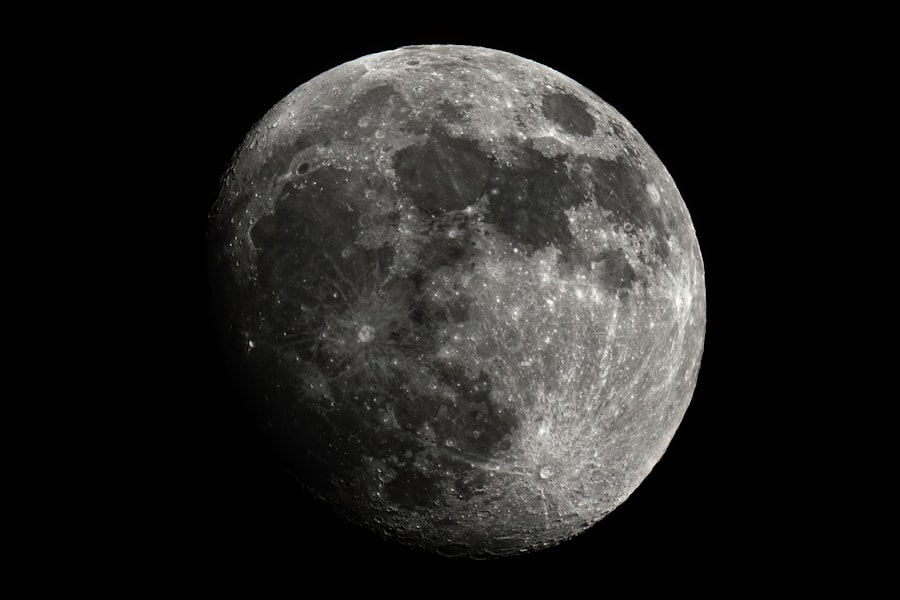
The mission of Apollo 11 was a carefully choreographed sequence of events, spanning several days and involving intricate maneuvers in deep space.
Liftoff and Trans-Lunar Injection: Breaking Earth’s Bonds
On July 16, 1969, at 9:32 AM EDT, the Saturn V rocket carrying astronauts Neil Armstrong, Buzz Aldrin, and Michael Collins ignited its engines, shaking the ground at Cape Kennedy. The thunderous ascent marked the beginning of their journey. After achieving Earth orbit, the Saturn V’s third stage reignited for a critical maneuver known as Trans-Lunar Injection (TLI), setting the spacecraft on a trajectory towards the Moon. This burn was a powerful push, fundamentally changing the spacecraft’s path from orbiting Earth to traveling to its celestial neighbor.
Lunar Orbit and Separation: A Celestial Ballet
Following a three-day transit, Apollo 11 entered lunar orbit. On July 20, 1969, Armstrong and Aldrin undocked the Lunar Module, “Eagle,” from the Command Module, “Columbia,” where Michael Collins remained in solitary orbit. This separation marked the point of no return for the two lunar-bound astronauts, as they began their descent towards the lunar surface. The synchronized movements of the two spacecraft in lunar orbit were a testament to the precision of orbital mechanics and mission planning.
The Historic Landing: “The Eagle Has Landed”
The descent of the Lunar Module was fraught with tension. Onboard computers flashed warning alarms, indicating potential overloads, while Armstrong had to manually steer the lander to avoid a boulder-strewn crater. With only seconds of fuel remaining, he guided “Eagle” to a safe landing in the Sea of Tranquility. His understated announcement, “Houston, Tranquility Base here. The Eagle has landed,” echoed through mission control and around the world, confirming humanity’s first arrival on another world. This landing, though seemingly simple in retrospect, was a perilous endeavor, demanding exceptional piloting skills under immense pressure.
A New Frontier: The Moonwalk and its Scientific Harvest

The initial steps on the lunar surface represented a profound shift in human perception, transforming the Moon from a distant object of contemplation into a tangible realm for exploration.
Armstrong’s First Step: “Small Step, Giant Leap”
A few hours after landing, on July 20, 1969, at 10:56 PM EDT, Neil Armstrong descended the ladder of the Lunar Module and placed his left foot onto the dusty lunar regolith. His immortal words, “That’s one small step for [a] man, one giant leap for mankind,” resonated globally, encapsulating the monumental significance of the moment. This single act transcended national boundaries, becoming a symbol of human achievement for all. The iconic imagery, transmitted live across continents, etched itself into the collective consciousness.
Scientific Exploration: Tools and Discoveries
During their approximately two-and-a-half-hour extravehicular activity (EVA), Armstrong and Aldrin deployed several scientific instruments. These included a Passive Seismic Experiment Package (PSEP) to detect moonquakes, a Laser Ranging Retroreflector (LRR) for precise measurements of Earth-Moon distance, and a Solar Wind Composition experiment to sample particles from the sun. They also collected 21.5 kilograms (47.5 pounds) of lunar rock and soil samples, which were meticulously documented and carefully returned to Earth for extensive scientific analysis. These samples provided invaluable insights into the Moon’s geological history, composition, and origin, reshaping planetary science.
The Enduring Image: Flags and Footprints
While the scientific instruments and geological samples were crucial, the planting of the American flag on the lunar surface became a powerful visual symbol of the mission’s success. Though debated from a purely scientific standpoint, it solidified the perception of American leadership in space exploration. The footprints left by Armstrong and Aldrin, undisturbed by wind or rain, became enduring testaments to humanity’s physical presence on another celestial body, a silent record of their transient visit. These images, more than anything, communicated the reality of the achievement to the global public.
The historic Moon landing in 1969 marked a significant achievement in human exploration and technology, inspiring countless individuals to pursue careers in science and engineering. For those interested in learning more about the various missions that followed Apollo 11, a fascinating article can be found here, which delves into the advancements and challenges faced by astronauts during their journeys. This exploration not only expanded our understanding of the Moon but also paved the way for future space endeavors.
The Legacy of Apollo 11: A Lasting Impact
| Metric | Value | Details |
|---|---|---|
| Date of First Moon Landing | July 20, 1969 | Apollo 11 mission |
| Astronauts on First Moon Landing | 3 | Neil Armstrong, Buzz Aldrin, Michael Collins |
| Duration on Moon Surface (Apollo 11) | 21 hours 36 minutes | Time spent by Armstrong and Aldrin on the lunar surface |
| Distance from Earth to Moon | 384,400 km | Average distance |
| Number of Moon Landings (Manned) | 6 | Apollo missions 11, 12, 14, 15, 16, 17 |
| First Words on the Moon | “That’s one small step for [a] man, one giant leap for mankind.” | Spoken by Neil Armstrong |
| Moon Rock Samples Returned | 382 kg | Collected during Apollo missions |
| Time Taken to Reach Moon | Approximately 3 days | From Earth to lunar orbit |
The 50th anniversary encourages reflection not only on the immediate triumph but also on the enduring effects of the Apollo 11 mission across various domains.
Inspiration and Innovation: A Catalytic Force
The Moon Landing served as an unparalleled source of inspiration, galvanizing generations of scientists, engineers, and dreamers. It demonstrated the power of collective human endeavor when united by a singular, ambitious goal. The Apollo program fostered countless technological advancements that found applications in diverse fields, from medical imaging and telecommunications to computer science and materials engineering. The drive for miniature, powerful, and reliable systems compelled innovation that permeated various aspects of modern life. It was a crucible for ingenuity, where solutions to highly specific problems often yielded broader benefits.
Geopolitical Repercussions: A Diplomatic Shift
While rooted in the competitive dynamics of the Cold War, the Moon Landing paradoxically facilitated a degree of cooperation. The success of Apollo 11 arguably contributed to a shift in superpower relations, signaling the end of the overt “Space Race” as a direct, aggressive competition. It laid groundwork for future international collaborations in space, albeit years later. The shared human accomplishment, while born from rivalry, transcended it in a way, illustrating a moment of shared human triumph even amidst political tension.
Shaping the Future: A Continuous Journey
The legacy of Apollo 11 continues to influence contemporary space exploration. It established fundamental principles of spacecraft design, mission planning, and crew training that remain relevant today. The program also underscored the importance of substantial public investment in scientific research and development. As humanity contemplates future missions to the Moon, Mars, and beyond, the experiences and lessons learned from Apollo 11 serve as an invaluable foundation, a historical blueprint for further audacious journeys into the cosmos. The ongoing pursuit of space exploration, from robotic probes to crewed missions, is a direct descendant of the path forged by Apollo 11, serving as a reminder that the frontiers of human endeavor are always expanding.
FAQs
What was the first successful moon landing mission?
The first successful moon landing mission was Apollo 11, which landed on the Moon on July 20, 1969.
Who were the astronauts involved in the first moon landing?
The astronauts on Apollo 11 were Neil Armstrong, Buzz Aldrin, and Michael Collins. Armstrong and Aldrin walked on the Moon, while Collins orbited above.
What was the significance of the moon landing?
The moon landing marked the first time humans set foot on another celestial body, demonstrating technological achievement and advancing space exploration.
How many manned moon landings have there been?
There have been six manned moon landings, all conducted by NASA’s Apollo program between 1969 and 1972.
What equipment was used to land on the moon?
The Apollo missions used the Lunar Module, a spacecraft designed specifically to land on the Moon and return astronauts to the Command Module in lunar orbit.