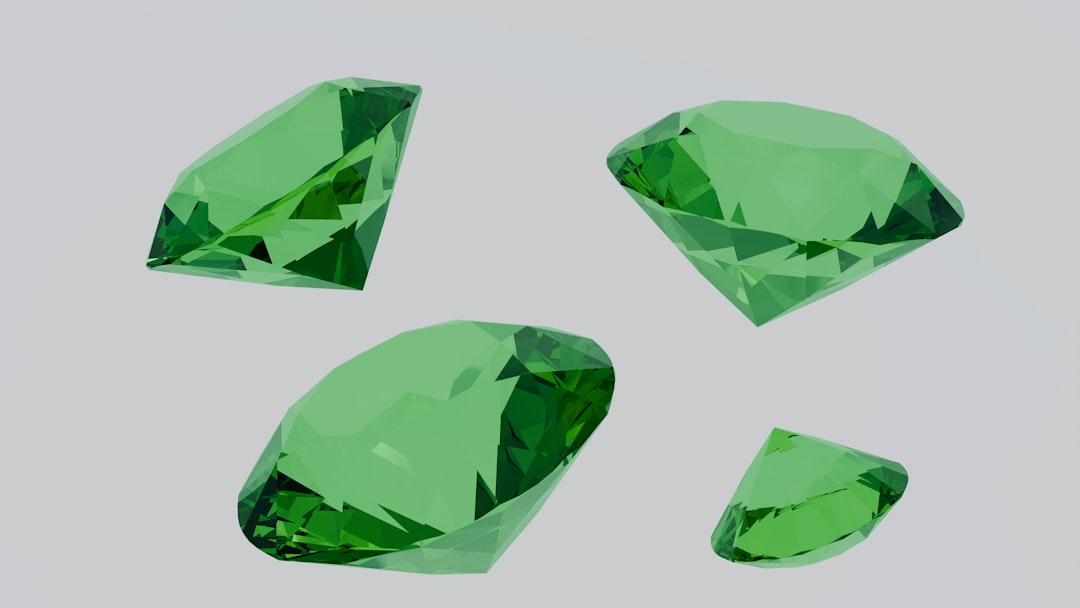
The journey of a diamond, from its primordial origins deep within the Earth to its shimmering display in a retail showcase, is a complex and often opaque process. This article endeavors to illuminate the intricate chain of custody, geological formation, and economic forces that shape the diamond industry. It provides a comprehensive overview for the interested reader, demystifying the path of these coveted gemstones.
Diamonds are crystalline forms of carbon, forged under immense pressure and heat millions to billions of years ago in the Earth’s mantle. Their ascent to the surface is a rare geological event, primarily facilitated by explosive volcanic eruptions that bring them embedded within kimberlite and, less commonly, lamproite pipes.
Formation of Diamonds
The genesis of a diamond necessitates specific conditions.
- High Pressure and Temperature: Diamonds form at depths of 150 to 200 kilometers, where temperatures exceed 1,000°C and pressures are approximately 50 kilobars. These extreme conditions are crucial for carbon atoms to arrange into the diamond’s characteristic lattice structure.
- Deep Geological Timelines: The formation process is not instantaneous; it spans geological epochs, often millions to billions of years. This extended period allows for the gradual crystallization of carbon.
- Carbon Source: The carbon atoms themselves are sourced from various origins, including ancient organic matter subducted into the mantle, or primordial carbon reservoirs.
Mining Techniques
The extraction of diamonds is a labor-intensive and often technologically advanced undertaking, involving significant capital investment. The primary methods vary depending on the type of deposit.
- Kimberlite Pipe Mining (Primary Deposits): These are vertical, carrot-shaped igneous intrusions that bring diamonds from the mantle to the Earth’s surface. Mining these pipes involves:
- Open-pit Mining: For shallower deposits, large-scale excavations are used, removing overburden to access the kimberlite. This method typically results in massive waste rock production.
- Underground Mining: As pits deepen, open-pit mining becomes economically unfeasible. Specialized tunnels and shafts are constructed to access the kimberlite at greater depths, employing techniques like block caving or sublevel caving.
- Alluvial Mining (Secondary Deposits): Over millennia, weathering and erosion transport diamonds from primary kimberlite sources into rivers, lakes, and coastal areas. This leads to the formation of alluvial deposits.
- Riverbed Mining: Dredges or diverting river sections allow for the extraction of diamond-bearing gravels.
- Marine Mining: In some coastal regions, particularly off the coast of Namibia, specialized vessels equipped with crawler-mounted excavators or suction hoses extract diamond-rich gravels from the seabed. This is a highly specialized and capital-intensive form of mining.
The diamond supply chain is a complex network that involves various stages from mining to retail, ensuring that diamonds reach consumers in a responsible and ethical manner. For a deeper understanding of this intricate process and its implications, you can read a related article that explores the challenges and innovations within the diamond industry. Check it out here: Diamond Supply Chain Insights.
Rough Diamond Sorting and Valuation
Once extracted, rough diamonds undergo a rigorous and meticulous process of sorting, classification, and valuation. This stage is critical in determining the economic potential of a diamond and its subsequent path through the supply chain.
Initial Classification
Immediately after recovery, rough diamonds are separated from the host rock and subjected to an initial classification based on basic visual characteristics. This involves specialists with extensive experience.
- Industrial vs. Gem Quality: The fundamental distinction is between diamonds suitable for jewelry (gem quality) and those destined for industrial applications (e.g., abrasives, drill bits). Industrial diamonds generally exhibit lower clarity, color, and irregular shapes.
- Size and Shape: Diamonds are grouped by approximate size (often measured in carats) and general shape (e.g., octahedron, dodecahedron, macle, cubes). This preliminary sorting helps in predicting potential cuts.
- Color and Clarity Indicators: Early assessment provides an initial indication of color and clarity, though a detailed grading occurs later. Even in a rough state, severe inclusions or strong color tints are observable.
Valuation Process
The valuation of rough diamonds is a highly specialized skill, often refined over decades. It involves a holistic assessment of multiple factors, anticipating the potential polished outcome.
- The 4Cs in Rough Form: While the 4Cs (Carat, Cut, Color, Clarity) are primarily used for polished diamonds, their potential in the rough stone is assessed.
- Carat Weight: The weight of the rough diamond.
- Inferred Color: The potential color grade after polishing, considering any surface coatings or internal hues.
- Predicted Clarity: The anticipated clarity grade, aiming to maximize clarity by minimizing inclusions during the cutting process.
- Potential Cut: The most critically observed factor. Expert valuers visualize potential cuts to maximize yield and beauty, considering the rough stone’s shape, internal grain, and blemishes. This often involves 3D scanning and computer modeling in modern operations.
- Market Demand and Price Guides: Valuation is not solely based on intrinsic characteristics. It is also heavily influenced by current market demand for specific sizes, colors, and qualities, and is guided by historical price data and industry benchmarks.
- Sales Methods: Mining companies employ various methods to sell rough diamonds:
- Sights: Large diamond producers like De Beers hold pre-scheduled sales events (called “Sights”) where approved buyers (“Sightholders”) are offered parcels of rough diamonds. These parcels are typically pre-sorted by the producer. Buyers often have limited negotiation power and a take-it-or-leave-it proposition for certain parcels.
- Auctions: Other producers and traders sell rough diamonds through open or closed bid auctions, allowing greater transparency and potentially broader participation.
- Tenders: Similar to auctions but often involving sealed bids, where the highest bid for a specific lot wins.
- Direct Sales: Less common for large volumes, but some smaller producers or artisanal miners may engage in direct sales.
Cutting and Polishing

The transformation of a rough diamond into a brilliant gemstone requires precision, expertise, and often, advanced technology. This stage dictates the ultimate beauty and value of the diamond.
Planning and Marking
Before any physical alteration, the rough diamond undergoes meticulous planning. This crucial step determines the final shape, size, and number of polished stones that can be yielded from the rough.
- 3D Scanning and Modeling: Modern cutting houses utilize sophisticated 3D scanning technology to create a digital model of the rough diamond. This model allows cutters to explore various cutting options virtually.
- Yield Optimization Software: Specialized software analyzes the scanned data and proposes optimal cutting plans, aiming to maximize the carat weight, clarity, and brilliance of the resultant polished diamonds. This often involves trade-offs between size and clarity/color.
- Marking: Once the optimal plan is determined, the rough diamond is precisely marked to indicate where it will be sawn or cleaved. This marking acts as a blueprint for the subsequent stages.
Sawing, Cleaving, and Bruting
These are the initial physical alterations to the rough diamond, separating it into manageable pieces and shaping it for faceting.
- Sawing: For larger diamonds, a laser saw is used to cut the stone along specific planes. Lasers offer high precision and minimize material loss compared to traditional mechanical saws. Some softer or inclusion-rich diamonds might still be sawn using phosphor bronze blades impregnated with diamond dust.
- Cleaving: In cases where the diamond has a well-defined cleavage plane, a skilled cutter can use a sharp tool and a swift blow to split the diamond along that plane. This method requires extreme precision and an intimate understanding of the diamond’s crystal structure; a miscalculation can shatter the stone.
- Bruting (Girdle Formation): After sawing or cleaving, the diamond pieces are typically rounded into a preliminary shape on a “lathe” (bruting machine). Two diamonds are placed on spindles, rotating against each other, to create a round girdle – the circumference of the diamond – which will eventually form the widest part of the polished stone.
Faceting and Polishing
This is the most artistic and skill-intensive part of the process, where the diamond’s brilliance is unleashed.
- Blocking: The first set of facets (typically 8 main facets on the pavilion and 8 on the crown) are ground onto the diamond. These are called “blocker” facets and establish the primary angles and proportions of the stone.
- Faceting: Subsequently, a series of smaller facets are meticulously polished onto the diamond’s surface. A standard round brilliant cut, for example, has 57 or 58 facets (including the culet). Each facet must be precisely angled and perfectly flat to maximize light reflection and refraction. This is done using a rotating cast iron wheel (scaife) coated with a mixture of diamond powder and oil.
- Polishing: The final stage involves polishing each facet to a mirror-like finish. Any imperfections or scratches on the facets would diminish the diamond’s brilliance, making this a critical step. The quality of the polish directly contributes to the diamond’s “luster.” This is where the rough diamond, a simple piece of rock, becomes a dazzling “fire and ice” spectacle.
Grading and Certification

Upon completion of the cutting and polishing process, a diamond’s inherent qualities are meticulously evaluated and documented. This objective assessment provides transparency and confidence to buyers.
The 4 Cs of Diamond Grading
The internationally recognized standard for evaluating polished diamonds is based on four key characteristics, collectively known as the 4 Cs.
- Carat Weight: This refers to the diamond’s weight, not its size. One carat is equivalent to 200 milligrams (0.2 grams). Carat weight is a direct measure and is precisely determined using calibrated scales. The price per carat often increases disproportionately with larger stones due to their rarity.
- Color: Diamonds are graded on a color scale from D (colorless) to Z (light yellow or brown). The absence of color allows more light to pass through the diamond, enhancing its brilliance. Color is graded by comparing the diamond to a set of master stones under controlled lighting conditions.
- Clarity: This refers to the absence of inclusions (internal characteristics) and blemishes (external characteristics). The clarity scale ranges from Flawless (FL) to Included (I3). Grading is performed by examining the diamond under 10x magnification. Inclusions are like the diamond’s unique birthmarks, telling a story of its geological past.
- Flawless (FL): No inclusions or blemishes visible under 10x magnification.
- Internally Flawless (IF): No inclusions visible under 10x magnification, but some minor blemishes may be present.
- Very, Very Slightly Included (VVS1, VVS2): Inclusions are extremely difficult to see under 10x magnification.
- Very Slightly Included (VS1, VS2): Inclusions are difficult to see under 10x magnification.
- Slightly Included (SI1, SI2): Inclusions are noticeable under 10x magnification.
- Included (I1, I2, I3): Inclusions are obvious under 10x magnification and may be visible to the naked eye.
- Cut: This is arguably the most crucial of the 4 Cs as it relates to the diamond’s interaction with light. It assesses how well the diamond’s facets are proportioned, symmetrical, and polished. A well-cut diamond maximizes brilliance, fire, and scintillation. Cut grades range from Excellent to Poor, based on a comprehensive evaluation of factors such as:
- Proportions: The relationships between the different parts of the diamond (e.g., table size, crown height, pavilion depth).
- Symmetry: The precision of the facet alignment and placement.
- Polish: The smoothness and luster of the diamond’s surface.
Certification and Laboratories
Independent gemological laboratories provide objective third-party grading reports (certificates) that document a diamond’s characteristics. These reports are essential for consumer confidence and industry standards.
- Leading Laboratories: Prominent gemological laboratories worldwide include:
- Gemological Institute of America (GIA): Widely regarded as the industry standard, known for its stringent grading protocols and unbiased reports.
- International Gemological Institute (IGI): Another respected laboratory with a global presence, offering comprehensive grading services.
- American Gem Society Laboratories (AGSL): Known for its proprietary cut grade system, particularly for ideal cut round brilliant diamonds.
- Certificate Contents: A typical diamond certificate includes detailed information such as:
- Date of issue and report number.
- Diamond plotting diagram showing inclusions and blemishes.
- Measurements and weight.
- Grades for color, clarity, and cut.
- Fluorescence (the diamond’s reaction to ultraviolet light).
- Laser inscription details (a microscopic number on the girdle that matches the report number).
- Traceability and Ethical Sourcing: Beyond the 4Cs, certificates can also include information related to a diamond’s origin, particularly for those sourced through specific initiatives aimed at ethical and conflict-free mining (e.g., Kimberly Process, blockchain-backed traceability).
The complexities of the diamond supply chain are often overlooked, yet they play a crucial role in understanding the ethical implications of diamond sourcing. For those interested in exploring this topic further, a related article can provide valuable insights into the various challenges and innovations within the industry. You can read more about it in this informative piece on diamond sourcing practices by visiting this link.
Distribution and Retail
| Stage | Description | Key Metrics | Average Timeframe | Major Challenges |
|---|---|---|---|---|
| Mining | Extraction of rough diamonds from kimberlite pipes or alluvial deposits | Annual production volume (carats), Ore grade (carats/ton) | Varies: days to months | Environmental impact, labor conditions, resource depletion |
| Sorting & Valuation | Classification of rough diamonds by size, shape, color, and clarity | Sorting accuracy (%), Valuation price per carat | Hours to days | Subjectivity in grading, fraud prevention |
| Cutting & Polishing | Transforming rough diamonds into polished gems | Yield percentage (%), Defect rate (%), Average cut time (hours) | Days to weeks | Skilled labor shortage, precision requirements |
| Certification | Issuing grading reports by gemological labs | Certification turnaround time (days), Number of certificates issued | 1-7 days | Standardization, counterfeit certificates |
| Wholesale Distribution | Bulk sale of polished diamonds to retailers | Inventory turnover rate, Average sale price per carat | Weeks to months | Market price volatility, supply-demand mismatch |
| Retail | Sale of finished diamond jewelry to consumers | Sales volume, Average transaction value, Customer satisfaction | Immediate to weeks | Consumer trust, ethical sourcing concerns |
| Recycling & Resale | Resale or repurposing of diamonds and jewelry | Resale value percentage, Volume of recycled diamonds | Varies | Authentication, market demand |
The final stages of the diamond supply chain involve the movement of finished gemstones to wholesale and retail markets, ultimately reaching the consumer.
Wholesale Distribution
Once graded and certified, polished diamonds enter the wholesale market, where they are bought and sold in bulk by diamond dealers and distributors.
- Diamond Bourses: Major diamond trading centers, often called bourses, like those in Antwerp (Belgium), Mumbai (India), and New York City (USA), facilitate wholesale transactions. These are highly secure environments where dealers engage in direct trading.
- Online Platforms: The rise of online wholesale platforms has added a new dimension to distribution, allowing dealers to connect globally and efficiently.
- Manufacturing Jewelers: Wholesalers supply polished diamonds to manufacturing jewelers who specialize in setting diamonds into various jewelry designs.
- Independent Retailers: Some independent retail jewelers may purchase directly from wholesalers or even cutters, bypassing intermediation.
Retail Sales and Consumer Engagement
The retail sector is the final interface with the consumer, where marketing, branding, and customer service play pivotal roles.
- Branded Retailers: Prominent luxury brands (e.g., Tiffany & Co., Cartier) offer curated collections of diamonds, often emphasizing their own quality standards, ethical sourcing, and design aesthetics. Branding plays a significant role in creating desire and perceived value.
- Online Retailers: E-commerce platforms have democratized diamond purchasing, offering a vast array of choices, competitive pricing, and often detailed digital imaging and virtual try-on experiences. Reputable online retailers provide comprehensive grading reports and return policies.
- Independent Jewelers: Local and regional independent jewelers provide personalized service, local expertise, and often a more bespoke experience. They may also offer custom design services.
- Marketing and Storytelling: Retailers employ various marketing strategies to appeal to consumers, often focusing on the narrative of love, commitment, and timeless beauty associated with diamonds. Ethical sourcing and sustainability are increasingly important marketing points. Retailers act as the storytellers, transforming a geological marvel into a symbol of human emotion.
- After-Sales Service: Reputable retailers offer after-sales services such as cleaning, repairs, and valuations, building long-term customer relationships.
Ethical and Environmental Considerations
The diamond industry, like many extractive industries, faces scrutiny regarding its ethical and environmental footprint. Addressing these concerns is crucial for its long-term sustainability and public perception.
Conflict Diamonds and the Kimberley Process
The issue of “blood diamonds” or “conflict diamonds” gained international attention in the late 1990s, highlighting the role of diamonds in funding civil wars and human rights abuses.
- Definition: Conflict diamonds are rough diamonds used by rebel movements to finance wars against legitimate governments.
- Kimberley Process (KP): Established in 2003, the KP is an international certification scheme that aims to prevent the flow of conflict diamonds into the legitimate global supply chain. Participating countries agree to implement controls over diamond production and trade.
- Certification Scheme: Diamonds exported from KP participants must be accompanied by a KP certificate, guaranteeing they are conflict-free.
- Limitations and Criticisms: While the KP has significantly reduced the trade in conflict diamonds, it has faced criticism for its narrow definition of “conflict diamonds” (excluding diamonds linked to human rights abuses or violence by state actors) and enforcement challenges. It’s often seen as a necessary but insufficient measure.
Labor Practices and Human Rights
Concerns regarding labor practices in diamond mining areas persist, particularly in artisanal and small-scale mining (ASM) sectors.
- Working Conditions: In some regions, ASM operations are characterized by hazardous working conditions, lack of safety equipment, child labor, and exploitation.
- Fair Wages: Ensuring fair wages and safe working environments for all involved in the diamond supply chain, from miners to cutters, is an ongoing challenge and focus for industry initiatives.
- Community Development: Responsible mining companies engage in community development programs, providing education, healthcare, and infrastructure improvements to mitigate the negative impacts of mining activities and contribute positively to local livelihoods.
Environmental Impact
Diamond mining, particularly large-scale industrial operations, has discernible environmental consequences.
- Land Disturbance: Open-pit mining leads to significant land disturbance, habitat destruction, and changes in landscape.
- Water Usage and Pollution: Mining operations consume large quantities of water and can generate wastewater containing sediment and chemicals, potentially polluting local water sources.
- Waste Generation: The extraction process generates vast amounts of waste rock and tailings (finely ground rock particles), which require careful management to prevent environmental contamination.
- Rehabilitation Efforts: Responsible mining companies invest in rehabilitation programs, aiming to restore mined land to its original state or to a state that supports biodiversity and local ecosystems after mining operations cease. This is a complex and long-term endeavor.
The diamond supply chain, from the deep Earth to the retail display, is a testament to natural forces, human ingenuity, and intricate economic networks. Understanding its complexities and acknowledging its challenges allows for a more informed appreciation of these extraordinary gemstones.
FAQs
What are the main stages in the diamond supply chain?
The diamond supply chain typically includes mining, sorting, cutting and polishing, grading, and retail. Each stage adds value and ensures the diamond meets quality standards before reaching consumers.
How are diamonds sourced ethically in the supply chain?
Ethical sourcing involves adhering to regulations like the Kimberley Process Certification Scheme, which aims to prevent conflict diamonds from entering the market. Many companies also implement additional standards to ensure responsible mining and fair labor practices.
What role do diamond grading laboratories play in the supply chain?
Diamond grading laboratories assess and certify diamonds based on the 4Cs: carat, cut, color, and clarity. Their reports provide transparency and help buyers make informed decisions.
How is technology used to improve the diamond supply chain?
Technology such as blockchain is increasingly used to enhance traceability and transparency, allowing stakeholders to track a diamond’s journey from mine to market and verify its authenticity and ethical sourcing.
What challenges does the diamond supply chain face?
Challenges include ensuring ethical sourcing, combating counterfeit diamonds, managing environmental impacts, and adapting to changing consumer preferences for lab-grown versus natural diamonds.